Final Fantasy VII Revelation has put its party in hot springs, given the group fresh swimwear, and—most importantly for a certain corner of the internet—opened a remarkably serious debate about Cid’s chest hair.
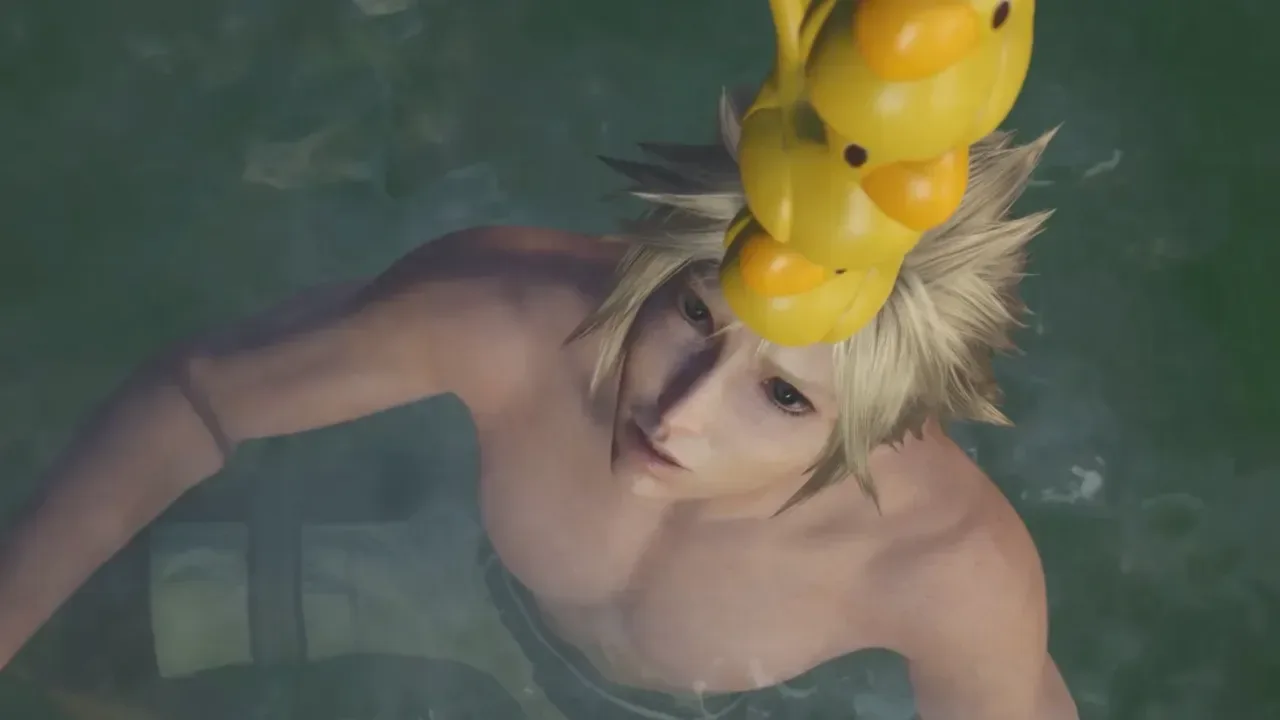
Two newly released clips focus on the sort of lower-stakes group comedy that can make an enormous role-playing game feel inhabited by people rather than solely by plot machinery. In one, Cloud, Red XIII and Barret attempt to balance rubber chocobos on their heads. In another, Barret and Cid encounter Vincent while he is bathing in full combat armor. The dialogue in the footage is Japanese, so viewers who do not understand it should be careful not to infer precise context or jokes from the scenes alone. But the visual read is clear: Revelation is making room for the party to be ridiculous with one another.
The clips also show the male characters in bathing outfits. Director Naoki Hamaguchi has said these costumes will be unlockable and usable throughout the game. That makes them more than a one-scene novelty: players who unlock them will apparently be able to carry those looks beyond the hot-springs setting.
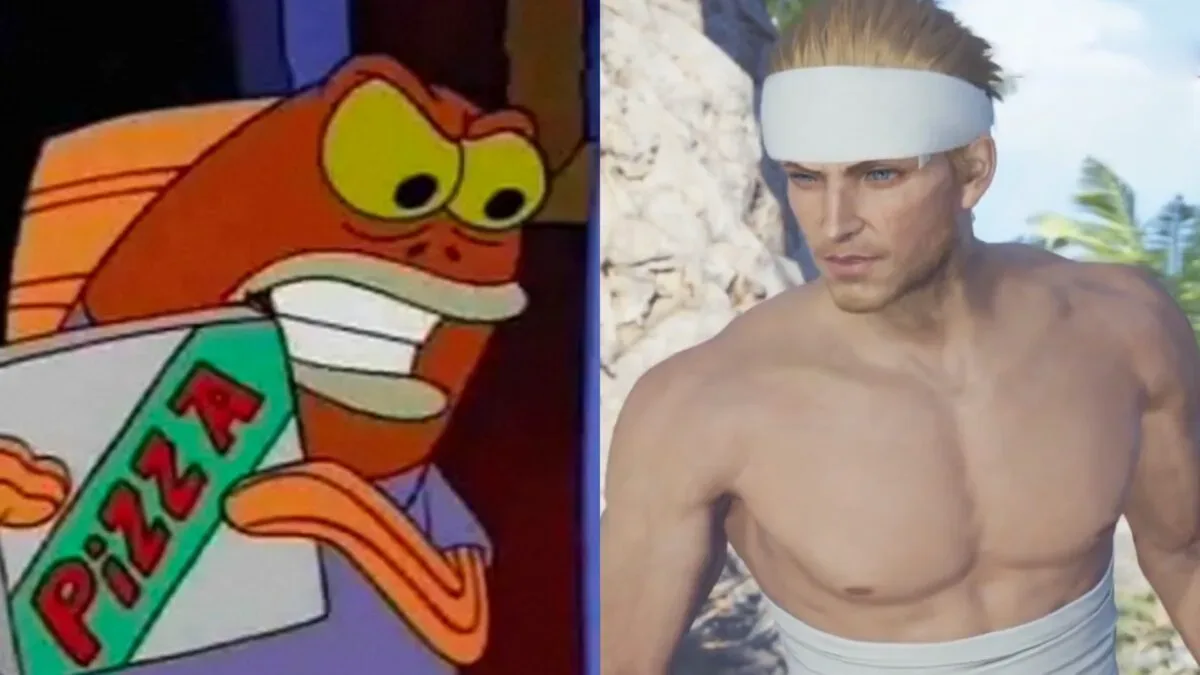
And that is where the Cid discourse begins. Barret’s model visibly has chest hair. Cid’s, at least in the available footage, does not. Neither detail alters combat, story progression or the consequences of whatever reality-bending business this third entry has planned. Yet the contrast has prompted a fair character-design question: why does a party member framed as weathered and rough-around-the-edges have a body model that looks so unusually polished?
For more context, explore Battlefield 6 Season 5 Teases Dead Space as Las Vegas Arrives October 13.
The clips sell the party, not just the spectacle
Revelation is positioned as the third game in the Final Fantasy VII Remake trilogy, and its hot-springs footage leans into an important strength of this retelling: spending time with the ensemble when nobody is saving the world. A rubber-chocobo balancing contest is not a grand lore reveal. Vincent choosing to soak in armor is not a major battle mechanic. Their value is that they offer distinct, instantly readable reactions.
Cloud, Red XIII and Barret participating in a goofy physical challenge suggests a party comfortable enough to share a pointless moment. Barret and Cid stumbling into Vincent’s armored bath, meanwhile, takes advantage of Vincent’s visual severity. Armor is normally an indicator of readiness, danger or identity. In a bath, it becomes an absurdly literal refusal to relax.
That kind of scene matters because character comedy can do heavy lifting in a long RPG. It gives players a break from dramatic tension, establishes who will indulge a joke and who will resist it, and supplies the kind of memorable texture that cannot be conveyed by a combat system alone. The clips do not establish how large the hot-springs sequence is or where it sits in the game, but they do demonstrate an interest in letting the cast bounce off each other.
Related coverage includes Final Fantasy VII Revelation's Hot Springs Clips Put Cid's Missing Chest Hair Under the Microscope.
There is also a practical reason the footage has attracted attention. Visual comedy travels cleanly across language barriers. A rubber chocobo perched on a character’s head and an armored man in a bath need little translation. The eventual English performances may reshape how those scenes land for English-speaking players, but the staging is already doing its job.
Unlockable swimwear has a purpose beyond fanservice
“Fanservice” is often used as a catch-all for outfits or scenes designed to emphasize a character’s appearance. That is part of the appeal here, plainly enough. The women of the party previously received a swimwear spotlight in Final Fantasy VII Rebirth at Costa del Sol, while the new clips give the men an equivalent chance to dress down.
But the detail that the outfits can be unlocked and used throughout Revelation is significant. An unlockable cosmetic is an optional appearance change earned through play rather than a mechanical upgrade that changes damage, defense or abilities. Its purpose is player expression: once obtained, it gives players a way to customize the look of a team they may be seeing for dozens of hours.
That persistence can make a costume feel like a real part of a player’s version of the game rather than a temporary gag. Someone may outfit Barret in swimwear because it suits his confidence. Another player may enjoy putting the whole party in deliberately mismatched clothing during serious scenes. Cosmetics do not need a systems advantage to be meaningful; their payoff is tonal control, attachment and sometimes sheer silliness.
The source material does not say how the outfits are unlocked, whether every shown outfit is available to every party member, or whether there are restrictions on where they can be worn. Those are details worth waiting for rather than filling in with assumptions. What has been established is the broader point: these looks are intended to remain usable after players obtain them.
Why Cid’s missing chest hair became the story
Barret’s hairy chest makes the issue less about a universal engine limitation and more about an apparent choice. Character artists can and do decide how much body hair, scarring, facial texture, muscle definition and other surface detail a model receives. That is not merely decoration. It informs silhouette, perceived age and personality before a character says anything.
Cid is described as 32, but the discussion around the footage treats him as someone with a substantially older, more worn-in vibe. The point is not that every 32-year-old man must have a hairy chest, of course. Real people vary enormously, and body hair should not be treated as a mandatory shorthand for masculinity or age. The more focused criticism is about consistency between a character’s visual coding and his presentation.
Cid’s appeal, for viewers making this argument, is not supposed to rest on having Cloud’s polished, smooth-bodied aesthetic. It is rooted in a rougher, more battered impression: a man who should look as though the world has left a mark on him. A little chest hair would not transform the character. It would simply reinforce that impression in a setting where the party’s bathing outfits make the artists’ decisions more visible than armored or layered costumes do.
That is why Barret’s design is central to the reaction. Barret demonstrates that Revelation includes chest hair on at least one character model, so the contrast reads as selective rather than technical. In a group assembled around strong archetypes and highly recognizable silhouettes, selective choices invite interpretation. Players notice when two men are presented with different degrees of bodily texture, particularly when one is perceived as the party’s rugged veteran figure.
Texture is character storytelling
In 3D games, texture can mean several related things: the image information laid across a model, material properties such as skin sheen or fabric roughness, and smaller authored features that stop a surface from looking blank. Body hair is one modest part of that visual language. It can suggest grooming, environment, age, comfort, vulnerability or simply a particular aesthetic preference.
None of this means every character needs maximal detail. A stylized cast benefits from contrast. Cloud being sleek and carefully composed tells the audience something. Barret appearing muscular and hairy tells them something else. A Cid who looks too close to Cloud when both are minimally dressed may flatten a contrast that could otherwise be immediate.
The reaction therefore lands as a playful request for specificity, not a demand that a texture map solve a narrative problem. Fans want character models to preserve the odd, particular qualities that make a party member feel like himself. In this case, that request happens to be for more fuzz.
There is no confirmed design change to report
It is important to separate the joke from the reporting. The available information confirms the hot-springs clips, the party interactions shown in them, the swimwear, and Hamaguchi’s statement that the costumes can be unlocked and used throughout the game. It does not establish that the developers view Cid’s appearance as an error, that an alteration is planned, or that the final release will differ from the footage.
Calls for a chest-hair revision are commentary. They are also an unusually focused example of how closely fans examine beloved characters when new footage arrives. Big franchises inspire scrutiny over casting, combat systems, plot turns, costumes and fidelity to earlier versions. A missing bit of body hair may sound trivial beside all that, but trivial details can be revealing. They show which visual traits audiences have come to connect with a character’s identity.
For now, the practical takeaway for players is simpler: Revelation appears to include a hot-springs sequence built around party comedy, male swimwear cosmetics that can be unlocked for wider use, and a fully armored Vincent who apparently will not compromise on the bathhouse dress code. Barret looks exactly as Barret should. Cid, depending on one’s preferred level of ruggedness, may have a little explaining to do.
Final Fantasy VII Revelation is listed for PC, PlayStation 5, Switch 2 and Xbox Series X/S on April 8.