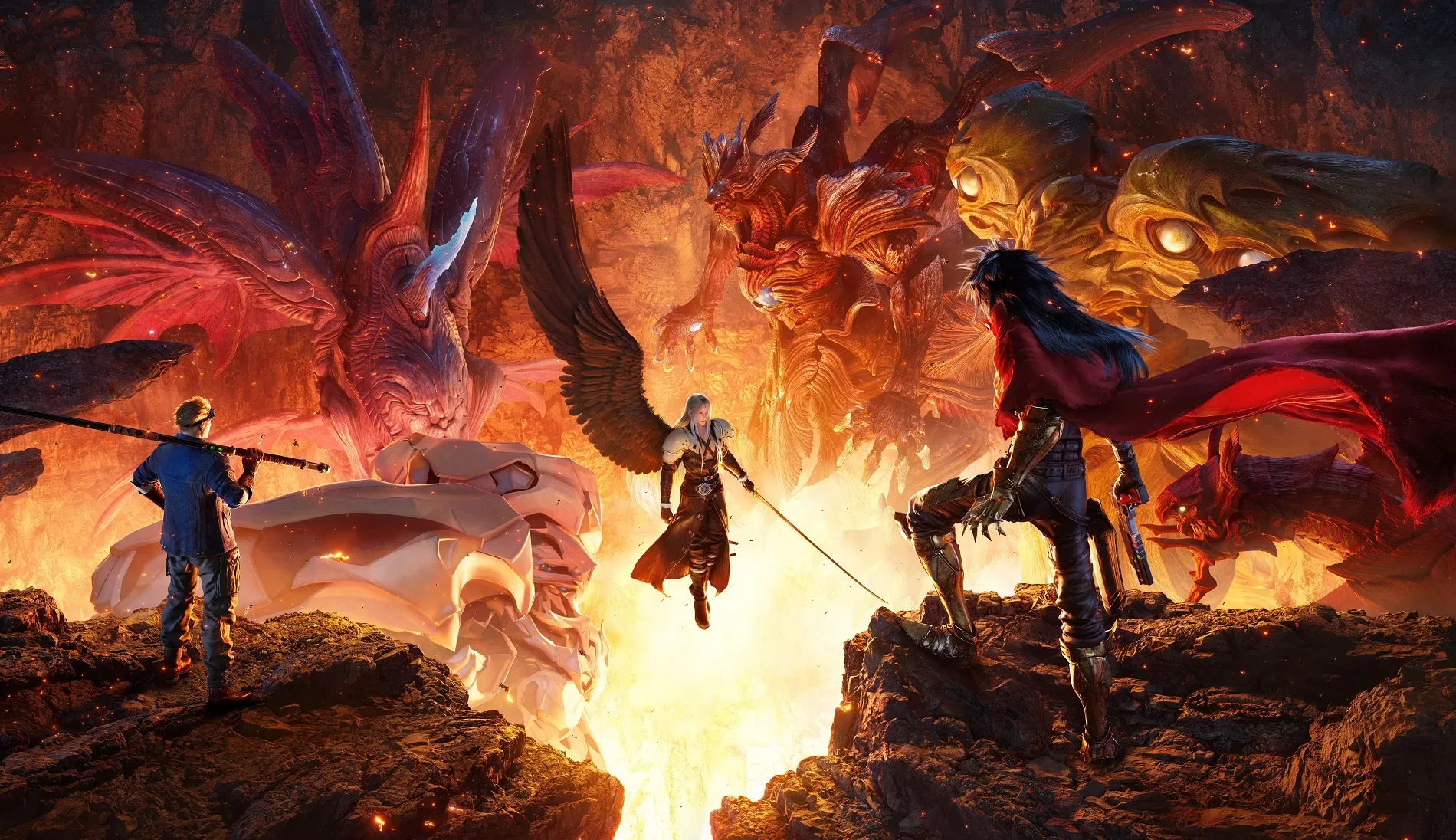
Final Fantasy VII Revelation is positioned as the finale to the three-game remake project, but its relationship with the 1997 PlayStation original is looking less like a beat-for-beat recreation and more like a comprehensive rework. The broad ingredients remain recognizable: the Highwind, Icicle Inn, Wutai, Vincent, Yuffie, summon materia and Knights of the Round are all in the conversation. Yet the rules governing how players reach them, recruit them and use them are changing substantially.
That distinction matters most in the latter portions of Final Fantasy VII. The original’s late game offered a relatively open structure after the Highwind became available, and it tucked some of its most powerful rewards and character material behind optional systems. Revelation instead appears designed around a fully explorable world, a real-time combat layer with a job-class mechanic called FITS, and more deliberately authored quest lines. It is preserving famous destinations and prizes while giving them new narrative and mechanical jobs.
Here is what the currently described changes mean for returning players, and why they could reshape the remake trilogy’s final stretch.
The Highwind opens the world, but not every destination at once
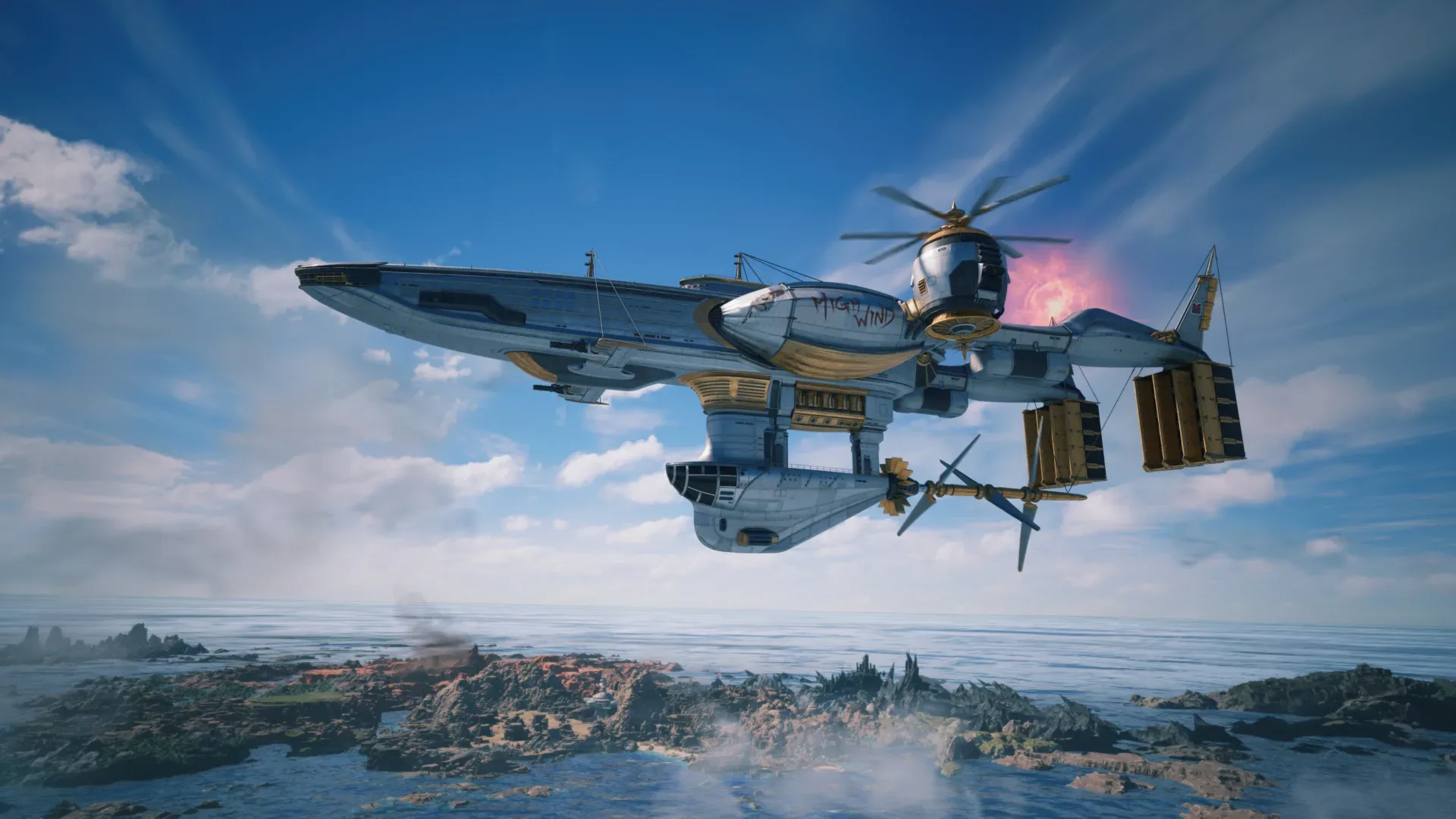
Revelation is expected to provide a true open world from the start, with the Highwind airship allowing the party to fly around it. That recalls the original game’s late-game freedom, where receiving the Highwind greatly expanded access to the world map.
There is an important limitation, though: Revelation will not apparently make every place immediately reachable simply because the player has the airship. Weather phenomena and closed airspace will restrict access to some locations until the appropriate point in the adventure.
This is a different kind of openness. In practical terms, the Highwind seems likely to function as a vehicle for exploration and player choice without removing story pacing altogether. A destination can exist visibly in the world while still being unavailable, letting the game hold back encounters, quests or narrative revelations. It is a structure familiar to modern open-world design: the map is broad, but progression gates control when particular content can be entered.
For players who remember the original’s late game as a period of rapidly expanding freedom, that may be the most consequential change. The Highwind remains a symbol of mobility, but Revelation’s world will seemingly have more guardrails. Readers interested in how other games use open-world travel to connect distinct areas can also see this look at an open-world update built around drivable exploration.
Snowboarding is returning, but its role may be different
The original Final Fantasy VII placed a snowboarding sequence on the route from the Forgotten City toward Icicle Town. Revelation is still expected to include snowboarding, Icicle Inn and the hypothermia minigame. What is less certain is whether snowboarding will remain a required step on the main route.
Current preview information suggests it may not be mandatory in the same way. The activities and location have been identified, but apparently appear in a different order from the one longtime players know.
That is a useful illustration of Revelation’s wider approach. The remake project is not necessarily deleting recognizable material; it is often moving it, reframing it or changing the conditions under which it occurs. Snowboarding can therefore remain an affectionate callback and an explorable activity without serving as the exact same bridge between two story chapters.
The available information does not establish the final sequence, nor does it confirm precisely how optional each element will be. For now, the safe expectation is that players should not use the original’s route through this section as a strict roadmap.
Yuffie and Vincent are no longer side discoveries
One of the largest narrative changes concerns two characters who were optional party members in the 1997 release. Yuffie Kisaragi and Vincent Valentine could be acquired through extra work in the original; they were not part of the standard seven-character party. Their availability and portions of their story material could be missed.
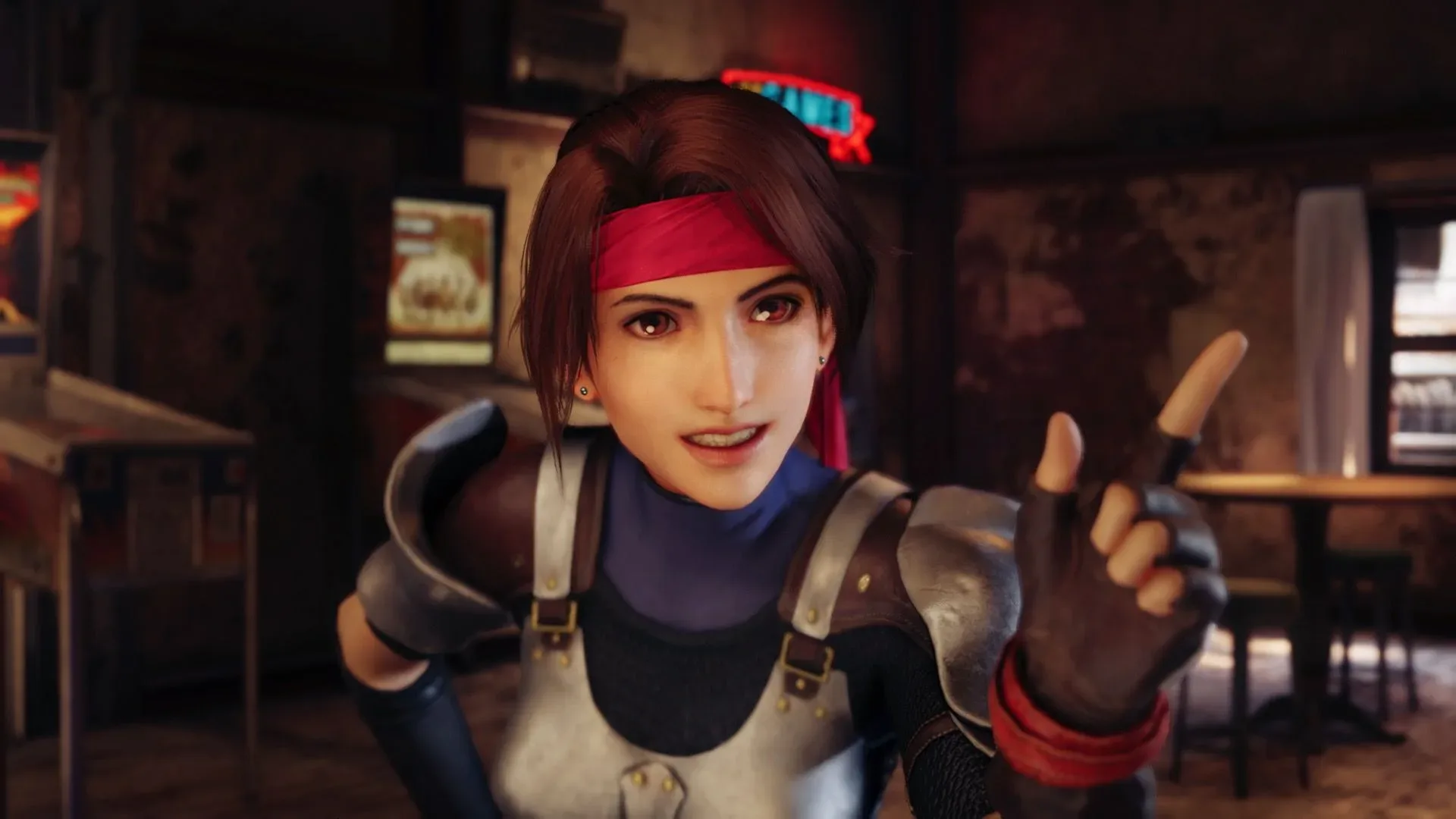
Revelation folds both characters into its central narrative. The party will visit Wutai, and Vincent’s history as a member of the Turks will be explored as part of the journey rather than left entirely to optional discovery. Cid and Vincent are also set to be full-time party members.
This does more than guarantee that everyone sees familiar characters. It changes the storytelling baseline. The original had to accommodate the possibility that Yuffie and Vincent were absent, which naturally constrained how essential they could be to mandatory scenes. Revelation can build encounters, dialogue, party dynamics and combat expectations around their presence because their involvement is no longer conditional.
For Yuffie, Wutai’s integration into the main path also gives the location a firmer place in the overall story. For Vincent, material tied to the Turks can be treated as foundational character history rather than bonus lore. That should make the final game feel less like it has a “main” party plus two detached secrets, even if optional activities still surround the cast.
Vincent’s Galian Beast shifts from Limit Break to core combat tool
Vincent’s combat design is also receiving a fundamental adjustment. In the original game, his Galian Beast transformation was a Limit Break. A Limit Break is a character-specific high-impact ability system, generally separate from a character’s normal command set. Revelation will make Galian Beast part of Vincent’s regular battle kit instead.
That decision matters especially because Revelation uses real-time action augmented by FITS, its job-class mechanic. A transformation used only on limited occasions in a turn-based system serves a different purpose than one incorporated into an action-focused combat loop. Making Galian Beast routinely available gives Vincent a persistent identity in battle rather than reserving the transformation solely for a special state.
Other Vincent transformations from the 1997 game may be incorporated into his Limit Break repertoire, though that point remains less definite than Galian Beast’s new regular-combat role. The broad idea is clear: Revelation is separating Vincent’s signature monster form from the original game’s exact Limit Break structure and building his style around it.
This could also help distinguish him from the other playable characters at a mechanical level. In a party-based action system, striking silhouettes and specialized modes are useful ways to make each member feel meaningfully different. Vincent’s transformation is an obvious candidate for that treatment.
Master materia is out because it would undermine the new combat balance
Not every famous endgame reward is making the transition. Revelation will not include Master materia.
In the original Final Fantasy VII, materia were equippable magical or command orbs. Master materia represented an ultimate consolidation of that system, granting access to every ability within a given category, such as magic, commands or summons, through a single piece. In a turn-based framework, that was an extravagant late-game prize. It simplified setup and delivered an intentionally overpowered sense of completion.
Revelation’s leadership has indicated that Master materia would break the game. The reasoning is easy to follow from the confirmed systems, even without knowing every final balance detail. Revelation is combining real-time action with FITS-based class mechanics. If one item allowed a character to bypass broad swathes of loadout decisions and access an entire category of powers, it could erode the trade-offs that make builds distinct.
Its absence is therefore not simply a missing nostalgia token. It signals that Revelation is protecting its combat progression from an all-in-one endgame shortcut. Players expecting the original’s ultimate materia collecting path should prepare for a different approach to top-tier character customization.
Summon locations are being reassigned—and Wutai gains a major connection
Summons are another area where Revelation is keeping the names but reshuffling the geography and context. In the original game, players could fight or find summon materia across the world, and the location of each reward became part of the game’s route knowledge.
Typhoon, the wind summon, is moving from the Ancient Forest to Mideel. Hades has an even larger change: rather than being linked to the underwater dungeon reached through the submarine associated with Emerald Weapon, Hades is set to become Wutai’s patron deity, taking Leviathan’s place in that role.
The changes give familiar summons a chance to carry more regional meaning. Hades in particular is no longer just a reward associated with an underwater destination; the summon is being tied directly to Wutai’s identity. That can make the encounter feel like a local piece of mythology rather than a powerful monster placed at a remote endgame point.
Leviathan, meanwhile, appears poised for an upgraded variant. A quest-menu sighting from a hands-on demonstration reportedly showed an Icicle Inn regional summon quest with a silhouette resembling an enhanced Leviathan. This has not established the exact name, mechanics or story behind that version, so it is best treated as a strong indication rather than a complete confirmation. Still, it suggests Leviathan may receive the sort of multi-version treatment that Bahamut had in the original.
Knights of the Round is becoming a dedicated superboss storyline
The biggest summon change may belong to Knights of the Round. In the original Final Fantasy VII, it was the ultimate summon and was famous for a remarkably long animation sequence of roughly 80 seconds. Obtaining its materia required breeding a particular ultimate chocobo capable of reaching the island where it was located.
Revelation has no chocobo breeding, so that route is gone. In its place, Knights of the Round is planned as a dedicated storyline divided into multiple parts, with Cloud’s party following the thread as they engage with the summon materia. The structure has been compared to the Gilgamesh quest line in Rebirth.
Most notably, the encounter is expected to be Revelation’s superboss. A superboss is an optional enemy designed to be much more demanding than the main story’s usual challenges, often intended for players who have developed advanced strategies, equipment or builds. The development team reportedly reconsidered and rebuilt the encounter after deciding an earlier version was not difficult enough.
That makes Knights of the Round a sharp contrast with the original’s reward path. Previously, the central challenge was largely logistical and system-driven: breed the right chocobo, then reach the hidden island. Revelation turns the prize into a combat and quest-line test. Rather than receiving an overwhelmingly strong summon at the end of a breeding process, players will apparently have to prove they can defeat an encounter built to honor its legendary reputation.
What Revelation’s changes say about the finale
The emerging pattern is consistent. Revelation is not abandoning the original game’s late-game iconography. It is using it as raw material for a more guided open world, a more combat-centered endgame and a more unified cast narrative.
Some changes are structural: weather and airspace restrictions reshape Highwind exploration, while Yuffie and Vincent move into the mandatory story. Some are mechanical: Galian Beast becomes a repeatable part of Vincent’s normal kit, while Master materia is excluded to preserve build balance. Others are reinterpretations of rewards: summons move to new regions, Leviathan may gain a stronger form, and Knights of the Round transforms from a chocobo-breeding destination into a multi-part superboss pursuit.
For players who know the PS1 original intimately, Revelation may be most interesting when it creates that tension between recognition and uncertainty. Knowing a place or summon exists will not necessarily reveal when it appears, why it matters, or what players must do to earn it. The names are familiar. The path through them is not.