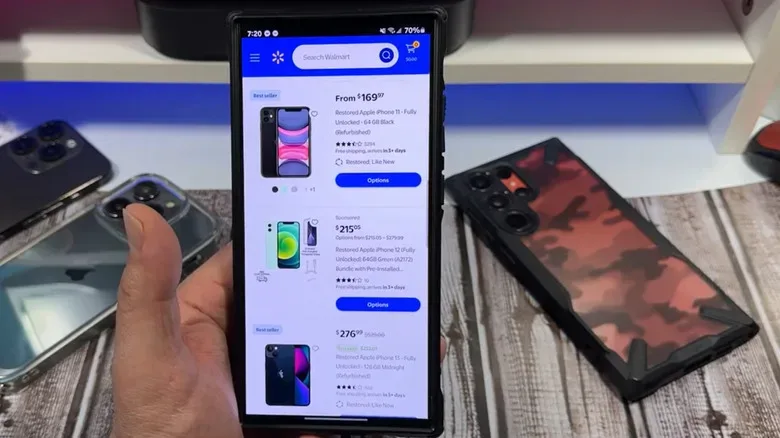
A refurbished iPhone can be a smart way to keep more money available for games, accessories, subscriptions, or the ever-expanding backlog of things you swear you will play someday. It can also reduce the amount of technology headed toward the discard pile. But a low price alone is not a victory screen. When shopping Walmart’s online listings, buyers need to understand that many renewed iPhones are offered through Walmart Marketplace by third-party sellers. That means the phone’s grade, return window, warranty coverage, and even the practical meaning of “refurbished” can differ from one listing to the next.
That does not make a Walmart Marketplace refurbished iPhone inherently unsafe to buy. It means the purchase needs to be treated less like grabbing a sealed new handset from a store shelf and more like examining a used console listing: identify who is selling it, establish its stated condition, and know your exit route if the item is not as promised. The item page holds most of the information needed to make that call, but it is easy to overlook when a tempting price is blinking at you from the screen.
Start with the condition label, not the discount
The most important detail on a refurbished iPhone listing is its condition classification. On Walmart product pages, this generally appears in the Condition area near the main product image and purchase controls. It can affect the expected cosmetics, the battery-capacity standard, and the return terms. A shopper comparing two apparently identical iPhones should not assume they are equivalent merely because the storage capacity and color match.
At the upper end is Restored Premium. This designation is reserved for products sold by manufacturers, manufacturer-authorized sellers, or selected third-party sellers recognized by Walmart. The program describes these devices as restored and tested to a high standard intended to provide near-new performance and dependability. Shoppers should still expect the possibility of light micro-scratches, but the stated target is an excellent screen and body. Restored Premium iPhones are also described as having battery capacity of at least 90% compared with a new iPhone.
That battery figure is a major distinction. Battery health influences how long a phone runs between charges and may affect whether a bargain feels like a bargain after a few months. A 90% threshold does not turn an older model into a new device, nor does it promise the exact endurance of a new handset. It does, however, give buyers a concrete standard to weigh against the asking price.
The next broad classification is simply Restored. These phones are refurbished through authorized partners and are described as inspected, cleaned, and verified, but they sit below the Premium tier. The stated battery benchmark for Restored items is 80% of a new iPhone’s capacity. That could still represent worthwhile value, particularly if the price gap versus a Premium listing is substantial, but shoppers should recognize they are making a different trade-off.
Restored products are further divided into three cosmetic grades:
- Like New: Expected to be in excellent condition, with extremely light micro-scratches that should not be apparent from more than a foot away.
- Good: Expected to have a clean display, small or barely noticeable scuffs, and limited signs of use.
- Fair: Expected to show more obvious wear, including visible scratches or marks that may be felt by touch.
“Fair” is not automatically a bad choice. It is a choice for buyers who can accept obvious cosmetic wear in exchange for a lower price. Someone planning to put the device into a case and use it as a secondary phone may reasonably value function over finish. Someone who wants an immaculate daily driver, or who is buying a gift, should be cautious about paying for a grade that openly advertises noticeable marks.
Related coverage includes What to Check Before Buying a Refurbished iPhone From Walmart.
Know the difference between restored, pre-owned and open box
Marketplace listings can also fall under a pre-owned program. These devices have looser consistency around inspection and quality control, and refurbishing is not necessarily required. In plain terms, pre-owned is a used-phone category rather than a promise of a standardized restoration process. Walmart uses the same Like New, Good, and Fair grading language, but buyers should not read that as identical to the Restored program.
For shoppers whose main objective is the lowest possible cost, a pre-owned iPhone may be appealing. The trade-off is uncertainty: the listing needs extra scrutiny because the device may not have received the same type of refurbishment expected in a Restored tier. Check the condition wording carefully rather than relying on a headline or thumbnail photo.
Open Box is another label that may appear. These units are described as being in excellent condition without signs of use and may arrive in their original or generic packaging. The original accessories are included. This can be an attractive middle ground for buyers who care about a cleaner presentation, but the listing itself should remain the authority on exactly what is included and what return terms apply.
The label is not decorative marketplace language. It is the buyer’s clearest statement of what physical condition and battery baseline the listing is offering.
Check “Sold and shipped by” before adding anything to cart
Walmart acts as the storefront for many third-party refurbished-phone sellers. The company named in the Sold and shipped by section, usually near delivery information, matters. It is the first thing to inspect after confirming the phone’s model, capacity, carrier status, and condition tier.
A familiar household retailer is not guaranteed to appear there, and an unfamiliar company name is not automatic evidence of a problem. What matters is whether the seller’s page provides useful signals. Selecting the seller name can surface contact information, its product catalog, a company description, and public customer feedback. These details give a shopper an opportunity to judge whether the merchant is transparent and established enough for the transaction.
Reviews are useful, but they are not a perfect controller input. Used and renewed electronics naturally produce a mix of outcomes, so a handful of complaints alone does not settle the matter. Instead, look for recurring patterns. Are buyers repeatedly raising issues about the condition grade, missing accessories, battery quality, delayed refunds, or customer-service responses? Or do the complaints appear scattered and specific to expectations that the listing had already disclosed? The difference is important.
It is also reasonable to use the seller’s provided contact details to research the business beyond the Walmart product page. A buyer does not need to become a private investigator with a corkboard and red string. They do need enough confidence that they can identify the merchant, understand its terms, and contact it if there is an issue.
Returns can be more valuable than a slightly lower price
A refurbished iPhone should never be purchased without reading the return label on that exact listing. The return policy can appear near the shipping and seller details and may state a term such as free 90-day returns. While the programs have typical timelines, a product page is where the buyer should confirm the rule for the phone in the cart.
Restored Premium devices generally have a 30-day return window. The Like New, Good, and Fair tiers within the Restored category generally carry a 90-day return period. Pre-owned iPhones generally have 30-day returns. Those windows are not merely small print. They define how much time a buyer has to decide whether the physical condition, operation, and battery behavior meet their needs.
Warranty coverage deserves an equally close read. The warranty may be set by the individual seller, which means it is not wise to assume every renewed iPhone has the same protection. Restored Premium is the notable exception: it comes with a guaranteed one-year warranty. For other offerings, buyers should use the seller information on the product page to determine whether coverage exists and what it actually includes.
Also account for the cost of a bad outcome. Return-processing and refund timing can depend on the seller, how the device is sent back, and the original payment method. Some sellers may charge a restocking fee that reaches 20% of the purchase price. A listing that is a little cheaper can quickly become the more expensive option if its return terms are restrictive.
A practical checkout and arrival checklist
Before ordering, save the item page or take screenshots of the condition, seller, battery standard, return policy, and warranty language. That is a simple record of what was represented at purchase. Confirm whether the phone is Restored Premium, Restored, pre-owned, or Open Box; do not treat those phrases as interchangeable. Then verify the exact cosmetic grade when applicable.
- Read the Condition section and identify the program and grade.
- Compare the stated battery standard: 90% for Restored Premium versus 80% for Restored.
- Open the seller profile and read feedback for repeated, relevant concerns.
- Confirm the return period on the individual listing and look for any restocking-fee language.
- Check warranty coverage, remembering that Restored Premium has a one-year guarantee while other warranties may be seller-specific.
- Keep the packaging and accessories until you have decided to keep the iPhone.
If a return is needed, it can be started through the Walmart.com account by selecting the relevant order and choosing Start a return. Depending on the seller, certain phones may also be eligible for a return at a physical store. Preparing the device properly before sending it back is essential, particularly if it has been set up with personal accounts and data.
Once an iPhone is in hand, owners dealing with payment cards, passes, or tap-to-pay errors can use our practical Apple Wallet troubleshooting guide. The key point before any of that setup begins is simple: buy the listing, not the headline price. A clearly graded phone from a seller with understandable policies and a workable return path is usually the safer value than an ambiguous deal that looks spectacular for five seconds at checkout.