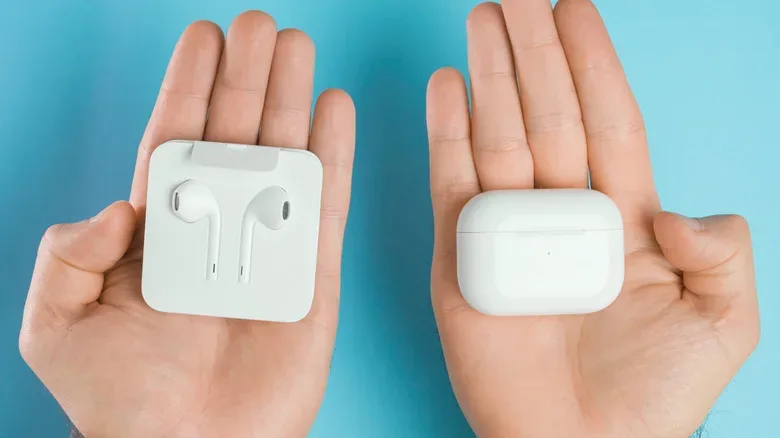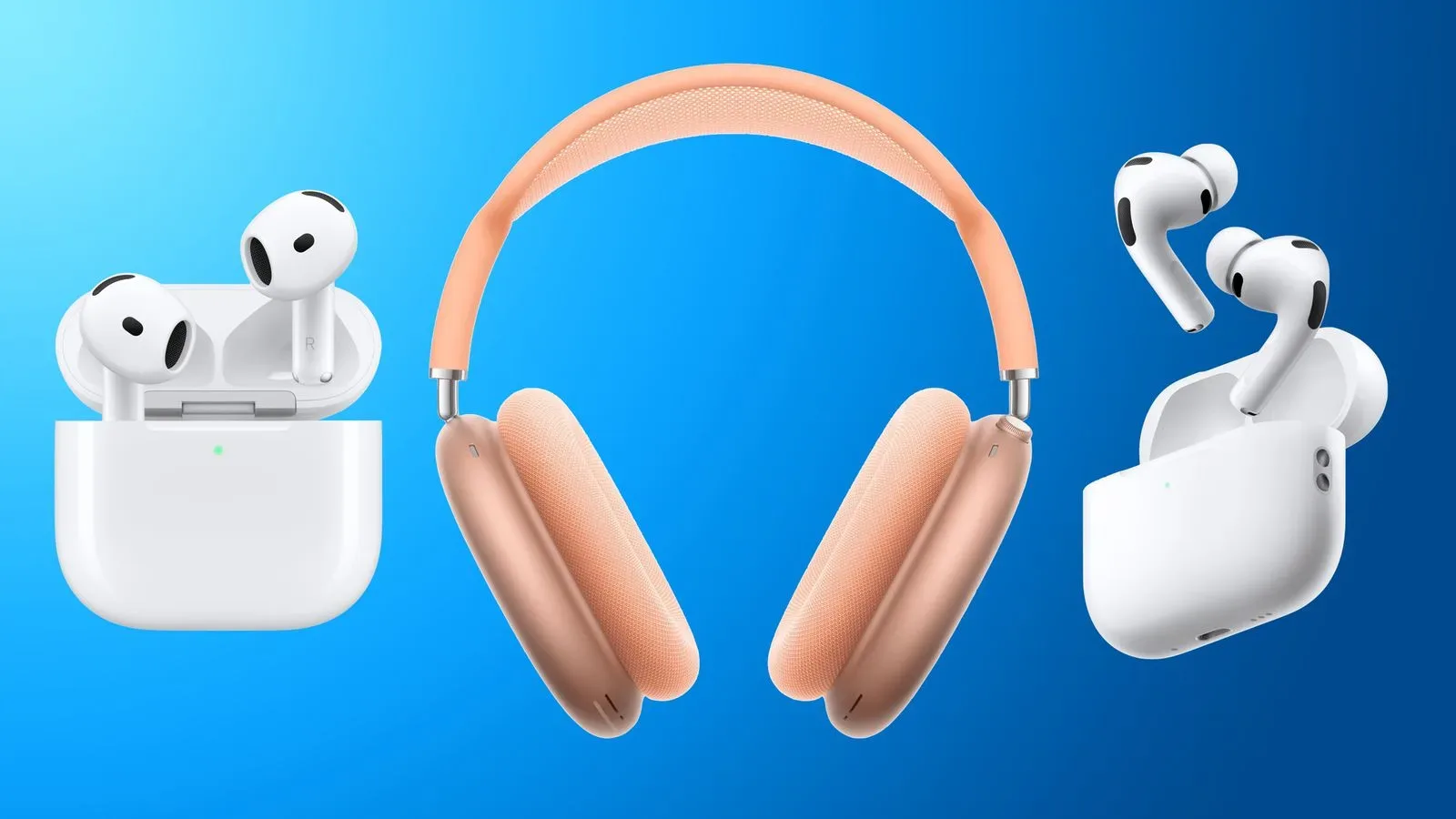
Wireless earbuds have won the convenience war so thoroughly that a cable can now look like an artifact from a different console generation. AirPods turn 10 this year, and the modern versions are built for a world where earbuds are expected to do much more than carry sound from a device to a listener. Noise cancellation, Spatial Audio, health-oriented features and built-in live translation put Apple’s wireless range in a markedly different category from its old-school EarPods.
Yet Apple still sells EarPods, and that continued place in the lineup is not merely a nostalgia exhibit. At $19, the wired earbuds remain a practical purchase for players, commuters, students and anyone who has watched a pair of wireless buds choose the worst possible moment to run out of power. They are not an AirPods substitute in every situation. They are, however, an unusually simple bit of equipment in a gadget ecosystem that increasingly asks for charging, pairing and another app-sized dose of attention.
For gaming-minded buyers, that simplicity matters. A wired pair that can live in a backpack, desk drawer, travel case or handheld console pouch has a clear job: plug in, hear audio, use the inline microphone, and get on with it. There is no battery percentage to check before a session and no Bluetooth connection to negotiate while friends are waiting in a lobby.
AirPods and EarPods are built for entirely different jobs
The word “earbuds” makes AirPods and EarPods seem closer than they really are. AirPods are feature-heavy wireless products. The AirPods Pro 3, for example, can track heart rate during workouts. Across the contemporary AirPods family, Apple also emphasizes features such as noise cancellation, Spatial Audio and live translation. Those functions can significantly improve the experience for people who want isolation in loud places, enhanced playback features, or a more flexible set of controls.
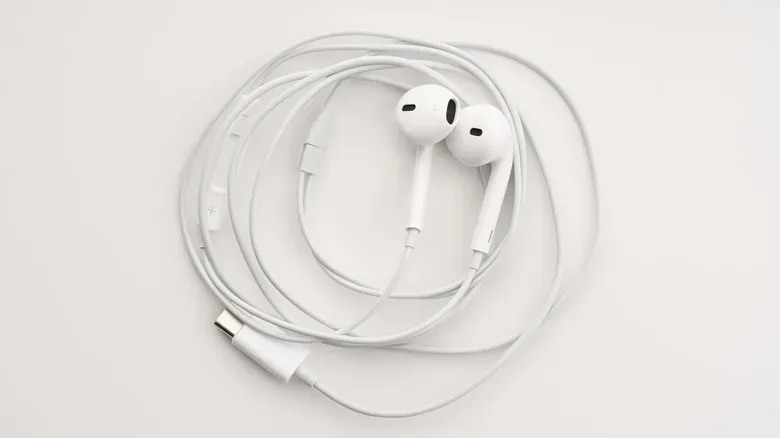
EarPods do not attempt to compete on that terrain. They are wired earphones with a built-in microphone and conventional controls, without wireless pairing, voice-command ambitions or advanced gesture systems. Their value is rooted in predictability rather than technological range.
That distinction should shape a purchase decision. Someone looking for noise cancellation on a plane, feature-rich listening on the move or the newest Apple audio extras should not buy EarPods expecting a bargain version of AirPods. They do not offer those capabilities. The point is almost the opposite: EarPods are for people who occasionally prefer a direct physical connection over another smart accessory.
The cable is a feature, not just a throwback
For all the jokes made about tangled cords, the cable solves several problems at once. EarPods do not have batteries, so they do not need a charging case and cannot be left inactive for days only to greet their owner with a low-power warning. They are ready as long as the connected device has power.
A wired connection also avoids Bluetooth pairing issues. There is no search screen, no reconnect routine and no uncertainty over which nearby device a set of earbuds has decided to join. Passing one earbud or the entire pair to another person is equally straightforward: unplug it and hand it over. That may sound almost comically basic in 2026, but basic can be exactly what is wanted when a call, match or meeting is about to begin.
Related coverage includes Why Apple’s Wired EarPods Still Have a Place Beside AirPods.
The microphone is another meaningful part of the case. Wired audio can provide better voice quality than Bluetooth audio, even as wireless microphone performance has improved. Anyone who regularly joins voice chat, takes a work call from a laptop, or needs to speak clearly without unpacking a larger headset may find the tiny inline mic more useful than its modest appearance suggests.
EarPods are not trying to win a specifications battle. Their appeal is that there is barely a battle to have: connect them and they work.
Three connectors make the old design surprisingly adaptable
Apple offers EarPods in 3.5mm, Lightning and USB-C versions. That is a notable practical advantage for a low-cost accessory because it allows buyers to match the earphones to the devices they actually use. The 3.5mm option suits hardware that still retains a traditional headphone socket. Lightning serves compatible older Apple hardware, while USB-C brings the same familiar EarPods shape to current devices using that connector.
For a player who moves between a handheld, phone, laptop or older gear, connector choice is not a minor detail. It determines whether an inexpensive backup can be used immediately or becomes another item waiting on an adapter. A separate pair for different devices is also less extravagant when each set costs $19.
There is a caveat for modern iPhone owners. Since current iPhones do not include a headphone jack, Lightning or USB-C EarPods occupy the device’s only relevant port while in use. That means charging the phone and using the earbuds at the same time is not possible without additional hardware. A splitter adapter can address the limitation, but it adds another object to carry and makes the setup less clean.
It is worth treating that compromise honestly. For long trips, marathon gaming streams or any situation where phone charging and wired listening must happen concurrently, wireless earbuds may be the neater choice. But as an emergency pair or a short-session solution, the one-port limitation will often be less important than never having to charge the earphones themselves.
The $19 question changes the math
The least expensive AirPods currently cost $129. EarPods at $19 are therefore not just cheaper; they occupy a completely different buying category. They can be a spare pair rather than a precious accessory. They can stay at a workstation, in a travel bag or alongside a handheld without creating the anxiety normally attached to misplacing an expensive wireless bud.
That affordability is especially relevant because replacing a lost AirPod can cost $69 or more. Losing a $19 wired pair is still annoying, but it is a very different kind of annoyance. Buyers do not need to pretend that EarPods deliver premium audio or the feature set of more expensive wireless models to recognize the appeal of that difference.
- Choose EarPods first if a no-charge backup, quick plug-in use, direct voice calls or a low replacement cost matter most.
- Choose AirPods first if noise cancellation, wireless freedom, Spatial Audio, health features and Apple’s newer audio tools are central to the purchase.
- Keep both if the goal is to cover different situations rather than force one product to solve every audio need.
That third route may be the most sensible for plenty of people. AirPods can remain the everyday wireless choice, while EarPods serve as the reliable reserve pair for a dead battery, a forgotten charging case or a device that simply works better with a cable. The wired set does not have to overthrow the wireless set to justify its existence.
A useful fit for handheld and PC routines
Not every gaming setup needs a large over-ear headset. Sometimes a player only needs sound and a microphone without adding another device to charge. EarPods can occupy that lightweight role, particularly for portable play, chat, media viewing or a quick session away from a usual desk setup. Their appeal rises when the alternative is using a wireless accessory whose remaining charge is unknown.
Of course, compatibility should always be checked against the specific hardware and connector on hand. EarPods are available in several connection types, but a particular console, handheld or computer may have its own port arrangement and audio support considerations. The strength of the EarPods proposition is not universal compatibility by magic; it is the availability of versions that can cover a broad range of gadgets when selected carefully.
They also fit a broader lesson familiar to anyone who has dealt with portable hardware: the most advanced solution is not always the one that gets a person back to playing fastest. Sometimes the reliable fix is as unglamorous as a cable, and sometimes a broader device issue is solved by the equally humble step of starting fresh. For more on that second kind of troubleshooting, see why restarting a Steam Deck or ROG Ally can resolve more problems than expected.
EarPods remain a sensible niche purchase
AirPods are better equipped products in most of the categories shoppers typically associate with premium modern earbuds. Noise cancellation alone is a major reason to go wireless for many people, and Apple’s additional features widen the gap further. EarPods cannot close it, nor do they try.
What they offer instead is unusually durable usefulness for $19: no charging routine, no Bluetooth pairing, a wired microphone, and versions with 3.5mm, Lightning or USB-C connections. The design’s limitations are clear, including the inability to charge a modern iPhone through the same port without a splitter. But its strengths are clear, too.
In a world of sophisticated earbuds, the humble cable still has a role. EarPods are a low-cost answer for anyone who values certainty over spectacle—or simply wants a backup plan for the inevitable day their wireless earbuds decide the match, meeting or commute would be an ideal time to die.