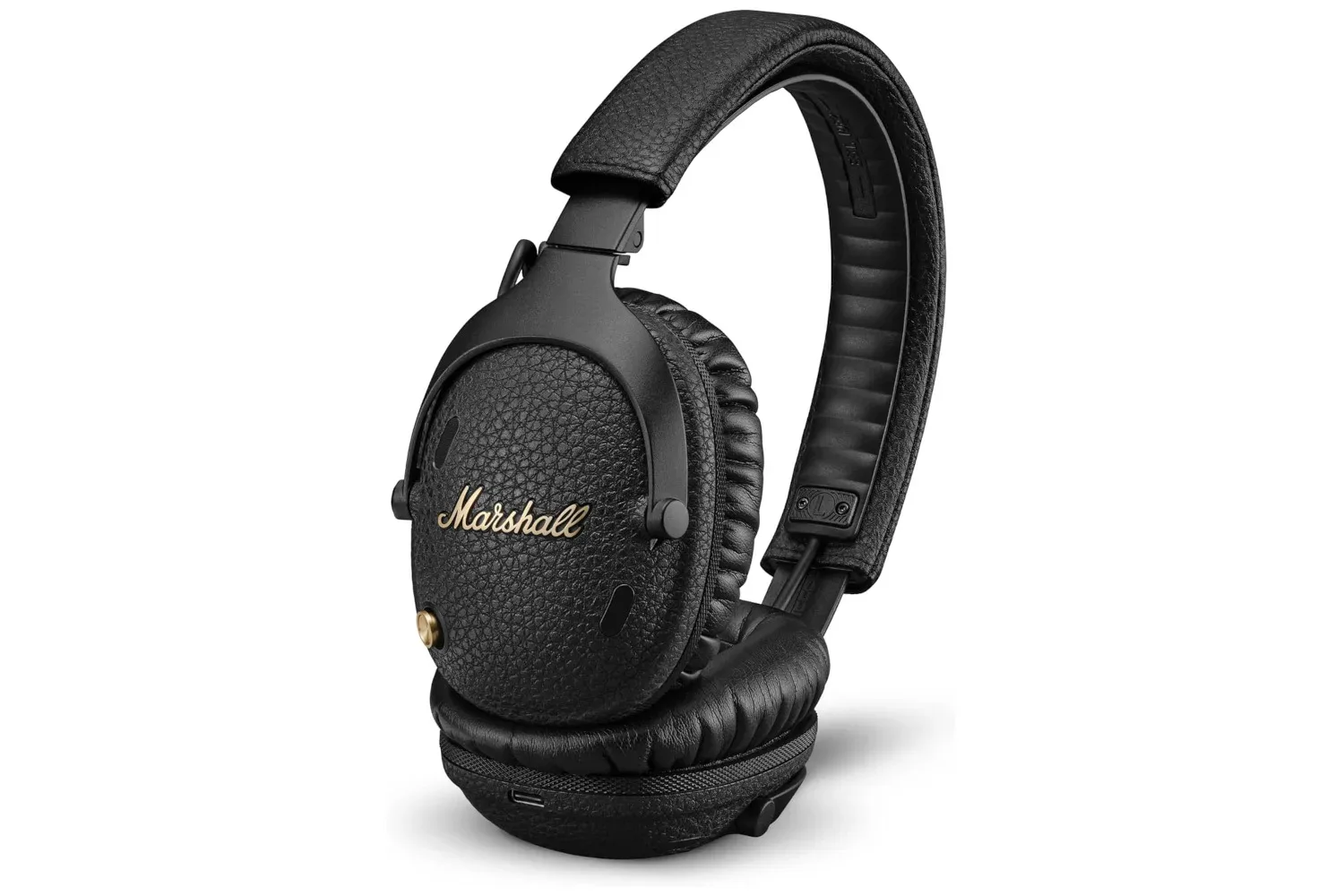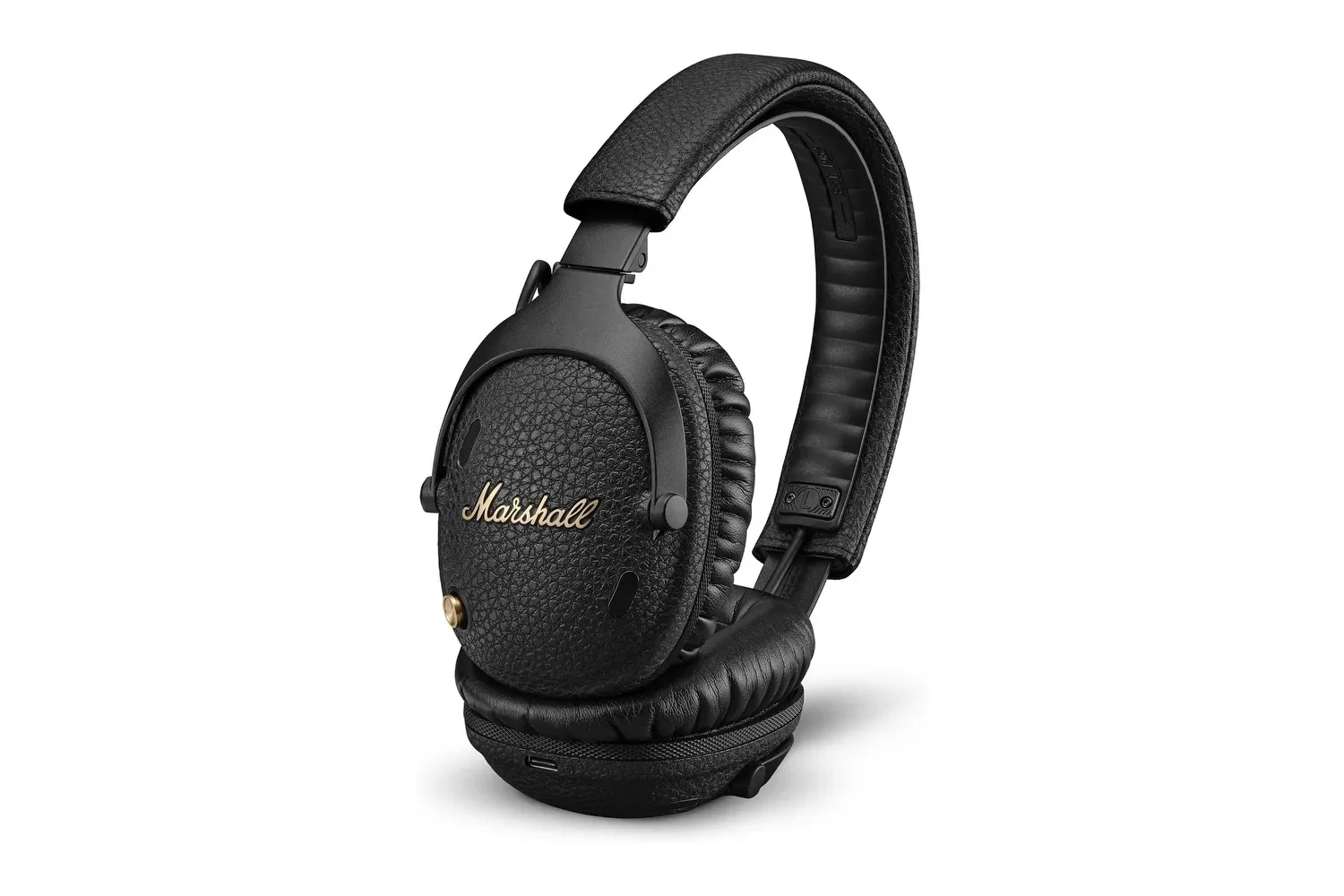
Marshall’s Monitor III ANC wireless over-ear headphones have been listed at $200, a reported $80 reduction from a usual $280 price. That is a 29% cut, but the more lasting reason to look at the deal is not the temporary number on a retailer page: it is the unusually large battery claim attached to the headphones.
Marshall rates the Monitor III ANC for up to 70 hours of playback with active noise cancellation switched on, rising to up to 100 hours with noise cancellation off. For people choosing headphones for commutes, travel, long work sessions, or simply fewer charging rituals, that stated endurance is the model’s clearest distinction. Pricing and stock can change, so prospective buyers should confirm the current listing, seller, and final checkout price before treating $200 as available.
The important figures at a glance
- Reported deal price: $200
- Usual price cited: $280
- Reported savings: $80, or 29%
- Battery estimate with ANC: up to 70 hours
- Battery estimate without ANC: up to 100 hours
- Quick-charge estimate: 15 minutes for about 12 hours of playback
- Full recharge estimate: about 2.5 hours
- Drivers: 32mm dynamic drivers
- Wireless: Bluetooth 5.3 with multipoint pairing
The word up to matters on every battery specification. It describes a maximum measured outcome rather than a promise that every listener will receive the same result. Volume, whether ANC is enabled, use of spatial processing, and general listening habits can all make a real-world routine different from a headline estimate. Still, a 70-hour ANC-on claim frames the Monitor III ANC as a headphone built around going a long time between charges, rather than merely surviving a day away from an outlet.
What ANC and Transparency mode are for
ANC stands for active noise cancellation. Rather than physically sealing out all sound, the system is intended to reduce persistent ambient noise, such as traffic, aircraft noise, and an office’s background hum. That can make a podcast or playlist easier to hear without turning volume excessively high. It does not mean the user becomes completely isolated from their environment, and it is not a substitute for awareness in situations where outside sound matters.
That is where Transparency mode comes in. The Monitor III ANC can let selected environmental sound through, with examples including an intercom announcement or a colleague speaking nearby. Marshall’s app provides three ANC modes and three Transparency modes, adding a level of adjustment beyond a simple on/off toggle. In practical terms, that means a listener can decide whether the moment calls for stronger isolation or more awareness, rather than removing the headphones whenever someone needs their attention.
The headphones also have a battery-preservation setting. The provided details do not define precisely how that setting operates, but its stated purpose is to help extend battery life. It is worth separating that long-term battery-health goal from the playback estimate: preservation is about caring for the battery over time, while the 70- and 100-hour figures describe use between charges.
Marshall’s app features explained without the marketing fog machine
Several of the Monitor III ANC’s software features are designed to alter how the sound is presented. Their usefulness will vary by listener and material, so they are better understood as controls to explore than automatic upgrades for every song, game, or spoken-word program.
Soundstage spatial audio
Soundstage spatial audio is intended to create the sense of listening in a virtual room around the listener’s head. Users can set the virtual room size. In plain language, the feature tries to make audio feel less like it is coming from two small points beside the ears and more like it occupies a surrounding space. Listeners who enjoy added atmosphere may find that appealing; others may prefer conventional stereo presentation. The key advantage here is choice, assuming the effect suits the content.
Adaptive Loudness
Adaptive Loudness automatically adjusts the equalization, or EQ, according to listening volume. EQ refers to the balance of different frequency ranges: bass is the low end, treble is the high end, and voices generally sit in the middle of that spectrum. At lower volumes, a mix can feel less full. Marshall says Adaptive Loudness compensates by maintaining bass-and-treble balance as volume changes.
That is potentially relevant for late-night listening or shared spaces, where raising volume may not be an option. It also gives the Monitor III ANC a more specific aim than a vague promise of “better sound”: the system is meant to keep music from losing weight and clarity when played quietly.
Manual EQ remains available
The Marshall app also lets owners customize the EQ themselves. A listener focused on rock or bass-heavy music may choose to lift the low end. Someone prioritizing spoken podcasts may instead prefer a flatter frequency response to focus on vocal clarity. Neither setting is universally correct. A manual EQ is useful because it acknowledges that a music listener, a frequent caller, and a podcast fan may not want the same tonal balance.
For another example of how audio hardware features and ratings are worth translating into practical use rather than merely reciting, see our look at the CMF by Nothing Speaker S and what its IP68 rating means.
Controls, connectivity, and wired fallback
The Monitor III ANC uses a gold multidirectional control knob for volume adjustment, track skipping, and answering or ending calls. A physical control can be especially useful while walking or travelling, when a listener may prefer an identifiable button or knob to touchscreen gestures. It is joined by a customizable M-button, which can be assigned to EQ presets, Spotify Tap, or a voice assistant.
Bluetooth 5.3 is the wireless connection standard named for the headphones. Multipoint pairing means the set can connect with two devices, useful for someone who moves between a computer and a phone. It does not remove the need to manage what is playing, but it is intended to reduce the friction of switching contexts.
The headphones are also described as LE Audio- and Auracast-ready. LE Audio is a newer Bluetooth audio framework, while Auracast is associated with the potential to share audio broadcasts. The supplied information characterizes those capabilities as opening future possibilities for audio sharing, so they should not be interpreted as a detailed promise of a particular present-day use case.
There is a wired option, too: Marshall includes a USB-C-to-3.5mm cable for connection to a compatible device. That is a useful fallback for listeners who want a direct connection, though compatibility remains important. A 3.5mm plug only helps when the device or its setup supports that connection.
Design priorities: portable over-ear headphones, not just portable audio
Marshall positions the Monitor III ANC as rugged and foldable, with a redesigned headband aimed at comfort during travel. Foldability matters for an over-ear design because the earcups are larger than those of earbuds; reducing their footprint can make them easier to pack. The stated audience—daily commuters, regular travelers, and people working from home—also clarifies why comfort, long battery life, noise control, and multipoint connectivity appear together.
The 32mm dynamic drivers are the components that convert electrical audio signals into sound. Their stated size is one technical detail, but it should not be treated as a stand-alone quality score. Sound is shaped by tuning, fit, processing, and the material being played, alongside driver design. Here, the more concrete purchasing case is the bundle of features: adjustable noise control, app-based EQ, spatial processing, physical controls, two-device pairing, a wired cable, and battery claims designed for extended use.
Who should weigh this $200 listing most seriously?
The Monitor III ANC makes the most straightforward case for someone who dislikes frequent recharging and wants over-ear wireless headphones with active noise cancellation. The 15-minute charge estimate of about 12 playback hours further supports that use case: if the headphones are low before a journey or workday, a short charge may be more helpful than waiting for the approximately 2.5-hour full recharge.
It could also fit listeners who actively use sound controls instead of leaving every setting at default. There are three ANC modes, three Transparency modes, EQ presets or custom equalization, Adaptive Loudness, and adjustable Soundstage room size. That is a lot of personalization for a listener willing to use the app. Conversely, buyers who only want the smallest possible travel audio gear should remember that these are foldable over-ear headphones, not compact earbuds.
At the reported $200 price, the decision is ultimately less about a clearance label than whether the Monitor III ANC’s stated priorities match your own. If long playback time, travel-oriented design, controllable ambient sound, and flexible listening modes top the list, the specification sheet is unusually focused. If those needs are secondary, the discount alone is not a reason to assume the fit will be right.
Shop the products
Check current price, model and availability at the retailer.