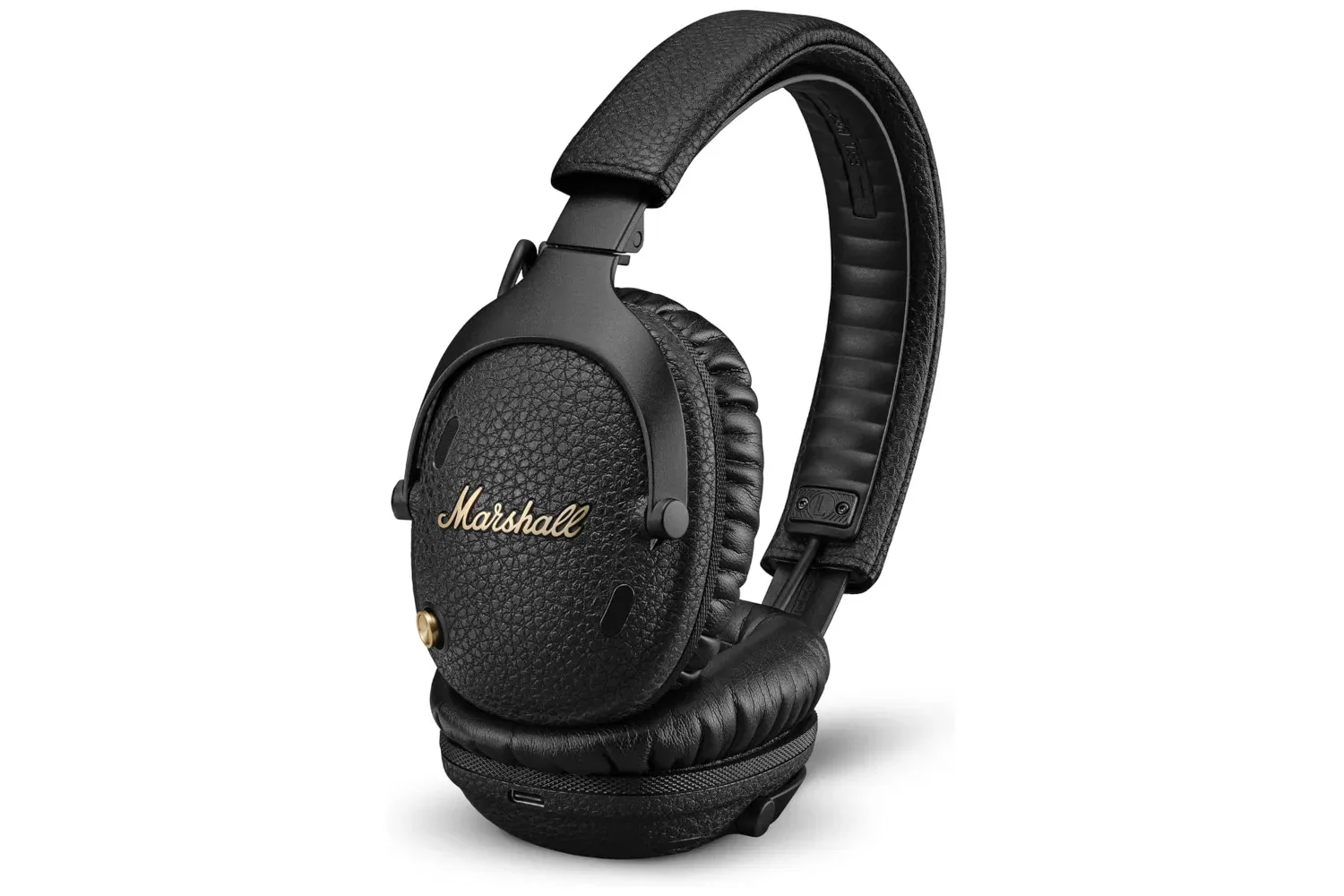
Marshall’s Monitor III ANC headphones were listed at $250 in a reported Amazon promotion, compared with a stated usual price of $280. That is a $30 reduction, or roughly 11% off the cited regular price—not an enormous cut, but a meaningful change for a premium over-ear wireless headphone.
The headline feature is the claimed battery endurance: more than 100 hours on a full charge. The headphones are also described as having active noise cancellation, a transparency mode, a microphone for calls, a lightweight foldable design, and Marshall’s familiar amplifier-inspired visual identity.
As with any retailer promotion, the price and stock can change without warning. Shoppers should confirm the live listing, final price, seller, delivery terms, and return policy before treating $250 as an available deal.
What the Monitor III ANC feature list means in daily use
The “ANC” in the product name stands for active noise cancellation. This is a system designed to reduce unwanted outside sound while listening. It is especially relevant for steady background noise—think fans, engine hum, transit rumble, or the general wash of activity in a busy room. For players, that can make it easier to hear quieter details in a game soundtrack, dialogue, or voice chat without simply turning volume higher.
ANC is not the same thing as complete silence, and it should not be treated as a replacement for awareness in situations where hearing the environment matters. That is where transparency mode comes in. Transparency mode uses the headphone microphones to bring outside sound back into the listening experience. In practical terms, it is intended to let a wearer hear someone speaking nearby or notice what is happening around them without necessarily removing the headphones.
The two modes address opposite needs, and both are useful in a headset that may move between gaming, music, calls, commuting, and desk work. Noise cancellation is the “leave me alone, I am trying to hear this boss dialogue” setting. Transparency is the “I still need to hear the doorbell, a teammate in the room, or somebody asking whether I have seen the controller” setting.
Battery life is the standout claim
More than 100 hours from a full charge is the strongest specification in the reported feature set. Battery life affects a wireless headphone experience in a particularly unglamorous but important way: it determines how often the device becomes another thing that needs charging. A high endurance claim potentially means fewer interruptions between sessions and less pressure to remember a cable before leaving home.
It is worth reading that number carefully. The information available identifies it as an “over 100 hours” full-charge claim, but does not provide the precise test conditions behind it. Features such as active noise cancellation can affect battery draw, and real-world results naturally depend on listening volume, microphone use, wireless behavior, and how often those features are enabled. The sensible interpretation is that battery life is positioned as a major strength, rather than assuming every usage pattern will produce one exact figure.
Related coverage includes Marshall Monitor III ANC Headphones Drop to $250 in Limited Amazon Deal.
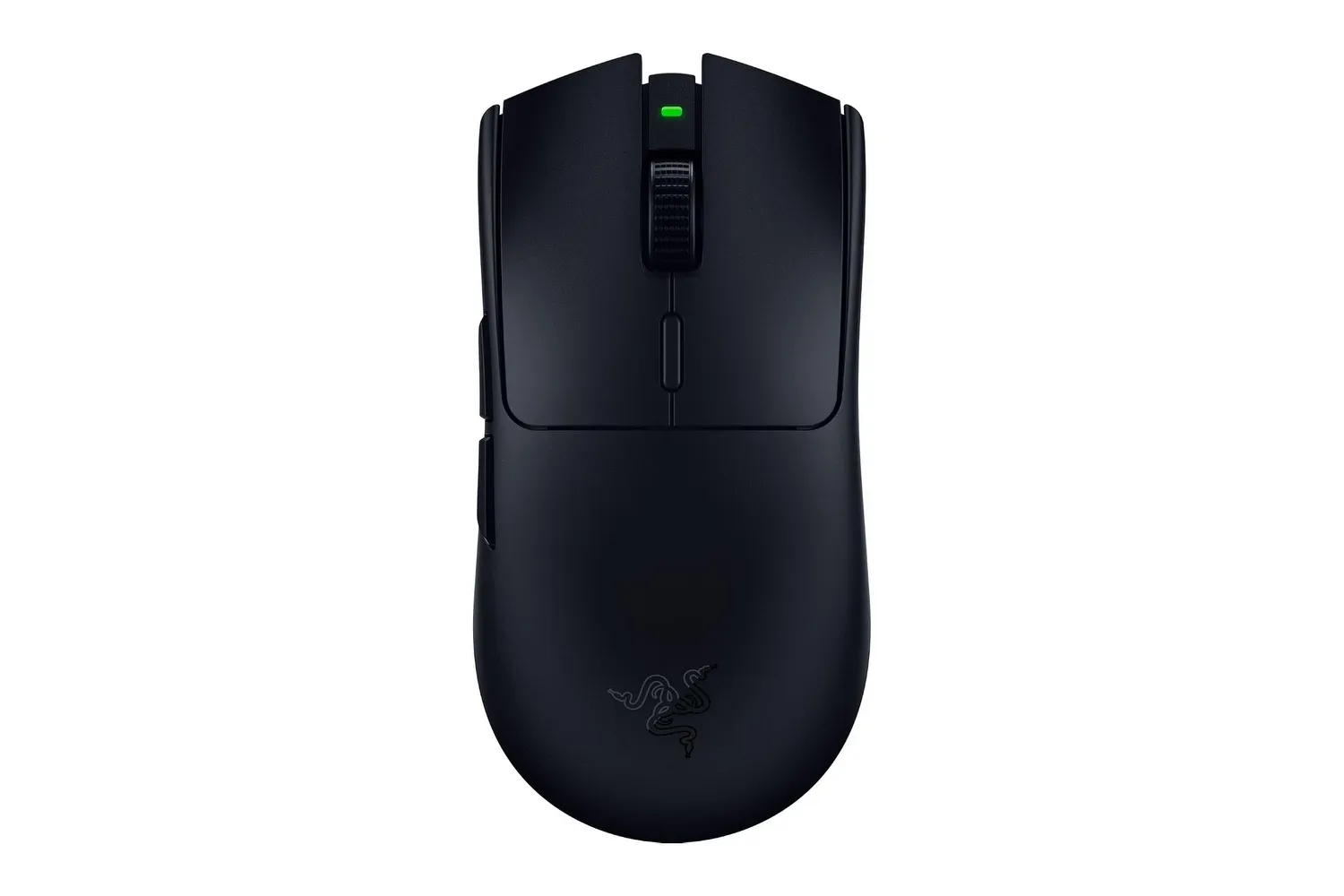
For a PC setup, long battery life can be just as valuable as flashy RGB hardware: it cuts down on friction. Anyone refreshing their desktop accessories may also be interested in the current deal coverage around the Razer Viper V3 HyperSpeed, another wireless-focused peripheral where reducing charging hassle is part of the appeal.
Foldable construction adds a practical advantage
The Monitor III ANC headphones are described as foldable, which matters more than it may initially sound. Full-size over-ear headphones are generally more cumbersome to transport than earbuds. A folding mechanism can make them easier to put in a backpack or carry alongside a handheld, tablet, laptop, or console accessories.
The report also characterizes the set as lightweight. Comfort is subjective, so that description is not a guarantee that every listener will enjoy an all-day fit. Head shape, glasses, ear-cup pressure, heat, hairstyle, and movement all affect comfort. Still, lightweight construction and a portable folding design point toward a product intended for extended, everyday wear rather than only occasional listening at a fixed desk.
Calls are covered by an included microphone. That makes the headphones potentially more versatile for everyday communication, although the available information does not specify microphone pickup quality, connection options, codecs, wired use, platform-specific support, or gaming-chat compatibility. Buyers who need a headset for a particular console, PC setup, or voice-chat service should verify those details directly in the product listing before purchase.
Marshall’s look is part of the proposition
Marshall is closely associated with amplifiers, and the Monitor III ANC is positioned around that rock-oriented identity rather than a minimalist, anonymous tech aesthetic. That does not establish an objective sound advantage by itself—design branding and audio performance are separate questions—but it does explain why the headphones may appeal to listeners who want their hardware to have more visible character.
The available description emphasizes audio quality, strong noise cancellation, and a “classic rock” appearance. Those are broad strengths rather than a full technical specification sheet. There are no supplied details about driver size, frequency response, Bluetooth version, supported codecs, charging speed, water resistance, latency, app controls, equalizer settings, multipoint pairing, or included accessories. Those omissions do not mean the features are absent; they simply cannot be assumed from the information available.
How to judge the $250 price
At the stated $280 usual price, a $250 promotion is a $30 saving. That makes this a modest discount, not a once-in-a-generation clearance price. The value argument therefore rests largely on whether the Monitor III ANC already matches a buyer’s needs: over-ear fit, wireless portability, active noise cancellation, transparency mode, calling support, folding construction, long claimed runtime, and Marshall styling.
For someone who wants all of those traits, saving $30 is straightforward. For someone mainly chasing the lowest possible price, or who needs a confirmed feature absent from the supplied details, the reduction alone is not enough reason to guess. Checking the retailer page for the exact model, current price, compatibility, and terms is the safer move.
Who should consider it—and who should verify first
- Potentially a good match: listeners who prioritize exceptionally long claimed battery life, over-ear noise cancellation, travel-friendly folding, and Marshall’s amp-inspired design.
- Worth a closer look for: people splitting time between music, games, calls, and general computer use, since the reported feature set includes both environmental modes and a microphone.
- Verify before buying: console and PC connection support, preferred chat functionality, exact included accessories, live sale price, and return conditions.
- Do not assume: a particular wired mode, codec, water-resistance rating, app feature, or specific gaming performance, as those details were not provided.
The key appeal is clear: a portable pair of Marshall-branded ANC headphones with a claimed 100-plus-hour battery life was listed for $250 rather than $280. It is a sensible deal to investigate for shoppers already interested in that balance of endurance, isolation, awareness controls, calls, and distinct visual styling. The final decision should come after confirming the current retailer listing rather than relying on a temporary price report.
Shop the products
Check current price, model and availability at the retailer.