Battery shopping becomes unnecessarily confusing the moment a package says “lithium.” For gaming households, that confusion matters: one drawer may hold AA batteries for a remote or wireless mouse, a rechargeable controller with a built-in battery, and perhaps a handheld or accessory with a removable pack. They do not all use the same technology, they cannot all be charged the same way, and treating them as interchangeable can be unsafe.
The useful starting point is not “which chemistry is best?” It is what does the device require? Alkaline batteries, disposable lithium AA or AAA cells, rechargeable nickel-metal hydride (Ni-MH) batteries, and lithium-ion (Li-ion) packs each suit different jobs. The right choice depends on the device’s battery compartment, its power demand, whether it will be used frequently, and what the manufacturer says it supports.
The three battery labels most easily confused
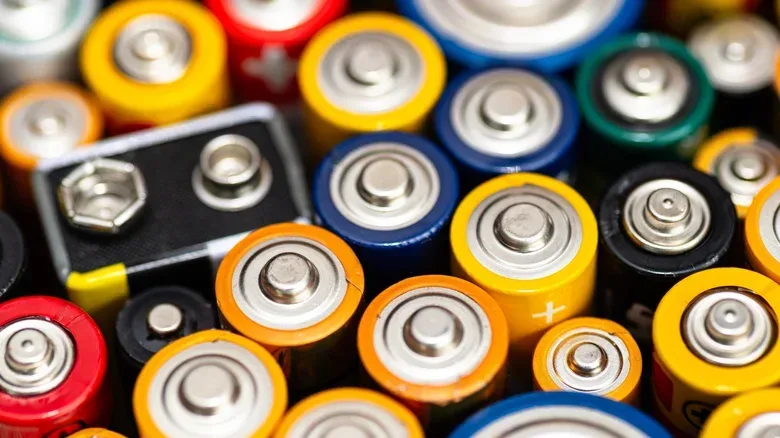
Alkaline is the familiar disposable format. It commonly appears as AA, AAA, C, D and 9-volt batteries, and it is built for devices that use a comparatively small amount of power over time. TV remotes, clocks, flashlights and wireless mice are typical examples. Alkalines are widely available, relatively inexpensive, and useful to keep in reserve because they remain viable after sitting unopened for months.
Disposable lithium is also a single-use battery, even when it is labeled AA or AAA and looks much like an alkaline cell. In this context, “lithium” does not mean a rechargeable Li-ion cell. Disposable lithium AA and AAA batteries can serve as 1.5-volt alternatives to alkaline equivalents, but they cost more. Their advantages are most relevant in demanding circumstances: equipment that burns through alkalines, emergency gear, outdoor use, or environments ranging from roughly -40 to 140 degrees Fahrenheit.
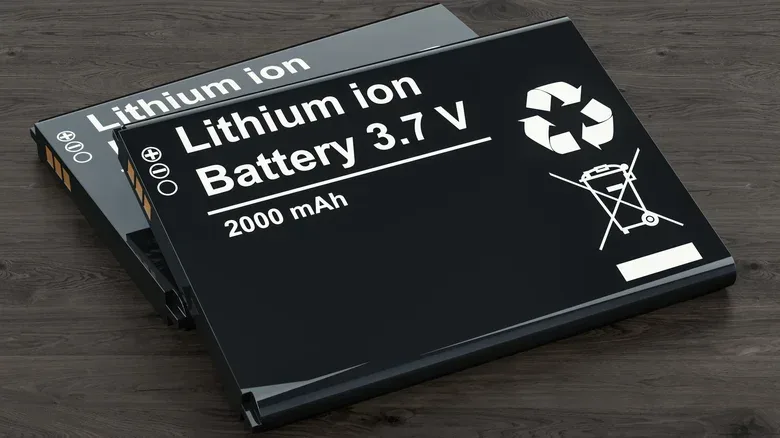
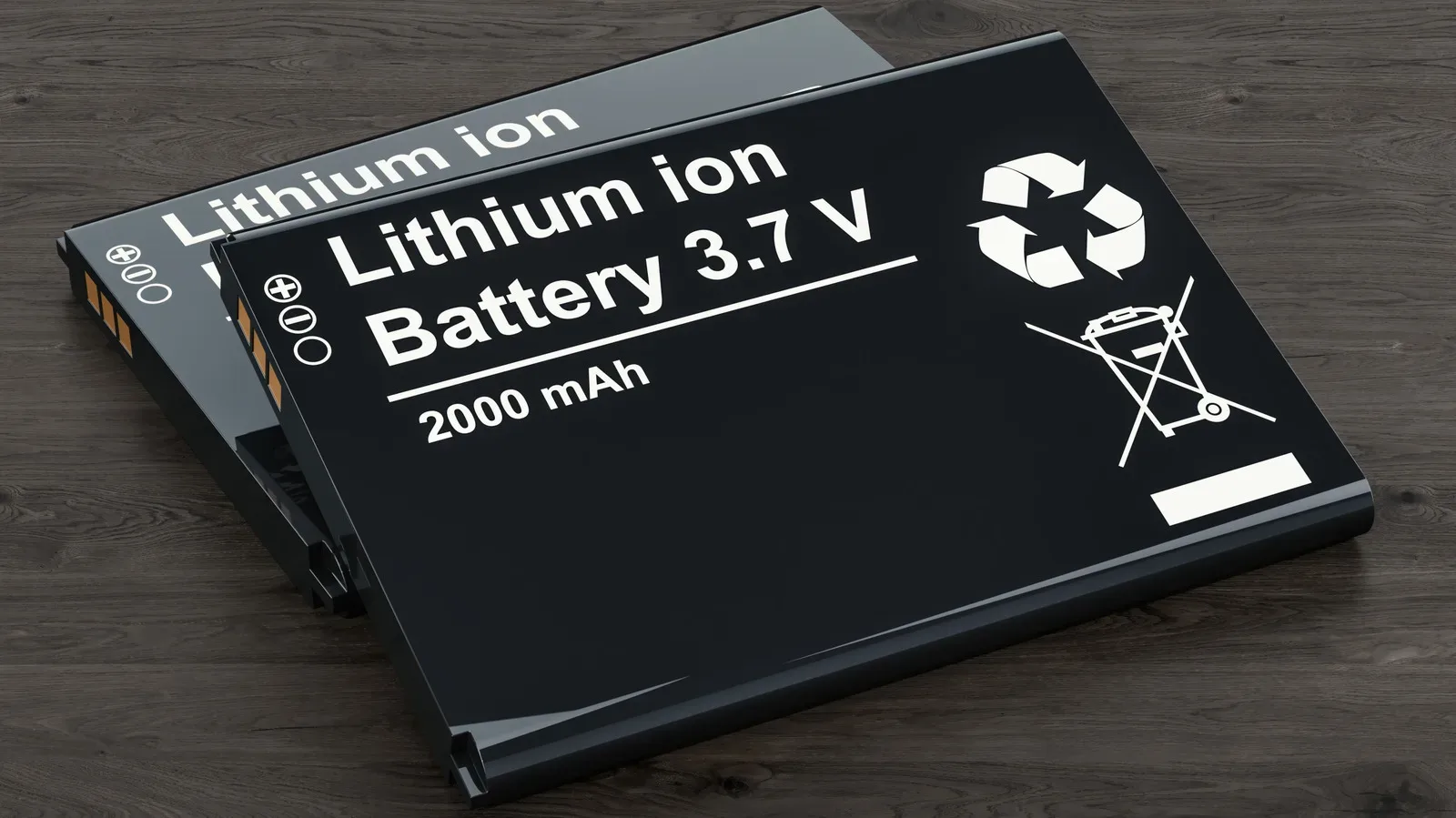
Lithium-ion, often shortened to Li-ion, is the rechargeable technology commonly found inside smartphones, laptops, cameras, game controllers and detachable power-tool batteries. Its major benefit is energy density: it can store a substantial amount of energy relative to its physical size. That makes compact rechargeable devices practical. But it also means a Li-ion battery is generally part of a designed charging system, rather than a loose cell to substitute casually.
The shared word “lithium” is the trap. A disposable lithium AA may fit where an alkaline AA goes, subject to device compatibility. A Li-ion battery pack is a different proposition entirely. Its shape, voltage, terminals and charging needs are tied to the product it was designed for.
For gaming gear, start with the battery compartment
Before buying anything, check whether the device takes removable AA or AAA batteries, uses a dedicated rechargeable pack, or has a built-in battery. This simple distinction answers most of the question.
- Devices using AA or AAA cells: Alkalines are usually the practical default for low-drain use. If batteries are being replaced constantly, rechargeable Ni-MH AA or AAA cells may be the better routine option.
- Devices with a built-in rechargeable battery or proprietary pack: These are typically Li-ion systems. Use the intended charging arrangement and replacement pack, rather than trying to adapt ordinary household batteries.
- Occasional-use, emergency or weather-exposed equipment: Disposable lithium AA or AAA cells may be worth considering where the device is confirmed compatible, particularly when temperature extremes or long storage are factors.
A wireless controller can sit in either of the first two categories. Some use loose AA batteries, while others are built around rechargeable packs. That is why “my controller needs lithium batteries” is not precise enough to guide a purchase. The manual and the markings in the battery compartment are the authority. The same basic check is useful when setting up PC peripherals or deciding which cells to keep beside a console. It is also worth remembering that features such as remappable controls do not tell you anything about a controller’s power system; they are separate design choices, as seen in coverage of remappable controls in a recent PC game update.
Why alkaline remains the sensible default for low-drain devices
Alkaline batteries are not obsolete just because rechargeable products dominate modern gaming hardware. Their strengths are simplicity and convenience. For a remote, clock or wireless mouse that uses power gradually, buying low-cost disposable cells and replacing them when necessary is often the least complicated approach.
They are also useful as backup power. A sealed package can stay in a drawer, ready for a device that needs a quick AA or AAA replacement. For households that only occasionally use a battery-powered accessory, a rechargeable system can introduce its own management task: batteries need to be charged in advance and kept together with their charger.
That said, alkaline batteries are largely single-use. If a particular device empties them every few days, repeatedly buying replacements becomes inconvenient and wasteful. That is the point where another option deserves serious consideration—not necessarily Li-ion, but Ni-MH.
Rechargeable AA and AAA batteries are the practical middle ground
Rechargeable Ni-MH batteries occupy an important niche. They are not Li-ion, but they are available in ordinary AA and AAA sizes and can work in many devices designed for disposable cells. For people who rotate through several sets of batteries in wireless accessories, the practical advantage is straightforward: keep one charged set ready, swap it in, then recharge the depleted set.
There is one specification worth noticing: rechargeable Ni-MH cells typically provide 1.2 volts, whereas common disposable AA and AAA batteries are generally 1.5-volt cells. Many everyday devices work with Ni-MH batteries, but a small number are particularly voltage-sensitive. This is why compatibility guidance from the device manufacturer should come before assumptions based on physical size alone.
Ni-MH is therefore not a universal “upgrade,” but it can be a smart system for frequently used devices that are designed to accept it. The term rechargeable by itself is not enough. It is the chemistry, voltage and supported charger that determine whether a battery is appropriate.
Disposable lithium is specialized, not a blanket performance upgrade
Disposable lithium AA and AAA batteries have a legitimate role, but their higher cost means they make most sense where their specific strengths matter. Devices that rapidly consume alkaline cells, emergency equipment kept for a critical moment, outdoor gear, and equipment used in extreme heat or cold are the clearest examples.
For a device that calls for alkaline cells, however, a lithium replacement should be used only if the manufacturer says it is compatible. Physical fit and a familiar AA or AAA label do not automatically prove that substitution is suitable. Battery choice is not merely about squeezing out more runtime; it is about giving a product the type of power it was designed to receive.
This point is especially important because disposable lithium cells must never be treated as rechargeable Li-ion batteries. Do not put disposable lithium batteries into a charger intended for rechargeable cells. Do not attempt to charge alkaline batteries, either. Both approaches can lead to overheating and potentially a fire.
Li-ion packs need the charging system made for them
Li-ion technology enables the compact rechargeable hardware people use every day. High energy density is the central technical benefit: more energy can be stored in a relatively small battery, supporting portable devices that need meaningful runtime without becoming excessively large.
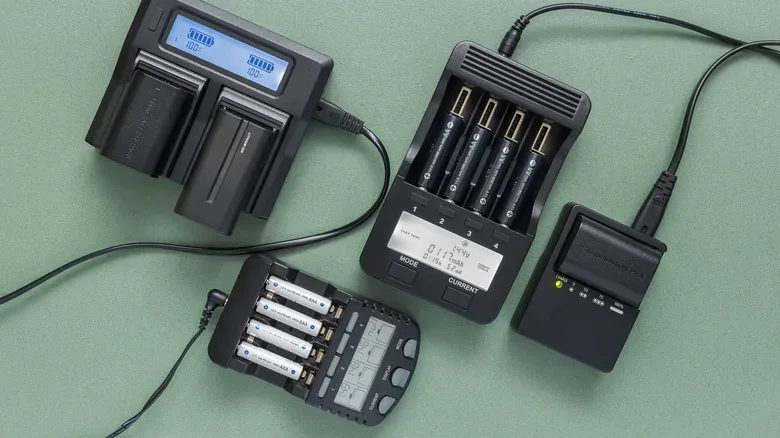
In exchange, Li-ion batteries require more discipline. They usually rely on a charging circuit designed around the battery pack. That is why a game controller with a rechargeable pack, a phone, a laptop and a digital camera should be charged through their intended equipment and in the manner their makers specify. A loose alkaline battery is not a stand-in for a dedicated Li-ion pack, and a Li-ion pack is not a replacement for cells in a basic AA compartment.
The practical rule is deliberately unglamorous: do not try to “finagle” one battery format into another system. Improvised adaptation carries more risk than benefit, especially when charging is involved.
Disposal is part of choosing the right battery
Battery responsibility does not end when the device stops turning on. In most of the United States, alkaline batteries may be placed in household trash, with California as an exception, although local or county rules can encourage or require recycling. Checking local guidance remains worthwhile.
Li-ion batteries are different. They, and devices containing them, should never go into household garbage or a standard mixed recycling bin. A damaged Li-ion cell can start a fire. They should instead be taken to a dedicated battery recycler or a participating retailer.
Before transporting Li-ion batteries for recycling, tape exposed terminals and keep batteries separated. This reduces the chance of terminals contacting each other or other conductive material. It is a small precaution with a meaningful safety purpose.
A fast buying and safety checklist
- Read the device label or manual before choosing a battery type.
- For low-drain AA or AAA devices, alkaline is usually the straightforward choice.
- For frequently used AA or AAA devices, consider compatible rechargeable Ni-MH cells and keep a charged spare set.
- Consider disposable lithium AA or AAA only for compatible devices where demanding use, emergency readiness or severe temperatures justify the cost.
- Use dedicated Li-ion packs and their intended charging equipment for products built around rechargeable packs.
- Never charge disposable alkaline or disposable lithium batteries.
- Never put Li-ion batteries into household trash or ordinary recycling; protect their terminals and use a proper collection route.
The best battery is not the one with the most impressive label. It is the one that matches the device’s design, the way the device is actually used, and the safety instructions that come with it. For gamers, that often means a modest stock of alkalines for low-power accessories, a disciplined Ni-MH setup for hungry AA-powered gear, and proper care for the Li-ion devices that now handle most daily play and portable tech.