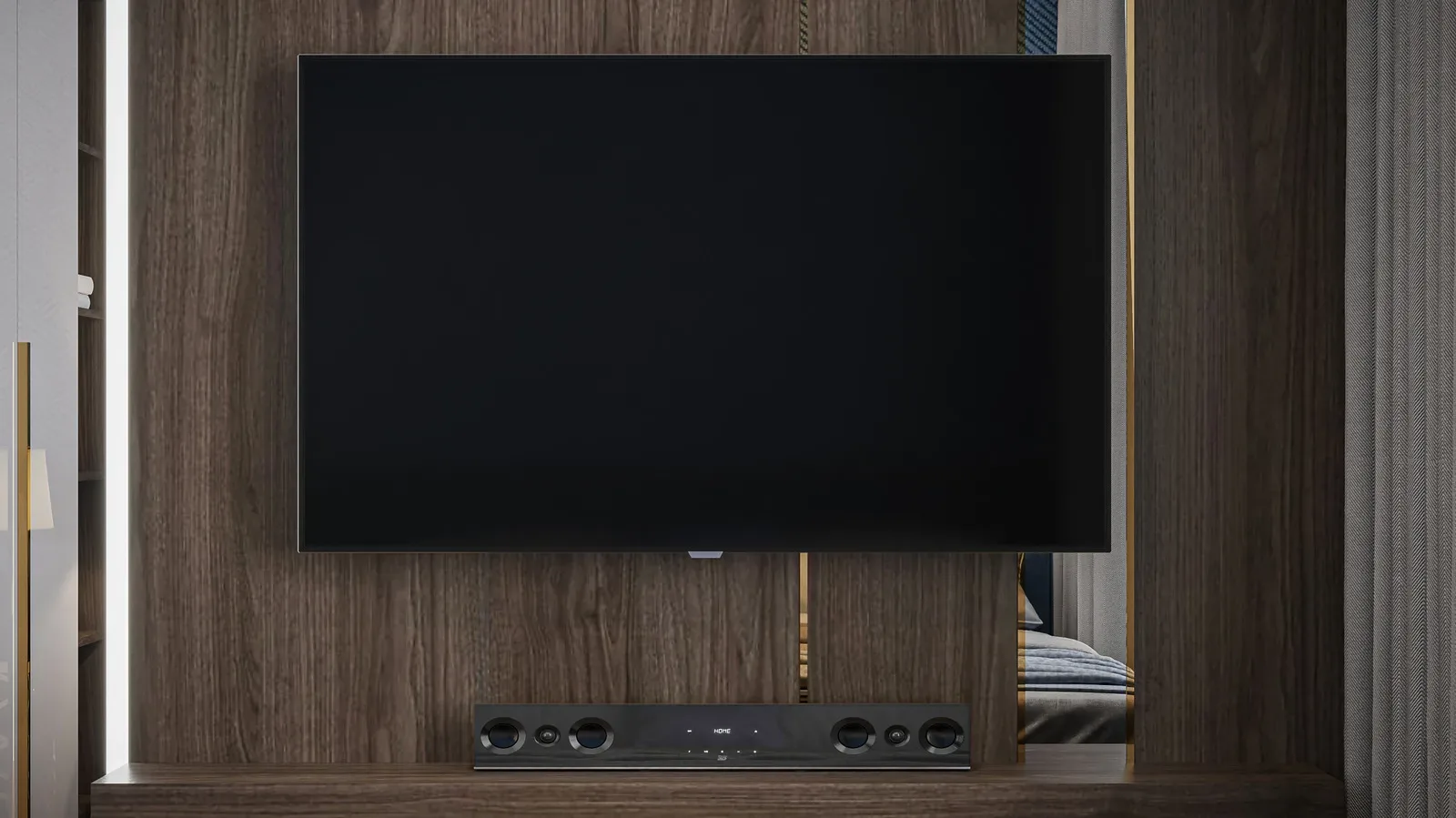
Modern TVs can make games, films and sports look enormous while sounding oddly small. It is a compromise of the thin-screen era: sets have very little room for substantial speaker drivers or the cabinet space that helps audio develop depth and bass. Speakers may also point downward or backward, sending sound toward furniture, walls or the floor instead of directly at the viewer.
A soundbar is the practical answer for people who want a clearer, more involving setup without moving straight to a room full of separate speakers. Some Dolby Atmos-compatible models cost under $200, putting a version of the format within reach of buyers who cannot justify a multi-speaker home-theater system. That does not mean every inexpensive Atmos bar delivers the same kind of effect, however. The important distinction is between virtualized Atmos and hardware with dedicated up-firing or side-firing drivers.
For gaming, that distinction matters less as a badge on a box and more as a question of what is actually improving. The most dependable immediate gains from moving beyond TV speakers are usually clearer dialogue, a stronger sense of scale and sound that reaches the room more directly. Atmos processing may add a wider or more dimensional presentation, but a budget bar should not be mistaken for a complete surround installation.
Why thin TVs often sound flat
TV makers have to place audio hardware inside exceptionally slim chassis. That limits the size of the drivers—the components that create sound—and leaves little space for resonance cabinets. A resonance cabinet helps a speaker produce fuller, more dynamic audio; without much room for one, bass and impact can suffer.
Direction is another obstacle. Downward- and rear-facing TV speakers do not naturally aim sound at the seating position. Instead, surfaces around the television can absorb or scatter part of it before it reaches the listener. The result can be muddy dialogue, weak low-end sound and a flatter presentation of music. Those shortcomings are not limited to inexpensive televisions: even a premium TV with internal Dolby Atmos support can struggle to project convincing sound forward into a room.
That is why the Atmos logo on a television is not, by itself, a guarantee of an enveloping experience. Dolby Atmos is associated with spatial audio: the goal is to convey sound with a sense of placement and height rather than as a simple flat field in front of the viewer. To make that effect persuasive, the system needs a practical way to direct audio cues around the room. A thin TV’s internal speakers remain constrained by their location and physical size.
What a budget Atmos soundbar actually changes
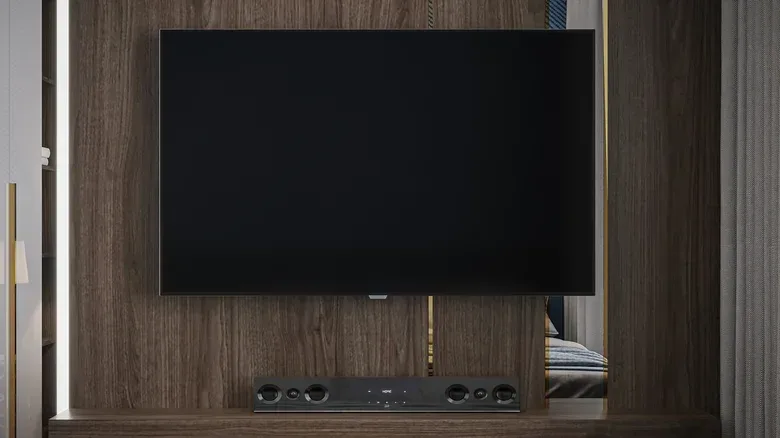
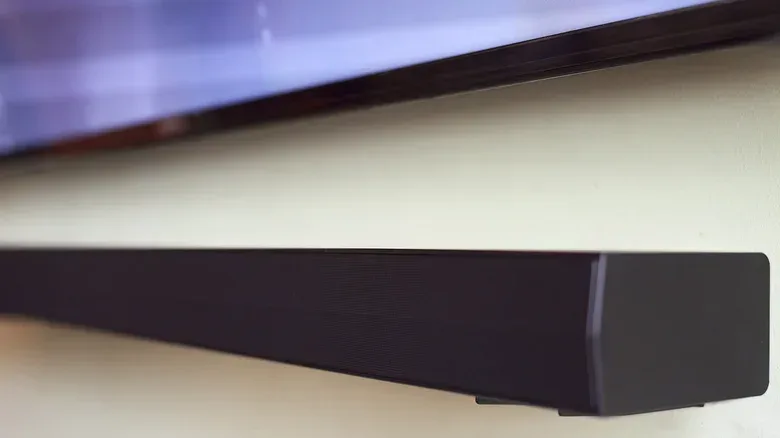
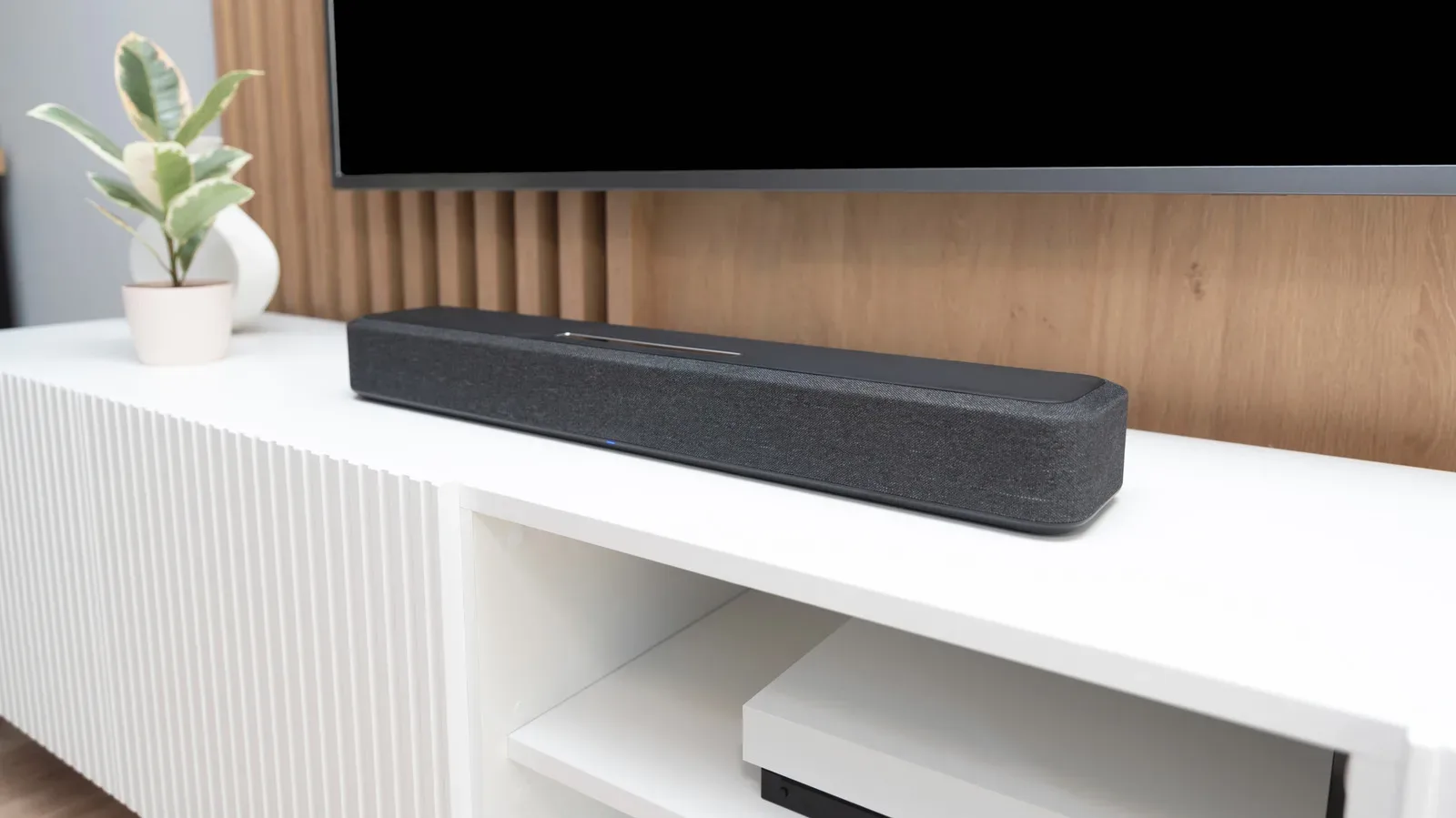
A soundbar relocates the main audio system from inside the TV to a dedicated speaker placed beneath or near it. Even before considering Atmos, that can solve the basic problem of where the sound is aimed. The bar is positioned to send audio into the room rather than forcing it to emerge from a narrow rear or lower edge of the display.
In a game, that can help make voice lines easier to follow while letting music and effects feel less cramped. In a movie or live sports broadcast, it can make commentary and dialogue more intelligible and give action more presence. These are practical benefits, not a promise that a single low-cost enclosure recreates a cinema or stadium.
The affordable route often uses virtualized Dolby Atmos. Rather than including physical speakers that fire sound upward, a bar uses audio processing to imitate the impression of overhead effects. This is a meaningful limitation. Processing can improve the sense of space compared with most TV speakers, but it does not supply the dedicated height channels used by models with actual up-firing drivers.
Put another way, virtualized Atmos is an attempt to simulate a more dimensional sound field. Genuine up-firing hardware gives the system a physical method to send sound upward, which is better suited to creating a height effect. The less expensive option can still be the sensible one when the alternative is relying on built-in TV speakers, provided buyers go in expecting an upgrade rather than a full replacement for a multi-speaker layout.
Atmos support is not a single performance tier
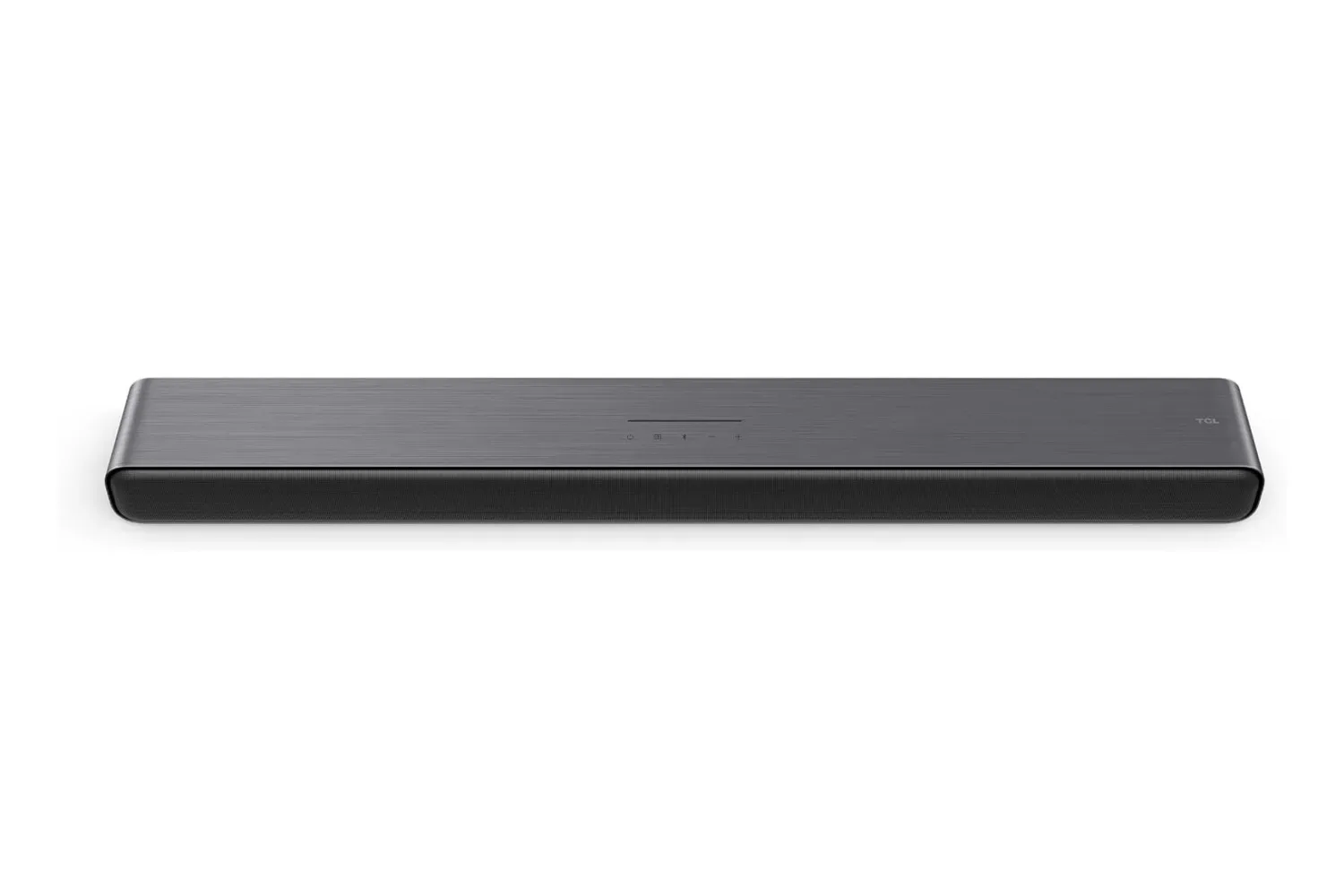
Shoppers can easily see “Dolby Atmos” on several products and assume they will perform alike. They will not. Some budget soundbars from Amazon, TCL and LG use virtual processing and lack the dedicated height channels needed to take full advantage of the format. That does not make them pointless; it simply defines what the purchase is.
The useful way to assess an inexpensive bar is to separate two questions:
- Will it be better than the TV’s integrated speakers? For many setups, a dedicated soundbar is likely to offer a substantial improvement in directness and overall immersion.
- Will it create convincing physical overhead audio? A virtualized model has a trade-off here because it does not have the same up-firing driver arrangement as a more elaborate system.
That framing can prevent a common disappointment. A buyer may reasonably enjoy the improvement in game soundtracks, dialogue and action effects, while still recognizing that simulated height is not equivalent to speakers designed to provide it physically.
Check the connection path before spending money
The most important pre-purchase check is whether the TV supports Dolby Atmos passthrough. Passthrough describes the television’s ability to send an Atmos signal onward to the compatible soundbar. If that link is not supported, simply pairing two Atmos-branded devices may not produce the expected result.
Compatibility should be treated as part of the total system, not as an afterthought. The chain may include a streaming device, the TV and the soundbar. If the television does not support Atmos passthrough, an affordable 4K streaming device such as a Roku Express 4K+ or Amazon Fire TV Stick 4K can provide a less costly way to handle the issue than replacing the television.
Before committing, identify which device will play the content, whether the TV can pass the Atmos signal through, and whether the soundbar is compatible with that arrangement. Connection terminology is often more confusing than it needs to be; a connector’s shape alone does not establish what it can carry, a distinction also relevant to similar-looking ports with different capabilities.
For console players in particular, the sensible goal is a setup where the display and audio gear work together without making the television’s speakers the weak link. The supplied evidence does not establish which individual soundbar is best for every console, room or budget, so it would be misleading to declare a universal winner. It does establish the more useful principle: confirm passthrough support first, then decide whether the lower cost of virtual Atmos is worth its reduced sense of height.
A sensible low-cost upgrade path
There is no need to start with a costly multi-speaker system to escape disappointing television audio. A sub-$200 Atmos-compatible soundbar can be an accessible first step, especially where the current problem is indistinct speech, limited bass and sound firing away from the viewer. It offers a more focused speaker solution while keeping the footprint and cost far below a traditional surround setup.
The trade-off should be stated plainly. Budget models relying on virtual Atmos do not have the required height channels to fully realize what the format can do. They use coding and processing to approximate overhead effects rather than generating them with dedicated upward-facing speakers. For many buyers, that is still a reasonable compromise: an improvement over most integrated TV audio without the expense and complexity of numerous separate components.
In short, do not buy the label alone. Buy for the upgrade that is actually on offer: better-directed TV sound and a potentially broader, more immersive presentation, with virtual height effects on many affordable models. Verify Atmos passthrough in advance, consider a compatible 4K streaming device if the TV lacks it, and reserve expectations of truly pronounced overhead audio for systems built with the speakers to deliver it.