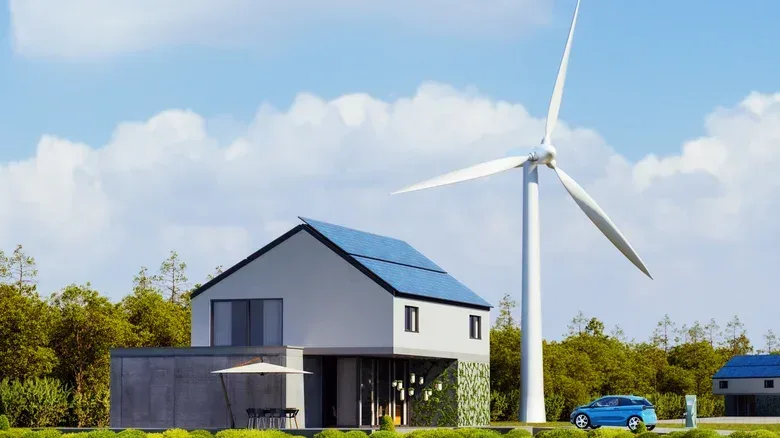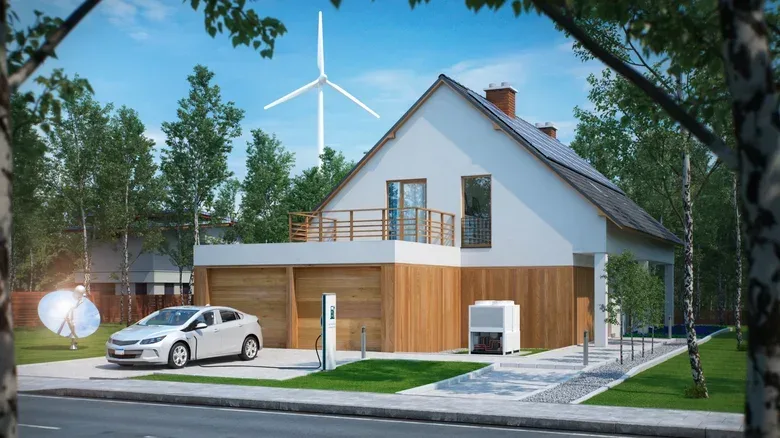
A 1 kW wind turbine sounds like a tidy home-power proposition: put a compact generator in the breeze and let the weather shave down the electricity bill. The awkward reality is that the “1 kW” label is not a promise of continuous output. It is a peak power rating, meaning the highest level the turbine can produce under suitable wind conditions—not the amount it will make every hour, day or month.
That distinction is the entire game for residential wind. A small turbine can be useful, particularly for a modest, efficient cabin, a permanently situated RV, or a rural property with clear exposure and reliably strong winds. But it is generally supplemental power rather than a whole-home answer for a typical U.S. household. Before treating a turbine as the backyard equivalent of a cheat code for utility bills, homeowners need to assess the local wind, physical obstacles, tower requirements, permits and the equipment needed to use or store the electricity.
Start with kilowatt-hours, not the 1 kW label
Power and energy are closely related but not interchangeable. Kilowatts (kW) describe power: the rate at which a device can generate or use electricity at a moment in time. Kilowatt-hours (kWh) describe energy accumulated over time, which is the measurement that matters on an electricity bill.
In a carefully selected location, a 1 kW wind turbine could produce around 200 kWh per month, or approximately 2,400 kWh in a year. That is a meaningful amount of electricity, but it remains below one quarter of the roughly 10,500 kWh an average U.S. household uses annually—about 850 kWh per month.
For more context, explore Night Tales Club Brings Seven Japanese Horror Filmmakers to Disney+ and Hulu in January 2027.
The practical reading is straightforward: 200 kWh in a month could offset a portion of a household’s consumption when conditions cooperate. It is not enough, on its own, to supply an average home that consumes around 850 kWh a month. And because the output depends on wind rather than an on-demand fuel supply, the production will not necessarily align with the moment a home needs power most.
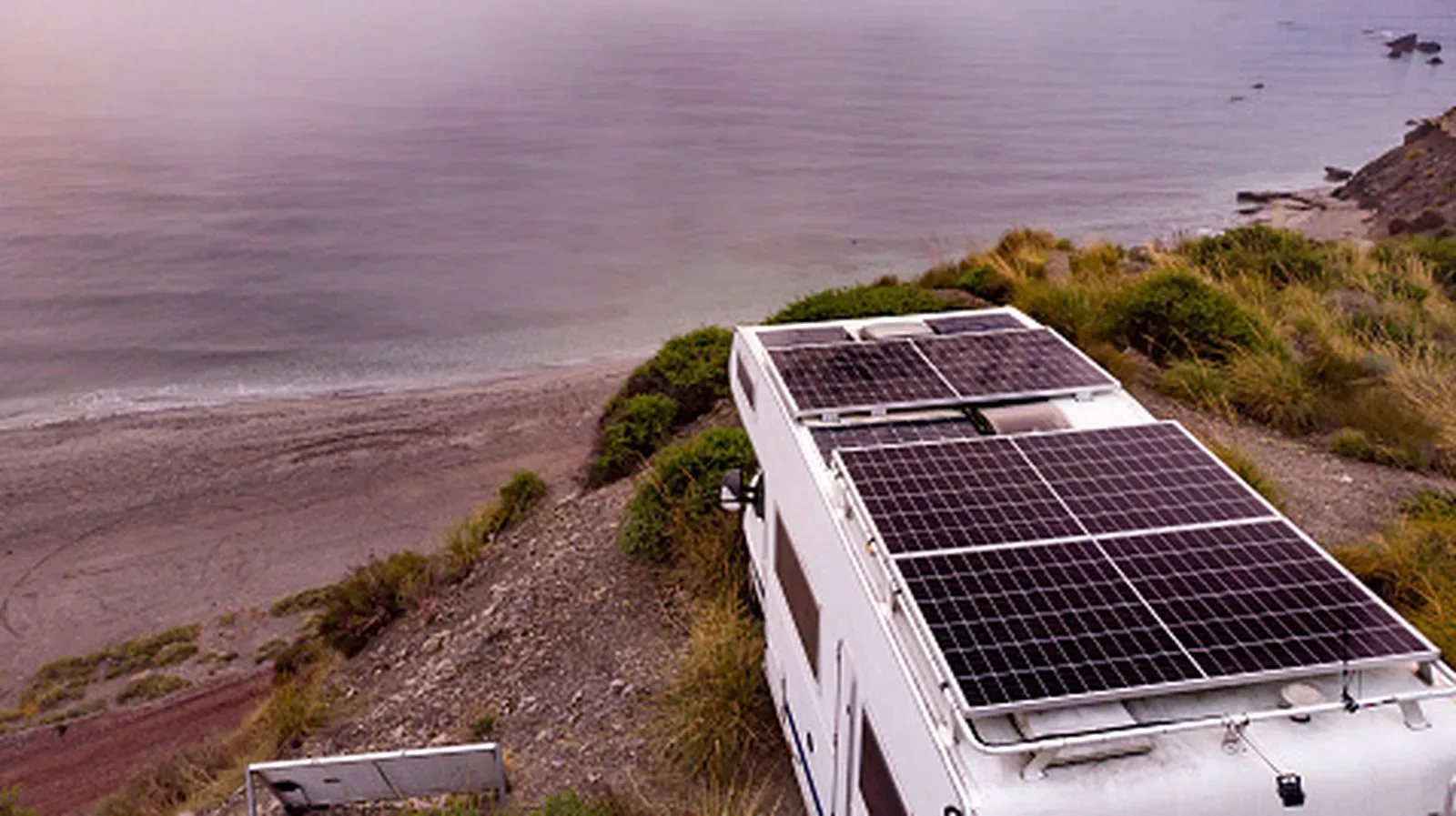
This does not make a 1 kW turbine a bad device. It makes it a device that needs a clear job. A household aiming to reduce grid use, rather than erase it, may find the scale more logical than one expecting whole-home independence. In a small and economical dwelling with a low electricity load, the contribution can matter more. A compact turbine can also be relevant to an RV use case, though that is a different energy problem from serving a conventional home.
Wind quality matters more than a windy day
Residential wind output depends on a property’s average wind speed and, just as importantly, how consistently that wind arrives over the year. A single blustery afternoon is not the useful benchmark. A turbine needs a site with a robust wind resource from month to month.
An annual average of 14 mph or higher is the threshold that makes a 1 kW turbine worth serious consideration. Below that, or where wind is sporadic and merely average, the expected return becomes much harder to justify. The turbine may still spin, but spinning is not the same as generating enough energy to support the investment.
That creates a basic mismatch with many suburban lots. A home can feel breezy at ground level and still be a poor turbine location. Nearby houses, mature trees, sheds, and hills can all reduce the useful wind reaching the rotor. Worse, these objects do more than block air movement: they create turbulence, an irregular and choppy flow of air. Turbulence lowers production and can increase wear on the machine.
In other words, a turbine wants smooth, unobstructed air rather than occasional gusts tumbling around rooftops and landscaping. Open rural land with verified wind speeds and room for a properly positioned tower is therefore a much stronger match than a confined neighborhood parcel.
Height and placement are non-negotiable
The recommended placement rule is demanding: the bottom of the rotor should sit at least 30 feet above any obstacle within 300 horizontal feet of the tower. This is a useful sanity check long before anyone shops for hardware.
Consider what that means on a typical developed lot. If a tree, neighboring roofline or shed falls inside that 300-foot radius, the rotor must clear it by 30 feet. Many homes have several such obstacles in every direction. A tower that works mechanically could therefore need to be far taller than a homeowner initially imagined.
Local zoning can make the problem even sharper. Structures are often limited to around 35 feet, while a wind turbine may need substantially more height to rise above surrounding trees and buildings. Checking zoning, utility requirements and other local rules is not paperwork to leave until after a purchase; it is part of deciding whether the project is viable at all.
Rooftop placement can look like an obvious workaround because it adds elevation without a separate tower. But it introduces a different trade-off. Turbine vibration and noise can travel directly into the building. The roof may put the unit closer to a person’s bedroom, not farther away from it, while the surrounding rooflines and structures can still produce turbulent air.
A regional wind map is an appropriate starting point, but it is not a complete site assessment. A homeowner should also review obstacles, the usual wind direction at the property, zoning limits and utility rules. Getting an installer to estimate expected production provides a more grounded basis for a decision than relying on a product’s peak rating.
What a grid-connected or off-grid setup needs
The turbine itself is only part of the system. In a grid-connected arrangement, an inverter is typically required. An inverter changes the electricity produced by the turbine into a form suitable for the home’s electrical system and grid connection. With that arrangement, the turbine can offset some utility electricity when wind is available.
An off-grid system has a tougher assignment. It needs batteries to store energy for calmer periods and a charge controller to manage battery charging. Storage is crucial because a turbine’s output follows the wind, not a household schedule. The additional gear makes off-grid wind a broader system decision rather than a simple generator purchase.
This is why a 1 kW turbine is most sensibly framed as one part of an energy plan. An efficient home lowers the amount of electricity that needs replacing in the first place. Better insulation can reduce demand, while ground- or roof-mounted solar panels may offer more dependable results for many suburban households. That is not an argument that wind cannot work; it is an argument for matching the technology to the site instead of making the site fit the technology.
Whole-home wind requires a much larger machine
A 1 kW turbine is not sized to cover the average U.S. home’s roughly 10,500 kWh annual electricity use. Residential turbines in the 5 kW to 15 kW range are the scale needed to make a more substantial reduction in that consumption. Even then, the quality of the site remains the deciding factor. More capacity does not cure poor wind, low mounting height or turbulent airflow.
Cost also demands careful expectations. Installing a wind turbine can run approximately $20,000 to $50,000. By comparison, solar panels intended to provide comparable energy production are cited at roughly $2,500 to $3,500 before incentives. Those figures help explain why wind is usually a specialist option for an unusually good location rather than the default residential renewable-energy choice.
A sensible pre-purchase checklist
- Confirm a verified annual average wind speed of at least 14 mph, with dependable conditions through the year.
- Map trees, houses, sheds, hills and other obstacles—not just those on the property, but those within 300 horizontal feet of a prospective tower.
- Determine whether the rotor can be positioned 30 feet above those nearby obstacles.
- Review local height limits, zoning restrictions and utility requirements before committing to equipment.
- Decide whether the goal is grid offset or off-grid supply; the latter requires batteries and a charge controller.
- Obtain a site-specific production estimate from an installer and compare it with the home’s real kWh usage.
- Consider efficiency improvements and solar alongside wind, especially for suburban properties.
The headline answer is reserved but useful: yes, a 1 kW home wind turbine can produce electricity, potentially about 2,400 kWh annually at an excellent site. It is not a universal household-power solution, and its rating should never be read as guaranteed continuous production. For a clear, open rural property with strong verified wind and a permissible tower location, it can be a worthwhile supplement. For the tree-lined, tightly built suburban block, the decisive obstacle is likely to be the site itself—not the turbine.