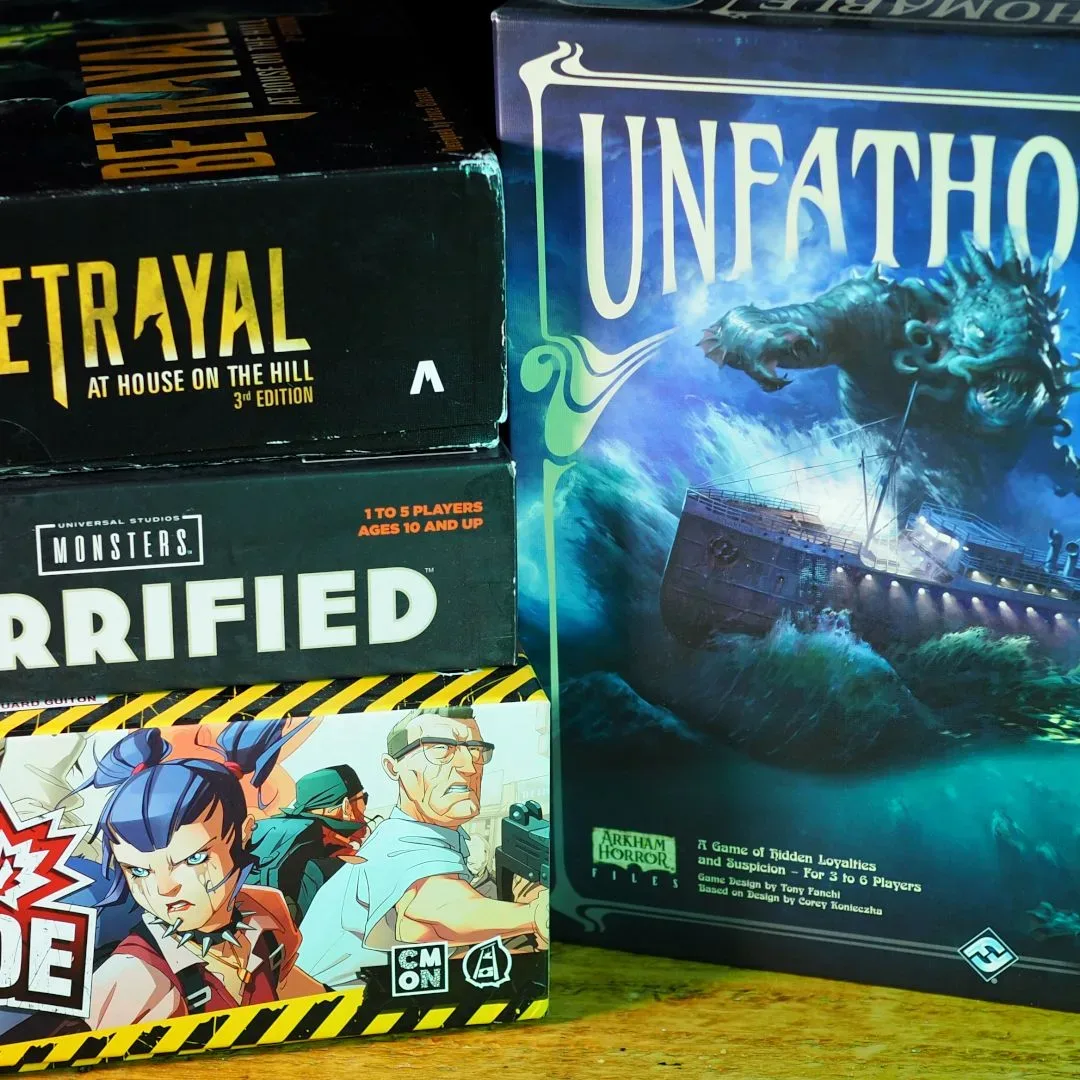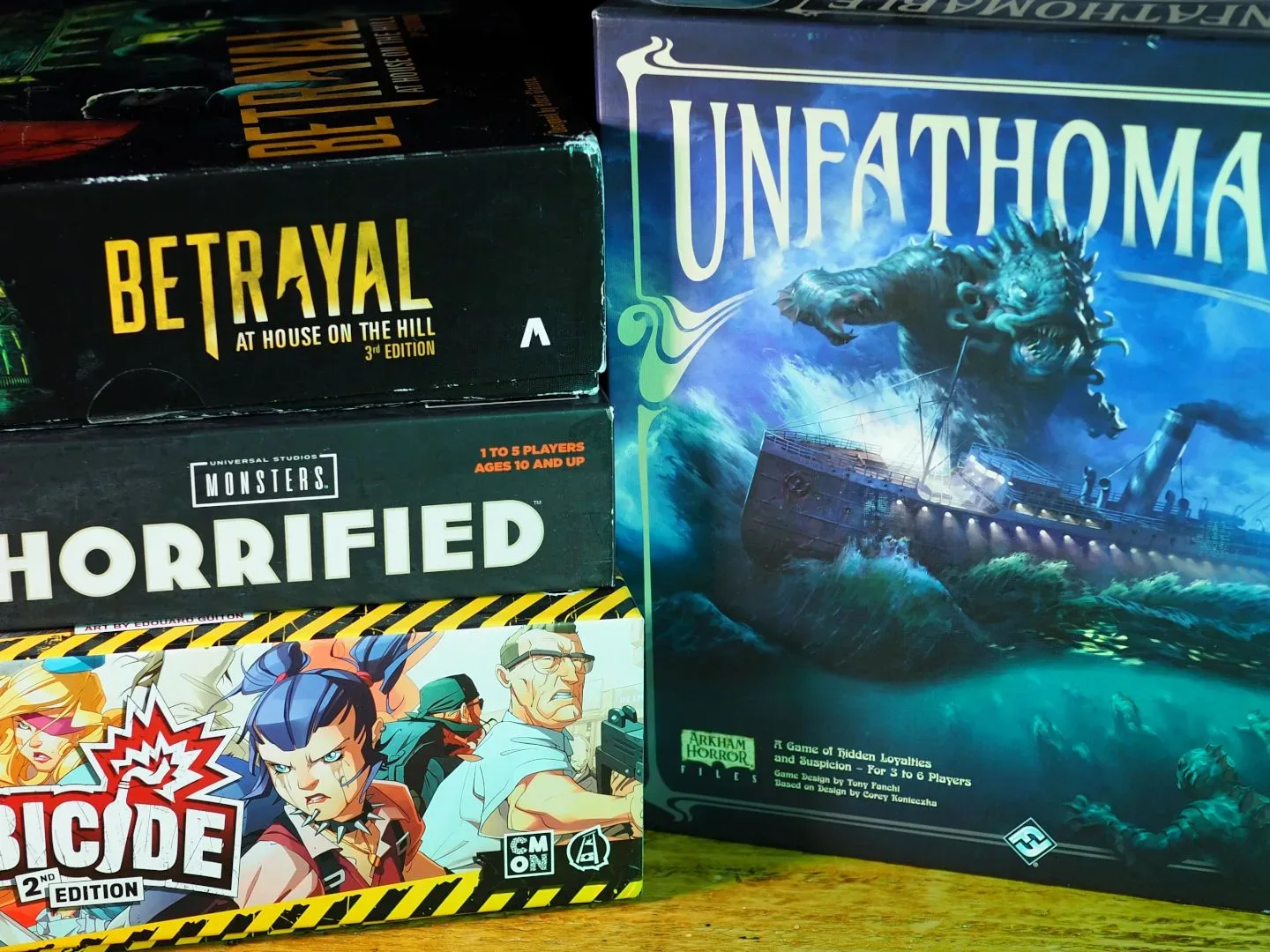
Halloween board games work best when their rules and theme are pulling in the same direction. A haunted-house game should make the next room feel risky. A monster hunt should make every delay feel costly. A story about a hidden traitor should make a perfectly reasonable suggestion at the table sound just suspicious enough to ruin everyone’s evening—in the best possible way.
That is why “horror board game” is less a single genre than a useful umbrella. The nine games here range from welcoming, chaotic scenario games to long, strategic survival tests. Some are fully cooperative, meaning every player wins or loses as one team. Others use hidden-traitor rules, where one or more players have private allegiances and can undermine the group. A few turn horror into direct competitive combat or bleak comedy instead.
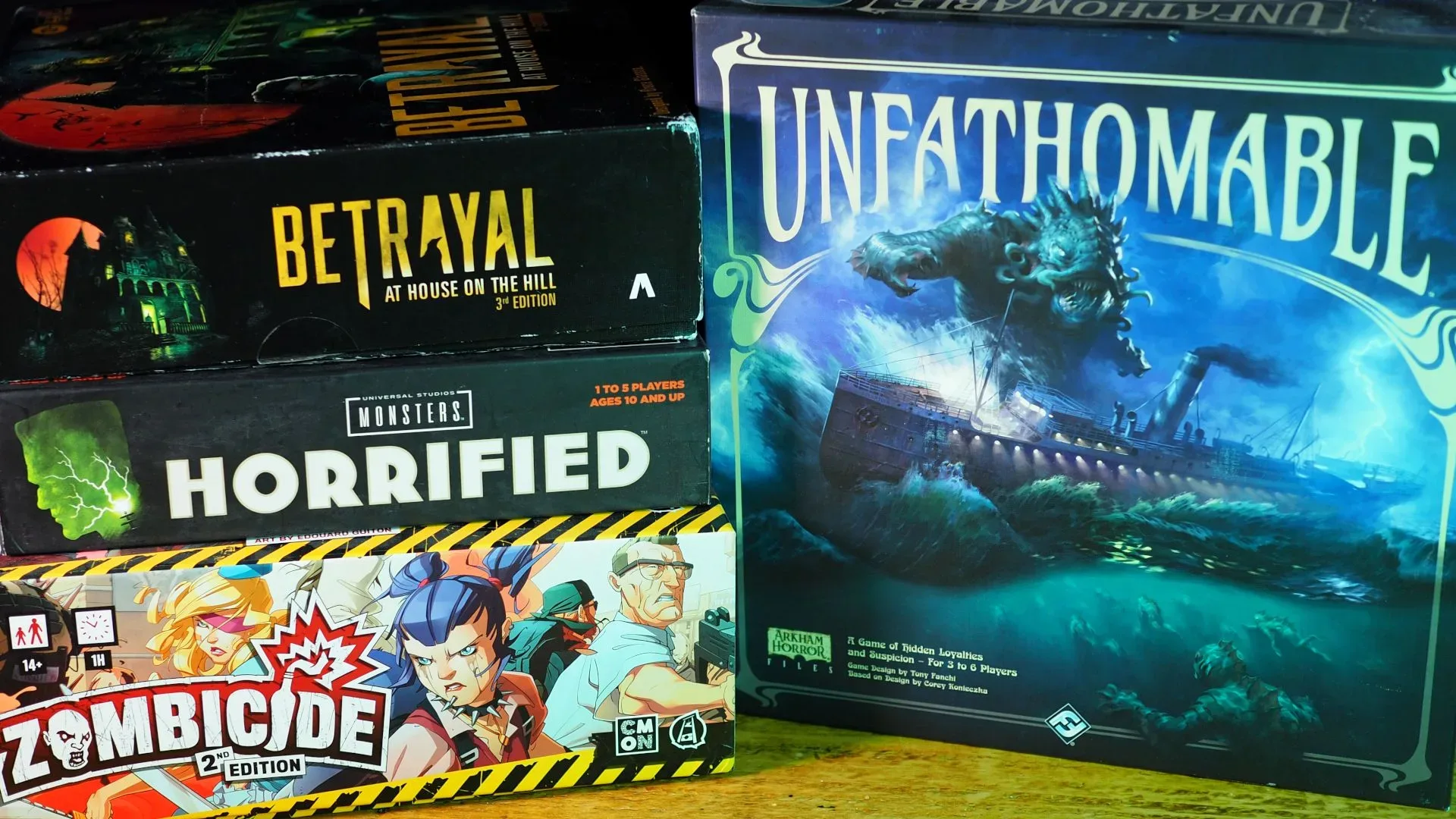
The practical takeaway is simple: choose the kind of tension your group actually enjoys. If the table wants surprises and a relatively easy route in, start with Betrayal at House on the Hill or Horrified. If it wants accusations, incomplete information and lengthy calamity, consider Unfathomable. Players who prefer tactical fights can look to Zombicide or Unmatched: Cobble & Fog, while groups chasing a more involved story can investigate Arkham Horror: The Card Game or Mansions of Madness.
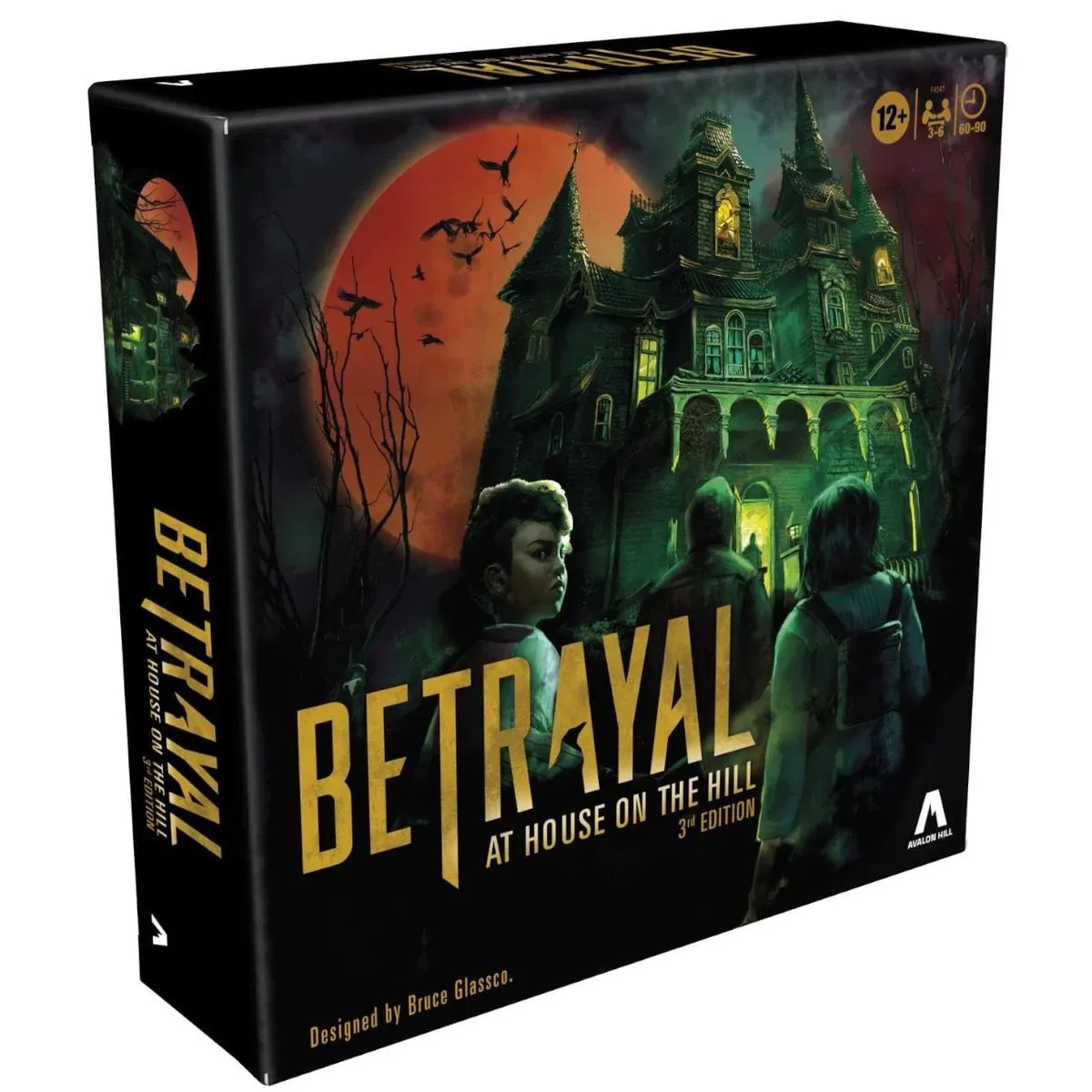
1. Betrayal at House on the Hill (3rd Edition): the welcoming haunted-house pick
Betrayal at House on the Hill earns its place as an approachable centerpiece because it builds its own setting as play unfolds. Players choose characters and a reason for visiting the mansion, then reveal room tiles while exploring. Since the layout comes from a large stack of tiles, the house develops differently from session to session. Individual rooms can introduce events, items or their own special effects, giving the early game the uneasy rhythm of opening one more door when that has already gone badly several times.
Its major structural turn is the scenario trigger. After enough discoveries, the game selects one of 50 scenarios using the circumstances created so far. The group may confront the mansion’s supernatural threat together, or a player may become an opponent. That change from uncertain exploration to a desperate finale is the game’s defining horror-movie arc.
The 3rd Edition is therefore particularly useful for a mixed-experience table: there is plenty happening, but the initial objective is understandable—explore and see what the house does. The scenario variety also supports repeat visits. Balance can vary between missions, so players looking for tightly measured competition may prefer another choice, but the unpredictable swings suit a Halloween gathering where stories matter as much as a cleanly calibrated contest.
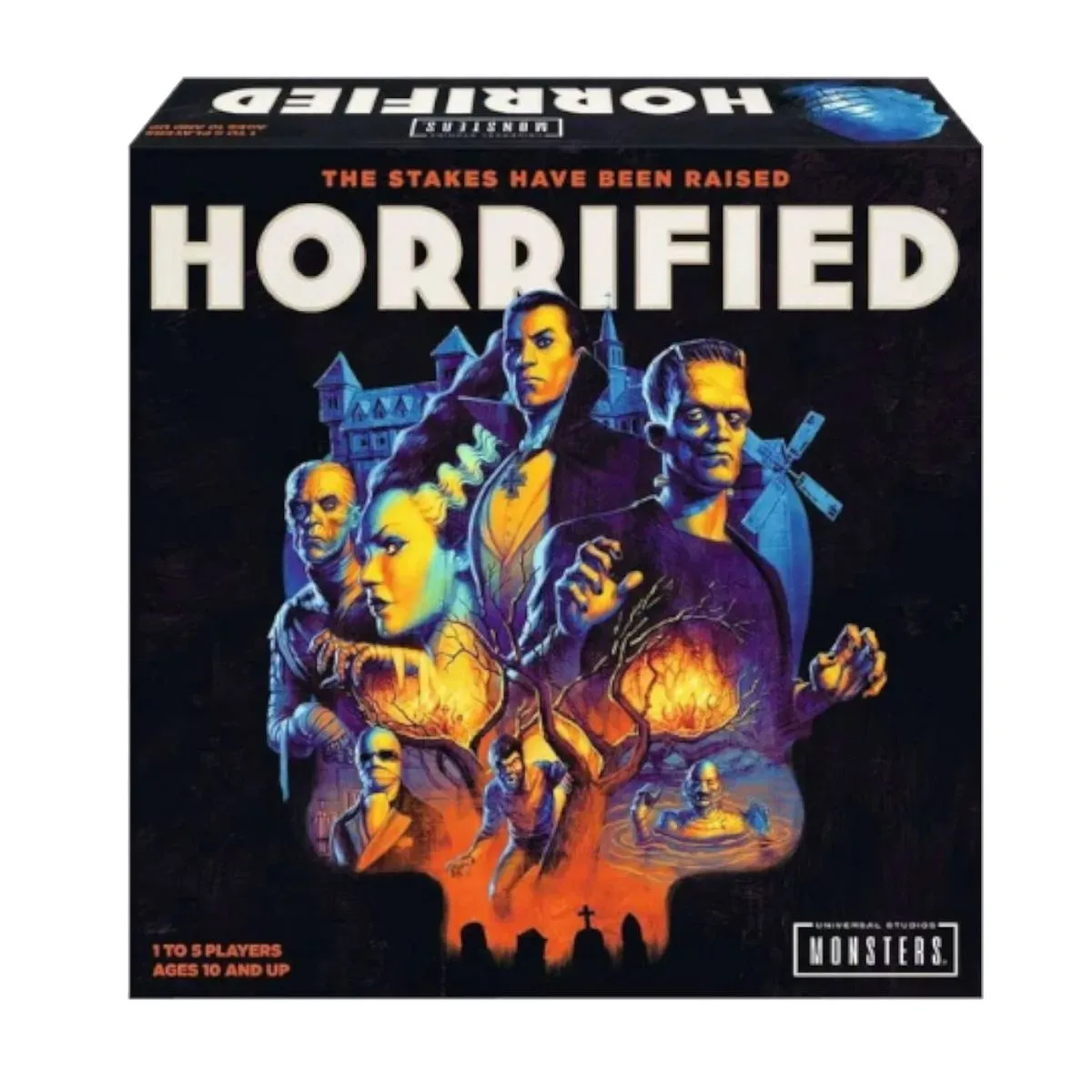
2. Horrified: cooperative classic-monster triage
Horrified puts the group in a gothic village threatened by famous monsters including Dracula and Frankenstein’s Monster. It is cooperative, so there is no secret saboteur and no need to hide information from teammates. Instead, the pressure comes from too many urgent responsibilities: monsters threaten villagers while players need to gather what is required to defeat them.
The clever part is that the monsters are not merely different tokens to fight. Each has its own method of defeat, effectively creating a separate miniature objective within the same shared crisis. That produces triage, a term for deciding which of several bad, time-sensitive problems deserves attention first. Do players rush to save a villager, advance a monster’s defeat condition, or get into position before the threat grows worse? A successful turn can still feel inadequate because something else is left exposed.
Related coverage includes 9 Halloween Board Games for a Properly Spooky Game Night.
That makes Horrified a strong option for a group that wants a recognizably spooky setting without the social strain that hidden roles can introduce. The original game is the cleanest starting point despite later versions and spin-offs, including a Dungeons & Dragons-themed entry and a Ravenloft installment. Its familiar cast does useful work: players understand the tone immediately, leaving the game’s monster-specific puzzles to provide the novelty.
3. Unfathomable: paranoia on an ocean voyage
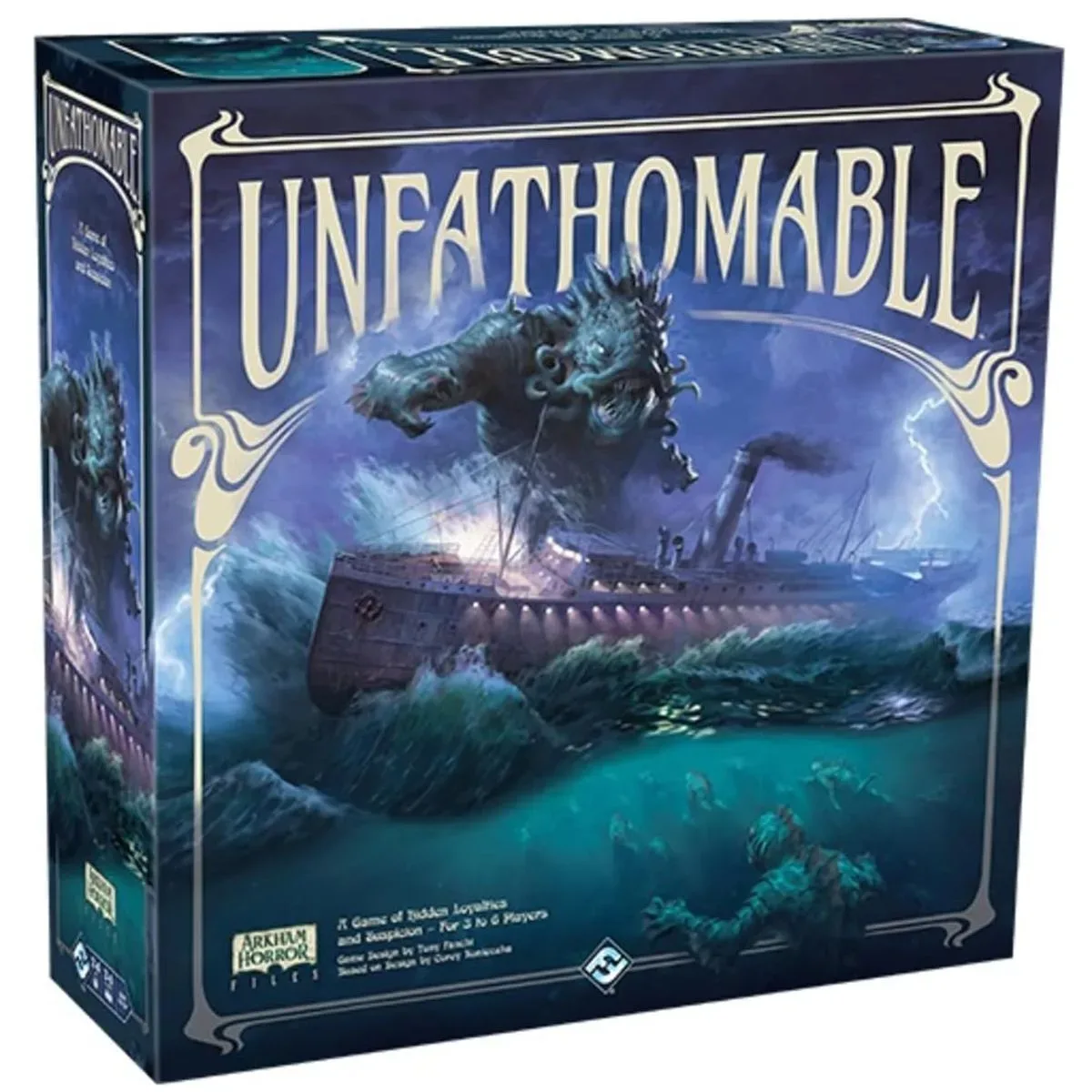
Unfathomable takes the cooperative structure and deliberately poisons it with doubt. Set during a 1920s sea crossing, it casts players as passengers facing creatures from the ocean and a vast unseen menace. The ship must survive, but some players may be hybrid traitors whose real task is to sabotage the effort.
A hidden-traitor game derives much of its drama from asymmetrical information: not everyone knows the same facts or wants the same outcome. In this case, ordinary setbacks can look like deliberate betrayal, while a traitor can disguise disruption as an unavoidable sacrifice. The players must protect their ship and respond to creatures while also evaluating who can be trusted.
That combination makes it a more demanding Halloween pick. It is described as a long game, and its pleasure is not simply monster-fighting. It lies in watching an apparent plan become a question: was that move necessary, careless, or calculated? Bring it out for players who enjoy talking through suspicion, defending decisions and living with the possibility that their most helpful teammate has an extremely different definition of “helpful.”
4. Zombicide: escalating zombie tactics with a table full of miniatures
Zombicide takes a louder, more action-oriented route. Players divide at least six characters among themselves and cooperate through scenario objectives while an expanding mass of zombies moves around the board. Noise and blood attract the undead, so survival is not just about hitting enemies; it is about managing the consequences of each risky choice.
This is a game built around escalation. More enemies appear as play progresses, and the situation becomes more crowded and demanding. Characters can follow upgrade paths, enemies bring different problems, and item decks can produce potent new weapons. The result is a tactical loop of assessing the board, making a plan, taking a risk and dealing with whatever fresh problem that risk creates.
Miniatures matter here as more than decoration. A board filling with plastic zombies makes the game’s growing threat immediately legible, especially for players who enjoy a visually busy play space. The newer edition also supports individual scenarios and the possibility of a campaign. Pick Zombicide when the group’s ideal Halloween story involves an armed last stand rather than quiet deduction.
5. Deep Regrets: fishing, mounting trophies and losing one’s grip
Deep Regrets takes its horror somewhere stranger and funnier: out onto a deeply wrong sea. Loosely inspired by the 2023 video game Dredge, it has players fish for a week, starting in shallower water and deciding whether to push farther into dangerous depths. The deeper the fishing expedition goes, the greater the chance of hauling up something genuinely disturbing.
Its central mechanic is push-your-luck. In a push-your-luck system, a player can stop with an acceptable result or continue in pursuit of a better one while courting a worse outcome. Here, dice govern fishing, and deeper water promises more alarming catches as well as greater danger. Back on shore, catches can be sold to fund future improvements or mounted as trophies for points.
Regret cards create the game’s darkly comic engine. They tell grim, absurd stories and mechanically represent a descent into madness, which can make mutant fish more valuable. Yet too much regret carries a meaningful cost: a player can lose their best trophy. That makes the game a fitting recommendation for a group that likes horror with personality and grotesque humor, rather than an entirely solemn mood.
6. Nemesis: Retaliation: a severe mission with private motives
Nemesis: Retaliation is for a group actively seeking a deeper, more strategic horror experience. Players are elite marines entering a facility overrun by alien threats in a premise that clearly evokes the mood of Aliens without being that licensed property. Possible primary objectives include destroying the facility or killing the alien queen, but every player also receives a secret personal objective.
Those private goals ensure that even players working toward the same broad mission may have incompatible priorities. That is not identical to a conventional hidden-traitor design: the important tension is that trust remains provisional. The soldier covering a corridor may be acting in the team’s interest—or merely arranging a situation that satisfies their own objective.
Exploration intensifies that uncertainty because the board is laid out randomly during play. Randomized map construction means the group faces an unknown environment rather than executing a solution memorized from a fixed layout. Combined with dangerous aliens and difficult survival odds, that makes every opened area feel like a commitment. This is not the breeziest entry on the list, but it is a focused choice for players who want planning, pressure and suspicion in the same package.
7. Arkham Horror: The Card Game: campaign-minded cosmic investigation
Arkham Horror: The Card Game is a cooperative deck-construction game. Each player controls an investigator whose deck represents their capabilities. As the campaign progresses, players add and remove cards, allowing characters to develop and enabling a degree of customization around preferred approaches.
Deck construction is worth separating from a game where everyone uses the same unchanging card set. Here, changing the deck is part of the ongoing narrative and strategy. An investigator’s growing selection of tools helps define how that character confronts future dangers. The core experience combines modular map cards with branching text, producing mysteries that can develop in several directions and lead to additional scenarios.
The box includes an initial mystery, and its paths give players a reason to replay it. Expansions can continue the larger story, while a newer “chapter two” box resets the narrative and provides a convenient new entry point. This makes it the natural Halloween selection for players who do not just want a one-night fright; they want an investigator’s story to evolve across connected sessions.
8. Unmatched: Cobble & Fog: elegant horror duels
Unmatched: Cobble & Fog changes the mood completely. Rather than cooperating against horror, players choose from Dracula, Sherlock Holmes, Jekyll and Hyde, and the Invisible Man, then fight on a point-to-point board. It is a duel game with a remarkably direct turn structure: take two actions from drawing and moving, playing a card for its effect, or attacking with one.
The depth comes from the fighters’ individual decks. Each character has a distinct identity expressed through cards and special abilities. Holmes can look at and manipulate an opponent’s cards, while Jekyll and Hyde changes form with different abilities. The rules framework remains compact, but the decisions feel different depending on the combatant.
For a Halloween group, its biggest advantage is flexibility. It creates a complete, characterful contest from one box, and those fighters can also be mixed with other entries in the Unmatched series. It is a good answer for two players—or a group rotating through matchups—who want gothic atmosphere without committing to a sprawling campaign or a full evening of survival logistics.
9. Mansions of Madness: investigation guided by an app
Mansions of Madness is another cooperative game built around cosmic horror, mystery-solving and an increasingly oppressive atmosphere. Its second edition uses an app to run the scenario, rather than assigning one player to control the monsters against everyone else. That shift removes the earlier setup where a human game-runner wielded enemies that were, by design, overwhelming.
An app-driven board game uses software to manage information and events that would otherwise require a player, a large rules overhead, or both. Here, the app supports descriptions and sound effects, manages changing circumstances, facilitates varied conversations with non-player characters, and enables puzzles that would be difficult to reproduce solely with physical components. It also randomizes elements between attempts, so knowing a scenario’s broad secret does not necessarily mean knowing every detail of a repeat playthrough.
There is a practical trade-off. App dependence means players rely on ongoing software support and updates. In exchange, the group can concentrate on working together while the game supplies the mystery’s shifting responses. With physical miniatures still representing the horrors on the table, Mansions of Madness offers a hybrid of tactile board-game presence and digitally managed narrative. It is an especially compelling fit for a group that wants Halloween horror to feel like a collaborative investigation instead of a pure combat exercise.
How to choose the right game for the table
- For newcomers or a varied group: Betrayal at House on the Hill offers exploration and scenario surprises; Horrified provides straightforward shared objectives.
- For suspicion and social drama: Choose Unfathomable, or select Nemesis: Retaliation for a more strategically demanding version of distrust.
- For action and tactical problem-solving: Zombicide makes the zombie horde visible and ever larger, while Unmatched: Cobble & Fog distills confrontation into character-driven duels.
- For continuing stories: Arkham Horror: The Card Game lets investigators and decks develop across scenarios.
- For narrative technology at the table: Mansions of Madness uses its app for atmosphere, branching interactions and changing setups.
- For oddball horror comedy: Deep Regrets transforms a fishing trip into a choice between profit, trophies and accumulating regret.
Horror games are ultimately social machines: they turn a room full of people into a band of investigators, panicked survivors, monster hunters or extremely questionable fishing enthusiasts. For more spooky-game energy beyond the tabletop, see why survivor-versus-killer knowledge has become part of the conversation around the Dead by Daylight movie. For board-game night, though, the key is matching the game’s pressure to the people at the table. The best scare is the one everyone is eager to face again next Halloween.
Shop the products
Check current price, model and availability at the retailer.