A New Beginning After Saturn
Dreamcast emerged from one of the most difficult periods in Sega’s history. During the early 1990s, Sega had been one of the world’s leading console companies, with a strong arcade business and a successful 16-bit platform. The Saturn, however, weakened that position. Its architecture was difficult to program, its launch strategy varied sharply between regions, and its surprise North American release in May 1995 damaged relationships with retailers and publishers. Sony’s PlayStation established polygonal 3D graphics as the language of the new generation, while Sega struggled to communicate the Saturn’s strengths. By the middle of the decade, the next console had to repair confidence as well as improve technology.
Sega began publicly discussing its next system in 1997, when the project was known by the development codename Katana. The company presented it as a break with the Saturn rather than a simple extension of that machine. The eventual name Dreamcast combined “Dream” with the idea of broadcasting or sending something outward, expressing Sega’s intention to create a more connected and imaginative entertainment device. The project involved Sega’s consumer hardware teams, arcade divisions, Hitachi processors, NEC’s PowerVR graphics technology, Yamaha audio hardware, and outside development partners. The central objective was to make advanced 3D graphics easier to produce while preserving Sega’s arcade identity.
The strategy was deliberately broad. Dreamcast had to deliver convincing arcade conversions, support ambitious original games, lower the technical barriers that had discouraged third-party developers, and arrive before Sony’s next console. Sega had already lost time and money with Saturn, so an early launch could create an installed base before the competition appeared. That advantage carried risk: the system might reach stores before its software library and supply chain were mature, while consumers might interpret its early arrival as evidence that it was an interim machine. Dreamcast was therefore both a hardware project and a corporate recovery plan. Its reception would help determine whether Sega could remain a console manufacturer at all.
Engineering a More Usable Console
Dreamcast’s architecture was much more unified than Saturn’s. Its main processor was Hitachi’s SH-4, a 200 MHz RISC chip with a floating-point unit intended to accelerate the calculations needed for 3D graphics. Instead of asking developers to coordinate several specialized processors through a complicated programming model, Sega wanted a system with clearer relationships between the central processor, graphics hardware, sound hardware, and memory. That did not make development effortless, but it reduced some of the barriers that had made Saturn unattractive to outside studios. The hardware was also designed with Sega’s arcade division in mind, where predictable performance and efficient asset sharing were valuable.
The graphics processor was NEC’s PowerVR2, identified in Dreamcast documentation as the CLX2. Its distinctive method was tile-based deferred rendering. In simple terms, the system divided the screen into small regions, determined which surfaces were visible in each region, and then rendered the useful information instead of spending as much effort drawing hidden polygons. This helped Dreamcast produce smooth 3D scenes with texture filtering, transparency, lighting, and other effects that were impressive for the period. The approach was particularly effective in fighting games and arcade-style action, where detailed characters and stable frame rates mattered more than enormous numbers of independently simulated objects.
The console used 16 megabytes of main memory, 8 megabytes of video memory, and 2 megabytes devoted to sound processing. Yamaha’s AICA audio system included an ARM7 processor and supported sampled music and effects. Software was distributed on GD-ROM discs, a Sega optical format physically similar to a CD but capable of holding more data. The additional capacity helped with voices, textures, music, and large environments, although it was not comparable to the DVD format later used by PlayStation 2. Sega also hoped the proprietary disc would make copying more difficult. That protection was never perfect, and vulnerabilities in the optical system eventually contributed to Dreamcast’s reputation as a comparatively open platform for unofficial software.
Launches Across Different Markets
Dreamcast launched in Japan on November 27, 1998, at a price of 29,800 yen. It was the first major sixth-generation home console to reach consumers, giving Sega a valuable head start. The Japanese release, however, did not generate the sustained momentum the company required. The Saturn’s decline had damaged Sega’s position at home, and the initial software lineup was relatively limited compared with the breadth of the later Western launches. Japanese consumers were also accustomed to PlayStation, whose large software catalog and strong publisher support made it difficult for a new Sega machine to regain the market quickly. Early manufacturing and supply constraints further limited the effect of the launch.
North America received Dreamcast on September 9, 1999. Sega of America promoted the date as “9/9/99” and set the launch price at 199 dollars, using an unusually large advertising campaign to present the system as a genuine generational leap. The North American launch included a substantial range of software, among it Sonic Adventure, Soulcalibur, NFL 2K, Hydro Thunder, Power Stone, and other arcade, racing, sports, and action games. Retail demand was strong, and Sega reported an exceptionally successful opening period. The important distinction is that launch performance did not equal long-term profitability. Hardware was sold aggressively, and Sega still had to recover development costs, manufacturing expenses, Saturn-era losses, and the cost of supporting a worldwide platform.
Europe received Dreamcast on October 14, 1999, after the originally planned September date was postponed. The European version used a blue swirl rather than the orange swirl used in Japan and North America because of a regional trademark conflict. Europe also differed in television standards, distribution arrangements, software timing, and online services. Sega emphasized 60 Hz support for compatible televisions, but the practical result depended on the television, software, and regional version. Australia and New Zealand followed later in 1999 through regional distribution. These differences matter because “the Dreamcast launch” was not a single event. Sega was managing separate release dates, prices, advertising campaigns, supply chains, legal requirements, and network partnerships across several markets.
The Controller and Visual Memory Unit
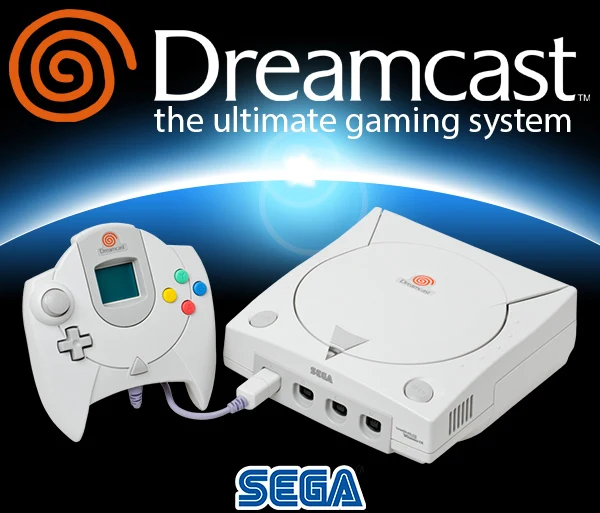
Dreamcast’s controller was large and distinctive. It used an analog stick, a digital directional pad, four primary face buttons, two analog triggers, and a central cable that connected to the console. Two expansion slots were built into the controller, with the lower slot intended primarily for the Visual Memory Unit, or VMU. The layout could feel unfamiliar, especially to players used to the smaller Saturn pad, but it was designed around 3D movement and analog control. Sega’s arcade heritage remained visible in the simple, direct button arrangement, even when the controller’s size and shape divided opinion.
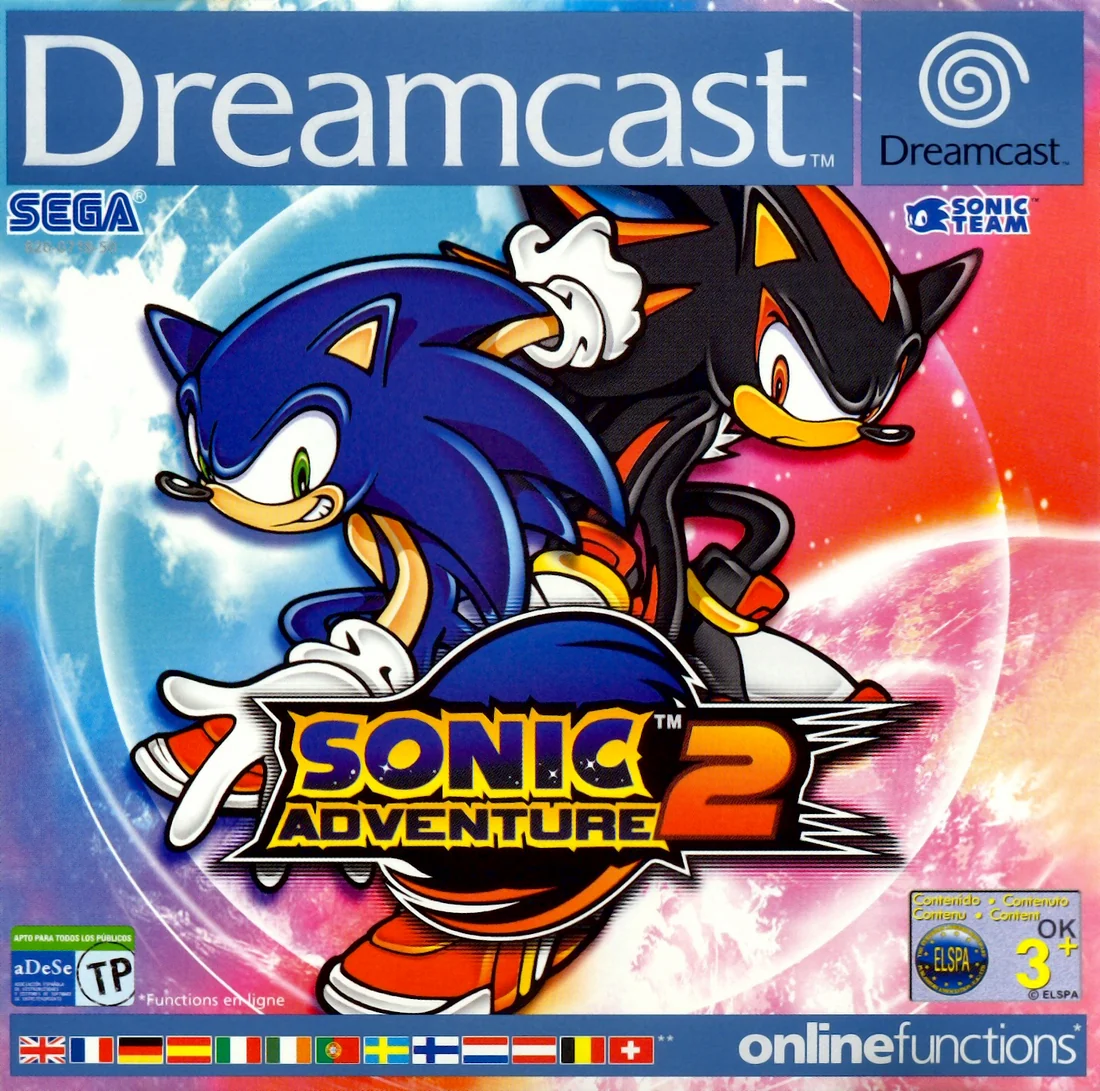
The VMU was far more than a conventional memory card. It contained flash memory for saves, a processor, a small monochrome screen, buttons, a speaker, and a battery. When attached to a controller, it could show information that only the local player was meant to see. In sports games it could display play information or private selections; in horror and action titles it could show health, ammunition, or other status details. When removed from the controller, it could run small applications and mini-games. Its most famous use came in Sonic Adventure, where players could raise Chao creatures through a self-contained activity resembling a digital pet.
The VMU anticipated several later ideas, including companion screens, portable player data, and downloadable or persistent content. Its weaknesses were equally instructive. Storage capacity was limited, batteries were required for the screen and standalone functions, and players often needed several units for a growing library of games. Sega and third-party developers nevertheless used the device creatively. The VMU made multiplayer information more private, gave games a secondary display without requiring another television, and made the memory card itself part of the play experience. It helped Dreamcast feel different from both PlayStation and Nintendo hardware rather than merely faster than Saturn.
Arcade Heritage and Landmark Software
Sega’s arcade divisions were among Dreamcast’s greatest strengths. The console shared important technology and development practices with Sega’s NAOMI arcade hardware, allowing some arcade concepts and assets to move between coin-operated machines and home software more efficiently than before. This relationship helped Dreamcast receive games that had previously seemed too advanced or too specialized for a home console. Virtua Fighter 3tb, Sega Rally 2, Crazy Taxi, Power Stone, and The House of the Dead 2 all reflected Sega’s ability to turn short, readable arcade experiences into living-room games without abandoning their immediate character.
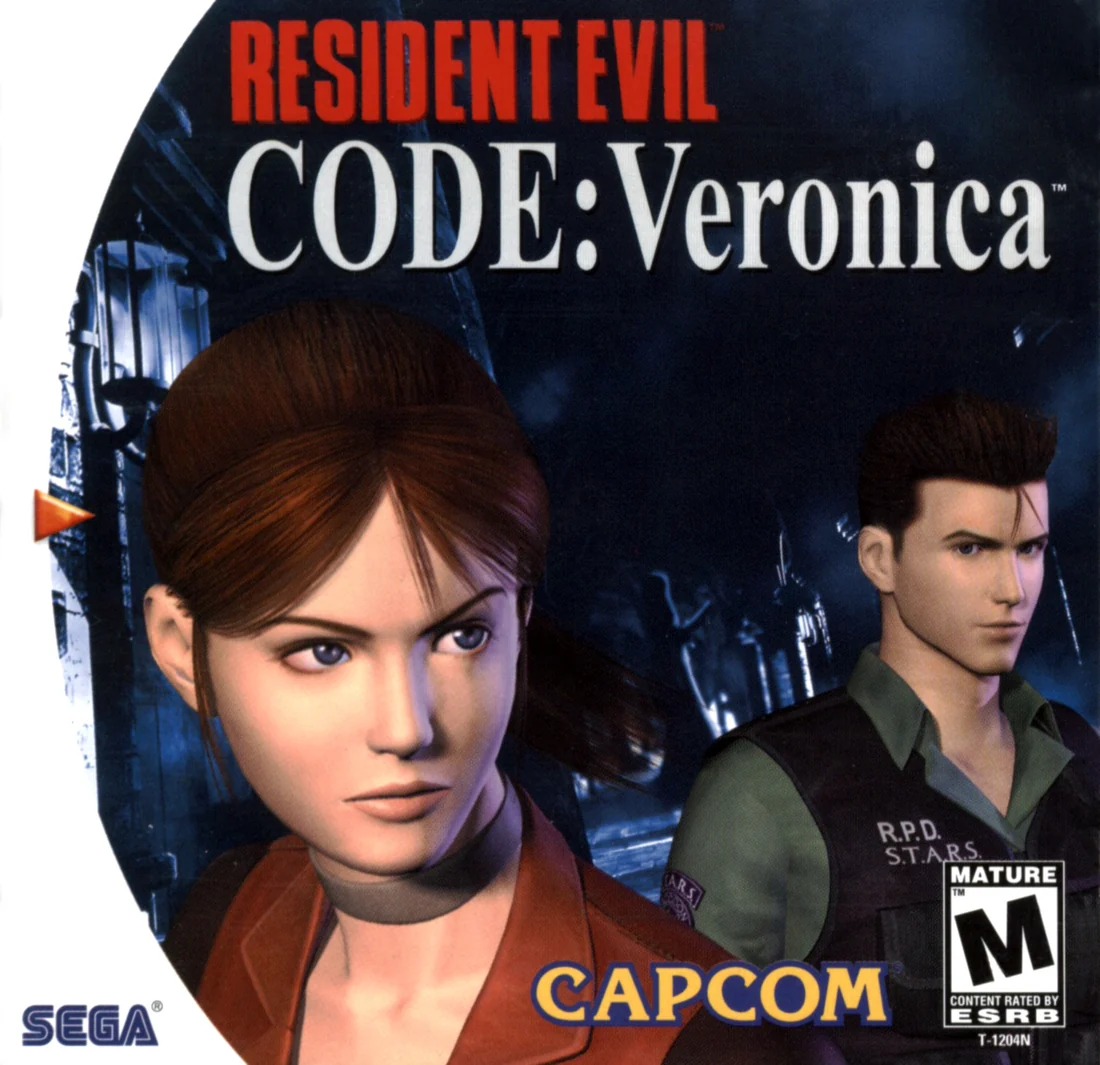
Namco’s Soulcalibur became one of Dreamcast’s most important technical showcases. It featured detailed fighters, expressive animation, elaborate arenas, and a fluid presentation that convinced many players the home version could match or surpass the arcade experience. Dreamcast also became a favored platform for two-dimensional and three-dimensional fighting games. Marvel vs. Capcom 2, Street Fighter III: 3rd Strike, Capcom vs. SNK, Project Justice, and other releases gave the system unusual importance among enthusiasts who cared about responsive controls, arcade accuracy, and display quality. Capcom’s support was especially important because it filled gaps in Sega’s own catalog and extended the machine’s life with games aimed at dedicated players.
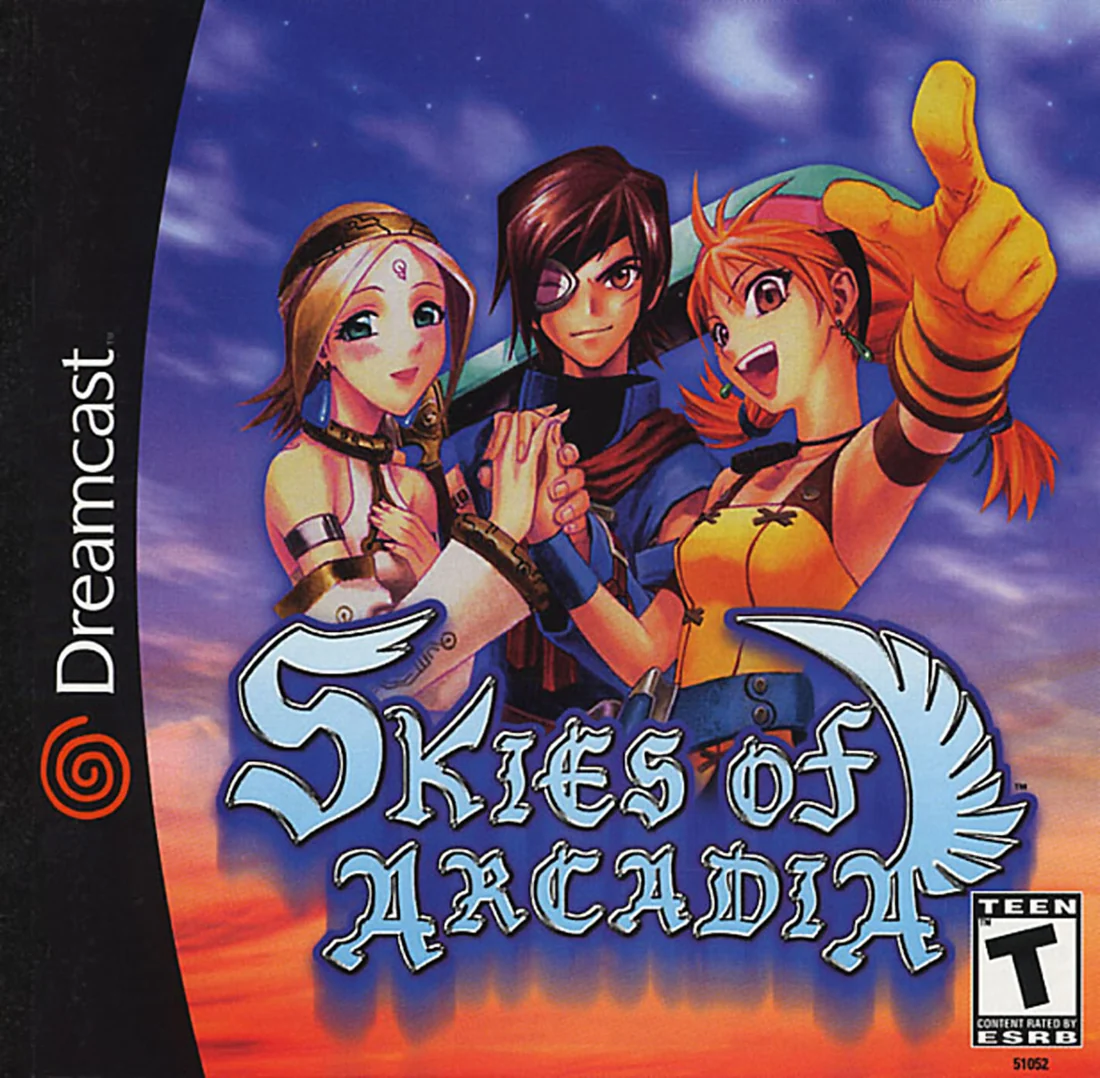
Sega’s first-party library was broader than a simple arcade showcase. Sonic Adventure brought the company’s mascot into a large 3D adventure, although its camera and pacing revealed how difficult that transition could be. Virtua Tennis reduced the sport to readable timing and satisfying rallies. Jet Set Radio combined cel-shaded graphics, skating, graffiti, music, and a stylized urban world. Space Channel 5 used dance commands and science-fiction television imagery, while Skies of Arcadia offered a colorful role-playing adventure centered on airships and exploration. These games did not appeal to one universal audience. Their importance lay in showing that Dreamcast could support many sharply different creative identities within a relatively small library.
Shenmue and the Attempt to Build Living Worlds
Shenmue was Sega’s most ambitious attempt to redefine the scale and structure of a console game. Yu Suzuki and Sega AM2 had originally developed the project for Saturn as a Virtua Fighter-related role-playing adventure, but the project’s scope and technology eventually moved to Dreamcast. The finished game followed Ryo Hazuki, a teenager investigating his father’s murder in a carefully reconstructed Japanese town. It combined martial-arts combat, exploration, dialogue, weather, time progression, arcade diversions, collectible objects, and a large number of voiced or partially voiced interactions. The game was not merely a sequence of action stages; it tried to make the player inhabit a place.
Shenmue’s most influential feature was its attention to routine. Shops opened and closed according to schedules, characters followed daily patterns, the weather changed, and the player could spend time on activities that were not strictly necessary to advance the investigation. This produced a sense of a world governed by overlapping systems rather than by isolated levels. The same structure could also feel slow. Travel, repeated conversations, waiting, and the deliberate pace of Ryo’s investigation made the game unusually patient. Shenmue showed that environmental detail and systemic simulation could create immersion, but it also demonstrated that realism did not automatically produce a faster or more universally accessible experience.
The project’s scale became part of Sega’s financial problem. Shenmue was a prestige title that demonstrated Dreamcast’s capacity for detailed environments and cinematic presentation, yet its commercial return could not by itself offset Sega’s losses in hardware and corporate operations. Shenmue II was released in 2001, after Sega had already decided to leave the console business. The series influenced later open-world design through schedules, contextual interaction, detailed environments, and a world that continued to operate outside the player’s immediate objective. Its legacy therefore reaches beyond its original sales. Shenmue helped normalize the idea that a game world could be valuable as a place to observe, revisit, and inhabit.
Online Gaming Before It Became Standard
Dreamcast included a built-in dial-up modem, making internet connectivity part of the basic platform rather than an optional accessory. Japanese models generally used 33.6 kilobits per second, while many overseas models used 56 kilobits per second. The modem could connect to internet service providers, web browsers, email, online game servers, and Sega’s regional network portals. Software such as Dream Passport, DreamKey, and PlanetWeb offered different combinations of browsing, account access, news, and game-related services. Sega’s corporate history later described Dreamcast as the company’s first console with built-in online communication capabilities, a distinction that reflected how central networking was to its identity.
The approach had practical limits. Dial-up was slow, telephone lines could be occupied during play, and users sometimes faced connection charges, access restrictions, or configuration problems. Sega worked with regional partners to reduce those barriers. Europe received Dreamarena, while North America received SegaNet and related services. These were not modern unified console networks with one permanent account system and standardized matchmaking. They were collections of portals, providers, game servers, and regional arrangements. Nevertheless, they established a key expectation: a console could be connected to the internet from the moment it was purchased, and online functions could be marketed as a normal part of gaming rather than as a specialist experiment.
The games demonstrated the idea more convincingly than the portals. ChuChu Rocket! supported online competition in Japan and became an early example of console puzzle play across a network. Phantasy Star Online turned online role-playing into a console-friendly experience built around small groups, exploration, combat, trading, and social interaction. Quake III Arena and Unreal Tournament brought fast multiplayer shooters to the living room, with keyboard-and-mouse support available in some configurations. Sega’s sports games also used online competition to make seasonal games feel more persistent. Dreamcast’s network services were temporary, but the design experiments anticipated later console systems from Microsoft, Sony, and Nintendo.
Competition, Publishers, and the PlayStation 2
Dreamcast’s early Western success did not erase the damage Saturn had caused. Retailers remembered Sega’s abrupt hardware shifts, inconsistent regional strategies, and history of abandoning products. Publishers had to decide whether Dreamcast would build a sufficiently large audience to justify expensive new projects. Sega improved its development tools and attracted important support from Capcom, Namco, Tecmo, Ubisoft, Visual Concepts, and others. Even so, support varied by territory and genre. The machine could have excellent releases in fighting games and arcade action while lacking the particular franchises that made a platform seem safe to a broad household audience.
Electronic Arts’ absence was especially significant. EA was a major publisher of mainstream sports and action games, and its Madden, FIFA, Need for Speed, NHL, and other brands influenced which console many consumers considered essential. Sega responded by investing in Visual Concepts and developing the Sega Sports line, including NFL 2K, NBA 2K, NHL 2K, World Series Baseball, and related titles. These games were creatively important and eventually helped reshape competition in sports publishing. They could not immediately replace the habitual audience, licenses, and marketing reach associated with EA’s sports brands. The absence was more damaging in North America than in Europe, where some American sports franchises were less central to the market.
Sony’s PlayStation 2 created the larger strategic threat. Sony presented it as a powerful next-generation console and as an affordable DVD player at a time when DVD adoption was expanding rapidly. Even before its release in every region, announcements and demonstrations changed consumer expectations. Some potential Dreamcast buyers chose to wait, while publishers concentrated resources on the platform they expected to dominate the coming generation. Dreamcast had the advantage of being available first, but that advantage weakened when consumers saw it as a machine that might soon be replaced. Sega had won an opening period, but Sony controlled much of the conversation about the future.
Revisions, Accessories, and Hardware Limits
Sega revised Dreamcast hardware during its commercial life without repeating Saturn’s most confusing add-on strategy. The main console remained compatible across revisions, although changes to the motherboard, optical drive, and copy-protection implementation affected repair behavior and the ability to run unofficial software. Regional models also differed in modem configuration and bundled software. Sega later supported the Broadband Adapter, which replaced dial-up with Ethernet for compatible online games. The adapter was better suited to fast multiplayer and avoided telephone-line problems, but it was scarce and never became a standard component of the installed base.
Dreamcast’s video output was another distinctive feature. The console could support VGA output on compatible games and displays, producing a sharper image than composite video and making the system attractive to arcade enthusiasts and technical users. VGA was not universal: individual games determined whether it worked, and television and monitor compatibility varied. The keyboard and mouse expanded the usefulness of online shooters and browser software, while racing wheels, light guns, microphones, fishing controllers, maracas, and other peripherals supported specialized games. Sega Bass Fishing, Samba de Amigo, The House of the Dead 2, and typing or communication software all reflected the company’s willingness to treat unusual input devices as part of the platform’s identity.
These accessories also exposed the limits of Sega’s business position. A peripheral was useful only when enough software supported it, and a software developer had less incentive to target an accessory if the installed base was small. Dreamcast therefore created a cycle of exciting experiments and narrow audiences. The system’s architecture was powerful, but it was not designed around DVD video, and GD-ROM did not offer the same consumer appeal as a format that could also play movies. Its innovations were often meaningful to players who bought the machine, yet the commercial market rewarded scale, familiarity, and broad publisher support as much as technical imagination.
Financial Crisis and the End of Sega Hardware
Dreamcast’s failure resulted from accumulated pressures rather than one bad game or one defective component. Sega faced debt, high manufacturing and marketing costs, software development expenses, weak Japanese demand, and the burden of coordinating several regional operations. The company could report strong sales in North America and Europe while still struggling overall because aggressive hardware pricing reduced margins and because profitability depended on software royalties, accessories, and sustained growth. Dreamcast’s initial Western performance created genuine optimism, but the later slowdown arrived before Sega had recovered from Saturn-era losses.
On January 31, 2001, Sega announced that it would stop manufacturing Dreamcast hardware and reorganize around software, arcade operations, and third-party publishing. Contemporary reporting said production would end by March 31, 2001, while existing inventory and software continued to reach retailers. This distinction matters. The announcement ended Sega’s commitment to continuing hardware production, but it did not instantly remove every console from stores or cancel every game already in development. Hardware discontinuation, inventory clearance, the end of first-party support, and the end of online services were separate processes with different dates.
The decision ended Sega’s role as a major home-console manufacturer after roughly three decades. It was painful for the company’s fans and developers, but it also freed Sega to publish games for PlayStation 2, Xbox, GameCube, and personal computers. Sonic Adventure 2, Shenmue II, and other late Dreamcast releases appeared after the hardware decision, while Sega Sports properties influenced later competition across several systems. Dreamcast demonstrated that a technically admired machine could still become unsustainable when its manufacturer lacked sufficient cash, market share, publisher confidence, and consumer trust to survive a generation defined by scale.
Cultural Impact and a Distinctive Software Identity
Dreamcast’s short lifespan gave it a particularly concentrated cultural identity. Because it arrived before PlayStation 2, early adopters experienced a visible generational change: smooth 3D graphics, fast arcade conversions, a modern-looking interface, and the novelty of connecting a console to the internet. The hardware also looked different from the gray and black electronics that dominated the period. Its compact white body, regional swirl logos, unusual controller, and VMU made it recognizable even to people who did not own one. That visual distinctiveness helped transform the system from a failed product into a memorable cultural object.
The software library was unusually experimental. Jet Set Radio used cel shading and a music-driven urban setting before those techniques became common across the industry. Seaman combined a microphone with a conversational digital creature. Samba de Amigo turned maracas into the central control method. Rez explored abstract audiovisual design, while Typing of the Dead transformed keyboard practice into an arcade shooter. Skies of Arcadia, Grandia II, Record of Lodoss War, Power Stone, and other games gave the system strength in role-playing, fighting, and cooperative action. No single genre defined the entire catalog, but the library consistently rewarded players who wanted something more distinctive than the safest mainstream formula.
The system also strengthened Sega’s relationship with creators and audiences who valued originality, arcade immediacy, and bold presentation. Its failure became part of its mythology, but nostalgia alone does not explain the continuing interest. Dreamcast had a recognizable design philosophy: rapid access to play, strong arcade translation, expressive audiovisual style, peripheral experimentation, and early network features. Its commercial defeat made those qualities appear concentrated because Sega had little time to dilute them through a long sequence of revisions. Dreamcast became remembered not as an ordinary machine that happened to fail, but as a brief alternative path that offered ideas the larger market would adopt only later.
Preservation, Homebrew, and Lasting Influence
Preserving Dreamcast is complicated because the platform combines aging optical drives, proprietary GD-ROM media, regional hardware variants, fragile VMU batteries, discontinued network services, and components that may require repair or replacement. Preservation therefore involves more than copying software. Researchers, collectors, and archivists document prototypes, regional differences, manuals, development tools, advertising, online portals, controller hardware, and packaging. These materials explain not only what the console played, but how Sega expected people to use it. A restored disc image without its technical and commercial context would preserve only part of the platform’s history.
Dreamcast’s comparatively approachable architecture helped support a long-running homebrew scene. Developers produced unofficial games, ports, utilities, media applications, emulators, and replacement network tools. Vulnerabilities and design decisions in the optical system also allowed some systems to run software from recordable media, although methods varied by hardware revision and raised legal as well as preservation questions. Independent publishers later released new physical software for the console, showing that a discontinued system could remain a development target rather than merely a nostalgic artifact. The homebrew scene also kept alive technical knowledge that would otherwise have disappeared with Sega’s original documentation and services.
Online preservation is especially revealing. Sega’s official portals and many original servers disappeared, but enthusiasts reconstructed alternative infrastructure for games such as Phantasy Star Online, Quake III Arena, and other network titles. These projects preserve more than multiplayer matches. They recreate lobbies, character names, message systems, browser functions, and the social experience of using a console as an internet terminal at the end of the 1990s. At the same time, aging web standards and vanished service providers demonstrate that preservation cannot depend on the original internet remaining unchanged. Dreamcast survives through documentation, emulation, repaired hardware, fan servers, archival work, and new software built around old constraints.
Why Dreamcast Still Matters
Dreamcast’s influence can be traced through several later developments. Its built-in modem helped make online console play a platform expectation rather than a specialist add-on. The VMU suggested that a controller could contain a private display and active storage. Its relationship with NAOMI arcade hardware anticipated closer links between arcade boards, home systems, and shared development pipelines. Sega Sports demonstrated that a publisher could challenge entrenched sports franchises through design quality, presentation, and online competition. Phantasy Star Online showed that console users could accept networked role-playing without needing a personal computer, while Sega’s browser and portal experiments anticipated consoles becoming general-purpose network devices.
The machine also influenced visual and creative trends. Cel shading became widespread after games such as Jet Set Radio made it a recognizable artistic technique. Open-world design absorbed ideas that Shenmue had explored through schedules, environmental detail, contextual interaction, and a world that continued to operate outside the player’s immediate objective. Fighting-game enthusiasts continued to regard Dreamcast as an important home platform because of its arcade conversions, controller options, and video output. Even its failures offered lessons. A console could be technically advanced and artistically successful yet lose if its manufacturer lacked stable finances, broad publisher support, a dependable product history, and enough time to build a market.
Dreamcast was Sega’s final home console, but it was not merely the end of an era. It concentrated the company’s strengths and weaknesses in one machine. Sega understood arcade design, visual spectacle, unusual peripherals, online experimentation, and software with strong individual identities. It struggled with corporate coordination, financial discipline, timing, and the long-term confidence of partners and consumers. Dreamcast’s commercial life ended in the early 2000s, but its ideas continued through online console networks, sports competition, experimental interfaces, open-world systems, and preservation communities. The dream did not become Sega’s new empire. Instead, it became one of the clearest examples of how a failed platform can still help shape the future.