
The Legend of Zelda: Ocarina of Time (2026) approaches a famously foundational adventure with unusual discipline. This is not presented as a radical reinterpretation built to interrogate, dismantle, or replace the older game’s design. It is a painstaking recreation that improves the presentation, revises selected friction points, and adds a pair of movement and viewing tools that materially alter how players occupy Hyrule. The result is an impressive remake whose most persuasive argument is simple: the original structure still has enormous power.
That restraint cuts both ways. Players seeking a substantially reworked campaign, redesigned dungeons, or a newly reconsidered take on an influential classic may find the project exceptionally familiar. Those who want the recognizable adventure preserved with care, meanwhile, have plenty to admire. Ocarina of Time (2026) makes old spaces newly legible without pretending they are entirely different spaces.
A rebuilt Hyrule worth looking at
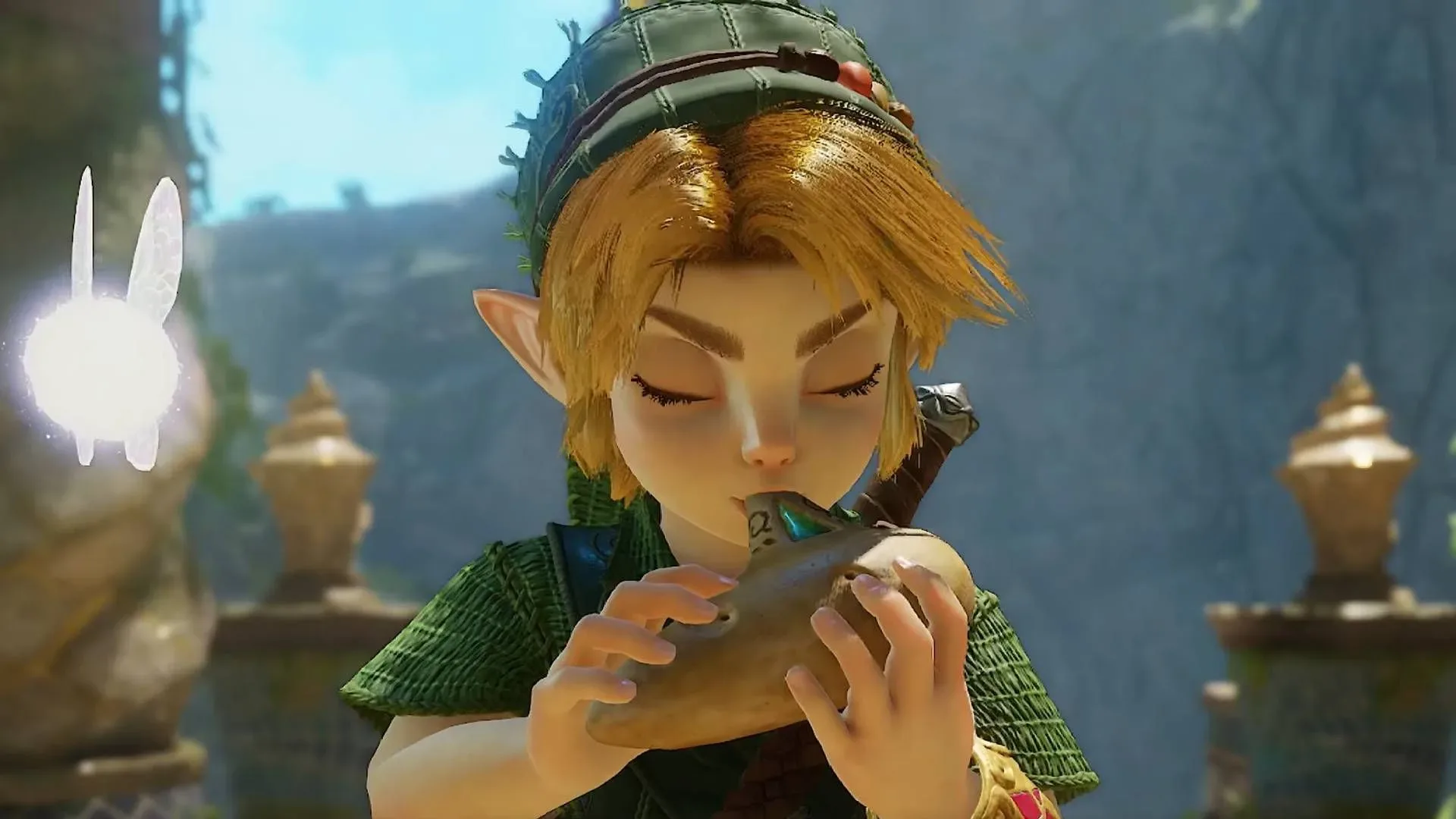
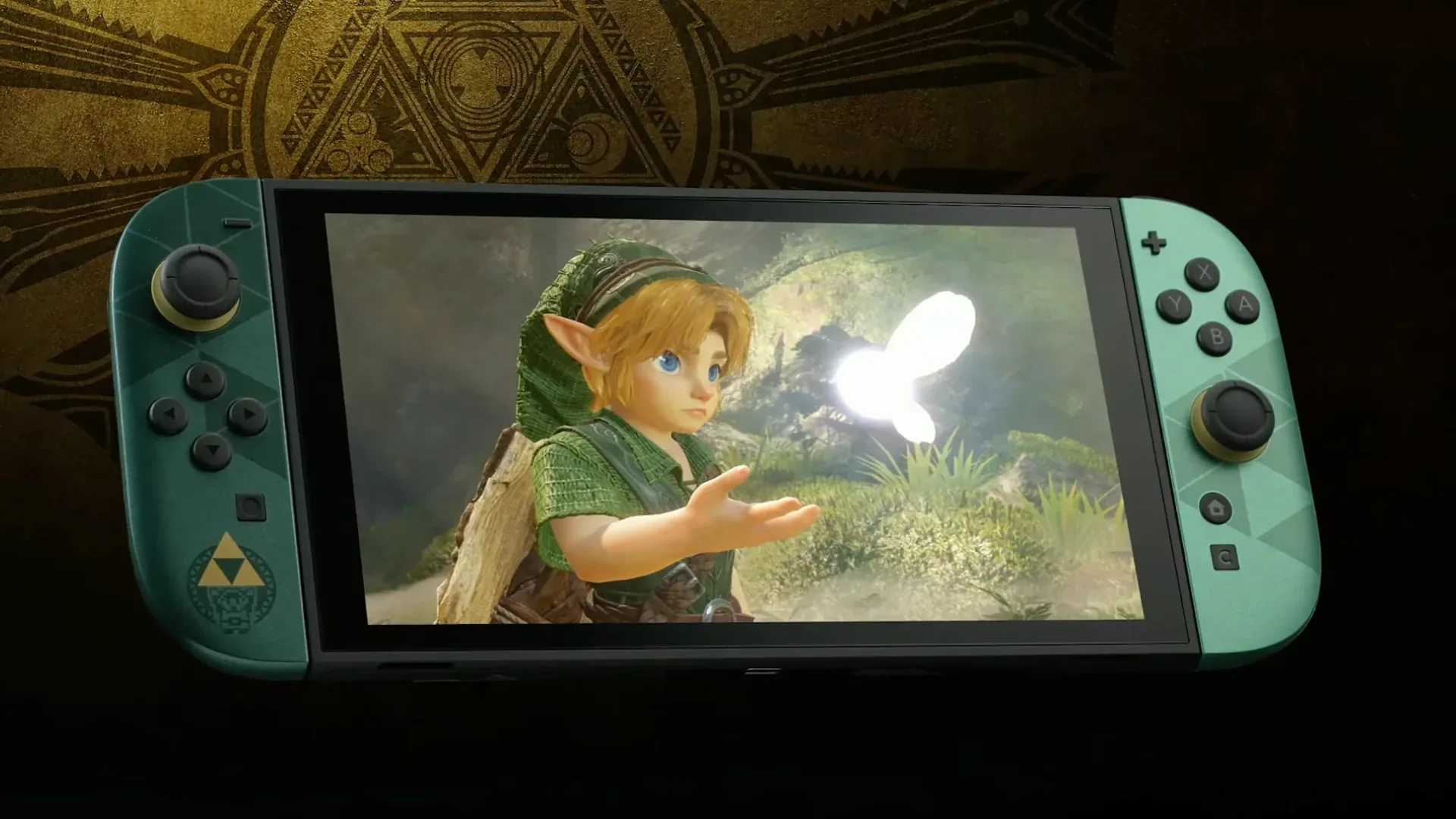
The visual overhaul is the remake’s most immediate success. Environments, enemies, items, bosses, and supporting characters have all been recreated in a far more detailed form, giving familiar places a renewed pull. The world’s changing light remains especially important: sunrises and sunsets over Hyrule retain the sense of occasion that helps the adventure feel larger than a sequence of objectives.
Not every redesigned face lands equally well. Child Link and Zelda have an awkwardness that may be difficult to shake, even amid otherwise strong character work. But the broader visual direction appears consistently effective, particularly when it comes to Hyrule’s stranger inhabitants and its more unsettling monsters. ReDeads and Stalchildren are positioned to make a stronger horror impression than before, while the range of updated character models rewards the simple act of meeting people again.
Technical polish serves more than surface-level nostalgia here. The rebuilt presentation helps players study locations that were once framed through more limited perspectives, including areas that previously used pre-rendered backdrops. This is where the remake makes its clearest experiential case: returning to a place that seems fully known, then noticing new angles and environmental detail that were unavailable or obscured before.
Camera and jumping change the texture of exploration
Full camera control is one of the most meaningful changes. It lets players turn their attention outward, inspect environments more freely, and establish their own view of Hyrule rather than working within a more tightly directed visual frame. That is not merely a convenience feature in a game whose locations are so central to its identity. The ability to look around can make a return trip feel less like reenactment and more like renewed discovery.
Active jumping has a similarly larger effect than its modest description suggests. It gives exploration a more direct, participatory quality, allowing players to move through spaces with an added degree of agency. Yet it also exposes the trade-off inherent in modernizing a design that was built around more constrained movement. Some hazards lose their bite when they can simply be jumped over; Blade Traps, specifically, become less threatening. The remake gains freedom at the cost of a little environmental menace.
That tension is useful rather than fatal. The new controls improve the pleasure of wandering and observing, which is a major asset in an adventure defined by its world. Still, players who prize the original’s exact obstacle rhythms should expect small shifts in challenge and pacing. This is preservation with adjustments, not a museum-piece replica.
Classic dungeon logic, gently sanded down
The fundamental design remains intact: time travel reshapes the world, puzzles ask players to connect ideas across spaces, and combat uses simple foundations to generate excitement. The time-travel premise remains one of the game’s strongest pieces of structure because it makes change visible. Returning to a location and recognizing that its state has evolved gives progression a tangible dramatic effect, rather than reducing it to a checklist of completed tasks.
Dungeon and puzzle revisions are more conservative. Annoyances have been trimmed, with the Water Temple requiring fewer keys, but the remake does not appear interested in reconstructing the dungeons from the ground up. That should be welcome news for players attached to their original layouts and puzzle identities. It may be less compelling for veterans hoping the remake would use hindsight to offer truly unfamiliar challenges.
The same applies to combat. New swordplay effects make successful hits feel more satisfying, lending extra force to an already direct combat model. But the core is still simple, and the game does not seek to transform it into a modern action system. This is a sensible fit for the remake’s larger philosophy: enhance feedback and remove select irritations, while leaving the essential language of the adventure recognizable.
Players interested in games where shifting periods reshape a place may also find a worthwhile thematic companion in Echoes of Mora PC Design Feature: Reading a Flooded Village Across Two Times. Ocarina of Time’s own use of temporal change is not presented as a new invention here, but it remains an effective way to make familiar geography feel different.
Sound and story receive thoughtful, not transformative, attention
The soundtrack’s new orchestrations are a major strength. They give the score a fuller presence while preserving its emotional role in the journey. The ocarina itself benefits from the audiovisual rebuild as well: watching Link’s hands play the appropriate notes adds a small but unusually pleasing layer of specificity to an iconic interaction.
Storytelling is also improved through revised dialogue and a handful of expanded character and narrative details. The additions are framed as more impactful rather than substantially more numerous, which is an important distinction. They can sharpen familiar scenes and add welcome texture without changing the meaning of major elements or reorienting the overall story. For returning players, that balance is likely the point. For newcomers, it may simply make an old narrative easier to connect with.
Voice acting is the conspicuous weakness of this update. Performances are stiff, and that stiffness keeps the production from achieving the complete dramatic fluency suggested by its visual and musical work. Fortunately, most dialogue is not voiced, so this does not dominate the experience. It does, however, make the moments that are voiced feel less assured than the surrounding presentation.
Who this remake is for
Ocarina of Time (2026) is most clearly for two groups. The first is returning players who want to revisit a beloved adventure in richer detail without seeing its identity overwritten. They will find a recreation that preserves the world, dungeon logic, time-travel structure, and combat foundations while providing better presentation, cleaner edges, a controllable camera, and active jumping.
The second is players who have never experienced this particular adventure and would prefer to meet it in a modernized presentation. The remake’s strengths are likely easiest to appreciate from that position: the game’s enduring puzzle design and evolving world can be encountered without the older visual and control limitations that might otherwise be a barrier.
Potential buyers should calibrate expectations carefully. This is not an overhaul that treats familiarity as a problem to be solved. Its revisions mostly make the old experience more inviting and expressive. That approach produces few true surprises, and certain adjustments can soften established threats, but it also avoids mistaking change for improvement. Ocarina of Time (2026) succeeds because it understands that meticulous care can be its own creative stance—even when it leaves the original game’s broad shape almost entirely intact.