Preview status: STARCULT. Night: Twisted Age is an upcoming PC game, not a completed release, and this is not a hands-on assessment. JokingJoystick has not played its demo, private beta, or any other build. The available evidence supports a look at the project’s stated design and one limited early-demo reaction, not a verdict on the finished game’s writing, routes, technical state, scope, or eventual release plan.
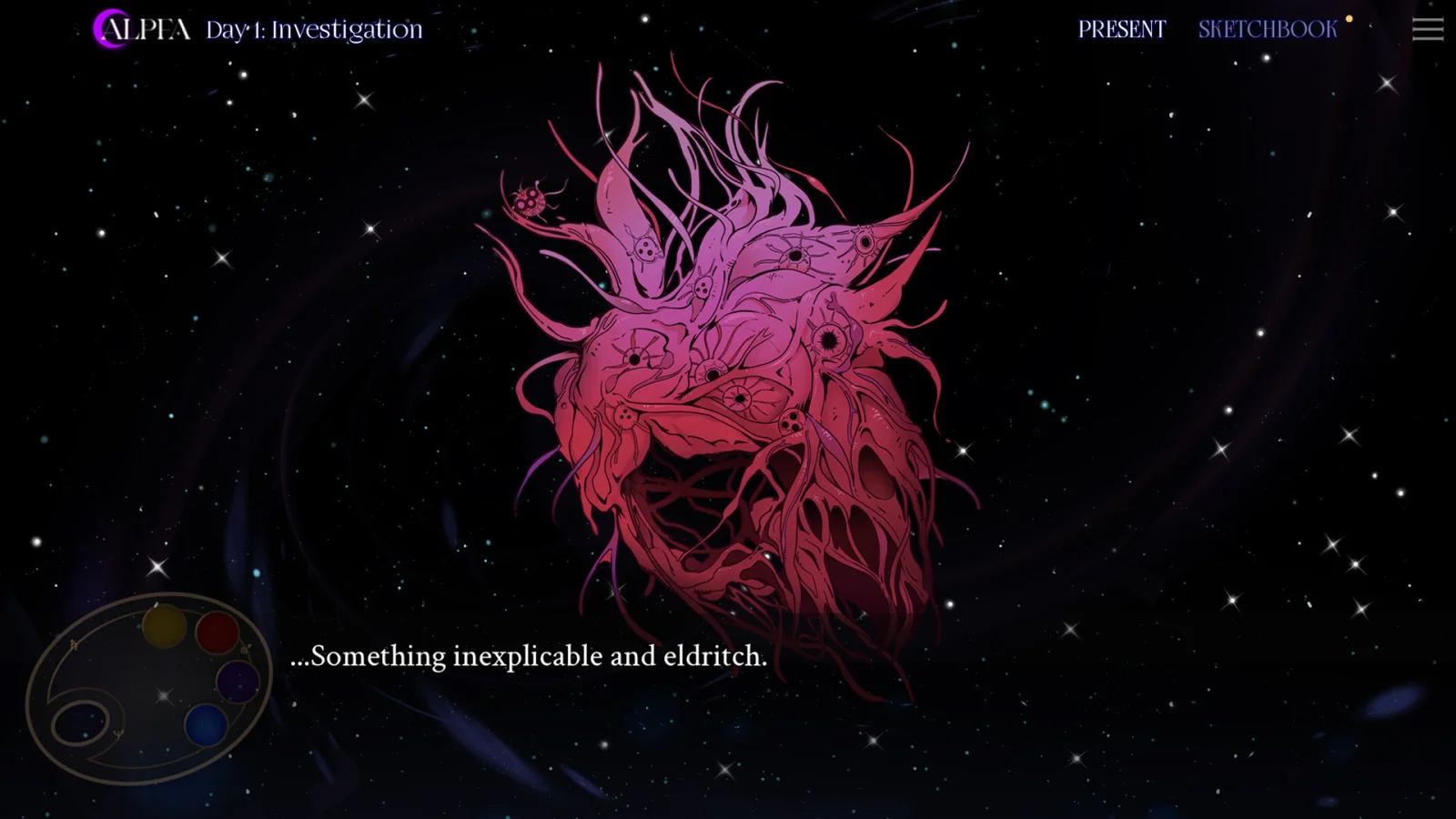
NOT A CAT STUDIOS describes STARCULT. Night: Twisted Age as a dark-fantasy visual novel that brings romance, mystery, and horror together around a protagonist whose emotional state can affect dialogue and relationships. That is a concise pitch, but it points to a potentially consequential idea for choice-driven fiction. Rather than treating the player character as a neutral delivery system for selected lines, the proposed emotion palette could make feeling part of the language through which choices are made.
The game is currently listed with a public demo and a planned Q4 2026 release window. The studio’s FAQ outlines a three-act rollout beginning around November 2026, while promotional planning has also identified a possible October Steam Next Fest appearance and November early-access launch for a first act. Those are plans rather than guarantees. The practical shape of the release, its schedule, and what each act contains remain matters for development to establish.
A premise built around emotional context
The clearest stated system is the emotion palette. Independent coverage of an early demo described fear, anger, sadness, and joy as emotions that can accumulate and influence conversational choices, with possible implications for relationships and story. That description should not be expanded into claims about exact rules, route structures, endings, or the extent of its narrative branching; none of those details are established here. It does, however, provide enough basis to discuss why the design direction is interesting.
Visual novels often derive their force from context. A line can be compassionate, evasive, cruel, flirtatious, defensive, or sincere depending on who says it, when it is said, and what the reader understands about the people involved. An emotion system has the potential to add another layer: not merely what the protagonist chooses to say, but the emotional pressure shaping the options that are available or persuasive at that moment.
That distinction matters. A conventional dialogue choice can frame agency as a clean decision between clearly labeled attitudes. A responsive emotional state could complicate that clean framing. Fear might make a cautious response more prominent; anger might invite confrontation; sadness might lend a conversation vulnerability; joy might open a lighter or more hopeful tone. These are analytical possibilities, not confirmed examples from STARCULT. The value would depend on how consistently the eventual game connects emotional accumulation, dialogue presentation, character reaction, and later consequences.
If the palette only changes wording while every conversation reaches the same place, it may still add texture, but its dramatic importance could be limited. If it changes how people interpret the protagonist, what trust is offered, or how events are understood, it could make the player’s evolving emotional state feel like an authored part of the story rather than a decorative meter. There is also room between those extremes. Small shifts in tone can matter greatly in a romance or a mystery if later scenes recognize them with enough specificity.
The concept also raises a productive question about agency. In many choice-led stories, agency means control: choose the response, pursue the relationship, identify the clue. An emotion palette could instead frame agency as management and expression. Players may be asked not simply what outcome they want, but what kind of person the protagonist is becoming under stress. That can make choices more intimate, particularly when a narrative is already concerned with emotional connection and dread.
Why romance, mystery, and horror are a fitting combination
STARCULT’s official genre mix is ambitious because its elements can reinforce one another. Romance gives relationships stakes beyond information gathering. Mystery provides unanswered questions and reasons to reassess what characters say or withhold. Horror can destabilize certainty, turning emotional intimacy into a source of comfort, danger, or both. A visual novel is well suited to that overlap because it can dwell on conversation, perspective, and implication rather than needing every dramatic escalation to take a mechanical form.
A responsive protagonist could be particularly useful in that space. In a romance, an emotion-sensitive conversation system may allow affection, distance, resentment, uncertainty, and trust to develop with more variation than a simple approval tally. In horror, the same system could potentially make the protagonist’s reaction part of the tension: fear is not only a theme described by the narrative, but a state that may shape communication. In a mystery, emotions may create friction around interpretation, making a character’s response to uncertainty as significant as the uncertainty itself.
Again, these are design possibilities, not promises that the final game will deliver a particular narrative complexity. The official description confirms the genres and the intended influence of emotion on dialogue and relationships. It does not establish how often those elements intersect, whether every emotional state receives comparable attention, or how the story will resolve their competing demands. Combining genres is compelling in principle; maintaining the balance is the harder task.
Horror and romance can pull toward different rhythms. Romance often benefits from room for conversations to breathe, allowing attraction, suspicion, and familiarity to change gradually. Horror can demand pressure, uncertainty, and escalation. Mystery has its own requirement: revelations must feel prepared without becoming obvious. A completed multi-act story would need to give each strand enough space that none becomes a label attached to another. The project’s appeal lies partly in that challenge.
For readers interested in how games manage distinct tonal ingredients, JokingJoystick’s Halloween review considers a different horror premise in which the balance between dread and lighter material is central. STARCULT should not be treated as a direct comparison: its announced format, emotional system, and romantic focus point to a substantially different design conversation.
What the early-demo evidence actually indicates
The independent early-demo preview offers a narrow but useful signal. It responded positively to the initial intrigue of the writing and to the distinctiveness of the character art, while also noting some typos. Its account of the emotion palette is the basis for the public description of fear, anger, sadness, and joy accumulating in ways that affect conversation. It assessed a limited demo rather than a complete work, and therefore cannot establish the quality or scale of the private beta, the first act, later acts, or a final release.
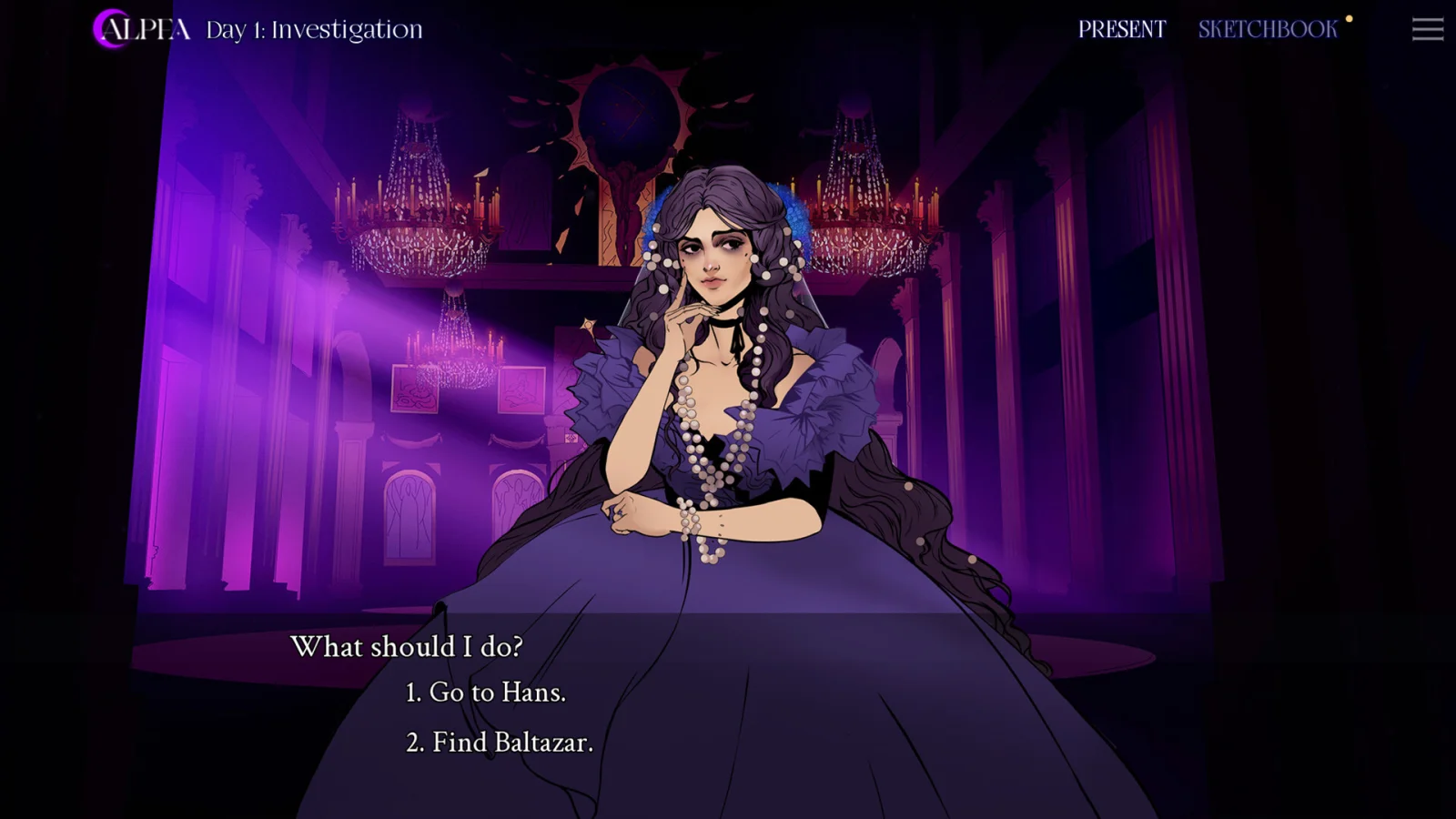
That limited reaction is encouraging in a specific sense: an opening for a narrative game needs to create curiosity, and the preview found initial intrigue there. Character art can likewise help establish identity quickly, especially in a format where faces, expressions, and presentation carry much of the communicative burden. The developer has said that the art is made by the studio itself. That is a factual attribution about authorship, not independent proof of the art’s quality or a reason to make broader claims about originality.
The reported typos are equally worth retaining in perspective. They are an observation from an early demo, not evidence that the final game will have the same issue, nor evidence that it will be fully corrected. Text quality matters in a visual novel because the writing is not incidental support for play; it is a primary means of pacing, characterization, and mood. Development revisions can address early textual issues, but only later public material can show what has changed.
Storefront quotation panels may repeat favorable demo impressions, but curated promotional quotation is not additional independent confirmation. The useful evidence remains modest: one early demo response found points of promise in the writing’s opening intrigue and character-art presentation, saw potential in the emotion system, and identified typos. Everything beyond that requires patience rather than extrapolation.
The challenge of consequences across acts
The proposed three-act plan makes consequence management especially important. A system that affects dialogue and relationships may feel responsive in an opening segment while becoming difficult to sustain once choices, emotions, and character bonds have accumulated. The challenge is not merely keeping track of variables. It is making the player understand why a response mattered, while preserving enough uncertainty for the story to remain emotionally alive.
Meaningful consequences do not necessarily require every choice to create a wholly separate plot. In a carefully written visual novel, consequence can appear through changed tone, remembered details, altered trust, a different interpretation of the same event, or an opportunity that feels different because of a prior emotional pattern. What matters is that the relationship between choice and result feels legible enough to be meaningful, but not so mechanical that characters resemble transparent reward systems.
For STARCULT, the emotion palette may create an additional balancing problem. Players should ideally be able to understand that emotions are accumulating and affecting conversations without reducing every scene to a calculation. If the eventual presentation makes the system’s effects too opaque, players may struggle to connect cause and outcome. If it explains every effect too directly, suspense and character ambiguity may weaken. There is no public evidence yet of where the game lands on that spectrum, only a reason to watch how it communicates its central idea.
A multi-act rollout also places pressure on continuity. Later material would need to recognize earlier relationship states and emotional histories in ways that feel intentional, particularly if the story asks players to invest in romance alongside mystery and horror. That does not mean every past detail must return. It means the game’s major emotional claims should have durable narrative weight. Whether STARCULT can maintain that weight is an open question, not a conclusion available from its demo evidence.
What remains unproven
The announced premise has clear potential, but it should not be mistaken for completed-game evidence. There is no basis here to judge the full narrative, the quality of later writing, the range of relationship outcomes, the total relevance of the emotion palette, the final polish of the text, or the technical condition of any release. Nor does the existence of a public demo establish that the wider project will arrive on the current timetable.
There is also no need to impose a false certainty on the visual-novel audience. Readers who enjoy choice-driven stories may find the combination of emotional state, romance, mystery, and horror worth following, particularly if they are interested in narratives where the protagonist’s interior life may shape interactions. Other readers may reasonably wait for a fuller act or a finished release to see whether that promise is carried through. Neither position requires assuming a broad consensus or treating preliminary attention as proof.
The most responsible reading of STARCULT. Night: Twisted Age is therefore a focused one. Its official description outlines a dark-fantasy visual novel with a potentially expressive core system. The available early-demo reaction suggests that its opening writing and character art made an impression, while identifying typos that underline the unfinished context. The rest—the strength of its romances, the cohesion of its horror and mystery, the significance of its choices, and the durability of its multi-act consequences—belongs to the work still ahead.