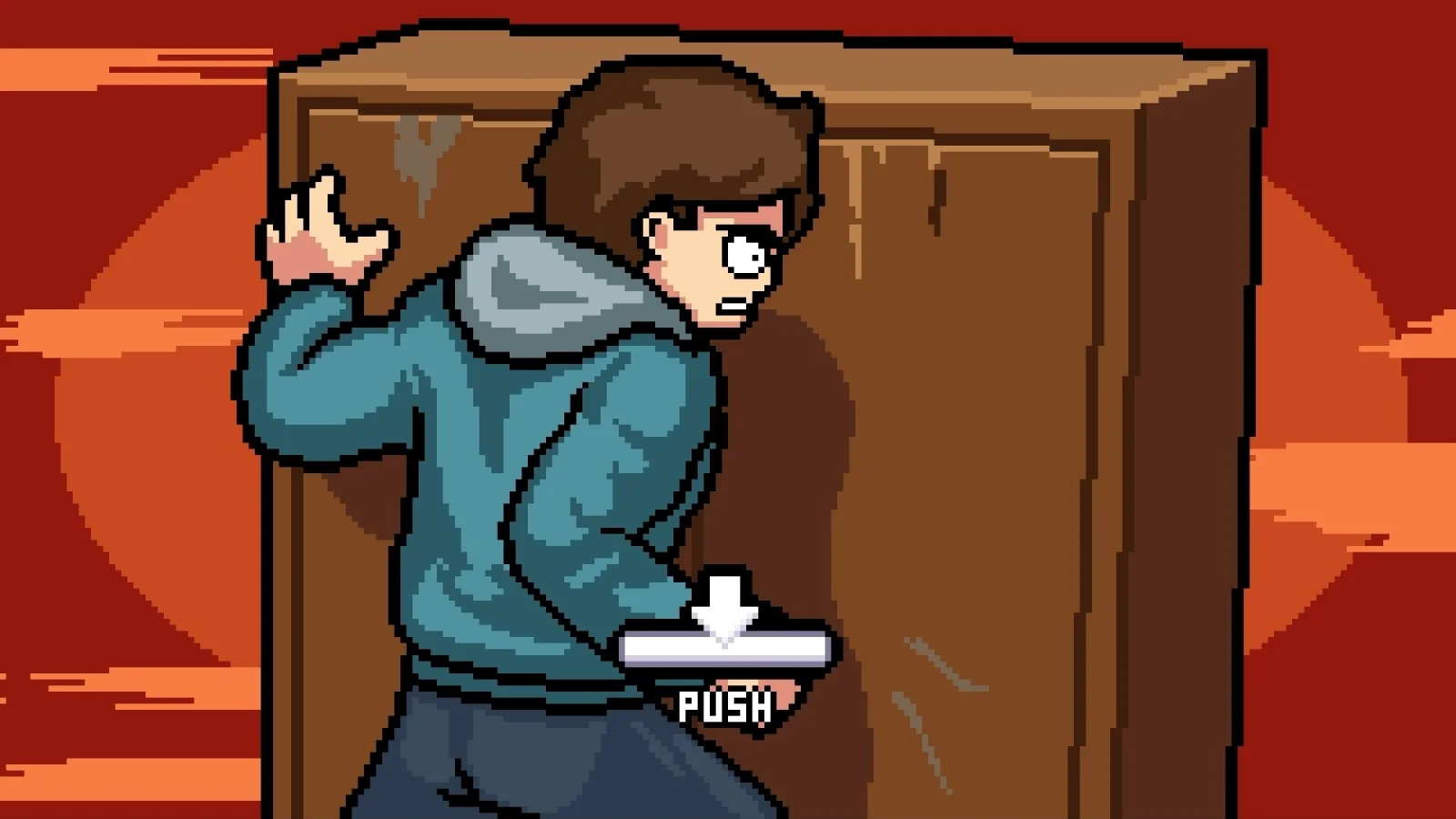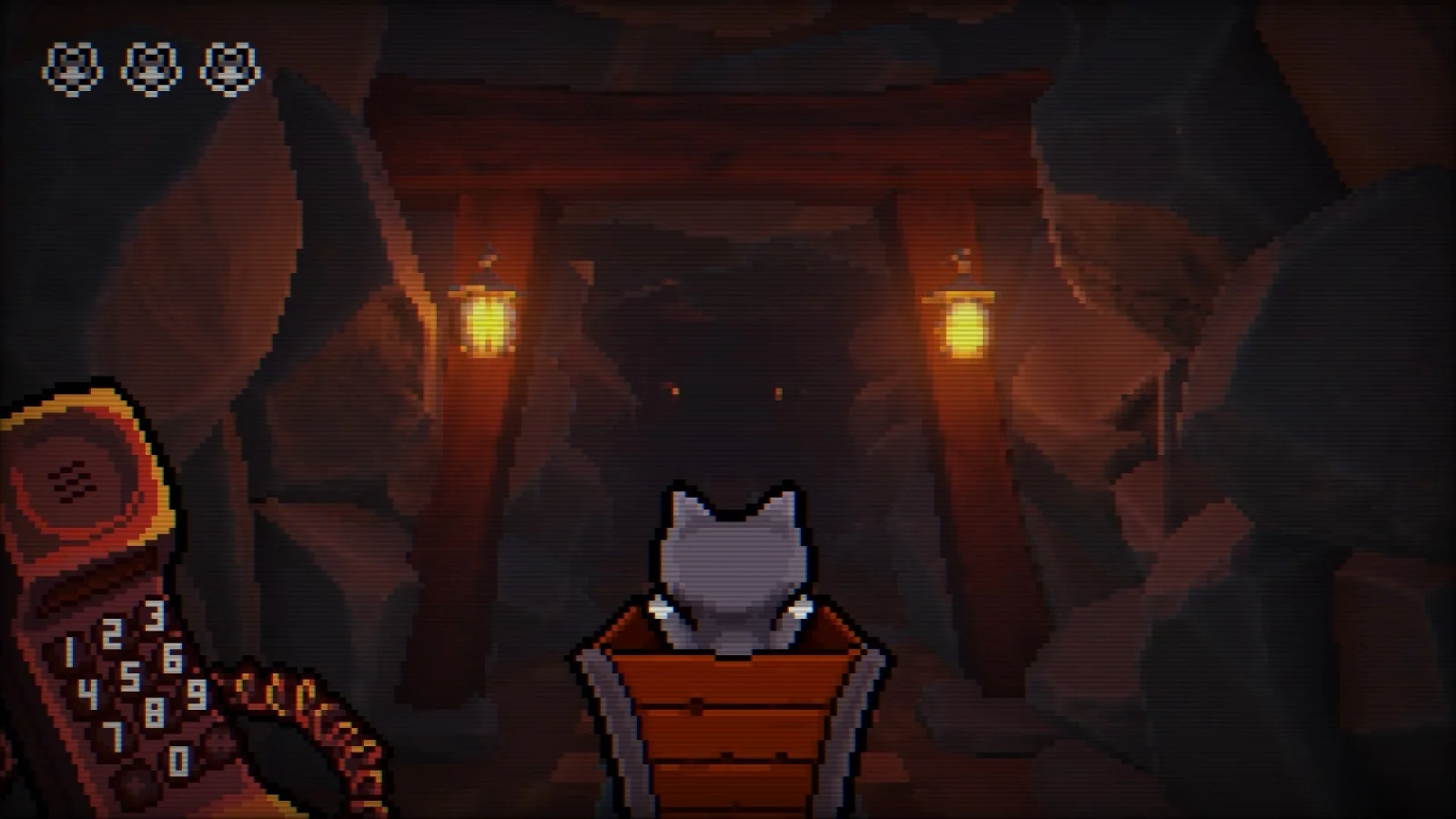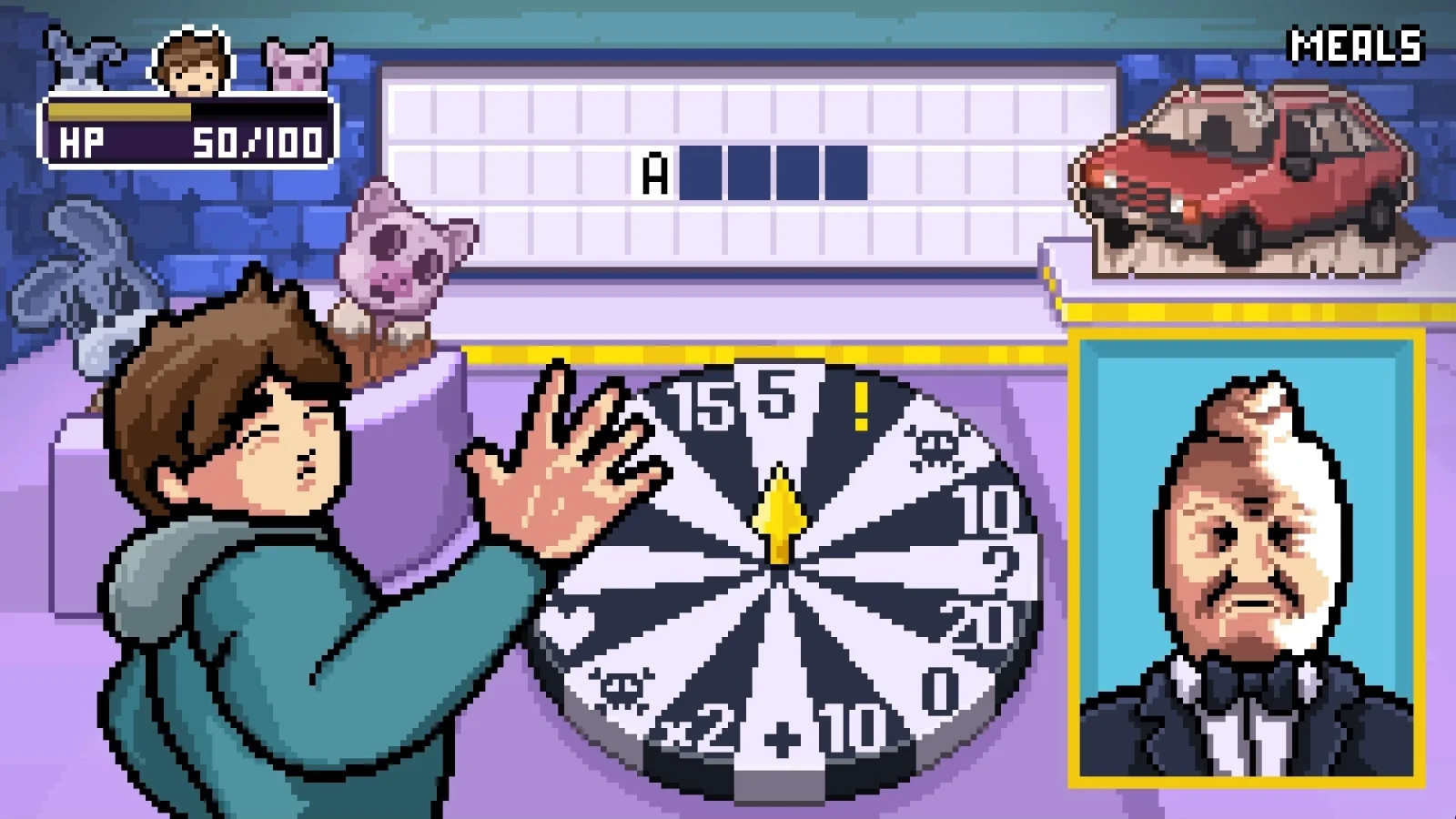
Midnight Souls is an announced PC game from developer BolshakovSergey and publisher SpaghettiCat. Its premise sends a protagonist to the sleepy village of Camomile Peaks to meet an online romantic interest, accompanied by their cat, Charlie. Beneath the town’s charming exterior sits a supernatural mystery. The announced design includes clue gathering, puzzles, quick-time events, minigames, allies, risks, combat, dodging, bosses, fears, and a stated need to protect Charlie, who may also help.
This is an announced-design preview rather than a hands-on review. The currently available description establishes the project’s premise and planned activity categories, but not their final pacing, controls, structure, difficulty, or quality. There is no supplied release date. The most useful way to consider Midnight Souls now is as a game with several potentially complementary ideas and a clear need to make those ideas feel like parts of the same journey.
A romantic meeting gives the mystery a human reason to begin
Camomile Peaks is not merely a destination chosen because it is strange. The protagonist travels there to meet an online romantic interest. That detail gives the visit an emotional purpose before the supernatural premise enters the foreground. It can introduce anticipation, uncertainty, and the understandable vulnerability of arriving somewhere unfamiliar to meet a person known at a distance.
This setup could distinguish the game’s mystery from one built only around professional investigation or accidental trespass. The protagonist’s reason for arriving may make the town matter as a social space as well as a place of danger. A hopeful plan can give later unease a sharper contrast: something personal and potentially intimate is interrupted by events the protagonist did not expect or understand.
The announcement does not describe the relationship’s development, its narrative importance after the arrival, or whether players influence it. It would be premature to assume romance choices, branching scenes, or particular revelations. Yet the premise supports a worthwhile dramatic possibility. The emotional question of whom to trust could sit beside the larger question of what Camomile Peaks is hiding, without needing either thread to become a conventional version of the other.
That distinction matters. Supernatural suspense often benefits when fear has something ordinary to press against. A personal visit can supply that ordinary anchor: the expectation of a meeting, the effort of travelling to an unfamiliar place, and the desire for a good outcome. If the finished game gives that situation enough presence, the mystery may feel less like an abstract puzzle dropped onto a map and more like an intrusion into a recognizably human moment.
The village needs to earn both halves of its identity
The official premise presents Camomile Peaks as sleepy and charming on the surface, with a supernatural mystery underneath. This contrast is the game’s central atmospheric proposition. The key opportunity is not simply to reveal that the town is dangerous; it is to make its calm exterior meaningful enough that players understand what is being disturbed.
Environmental detail could do much of that work. If the village’s apparent normality is expressed through places, objects, routines, or people that carry a readable character, later discoveries could encourage players to reconsider what they thought they understood. A detail seen early might acquire a different implication after a clue, an encounter, or a conversation with an ally. That kind of recontextualization can make investigation feel connected to place rather than limited to collecting isolated answers.
The announced premise does not identify locations, explain the town’s layout, or say how the supernatural material is communicated. Still, the setting has a potentially useful dramatic function. Camomile Peaks can be more than the container for gameplay if its charm establishes a baseline and its mystery challenges that baseline in legible stages. Suspense becomes more pointed when the player has a sense of what “safe” was supposed to mean.
For a different look at why horror depends on a convincing relationship between dread and the spaces players repeatedly inhabit, see our assessment of Dream Cage’s horror setting and tension. The projects’ announced or assessed designs should not be treated as direct comparisons, but the broader question of whether a setting sustains unease is relevant to Midnight Souls’ stated village premise.
Camomile Peaks could also support uncertainty without abandoning its identity. The strongest version of the announced contrast may not be a simple switch from pleasant village to hostile zone. It could instead allow charm and discomfort to occupy the same space, so that the protagonist is never entirely certain whether an apparently reassuring detail is truly reassuring. That is only a possible direction suggested by the premise, not a claim about the game’s story or environmental design.
Investigation should supply the connective tissue
Clue gathering and puzzles are among the announced features most naturally suited to a concealed supernatural mystery. They could give players a reason to observe Camomile Peaks closely and turn information into participation. Rather than merely being told that the village has a secret, players could be asked to recognize details, retain context, and make connections.
For this material to carry the game’s dramatic weight, clues would ideally do more than unlock the next task. They could explain why the town’s surface is deceptive, clarify what threatens the protagonist and Charlie, or alter the significance of an ally’s involvement. Puzzles could then become moments where the player acts on what has been learned. In that arrangement, investigation is not a pause between frightening events; it is the process that gives those events meaning.
There are several possible pitfalls inherent to the announced concept, though none can be assigned to the game before play. If clues are too detached from their surroundings, Camomile Peaks may feel like scenery rather than a mystery to read. If puzzles do not draw on understandable information, solving them may feel separate from the act of investigating. Conversely, clear thematic links between a puzzle, a clue, and a new understanding of the village could make progress feel satisfying even before any action sequence begins.
The announced allies may be important here. Allies could broaden the investigation by offering other perspectives on the town, by introducing competing priorities, or simply by making the village feel socially inhabited. Their presence could also create useful pressure if information is incomplete or trust is uncertain. The available description does not identify them or define their role, so their connection to clue gathering remains open. What matters is the opportunity: other characters could make discovery feel like a shared and contested process rather than a solitary checklist.
Different activity types need distinct jobs within one arc
Midnight Souls is not announced solely as an investigation game. Alongside puzzles and clues, it lists quick-time events, minigames, combat, dodging, and bosses. Variety alone is not a guarantee of momentum, but the range suggests an ambition to move between contemplation, sudden pressure, and direct confrontation.
The most promising way for those modes to coexist would be for each to answer a different emotional need. Investigation can serve curiosity and understanding. Puzzles can test attention and interpretation. Quick-time events could convey abrupt danger at especially urgent moments. Combat and dodging could make threats immediate once they can no longer be studied from a distance. Bosses could potentially mark heightened encounters that demand more than ordinary caution. Minigames, depending entirely on their form and context, might add texture or offer a change of pace.
That proposed division does not require every feature to appear in a rigid sequence. In fact, a mystery might benefit from a more variable rhythm. The important issue is whether players can understand why the game changes gears. A fast response sequence may feel more dramatic after a period of careful observation because it disrupts an established pace. A puzzle may feel more urgent after an encounter because it becomes connected to an immediate problem. Direct action may land more forcefully after clues have clarified what is at stake.
The announced design therefore faces a coherence challenge, not because its ingredients are inherently incompatible, but because they ask for different kinds of attention. Puzzles usually reward deliberation. QTEs generally ask for fast recognition and response. Dodging implies reactive movement during danger. Minigames are too broadly described to characterize further. The final game will need transitions that make these changes feel motivated by the mystery and its risks, rather than like unrelated categories taking turns.
Combat, dodging, and bosses establish that the protagonist is expected to face some threats directly. They do not establish weapons, enemy behavior, encounter frequency, damage rules, controls, or the nature of boss battles. As a result, no judgment about combat depth or responsiveness is possible. The more relevant announced-design question is thematic: will confrontation reveal something about the supernatural danger, or will it simply interrupt the investigation? If action grows from the same fears and discoveries that animate the clue work, it could make the mystery’s consequences tangible.
Charlie could make risk personal without defining player agency
Charlie is one of the clearest emotional elements in the announcement. The protagonist arrives with the cat, must protect Charlie, and may receive help from Charlie in return. That relationship has the potential to keep the game’s danger grounded. Threats often become more immediate when they concern a companion who matters to the protagonist, rather than only an impersonal obstacle between the player and progress.
There is an especially useful contrast available in the stated setup. The protagonist is already entering an unfamiliar place to meet someone important; Charlie can represent a familiar presence brought into that uncertainty. In a village whose surface security may become suspect, a companion from outside the town can give the player a simple emotional reference point. If the mystery places Charlie at risk, that risk could give puzzle solving, exploration, or confrontation a more personal charge.
However, the announcement does not define what protecting Charlie entails. It does not confirm command systems, independent behavior, rescue scenarios, assistance mechanics, or how Charlie’s help may connect to other activities. Those specifics should remain unassumed. The important potential lies in emotional integration rather than any predicted mechanic.
If Charlie’s presence is meaningfully connected to the village’s supernatural events, the companion role could unite several parts of the concept. Clues may matter because they help explain a danger aimed at Charlie. A sudden QTE could matter because it represents an urgent attempt to respond. An ally might matter because they offer knowledge or assistance relevant to the cat’s safety. A boss encounter could matter because it brings a fear already established through the story into direct conflict. This is not the only viable structure, but it illustrates how a stated companion stake could give disparate feature categories a shared purpose.
Fears and allies could determine the game’s emotional range
The announcement explicitly mentions fears as well as allies. Those terms are broad, but together they suggest that Midnight Souls may be interested in more than simply identifying a supernatural threat. Fears could refer to thematic concerns, dramatic situations, or specific hazards; the description does not specify which. Allies, meanwhile, may offer support, perspective, or complication. Neither feature can be evaluated without further material, but both could shape whether the game’s mystery feels emotionally varied.
Allies may prevent the protagonist’s experience from becoming too isolated, while fear can challenge the reassurance that companionship provides. This creates a potential pattern of approach and withdrawal: the player learns from others, feels briefly safer or better informed, then encounters new uncertainty. If handled with restraint, that pattern could make Camomile Peaks feel populated without making it fully knowable.
The online romantic interest is also part of this emotional range, even though the supplied information does not say whether that character is an ally. The game need not turn every relationship into a twist to benefit from the premise. Sometimes uncertainty works better when it comes from incomplete knowledge and changing circumstances than from a predetermined betrayal. Whether Midnight Souls takes that route cannot be known, but the initial setup gives it room to explore trust as a feeling rather than merely a plot device.
What Midnight Souls has to demonstrate
As announced, Midnight Souls has a coherent core idea: a personal journey into a charming village whose supernatural truth threatens to overturn the expectations that brought the protagonist there. The larger feature list could support that premise if investigation supplies understanding, action supplies consequence, allies give the town human texture, and Charlie gives danger a personal focus.
The project’s appeal currently lies in this potential relationship between affection, uncertainty, discovery, and fear. Its individual ingredients are familiar in broad terms, but their combination may matter more than any one item. The final game will need to show that its puzzles, clues, QTEs, minigames, combat, dodging, bosses, allies, and companion stakes belong to the same dramatic arc.
Until playable material establishes how those elements work together, Midnight Souls remains a premise to watch rather than a game to rate. Camomile Peaks’ calm surface, the vulnerability of the protagonist’s visit, and Charlie’s stated role provide a foundation for suspense. Whether that foundation becomes a persuasive supernatural mystery will depend on execution that has not yet been demonstrated.