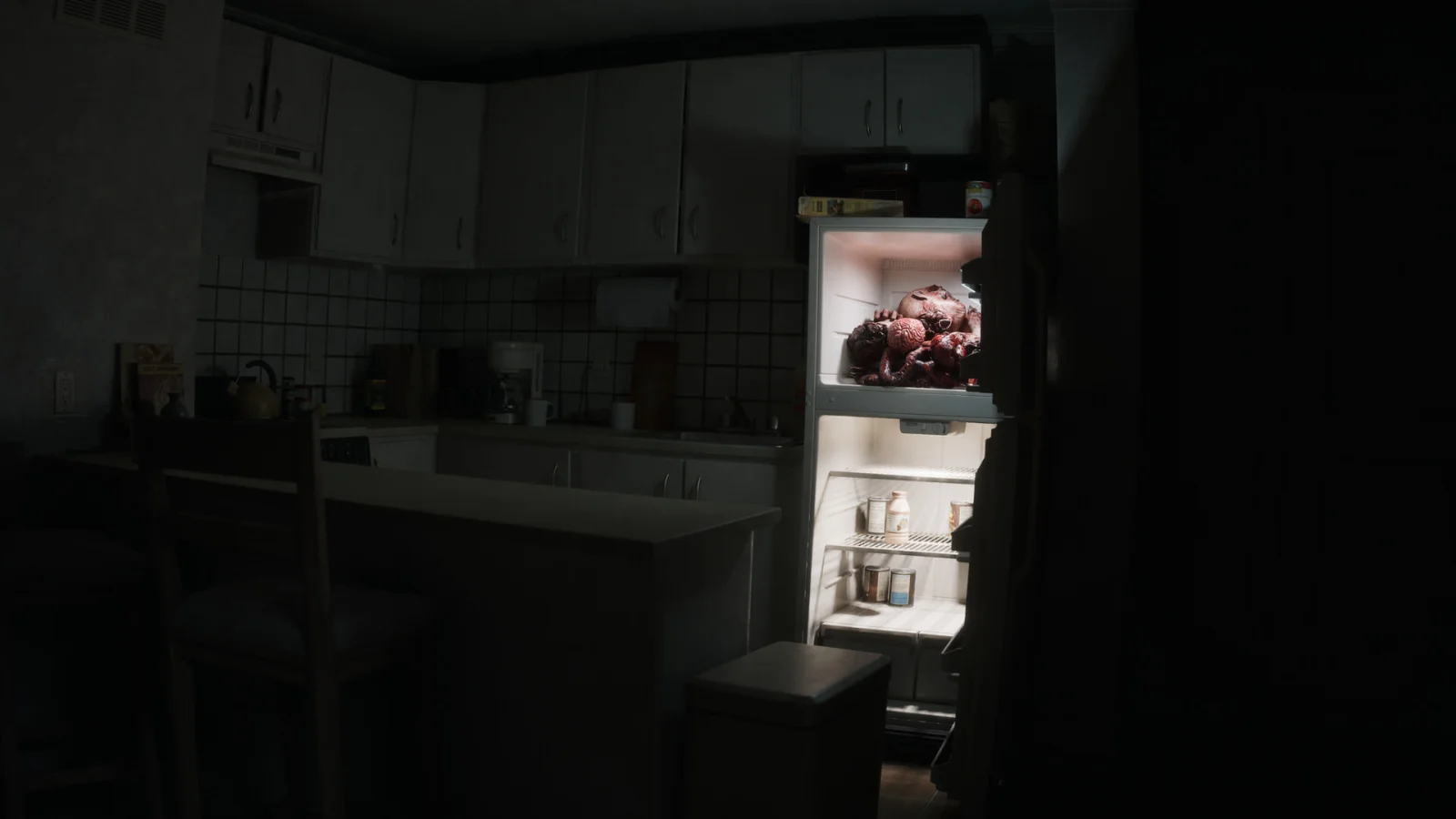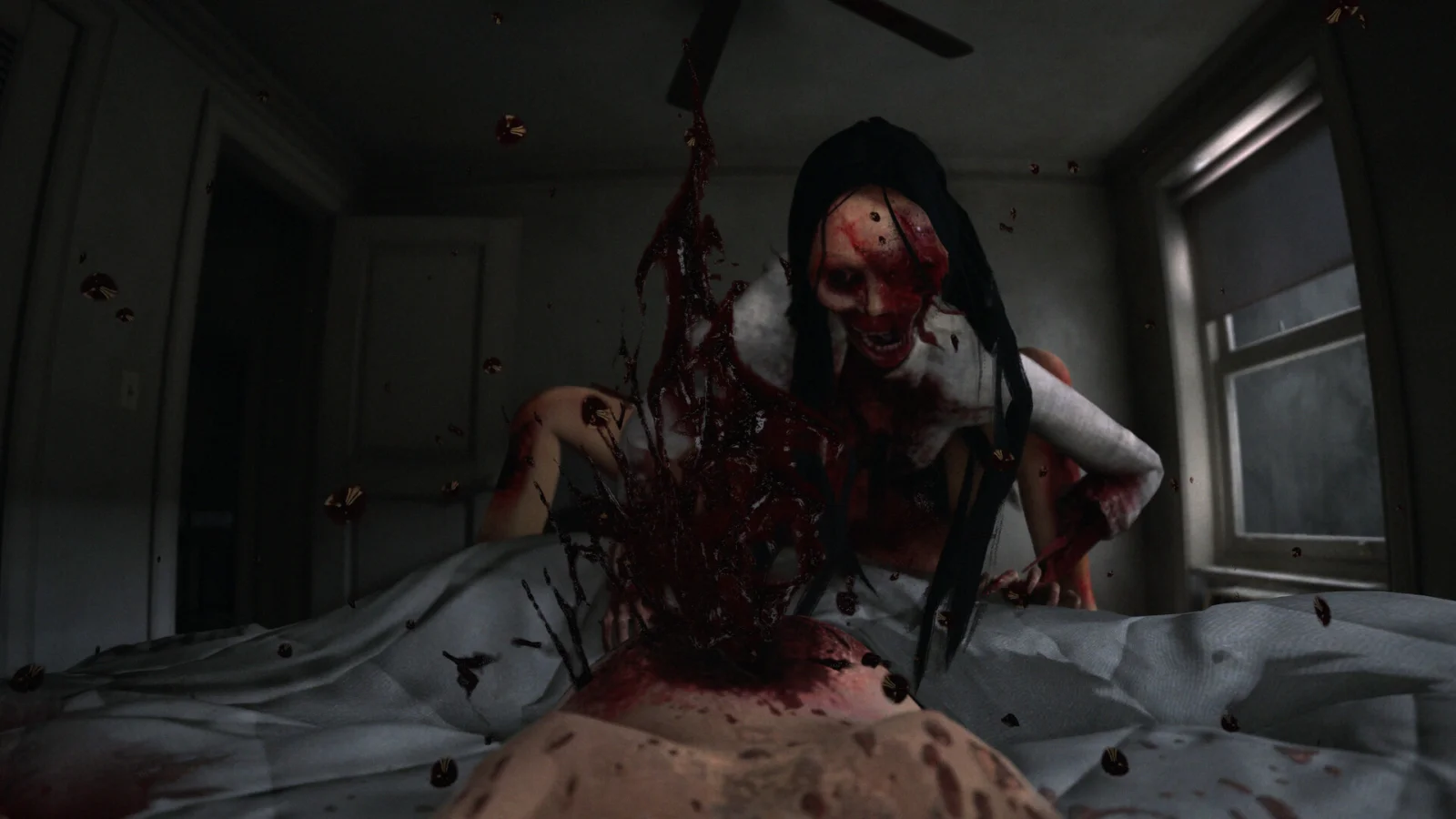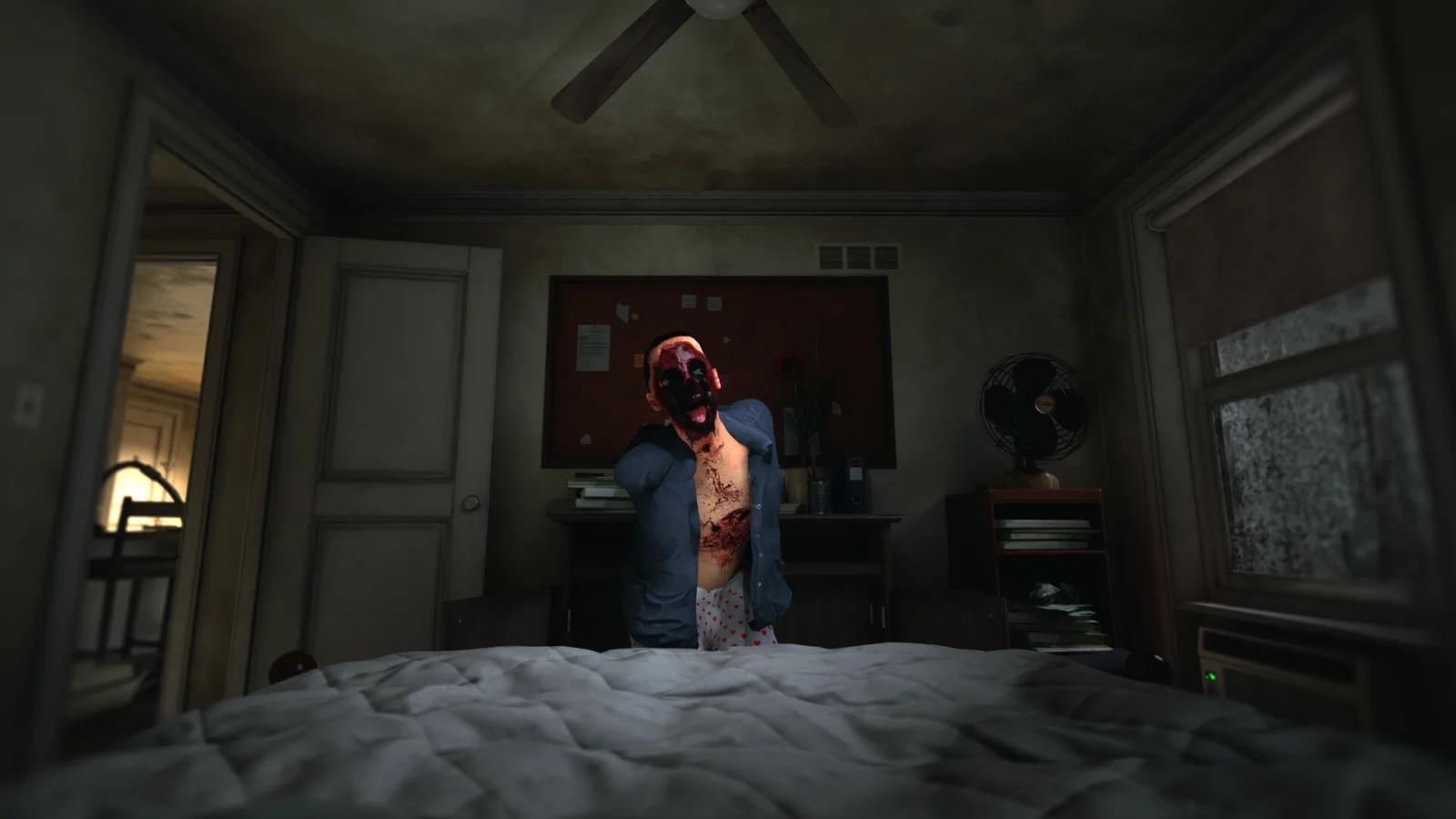
Dream Cage is a psychological horror game built around an immediately fertile fear: not simply that a home may be unsafe, but that the person moving through it cannot entirely trust their own recollection of it. Robert’s memory problems and insomnia frame five nightmare nights in which anomalous objects and hostile entities intrude on familiar domestic space. That setup gives the game an appropriate thematic foundation for horror based on perception, routine and doubt rather than simple shock.
Developed by Hitori De Productions and published on consoles by JanduSoft, Dream Cage is slated for Xbox Series X|S on September 4, 2026. It presents a contained, replay-oriented horror structure with multiple endings advertised. The appeal is clear for players who enjoy inspecting spaces closely, tracking unsettling deviations and extracting meaning from environmental details. The potential reservation is equally clear: the same systems intended to create vulnerability reportedly do not always provide enough clarity or comfort to turn pressure into satisfying suspense.
A home that cannot be taken for granted
The core idea has considerable psychological-horror value. A familiar apartment shown across different periods of a life can suggest memory’s instability without requiring a parade of wholly new locations. A changed object, an absence where something belongs, or an unfamiliar presence in an ordinary place can all make a player reconsider what they thought they knew. Dream Cage’s premise is therefore stronger than a generic haunted-house hook: Robert’s condition gives the uncertainty a personal and narrative dimension.
That distinction matters because uncertainty is not automatically frightening. Uncertainty about what is real can create anticipation; uncertainty about what the game expects can instead produce hesitation and irritation. The game’s anomaly-hunting concept lives directly on that boundary. Searching carefully for things that do not belong is naturally tense when the player understands the broad objective but remains unsure what might be found. It becomes less effective when the next required action is too opaque to infer.
Dream Cage’s five-night framing should also support escalation without revealing its story in blunt exposition. A diary-led narrative can make gradual discoveries feel intimate, particularly when sleep deprivation and faulty memory are central themes. Yet written storytelling has to coexist with active danger. If reading is difficult or the player is pressed to move on, then the diary risks becoming a task to squeeze into a survival routine rather than a source of atmosphere. That is a design tension worth recognizing before buying: this is a horror game asking for both patient observation and alert resource use.
Resource pressure needs readable rules
Reported play impressions describe pills alongside batteries and a camera as part of Dream Cage’s resource-management loop. On paper, these are sensible survival-horror ingredients. Limited supplies can make every search feel consequential, and the camera can give investigation a practical purpose beyond sightseeing. Horror often benefits when safety is temporary and players must decide whether a resource is worth spending now or saving for an unknown threat later.
But scarcity only deepens fear when feedback supports meaningful choices. Players need to understand, at least broadly, what their tools accomplish, what failure costs and how their behavior affects the immediate risk. Otherwise, conservation can become blind hoarding, and experimentation can feel punished rather than encouraged. A game about distorted reality should keep its fiction unsettling; it should not depend on its essential rules being indistinct.
This is where the reported concerns deserve weight. One critical assessment found the premise and atmosphere compelling but cited unclear guidance, restrictive resources and bugs as factors that weakened the experience. Those observations do not prove every Xbox Series X|S session will encounter the same issues, especially as patches can alter technical behavior. They do, however, identify the precise areas most likely to determine whether Dream Cage’s pressure feels purposeful: directions, supply balance and technical consistency.
The camera-and-battery relationship can be especially effective in theory because it ties perception to limitation. If noticing the abnormal depends on a finite tool, attention acquires a cost. That could make a quiet room more unnerving than a loud scare, since looking closer is not automatically free. Yet an investigation game must be cautious here. Asking players to spot anomalies already favors slow scrutiny; threatening pursuit or urgent resource drain favors quick decisions. That conflict can be thrilling when objectives are legible and risks can be weighed. It can become frustration when the player is rushed to solve a problem that has not been clearly defined.
Restart pressure is a delicate form of horror
Another Xbox-focused critique pointed to repetitive searching, pressure to restart, awkward controls and very small journal text. These are reported concerns rather than universal findings, and they should be read as version-dependent rather than as a guarantee of the current console experience. Still, they are highly relevant to this particular design. Repetition can reinforce a nightmare’s cyclical quality, but it must add knowledge, mastery or a newly visible detail. Repeating a search because the player missed an intentionally subtle clue can build obsession; repeating it because the goal was unclear can drain the same premise of its menace.
Restart structure is not inherently a weakness. Many compact games achieve their best tension through clean, comprehensible runs, as discussed in our Roguecraft DX review. Dream Cage appears to pursue a different emotional register: its repeated nights and fragile state are meant to feel oppressive rather than briskly strategic. That makes usability even more important. Controls must let the player act on a thought before anxiety turns into avoidable clumsiness, while notes must remain accessible enough to support the story during tense play.
The journal concern is more than a presentation complaint. When a game uses diary material to help establish character and narrative context, text presentation affects whether the player can absorb it at the intended pace. Small text may be a modest obstacle for some setups and a more substantial one for others. Prospective players who rely on comfortable readability should treat that reported issue as a reason to check current accessibility information or gameplay footage for the Xbox version before committing.
Multiple endings need a reason to revisit
Dream Cage advertises two endings, which gives its nightmare format a clear reason to invite another attempt. Multiple outcomes can make close observation feel rewarding, particularly in a story about interpretation and uncertain memory. They can also give repeated searches a different emotional purpose: returning is no longer only about surviving more efficiently, but about reconsidering what earlier details meant.
Still, replayability is earned rather than declared. A brief horror experience does not need a large map or a long list of systems to feel complete. It does need revisits to reveal fresh tension, clearer understanding or meaningful variation. If pursuing another ending mainly means repeating the same searching under the same constraints, the game risks shifting focus away from Robert’s predicament and toward optimization. That is a poor trade for psychological horror, whose strongest moments generally come from sustained unease rather than administrative repetition.
The advertised microphone-based silence idea is also best approached cautiously on Xbox Series X|S. It is part of the game’s marketing, but Xbox-specific verification has not been established here. Players interested in that feature should not assume it is supported or tested on this platform without checking current store and accessibility details.
Who should enter the cage?
Dream Cage is most promising for a particular kind of horror player: someone drawn to small-scale anomaly hunting, domestic unease and narratives that ask whether perception can be trusted. Its strongest apparent asset is the alignment of premise and genre. Insomnia, memory problems, an apartment transformed by different life periods, hostile entities and unstable objects all point toward a coherently personal horror space.
It is a more cautious prospect for players who want explicit tutorials, forgiving failure states, reliably smooth control response or a straightforward route through a story. Reports of bugs, awkward handling, sparse guidance, constrained supplies and restart-heavy pacing suggest that its rough edges may be unusually disruptive because the game depends so much on careful attention. Players seeking clear mechanical certainty may find its rules more exhausting than its nightmares.
There is a worthwhile game design idea at the center of Dream Cage. Its success depends on whether the final balance allows uncertainty to serve the horror instead of obstructing it. For the niche audience comfortable with ambiguity and repeated observation, that gamble may be part of the attraction. For everyone else, a little caution is sensible.