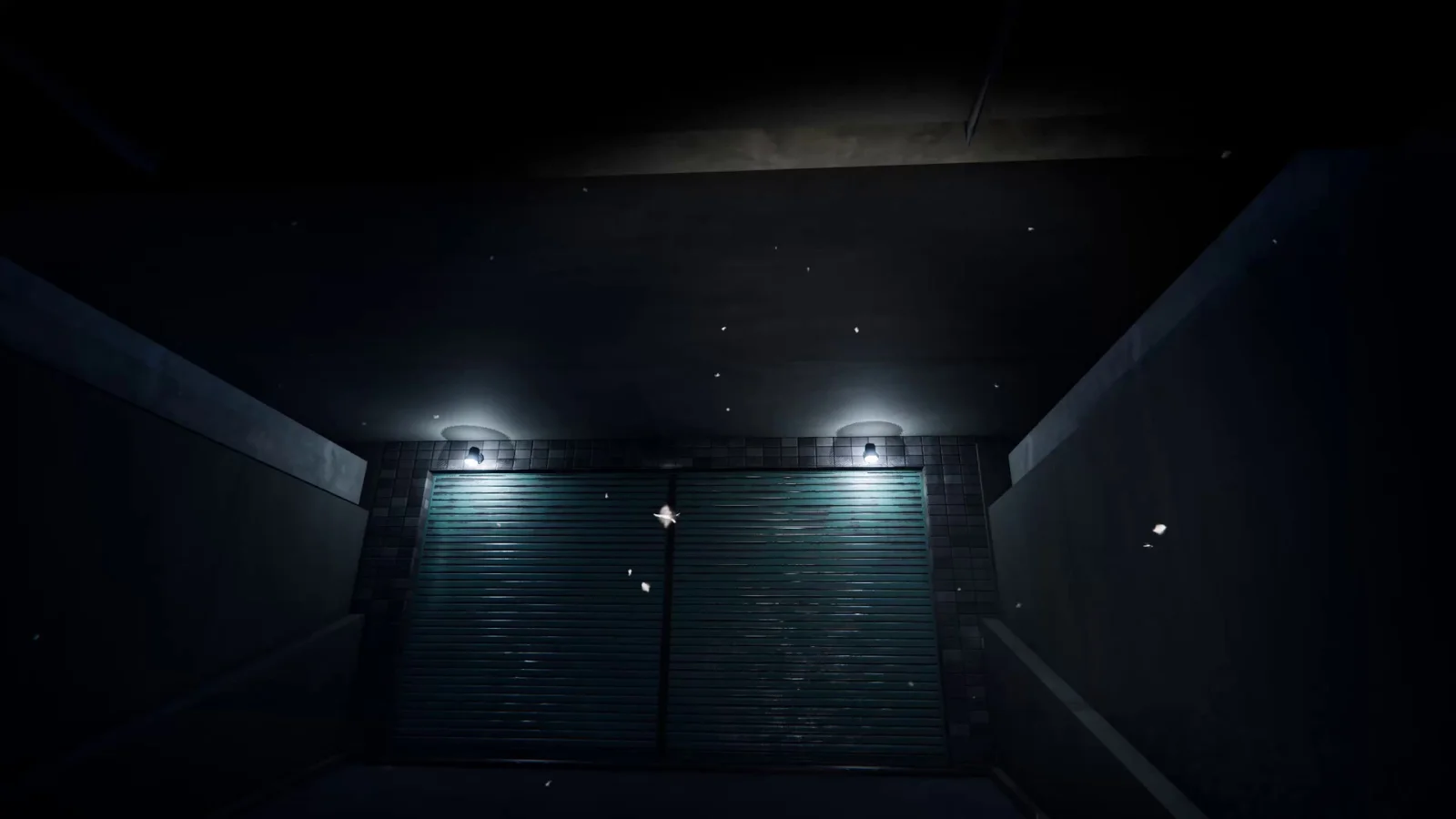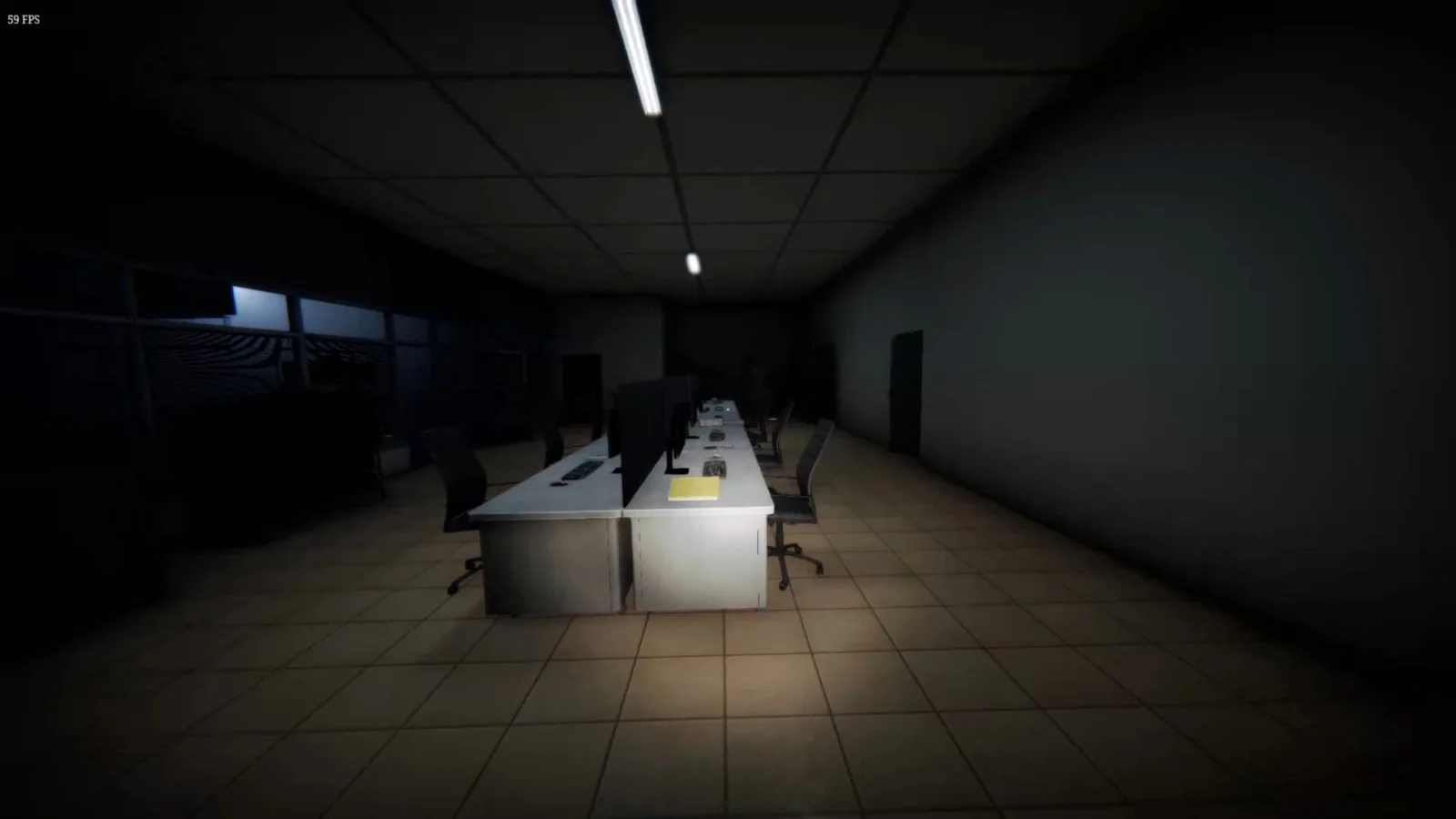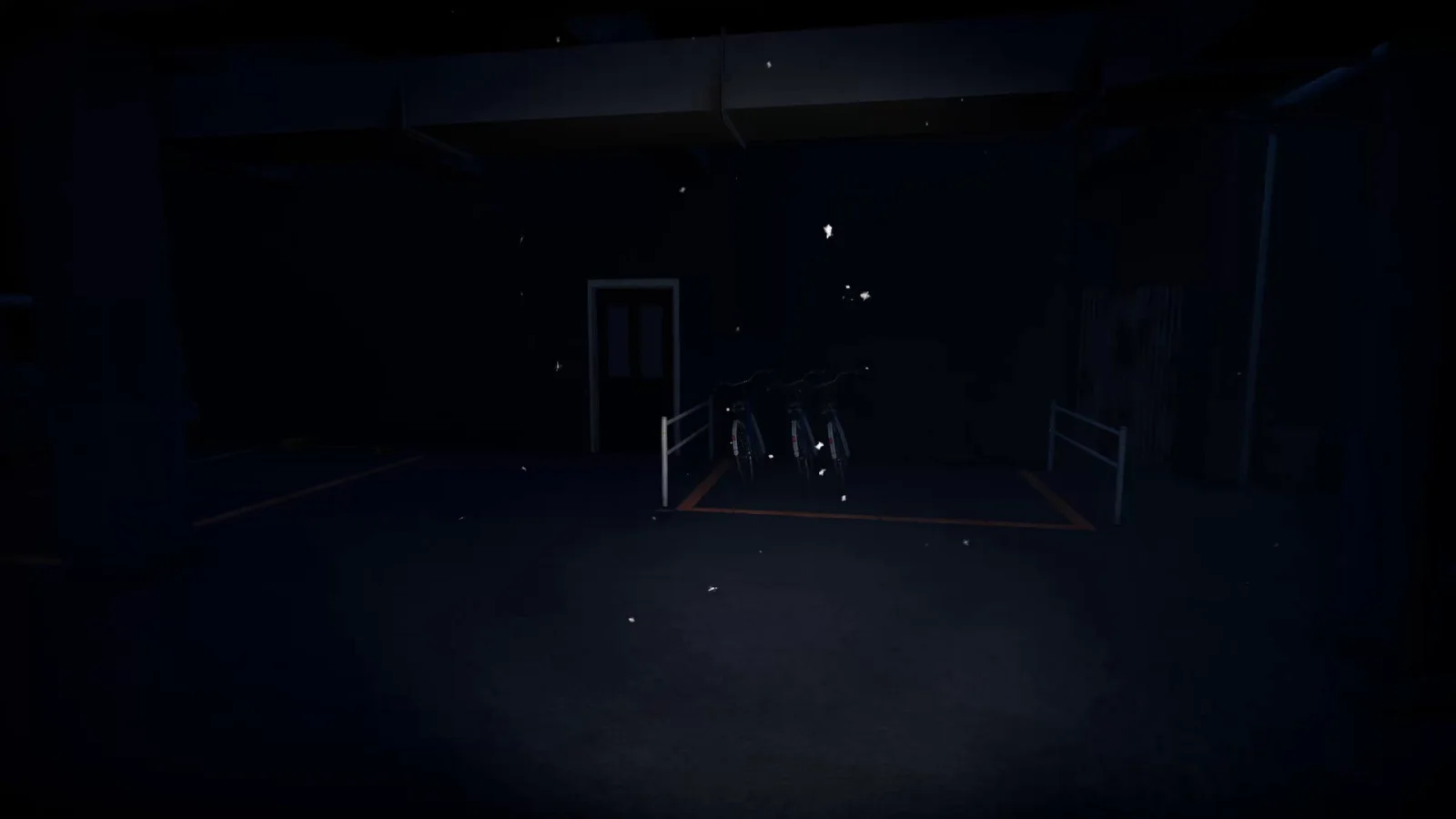
Last Call by Two Sleepy Cats takes place during a night shift in a strange building, but its central horror idea is not simply being alone after dark. The player’s job is to notice when the building ceases to make sense. Floors, rooms, corridors, offices, and everyday objects become sites of inspection. A misplaced item can matter. So can an object that has vanished, multiplied, moved, changed shape, or appeared somewhere it should not be. Players photograph anomalies with a phone, follow messages and rules tied to particular floors, and try to progress out of the building.
That premise gives this particular Last Call a useful identity among games sharing the same title. It is a first-person psychological-horror game where observation is a gameplay responsibility rather than background flavour. The building is not merely a place to traverse while waiting for an obvious threat. It is the source of evidence, uncertainty, instructions, and potential mistakes. Missing an anomaly, making an incorrect call, or breaking a rule may reset the loop, placing weight on both perception and judgment.
Last Call released for PC on September 24, 2026. It supports single-player play and lists 12 Steam achievements, Steam Cloud, Remote Play Together, and Family Sharing. English and Vietnamese are available for interface and subtitles; full voice audio is not listed. The PC minimum requirements specify 64-bit Windows 10 or Windows 11, 4 GB RAM, and 5 GB of storage.
A horror game built around looking twice
The most concrete part of Last Call’s design is its anomaly vocabulary. The stated possibilities cover more than a single kind of visual discrepancy. An object may be missing, duplicated, relocated, reshaped, or simply in the wrong place. Each possibility suggests a slightly different kind of attention. A missing object asks the player to remember what should be present. A duplicate tests whether a space has become too familiar to examine closely. A changed shape challenges recognition itself. A misplaced item turns ordinary spatial logic into something worth questioning.
This can make an office, a corridor, or a room unnerving without requiring those spaces to begin as obviously supernatural. Familiar indoor environments are generally understood through routine. Desks, chairs, clutter, doors, and signs occupy expected places, and people normally filter out these details because they do not need to be studied. Last Call’s premise reverses that habit. Routine becomes risky when the smallest piece of background scenery could be evidence that the rules of the building have shifted.
The phone camera gives that act of noticing a defined response. Rather than treating anomaly detection as a passive moment of recognition, Last Call asks players to document what they think is wrong. That turns attention into a commitment. In conditional design terms, a camera can make observation feel more deliberate because the player must move from suspicion to action. A detail is no longer just strange; it is something worth recording.
How the game judges photographs, communicates a correct call, or presents information through the phone is not part of the stated premise. Those details matter because they determine whether photography becomes a satisfying act of deduction, a test of precision, or a more immediate form of reporting. The basic concept is nevertheless clear: the player is asked to turn visual vigilance into a concrete task.
Rules, messages, and the pressure of uncertainty
Last Call does not frame the building as one unchanging observation exercise. Different floors introduce different anomalies, hazards, messages, and instructions. Floor-specific rules are especially important to the concept because they can alter the meaning of what players see. A suspicious object may be only one part of a problem if the surrounding floor also imposes a procedure, warning, or restriction.
That structure could distinguish the game from a repeated puzzle built around one static question. If each floor changes what matters, players may need to revise their habits instead of relying entirely on a familiar checklist. The process of moving through the building could then become a sequence of related mental challenges: read the current conditions, inspect the environment, determine whether something has changed, and act in a way that respects the applicable rules.
The game’s messages introduce another source of instability. Messages may not come from the person the player expects. That fact does not define a sender, reveal a narrative explanation, or establish what any message ultimately means. It does, however, place communication within the game’s broader atmosphere of doubt. In a rule-driven horror setting, written guidance can be reassuring because it gives the player a procedure. It can also become unsettling if the authority behind that procedure is uncertain.
There is a strong conditional tension in that setup. Environmental evidence asks, “What has changed?” Instructions ask, “What should be done?” If the two demand attention at the same time, players may have to divide their focus between reading and looking. That could make even a simple room feel pressurised: concentrating on a message may mean briefly turning away from a space that cannot be assumed to remain stable. Conversely, a well-designed rule system needs enough clarity that players can make informed decisions rather than feel that failure came from an unknowable demand.
Loops can make memory part of the challenge
Missed anomalies, wrong calls, and broken rules may reset the loop. This consequence is central to the game’s stated stakes. The player is not only observing for mood or collecting curiosities; errors can interrupt progress. A reset structure can naturally support psychological horror because it returns players to spaces they thought they understood. Revisiting a corridor, office, or room invites comparison with prior attempts, while the possibility of change makes certainty fragile.
Memory and visual literacy could become increasingly important if anomalies vary across repeated visits. Players may begin by memorising broad landmarks, then become more attentive to small arrangements, object positions, and visual details they previously ignored. That is a promising fit for a game about paranoia. The better a player believes they know a place, the more potent a meaningful alteration can become.
Whether repetition remains engaging will depend on the variety and pacing of those changes. A loop gains force when returns produce fresh decisions, new uncertainty, or a different relationship to previously familiar rules. It can lose force if players reach a point where the necessary attention feels rote rather than tense. Last Call’s floors, hazards, messages, and changing anomalies provide the ingredients for a changing format, but the eventual rhythm will rest on how those elements are arranged across play.
Fairness is another important consideration. A reset can build dread when the player can identify what went wrong and apply that knowledge next time. It can become frustrating if an error is too difficult to recognise or if feedback does not help the player learn. Last Call’s concept therefore raises useful questions about how clearly it signals a missed anomaly, an incorrect photograph, or a violated rule. Those questions are not a verdict on its execution; they are the practical measures most relevant to an observation-led loop.
Psychological horror with explicit content warnings
Two Sleepy Cats warns that Last Call includes disturbing imagery, visual distortion, flashing effects, paranoia, and sudden jump scares. These warnings establish that the game’s horror extends beyond quiet unease and environmental comparison. Players deciding whether the game suits their preferences should take them seriously, particularly those who avoid flashing imagery or abrupt scares.
The warnings also fit the premise. A game about detecting changes in ordinary surroundings can use visual distortion to unsettle a player’s confidence in what they are seeing. Paranoia has an obvious connection to the loop of inspecting familiar spaces for deviations. Sudden jump scares may break the concentration created by slower scrutiny. Still, the balance between lingering tension, distortion, disturbing imagery, and sudden shocks will shape the final tone in ways a feature list cannot fully describe.
For players drawn to horror that makes mundane places feel unreliable, the office-and-corridor setting has clear potential. It does not need a fantastical environment to create uncertainty. The unsettling idea is that the environment may look almost normal, and that “almost” is the problem. The closer a space is to ordinary, the more a moved object or impossible duplication can challenge a player’s confidence in their own memory.
Who the premise may appeal to
Last Call may appeal most directly to players who enjoy first-person horror built around close observation, environmental comparison, and following procedures under pressure. The camera-based reporting element is likely to interest players who want a direct task tied to the act of noticing, rather than a game where spotting an oddity is only incidental. The floor-specific messages and rules may also appeal to people who like horror concepts with structured demands instead of purely freeform exploration.
Players who enjoy mentally cataloguing spaces may find the premise particularly attractive. The design encourages questions that are small in scale but potentially high in consequence: Was that object there before? Is this arrangement normal? Does this instruction change the way the room should be read? Such questions can produce a more intimate kind of tension than a threat that is always visible and easily understood.
On the other hand, the stated content warnings may make Last Call a less suitable match for players seeking horror without flashing effects, visual distortion, disturbing imagery, paranoia-focused material, or sudden jump scares. The possibility of loop resets after missed anomalies, incorrect calls, or broken rules is also relevant for anyone who prefers low-pressure exploration. The exact frequency and severity of those setbacks are not defined, but the design plainly attaches consequences to attention.
Readers interested in another Joking Joystick game feature can find our Control Resonant article.
Design feature verdict
Last Call presents a focused psychological-horror proposition: inspect a strange building during a night shift, recognise what has become wrong, photograph anomalies, follow floor-specific rules, and keep moving despite messages whose source may be uncertain. Its published mechanics put pressure on observation rather than treating the environment as a passive backdrop.
The most interesting design question is how its individual parts reinforce one another. The camera can make noticing changes feel like documentation. The loop can make memory valuable. Floor-specific rules can keep the player from approaching every space in exactly the same way. Messages can complicate the relationship between what players are told and what they believe they see. If those systems are paced clearly and varied meaningfully, the result could make ordinary rooms feel increasingly difficult to trust.
Variety, feedback clarity, difficulty pacing, and the long-term texture of repetition remain the key considerations for this anomaly-detection format. What is already distinct is the premise’s decision to make scrutiny itself the source of danger: in Last Call, surviving the shift may depend on seeing the building more carefully than the building wants to be seen.