Control Resonant returns to a world where the everyday is only one bad bureaucratic memo away from becoming deeply, gloriously uncanny. Seven years after Jesse Faden sealed the Hiss, herself, and numerous Federal Bureau of Control personnel inside the Oldest House, a new paranatural crisis has breached the boundaries of the bureau. Manhattan is now warped by a reality-threatening disturbance, the Hiss are loose in the city, and Jesse has vanished from the organization she led. It is an enormous situation to hand to Dylan Faden, formerly a tragic, imprisoned figure in the prior game. Resonant’s most persuasive decision is making him equal to that task without pretending his history does not matter.
Dylan is presented as extraordinarily powerful, socially awkward, and determined to answer for the harm associated with his past. That combination gives the game a lead with a different texture from Jesse: sympathetic without being bland, and capable without being serenely assured. His exchanges with FBC handler Zoe De Veras are especially important. Their choice-driven banter supplies humor and personality amid a plot built from possession, institutional secrecy, and unstable reality. Returning characters including Emily Pope and Frederick Langston also help make the bureau feel like a continuing place rather than a box of familiar references. Messages and conversations gradually fill in the seven-year lockdown, the uncertain question of Jesse’s whereabouts, and the altered state of New York.
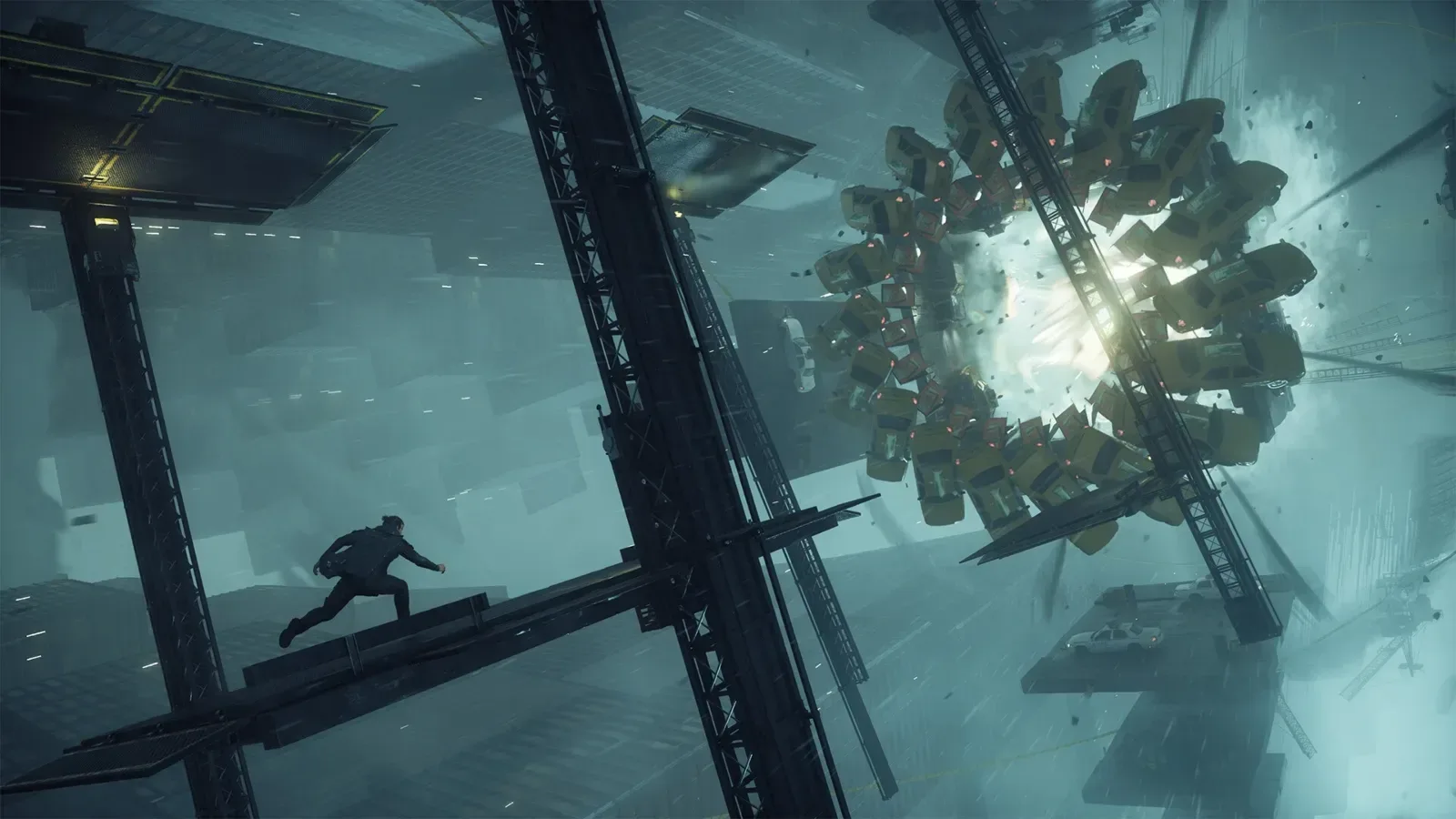
The resulting story has room for revelations that land emotionally as well as moments that lean into strangeness for its own sake. It does not merely use paranormal oddities as wallpaper. Its stronger optional missions examine what happens when ordinary citizens suddenly encounter the impossible. One thread involves a malevolent karaoke machine; another asks Dylan to escape a taxi-filled pocket dimension through spot-the-difference puzzles; another concerns a volatile supernatural pet. Those premises are wonderfully specific, and their changes in activity matter. In a game that often sends players into combat, the willingness to switch the rhythm with visual puzzles, pursuit, or self-contained paranormal problems keeps the fiction from becoming a stream of interchangeable firefights.
A city built for questions
Manhattan is organized as open hubs rather than a conventional uninterrupted sandbox. Progress depends on acquiring abilities and keys that open routes and make travel easier, a structure that echoes the locked-off spaces of the Oldest House. Objectives may require close attention to locate concealed entrances or unusual paths, but traversal appears to be one of Resonant’s most consistently enjoyable elements. Warping to rooftops and hovering over substantial gaps turn movement into a reward, not merely a commute between markers.
The city’s imagery also refuses to settle for familiar urban scenery. Some areas resemble a surrealist painting, while others evoke science-fiction cover art, lending real visual contrast to streets, apartments, cafés, and rooftops. The catch is that the most visually disorienting places can be difficult to read. When spaces can be approached from multiple directions, bizarre layouts occasionally turn discovery into uncertainty. That tension fits the fiction, but fitting the fiction and being pleasant to navigate are not always the same thing. Players who enjoy studying environments and testing suspicious-looking openings may find this inviting; those who want direct, unmistakable routing may find it tiring.
Exploration is usually worth the effort. Longer mission chains include investigating a secret organization and working through abandoned FBC experiments, and the game repeatedly makes otherwise ordinary locations feel potentially significant. A laundromat, apartment block, or café might contain another odd little branch of the central mystery. The best side content earns curiosity through imaginative setups rather than sheer quantity.
Not every optional activity clears that bar. Escort assignments for stranded rangers and wave-defense tasks focused on protecting assets are comparatively thin. Their repetition is conspicuous beside the more authored, surprising quests. Fortunately, these lesser errands can largely be skipped without severe consequences. The important caveat is that skipping all optional work is a poor fit for Resonant’s progression: quests provide strength needed for its demanding combat. It is a design that can make the world feel purposeful, but it also risks making appealing narrative diversions feel like required homework.
Good tools, stubborn opposition
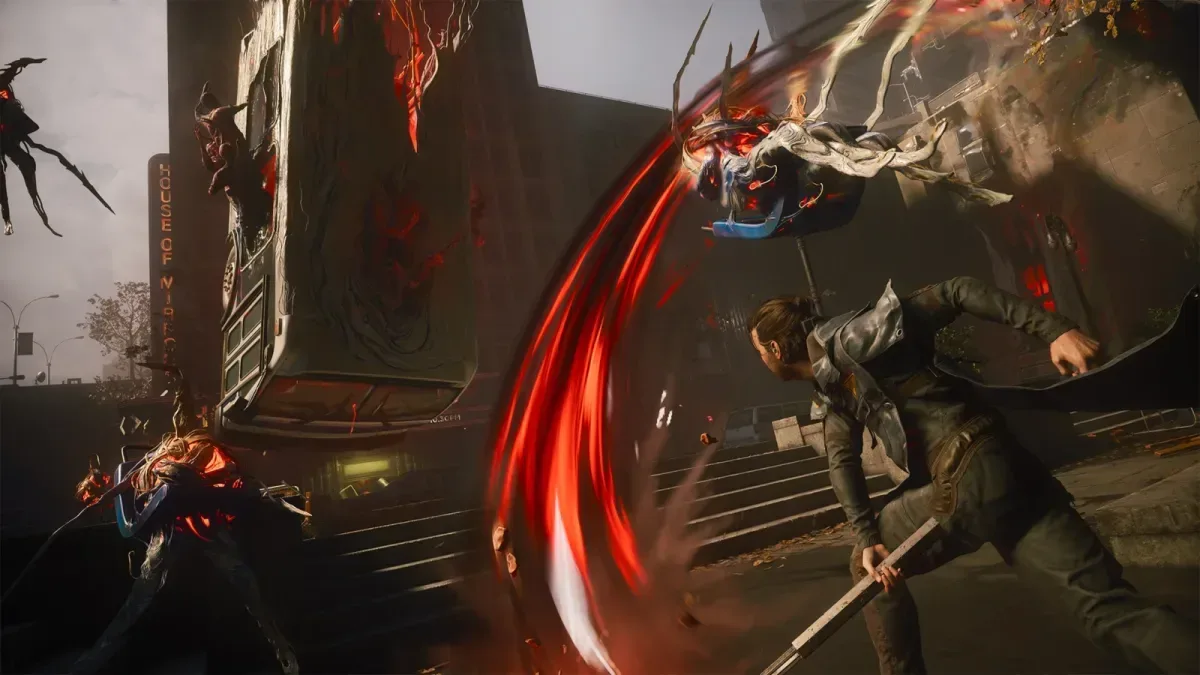
Resonant frames its action around Dylan’s transforming weapon, the Aberrant. It can take the form of a one-handed axe, dual sword-like weapons, or a two-handed scythe. Those core forms offer a pleasingly direct melee foundation, with basic attack strings punctuated by combo finishers. Reinforced punches, a hovering spinning blade, and a large glaive-like knockback tool add flavor around that foundation. Dylan’s perfect dodge stands out as a particularly satisfying defensive option because it can be quickly chained into an attack, encouraging movement and timing instead of passive retreat.
Early encounters can feel narrow and repetitive, but the combat gains tactical range as supernatural abilities arrive. Fire attacks can explode against enemies, mold spores can poison targets through rapid-fire use, abstract entities can be summoned as allies, and force pushes can send foes into environmental dangers or over ledges. These additions are not just decorative power-ups: the game’s difficulty gives players reason to combine them. The appeal lies in learning when a conventional melee string is sufficient and when positioning, status effects, a summon, or a shove will make an encounter manageable.
That same challenge is Resonant’s most divisive feature. Enemies commonly level alongside Dylan, so progression does not reliably produce the comforting sensation of steamrolling earlier threats. Large wave battles can instead become long efforts to chip down sturdy health bars. The big-enemy rule compounds the problem: smaller opponents respawn continuously until a larger foe is defeated. This can create hectic, high-pressure encounters with a clear priority, but it can also make difficult fights feel like wars of attrition. The game wants Dylan to seem formidable; its balancing too often insists that he prove it again and again.
Its boss fights offer a better version of the challenge. Battles against distorted humans known as Resonants are more evenly tuned tests, while the enemy roster is broadened by threats beyond Hiss variations, including mold creatures and another faction. That variety prevents the game from becoming entirely monochrome in motion. Still, frequent battles against roaming groups across Manhattan eventually expose the limits of the combat loop. The systems deepen, but the volume of conflict can blunt their novelty.
Who should answer the bureau’s call?
Control Resonant is best suited to players who value lore, environmental mystery, and authored side missions enough to tolerate a stiff action-game edge. Its central appeal is not simply that Manhattan is strange; it is that the game continually gives its strangeness a purpose through people, cases, institutions, and questions worth following. Dylan’s thoughtful characterization makes that search more grounded, while the Aberrant and later abilities provide enough expressive options to make success feel earned.
Prospective players should nevertheless know what they are signing up for. Optional quests are strongly encouraged by the progression curve, navigation can become opaque in the most abstract spaces, and combat may demand sustained patience rather than delivering uncomplicated empowerment. Players after a breezy power fantasy may bounce off the enemy scaling and respawning waves. Players willing to sift through the bureau’s messiest files, however, will find an adventure whose best missions repeatedly justify opening one more suspicious door.
For another look at how repeated waves can shape an action-focused experience, see Zombuffoonery Xbox Launch Assessment: Waves, Walls, Turrets, and a Personal Arsenal. Resonant is ultimately more successful when it trusts its peculiar setting, characters, and mission ideas than when it leans on endurance-heavy encounters. Those weaknesses are substantial, but they do not erase the pull of a world that remains delightfully eager to turn the mundane into the alarming, absurd, and unexpectedly human.