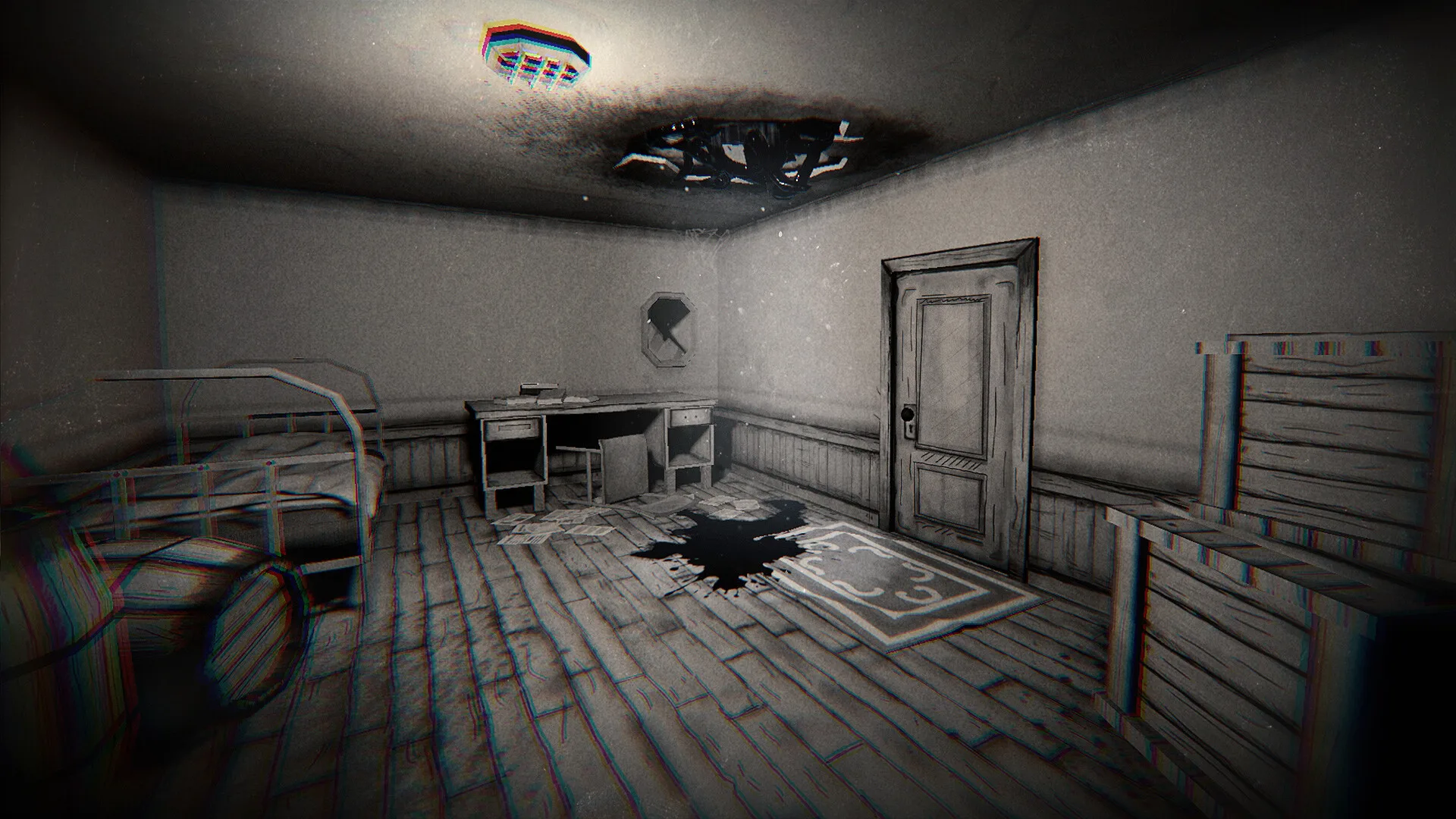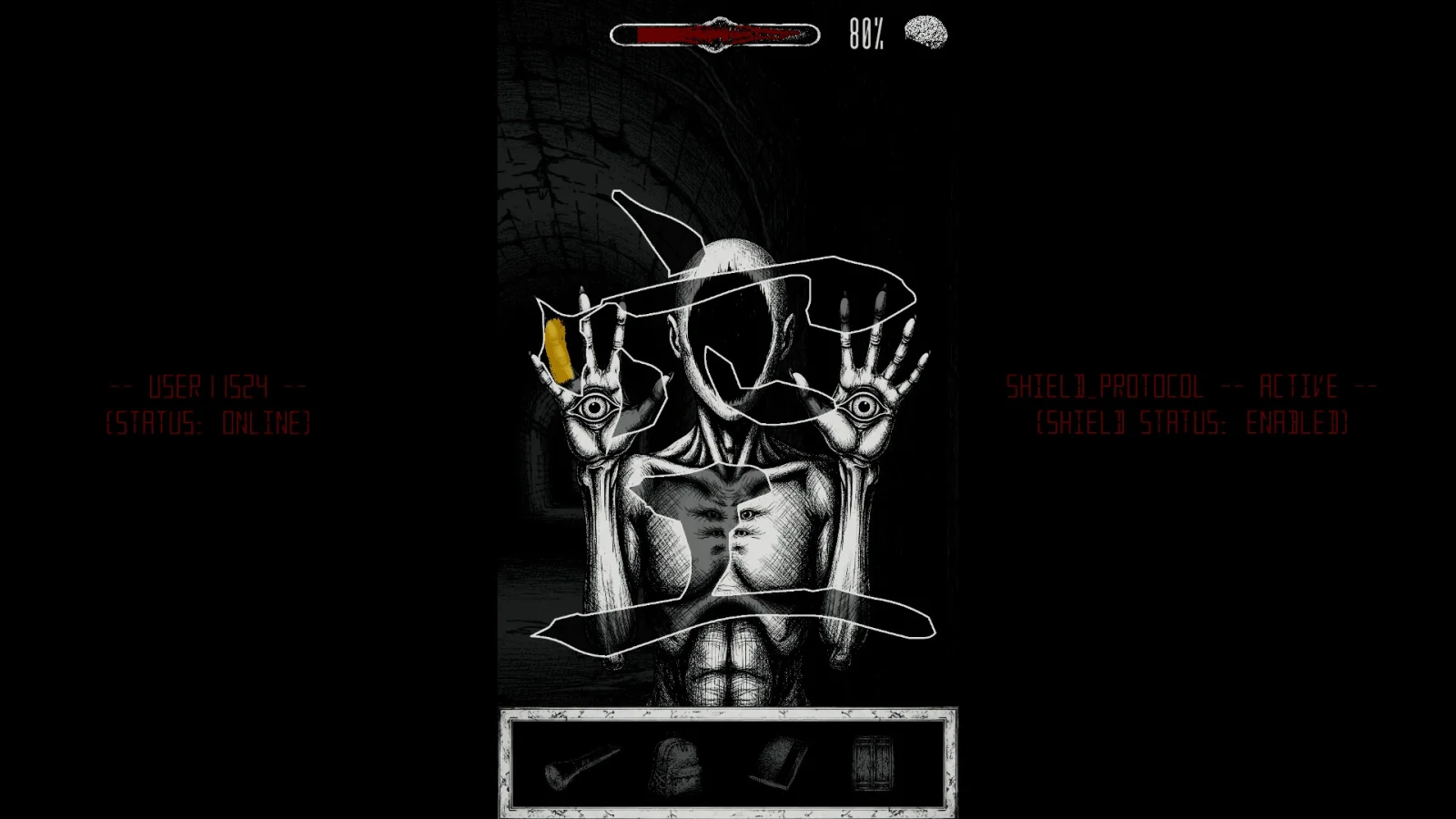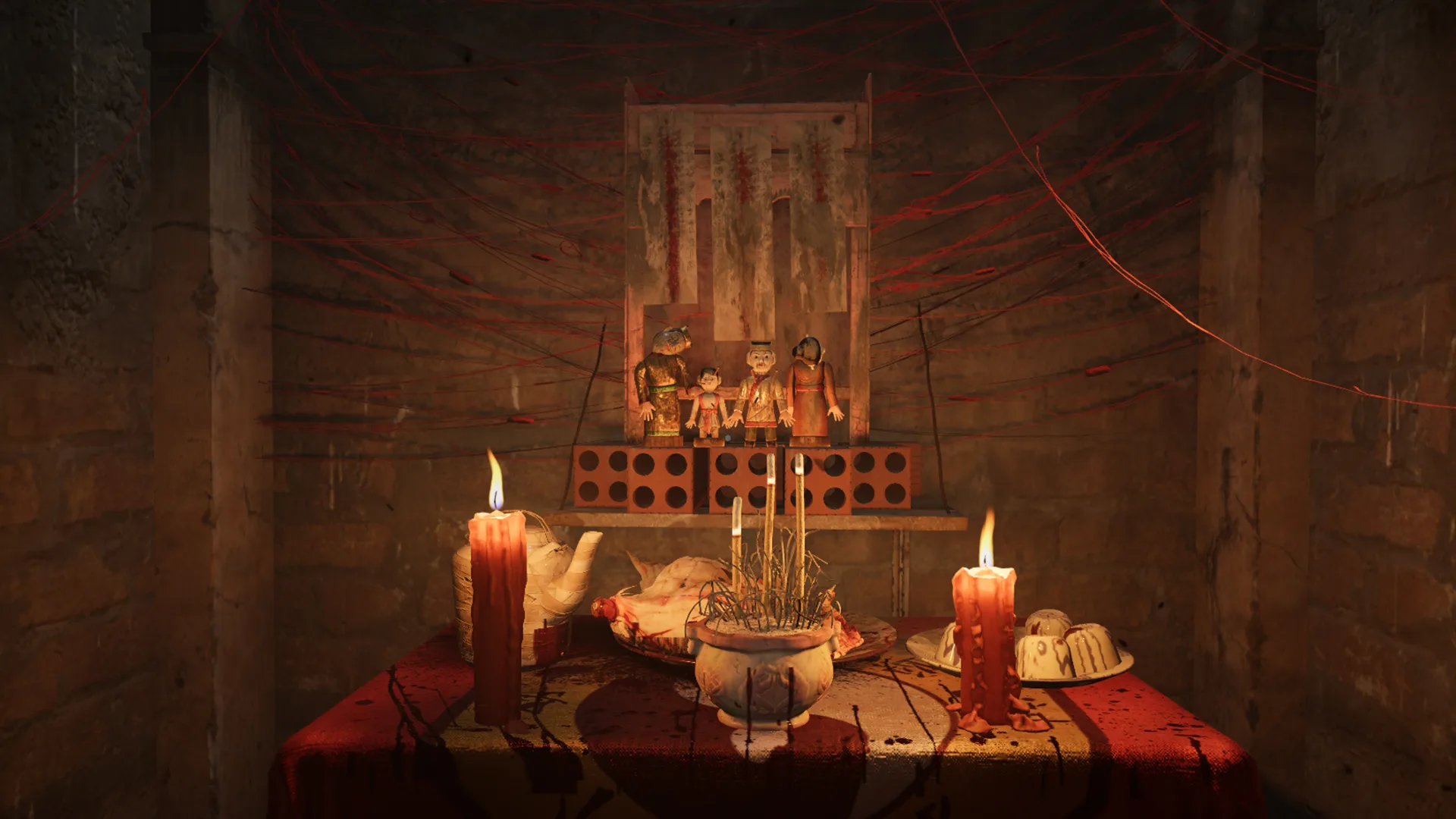
The Scourge | Tai Ương is an unscored critical-design feature. Released in full for PC on March 28, 2026 following an early-access launch in October 2024, Rare Reversee and Beaztek’s first-person psychological horror and puzzle adventure makes an unusually consequential choice before any individual fright or puzzle enters the picture: it locates its story in 1990s Saigon, Vietnam. The official premise follows Nhat Huy through family tragedy, past mistakes, urban legends, and supernatural events, beginning in a rundown apartment during an unnamed epidemic. Environmental exploration and puzzles are presented as central to that journey.
Those foundations give the game a more pointed design opportunity than the broad category of “haunted apartment horror” might initially suggest. Apartments are familiar horror architecture because they promise intimacy, repetition, neighbors close enough to imagine but not necessarily reach, and rooms whose ordinary purposes can turn unsettling when their usual routines fail. A setting as particular as 1990s Saigon, however, can make that architecture mean more than a convenient collection of corridors. It can ask the environment to carry history, family pressures, social texture, and a sense of a city beyond the immediate walls. Whether the finished work consistently realizes that possibility is a question each player will need to answer, but the announced design makes its stakes clear.
Place is not just decoration
Psychological horror often leans on indeterminate space. A house may be old, a hospital abandoned, a town fogbound; the lack of precision gives an audience room to project fears onto a generic darkness. That strategy has value, but it can also flatten the setting into a delivery mechanism for shocks and locked doors. The Scourge | Tai Ương instead identifies a time and place, along with a family-centered premise. This does not automatically make the setting persuasive or respectful, yet it gives the design a route toward specificity that generic horror frequently declines.
A 1990s urban apartment is potentially rich because domestic space is never only domestic. The arrangement of rooms, the objects preserved or discarded, the signs of care and wear, and the relationship between private interiors and a crowded city can all imply how people lived before the player arrived. In a puzzle adventure, these details can become more than visual dressing. They can establish why an object matters, why an area has been left inaccessible, or why a clue belongs in a certain room. The strongest version of this approach would make close observation feel like reading a life rather than conducting an abstract scavenger hunt.
That distinction matters greatly for horror. Fear in a highly specific home can come from the corruption of things that once had understandable, everyday functions. A puzzle clue may be unsettling not merely because it is obscure, but because solving it makes the player recognize an absence, a strained relationship, or an attempt to conceal something. The official outline’s combination of an epidemic, family tragedy, old mistakes, and supernatural events gives the environment several possible layers to hold at once. The danger is that such layers can be treated as surface flavor. The promise is that they can make the apartment feel like a place with human residue rather than a neutral stage for spectral effects.
For readers interested in how location can shape game interpretation, this design feature on place and time in a PC game offers a related, though separate, critical lens. The relevant point here is not that every culturally grounded setting must operate in the same way. It is that a named place brings responsibilities: details should inform the emotional and investigative work, rather than simply distinguish a storefront image.
Family guilt gives puzzles an emotional job
The official story frames Nhat Huy’s path through family tragedy and mistakes in the past while also blurring nightmares with reality. This is familiar material in psychological horror, but familiarity is not a weakness by itself. The important question is what the game asks puzzles to do inside that framework. A puzzle can be a pause between plot revelations, a pure test of observation, or a way to make a player participate in reconstructing a damaged past. The latter is the most promising fit for this premise.
In a story about guilt and unstable memory, investigation can become a form of interpretation. Players are not simply trying to discover which item opens which barrier; they may be encouraged to decide what fragments of a household signify and how separate fragments belong together. That kind of design can create a valuable uncertainty. A clue could be materially useful while also complicating the player’s understanding of a character or event. The act of moving forward then echoes the narrative’s broader work of confronting what has been avoided.
But this alignment is fragile. A psychological mystery gains force when discovery changes the meaning of what came before. A puzzle sequence risks working against it when the solution feels detached from the surrounding space or story. If players cannot reasonably connect information to action, their attention may move away from family history, grief, and uncertainty toward a narrower question: what does the game want from me? That shift is especially costly in horror, where sustained mood depends on the player feeling absorbed in the situation rather than stalled outside it.
This does not mean every challenge must be effortless or immediately transparent. Friction can be dramatically useful. A carefully paced search can make a domestic environment feel dense with detail, and delayed understanding can mirror a protagonist’s reluctance to face a painful truth. The dividing line is whether the challenge produces meaningful thought. Productive difficulty directs attention back into the world: a player revisits a detail, reconsiders an implication, or notices a relationship that was previously overlooked. Unproductive difficulty tends to collapse context, making experimentation feel arbitrary. The Scourge | Tai Ương’s design premise is well suited to the former, but that suitability is a possibility, not a guarantee.
The apartment as an instrument of attention
First-person exploration changes the scale at which a setting can communicate. It naturally asks the player to inspect, compare, remember paths, and make judgments about what deserves attention. In an apartment, that focus can be particularly intense because the environment is built from intimate categories: living areas, storage, thresholds, personal belongings, and spaces shared by people with different needs. A design centered on environmental exploration can use these categories to tell a story without converting every meaning into exposition.
The official description’s emphasis on nightmares and reality suggests another potential use for this attentiveness. Horror does not require a player to know precisely which perceptions are trustworthy at every moment; uncertainty can be the subject. Yet uncertainty works best when it has some form. If a game alters the player’s assumptions, it needs enough recurring logic, emotional consistency, or environmental evidence for the player to recognize that there is something to interpret. Otherwise, instability can become mere randomness, and randomness rarely sustains dread for long.
Here, domestic space provides a potentially useful anchor. The more a player understands a room’s emotional or practical identity, the more significant it becomes if that identity is challenged. The narrative may be able to derive unease from altered context rather than relying solely on overt threat. The published premise supports discussion of that design potential, but it does not establish how frequently or in what form the game pursues it. Readers should therefore treat the central appeal as a question of cohesion: do exploration, puzzle logic, and the story’s uncertain reality reinforce one another?
Slow investigation needs momentum
The Scourge | Tai Ương appears designed around a deliberate contradiction. Environmental exploration invites patience, inspection, and return visits. Horror narrative, meanwhile, needs motion: a reason to proceed, a rising sense that the situation is becoming harder to escape, and emotional developments that prevent the player from settling into routine. Neither side is inherently superior. The challenge is controlling their rhythm.
A slower game can create strong dread when its pauses are charged. Searching should reveal a new concern, deepen a relationship, or make a previously ordinary space feel altered. Puzzles should ideally work as beats in the narrative rather than administrative locks. Conversely, a brisker horror game can lose the benefit of its carefully made setting if it repeatedly hurries players past the very details that would make its location distinctive.
There is also a reader-fit question. Someone seeking rapid-action scares may find a premise centered on environmental exploration and puzzles less immediately aligned with that preference. Someone drawn to psychological horror in which the setting itself invites scrutiny may find the combination more attractive. That is not a judgment about quality; it is a useful distinction in a genre whose labels cover very different pacing philosophies. “First-person horror” alone says little about whether a player primarily wants reflexive pressure, interpretive investigation, or a mixture of both.
The story’s themes also require care in pacing. Family tragedy and guilt are not automatically profound simply because they are serious. Their dramatic weight depends on how revelations are contextualized and whether the player’s own acts of exploration make those revelations feel earned. Too much withholding can produce vagueness; too much explanation can undermine the anxiety created by uncertain memory. The best outcome would preserve ambiguity where ambiguity serves the characters and the setting, while still giving the player enough meaningful information to form and revise an understanding of events.
What the demo can answer
A free Steam demo is particularly useful for a game whose likely appeal rests on atmosphere, navigation, and the relationship between observation and puzzles. Depending on the material included, it may help a prospective player decide whether the first-person perspective, visual language, movement, and investigative emphasis feel inviting. It may also offer a limited practical sample of the game’s approach, while Steam’s listed language information can help players determine whether the available options meet their needs. Steam lists Vietnamese full audio, English text without English full audio, and text options in Japanese, Chinese, and Korean.
The demo may also help readers judge a more subjective matter: whether its available material conveys the premise’s particular location as more than an announced setting. That is not something a feature list can settle. A player may come away encouraged by the texture of the environment and the kind of attention it requests, or may decide that the sampled material is not a match for their tastes.
At the same time, a demo cannot establish the full narrative architecture. It cannot settle whether later puzzles maintain a satisfying relationship to the story, whether the handling of family tragedy develops with care, or whether the broader arc turns its early uncertainty into a coherent payoff. It also cannot prove how consistently the game sustains its central atmosphere across the full release. A sample is valuable precisely because it answers narrower questions well; it becomes less useful when treated as a verdict on everything beyond its boundaries.
A design worth approaching on its own terms
The Scourge | Tai Ương arrives with a premise that is more interesting than a simple inventory of horror components. Its identified 1990s Saigon setting, rundown apartment, family tragedy, past mistakes, urban legends, and supernatural events could form a unified exploration of memory and domestic unease. Its central risk is equally clear: puzzles and psychological ambiguity must feel connected to the human meaning of the place, not layered over it as separate genre obligations.
That is why the most useful way to approach the game is not to ask whether it delivers horror in the abstract. The sharper question is whether its specific apartment setting changes the kind of attention horror demands. If careful inspection helps players understand both space and sorrow, the design has the potential to make its puzzles part of the haunting. If the investigative demands and narrative concerns pull apart, the same elements may interrupt one another. The free demo offers a sensible first test of the material it contains for players interested in that distinction, while the complete answer belongs to the full experience.
On PC, Steam lists a Windows 10 x64 minimum and 20 GB of storage. Those practical requirements are useful for planning, but they do not resolve the more important fit question. The Scourge | Tai Ương is most compelling in concept for players who want psychological horror to reward attention to a culturally and historically situated domestic space, and who are open to puzzles being part of how a mystery is read. Players seeking a faster, more action-led scare can use the demo’s available sample to judge whether its approach suits them.