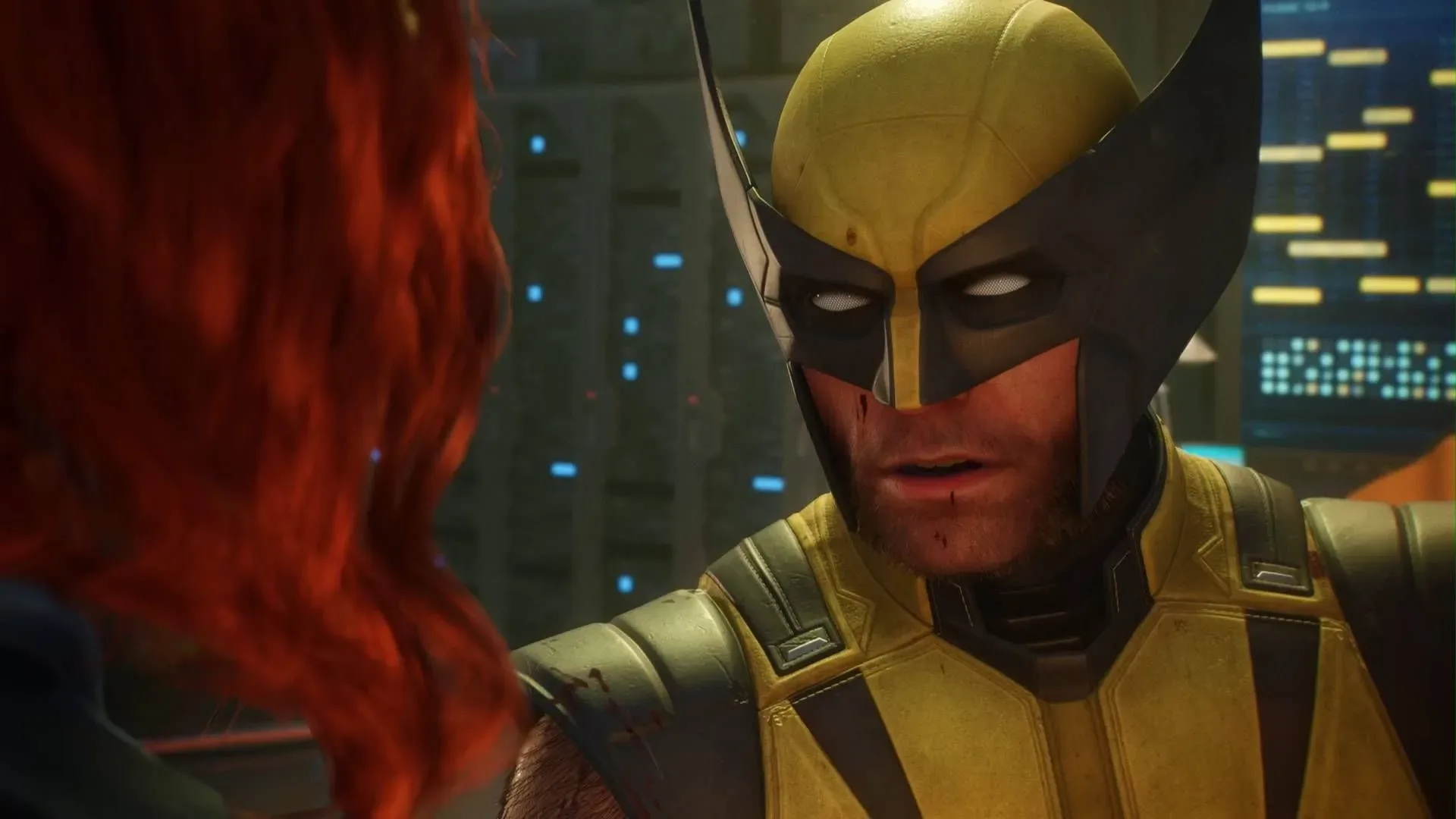
Marvel’s Wolverine understands the assignment with the kind of enthusiasm that would make a safety inspector quietly back away. This is a tightly focused action game built around Logan’s speed, aggression and alarming ability to turn a crowded room into a much less crowded room. Its best quality is not subtle: combat delivers the fantasy of an unstoppable clawed brawler with an unusual amount of force, pace and precision.
That focus pays off. Encounters are brisk, vicious and satisfying without becoming thoughtless button-mashing. The game does not attempt to make Wolverine a version of another superhero, and players expecting broad open-world exploration should recalibrate before arriving. This is a linear adventure whose main priority is getting Logan into the next dangerous situation, then giving players the tools to cut a path through it.
That clarity makes for a compelling ride, even when the surrounding narrative loses its bearings. Marvel’s Wolverine is at its sharpest when it is moving forward; it is less assured when it pauses to explain why every familiar face and mysterious fragment of the past matters. The result is an action game with excellent instincts, a confident presentation and a story that sometimes seems more eager to hint at tomorrow than land today.
A combat system with its claws in the right place
The central appeal is the momentum-based combat loop. Logan has varied attacks, dodges and parries, and these actions feed resources tied to healing and rage. The design encourages constant pressure rather than cautious circling. Players are pushed to stay active, exploit openings and maintain the tempo of a fight. In a game about Wolverine, this is not merely appropriate; it is the entire pointy business plan.
The violence is explicitly adult-oriented, but the important design achievement is how the brutality supports readability and rhythm. The fights are not presented as disconnected spectacles. Attacking, evading and parrying contribute to a system in which forward momentum matters. That gives encounters a useful tension: aggression is valuable, but careless aggression can still create problems, particularly in bigger and more nuanced confrontations.
New attacks and abilities arrive gradually, expanding Logan’s options across the campaign. This steady addition of tools helps basic enemies remain a venue for confident domination while providing more survival options for harder fights. It also avoids front-loading every possibility at once. Rather than dropping an entire claw cabinet in the player’s lap, the game builds its repertoire over time and lets the combat vocabulary become broader without losing its directness.
Boss encounters appear to be a major payoff for longtime Wolverine followers, including at least one intense showdown with a foe fans may have hoped to see. The value here is not just recognition. These larger fights provide a counterweight to the thrill of powering through standard opponents, asking more of the mechanics and giving the campaign memorable peaks. The combat is consistently the reason to keep moving, and the game knows it.
Linear by design, not by accident
Marvel’s Wolverine makes a deliberate trade: it favors a guided structure over extensive exploration. That choice will be a relief for players who want a concentrated action campaign, and a disappointment for those looking for a sprawling superhero sandbox. Neither preference is inherently more virtuous. The practical question is whether the game’s combat and story can carry a more narrowly directed format.
For the most part, the answer is yes. The adventure reaches its ending before the ferocious melee loop becomes exhausting. Its pace is an advantage, especially in a genre where a perfectly good combat system can be asked to work overtime long after the novelty has clocked out. Here, the focused structure prevents fatigue from blunting the action’s impact.
The limitation emerges in slower character-focused sequences. The game does pause for development and interpersonal scenes, and the voice work gives those moments energy. Yet many are described as highly on-rails, offering little or no choice in how players proceed. That does not make every quieter section unsuccessful, but it creates a mismatch. A game so committed to making Logan feel active and forceful can feel oddly passive when it asks players to simply follow a prescribed emotional route.
Those wanting optional challenges have some extra material after or alongside the primary path. Secondary challenge stages include difficult wave-based gauntlets, supplying an arena for players who want to test their command of the combat systems. New Game + also allows increased difficulty and the opportunity to revisit favorite battles. These are welcome additions, but they seem best understood as extensions of the main attraction rather than a deep second game concealed beneath the adamantium.
Strong character work meets a tangled second act
The setting offers a bleak variation on X-Men mythology, notably without Professor Xavier or Magneto shaping the immediate dynamics. That absence creates room for different relationships and conflicts around Logan. The character interactions benefit from a committed voice cast, particularly in scenes that demand intensity and feral emotion. The performances help sell the high-stakes mood and give the cast texture even when the plot becomes knotty.
Unfortunately, the second half appears to put too much weight on implication and future-facing mystery. Hints about Wolverine’s past and the direction of the larger story can become difficult to parse. That may frustrate even players already comfortable with these characters, while newcomers could find the material still harder to follow. Ambiguity can create intrigue; confusion merely sends the reader—or player—back through the evidence board looking for red string.
The deeper issue is one of resolution. Key relationship arcs do not always receive the satisfying closure that the action receives. The narrative seems more invested in setting up possible next steps than completing its own emotional work. This is not a fatal problem, since the campaign’s core combat loop is so potent, but it does leave the game feeling less complete as a character drama than it does as a superhero action piece.
For another recent take on Marvel’s place in a different kind of combat game, see Marvel Tōkon: Fighting Souls Brings Marvel Back to the Fighting-Game Main Event.
Who should answer the call?
Marvel’s Wolverine is best suited to players who value responsive, animated melee action and prefer a campaign that does not overstay its welcome. Its touchstones are taut, character-led action experiences rather than an exploration-heavy superhero format. Anyone approaching primarily for open-ended traversal or extensive player-driven story decisions should temper expectations.
It is also a particularly easy recommendation for players who want combat with a rising sense of capability. The growing move set, demanding wave challenges and New Game + difficulty options give engaged players reasons to refine their approach. At the same time, the game’s basic appeal is immediate enough that players do not need to treat every encounter like a doctoral thesis in claw geometry.
Marvel’s Wolverine ultimately succeeds because it identifies the essential interactive appeal of Logan and commits to it. The combat is fast, brutal and mechanically purposeful; the presentation and performances supply considerable atmosphere; and the focused length protects the game from repetition. A constrained structure and unclear late-story turns prevent it from being a fully satisfying narrative package, but when the claws come out, this adventure lands its hits with tremendous confidence.