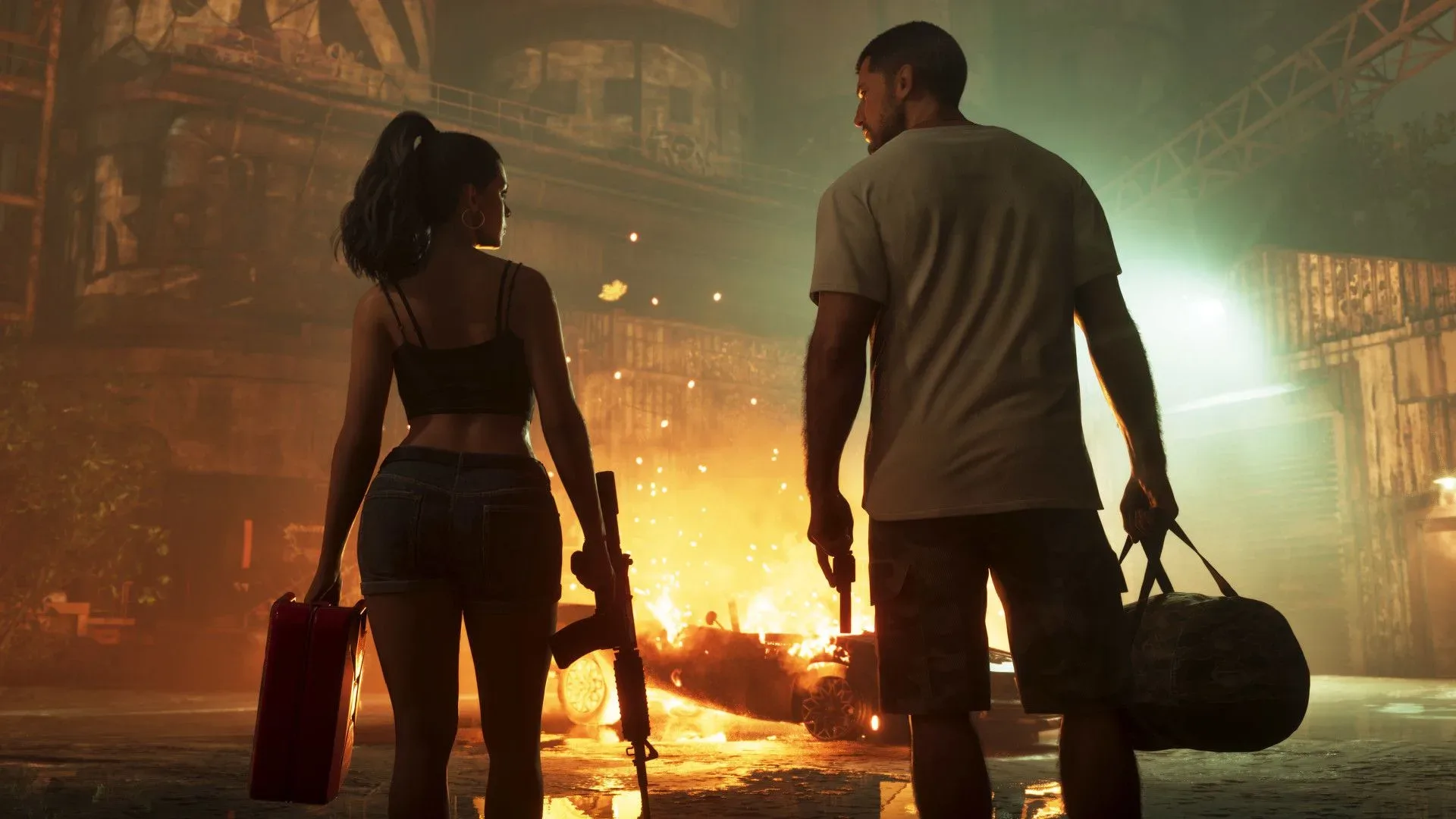

Grand Theft Auto VI has an enormous appetite. It wants to be a bustling place to waste an afternoon, a catalogue of criminal set pieces, a caustic satire of contemporary American life, and a character-driven crime story centered on Lucia and Jason. That is an intimidating stack of ambitions, especially for a game whose world is so eager to interrupt any straight line between two plot points. Yet its defining quality is not simply scale. It is the sense that its activities, detail, action, and storytelling are all pulling toward the same fantasy: inhabiting a volatile, funny, occasionally ugly criminal world that feels startlingly lived in.
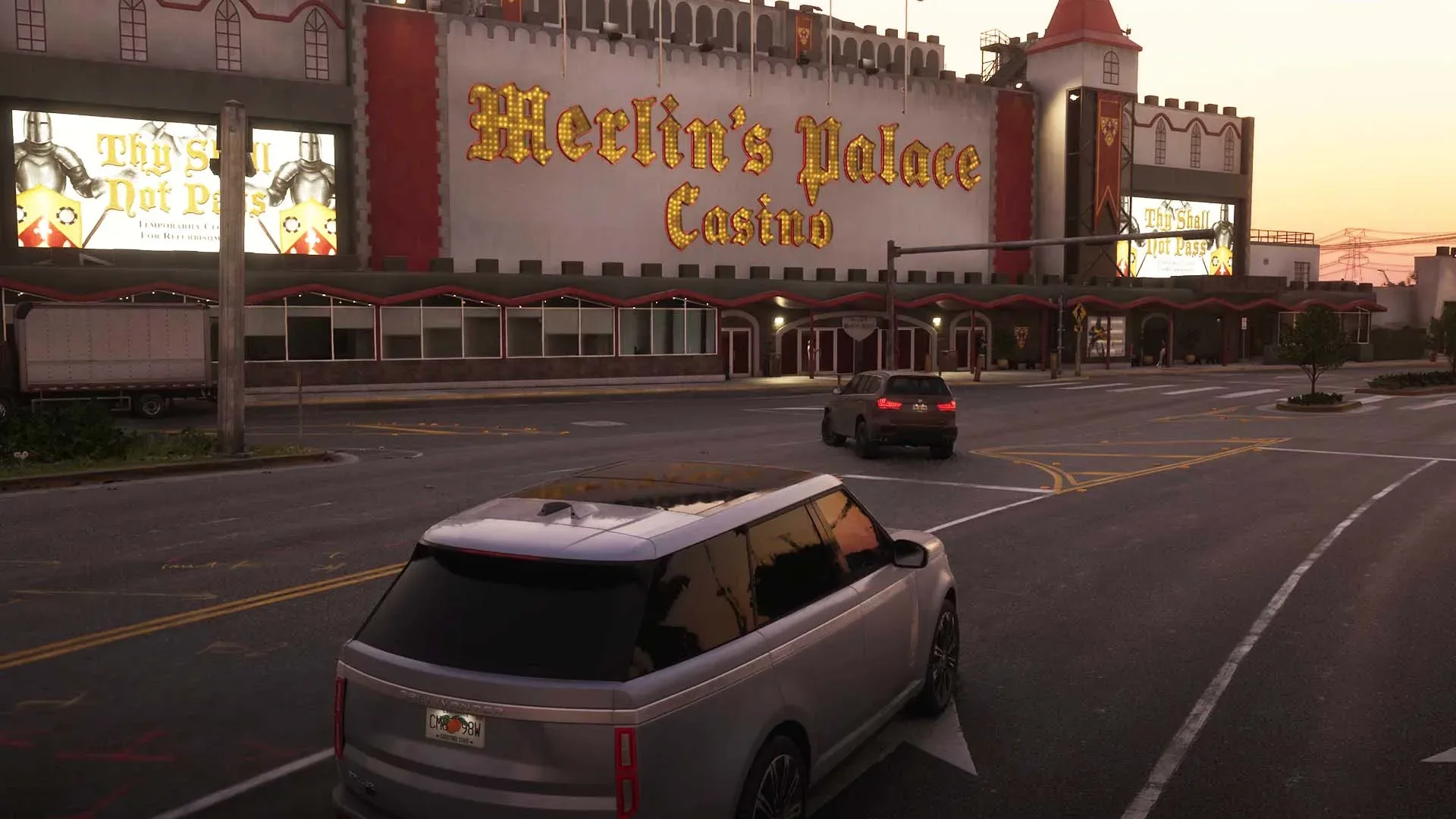
Leonida, including a dramatically expanded take on Vice City, supplies the stage. It is a place designed not merely to be crossed while traveling toward missions, but to be noticed. Ordinary diversions sit beside illicit opportunities: fishing from a boat, brewing coffee, exercising, scuba diving for lost treasure, crop dusting, muddy motocross riding, and club dancing all share space with the more expected criminal pursuits. The effect is less about ticking off a list than creating contrast. Quiet routines and small detours make the escalation of a chase, shootout, or heist register more sharply.
That rhythm also makes getting distracted part of the point. Traffic accidents, suspicious people near an ATM, background conversations, and the abundance of small animations lend everyday movement texture. A character adjusting windblown hair, the aftermath of a workout reflected in sweat and heavier breathing, or a location dressed with specific clutter may sound like minor touches in isolation. Together, they give the setting a convincing density. The game is especially effective at making a player wonder what is around the next corner, even when there is no immediate reward promised.
A world built for lingering
There is a potential downside to such saturation: detail can become overwhelming, and anyone looking for a brisk, uncluttered crime-action campaign may find the world constantly competing for their attention. But Grand Theft Auto VI appears to understand that temptation as a feature rather than an accidental byproduct. Its side activities and ambient incidents support the tone of a society in constant motion, where a mundane errand can coexist with danger, absurdity, or opportunity.
The visual work reinforces that idea without feeling separate from it. Weather changes are given room to matter, with clouds gathering into convincing skies. Interiors and characters carry telling details, whether that is debris in a drug den or a contact whose expression hints that a meeting is about to sour. These observations do not replace story or design; they establish the atmosphere in which both operate. The world is full of signals, some decorative and some dramatic, and learning to read that difference becomes part of the appeal.
For players who enjoy games that reward aimless exploration as much as mission progress, this is an exceptional fit. It should also appeal to those who want a big interactive city with more to do than drive from firefight to firefight. Conversely, players with little patience for a setting that invites detours should be prepared to impose their own focus. Leonida seems purpose-built to make a short session last longer than planned.
Direct action, tightly directed missions
When the game turns up the pressure, it does so through elaborate missions and set pieces that range from comic misadventure to chases, escapes, gunfights, and explosions. The variety matters. The criminal arc moves through smaller thefts, coordinated heists, and illicit operations with a more tactical flavor, helping the campaign avoid feeling locked to one kind of fantasy. Music is a major part of that propulsion, pairing an original score with a broad licensed soundtrack to heighten both excitement and unexpected emotion.
The fundamentals favor accessibility over elaborate technical demands. Ranged combat is forceful and supported by cover and a time-slowing focus ability, while on-foot encounters emphasize judging when stealth is useful, when retreat is wiser, and when a sudden burst of aggression is the right answer. Driving is framed as fast, intense, and importantly varied, with functionally distinct vehicles encouraging players to appreciate more than one preferred ride.
The trade-off is mission freedom. Core and optional story assignments can be prescriptive about route and procedure. That limitation is worth taking seriously in a game otherwise so committed to a wide-open impression. Players hoping each objective will accommodate extensive improvisation may be disappointed when a sequence insists on a specific solution or destination. Still, the restriction has an intelligible purpose: it keeps scenes moving with the confidence of carefully staged crime fiction. The result is a game that offers broad freedom between major beats and more controlled direction within many of them.
This is not necessarily a contradiction, but it is a meaningful distinction for prospective players. Grand Theft Auto VI is strongest when its authored momentum and its open-ended wandering alternate rather than compete. The game uses the calm of free exploration as counterweight to the force of scripted spectacle, and its biggest moments benefit from that preparation.
Lucia and Jason give the chaos stakes
The central relationship between Lucia and Jason is the crucial element that makes the action feel like more than an extravagant parade of mayhem. Their bond supplies tension and warmth to a story about people committing terrible acts while trying to secure a future together. Player choices can affect the strength of that relationship, tying participation to the emotional texture of the narrative rather than treating the leads as fixed mascots for destruction.
That premise invites an uneasy but compelling response. The game asks players to root for people who do serious harm, then grounds their ambition in mutual survival within a world stacked against them. It is a familiar crime-fiction tension, but one that gains force here because the couple’s attachment is treated as the story’s emotional center. The stakes are not only money, danger, or status; they are also what the pair can preserve of one another amid escalating consequences.
The satire around them is expansive, targeting social media, wellness culture, music culture, manosphere content, and other contemporary targets. Its broad caricature is sharpened by a more bitter concern with inequality and systems that leave people behind. That bite is significant, even if the game wraps its criticism in sensational violence, sex, comedy, and wish-fulfillment. The tension is deliberate: Grand Theft Auto VI is both entertained by this excess and interested in what it says about the culture producing it.
Anyone drawn to crime stories with a strong romantic core will find far more than background flavor here. Those who want satire without ugliness, or who are uncomfortable with wanton violence and explicit sexual material, should approach with care. The game’s most persuasive trick is that it makes its extravagance emotionally legible without pretending its world is admirable.
Big, brash, and unusually cohesive
Grand Theft Auto VI’s achievement is the cohesion of its extremes. Leisure activities, ambient observation, guided action sequences, sharp driving, and social commentary could easily have felt like competing attractions. Instead, they build a setting that can be funny, threatening, tawdry, and unexpectedly tender in rapid succession. Its more rail-bound missions remain a real constraint, particularly against the freedom promised by the larger world, but the direction also gives the campaign focus and momentum.
For a very different example of a game finding structure inside constant forward motion, see our feature on Endless Rails. Grand Theft Auto VI operates on a vastly different scale and genre, but it similarly shows how a strong central design rhythm can make repeated action feel purposeful.
Ultimately, this is a game for players who want a huge criminal sandbox but do not want its narrative to be an afterthought. Leonida makes room for idling, investigating, and causing trouble; Lucia and Jason give that freedom a human throughline. The result is lavish and often deliberately excessive, yet its strongest qualities are surprisingly precise: the timing of a look, a song, a detour, or a choice to run rather than fight.