Call of Duty: Modern Warfare 4 arrives carrying the awkward weight of a finale and the practical obligation to restore confidence. It follows 2023’s Modern Warfare 3, returns Captain Price to the pursuit of Makarov and his higher-ups, and sets out to close the rebooted Modern Warfare storyline. More importantly, it understands where the series earns its keep: not solely in thunderous campaign moments, but in a multiplayer package with enough range to suit focused competitors, experimental loadout tinkerers, and squads looking for a higher-stakes extraction outing.
That breadth makes Modern Warfare 4 a persuasive military first-person shooter even when its campaign cannot give every idea, character, or dramatic turn the room it deserves. The gunplay-led modes are the sturdy center, while the story offers a better sense of stakes than recent spectacle-first installments without fully escaping the rush to reach its closing milestones.
A finale that finds its footing, then hurries past it
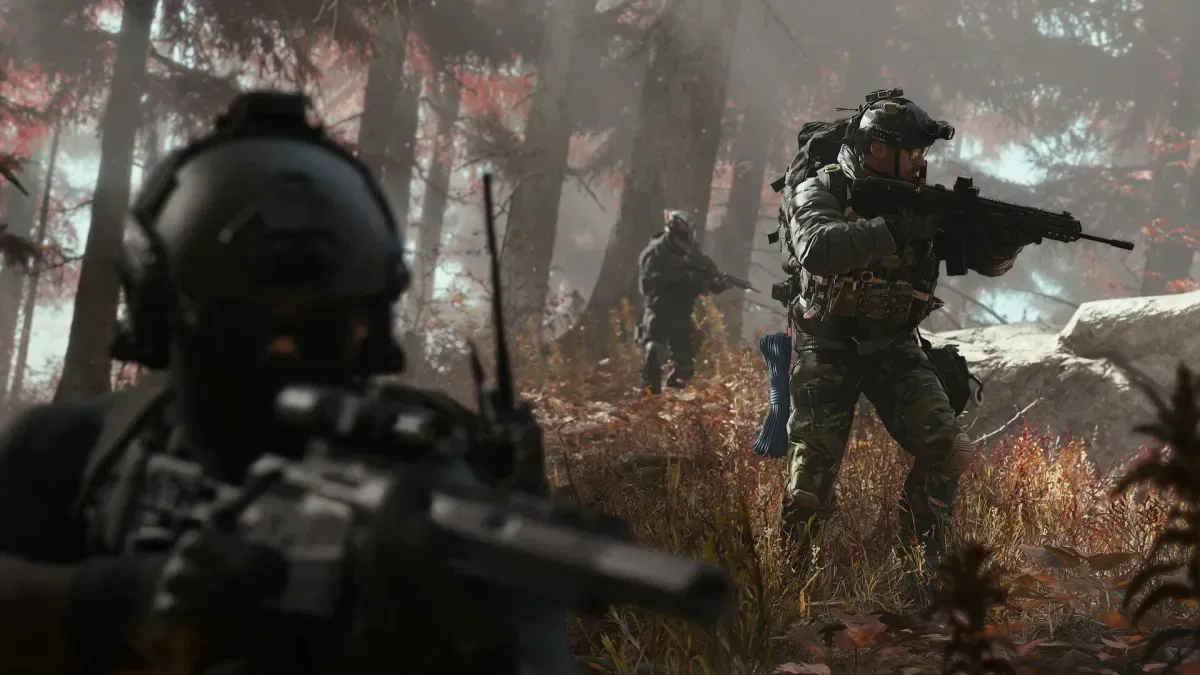
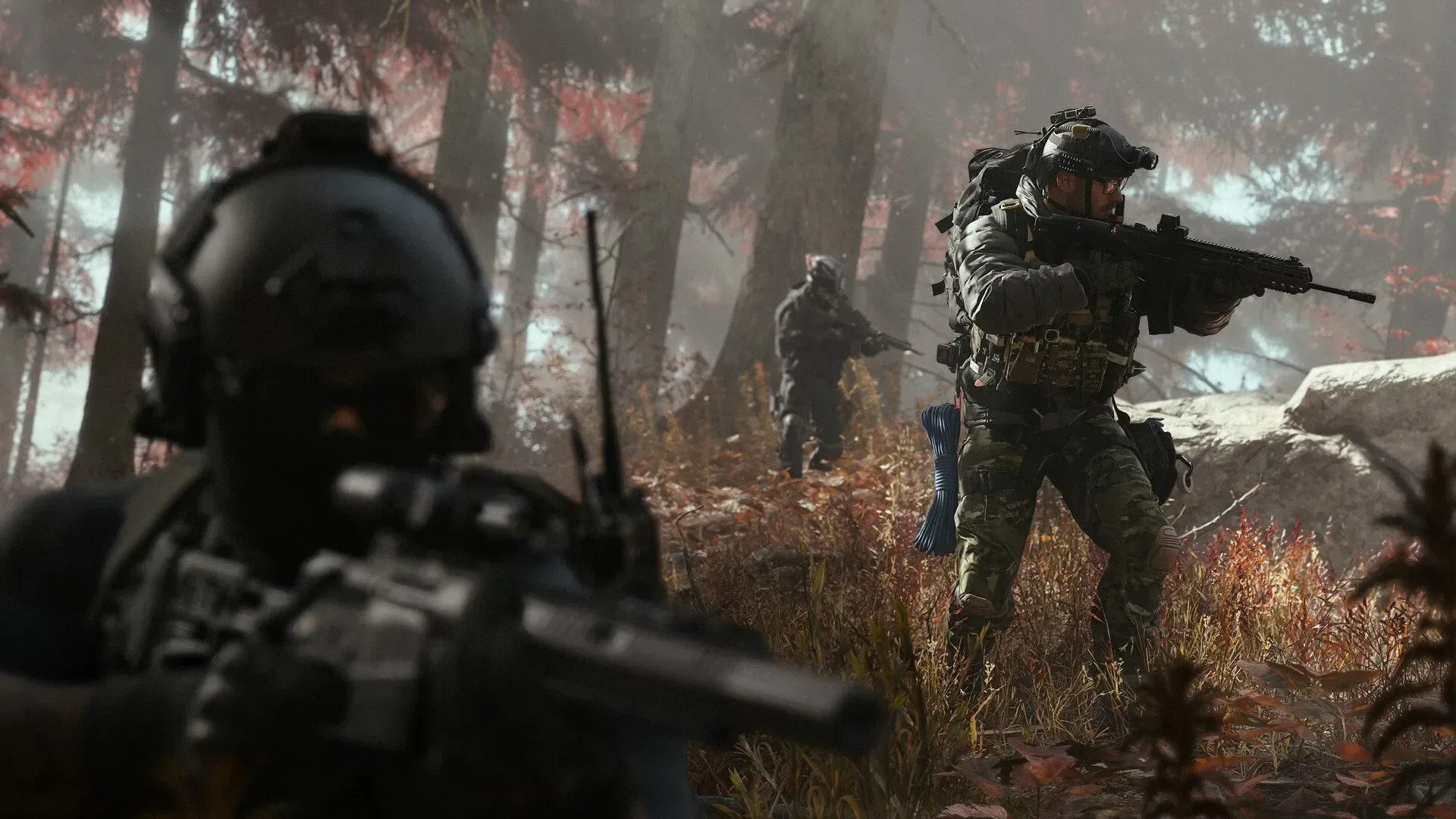
The campaign shifts perspective between familiar faces such as Gaz and a new, ragtag unit of South Korean soldiers led by Park. That choice gives the story a welcome human scale. The boots-on-the-ground missions involving Park’s group evoke the character dynamics associated with the earlier Modern Warfare trilogy, and Park’s presence, played by Young Mazino, helps make the newer viewpoint feel purposeful rather than merely decorative.
Modern Warfare 4 is at its strongest narratively when it lets its stakes register before moving on. The campaign does not lean as heavily on stealth-oriented or modernized elements, but that shift fits the escalating conflict it wants to resolve. There is a sense that this is a concluding chapter rather than a parade of disconnected set pieces, and the central drive to stop Makarov provides a clear spine.
Yet the campaign’s ambition also exposes its compression. Several character arcs and story beats move in uneven fashion, reducing the impact of developments that seem to warrant more time. Archer, played by Mads Mikkelsen, and Ri Ju-Young, played by Prisca Kim, are particularly underused despite strong performances. Their limited space makes the campaign feel as though it has assembled compelling pieces without always permitting them to do their best work. Players seeking a carefully paced, character-rich conclusion may find the narrative satisfying in outline but frustrating in detail.
Multiplayer remains the main attraction
The competitive suite provides the clearest argument for Modern Warfare 4. Its movement may not have the same fluidity as newer Black Ops entries, but weapon customization and map design give matches considerable replay value. The map pool moves between close-quarters pressure and more open contests: Mumbai and Nautical are compact shooting galleries, while Coal and Reactor U92 offer broader spaces for free-for-all engagements. That range encourages different approaches instead of asking every mode and map to serve one pace.
There is a limit to that freshness. Repetition can still settle in over time, an issue familiar to multiplayer shooters built around repeated combat loops. But the game gives players useful ways to change the texture of those loops. Standard Team Deathmatch and Kill Confirmed remain dependable choices for direct competitive play, while Combat Outpost and Hijack expand the menu in ways that appear to complement, rather than clutter, the established formats.
Combat Outpost is the standout. By scaling a typical 6v6 structure up to 24v24, it turns matches into larger, less controlled fights where teamwork and sudden reversals matter. Holding onto a team tank, engaging enemies at range, and reclaiming outposts create a strong sense of momentum. That momentum can disappear instantly under an RPG shot, which is precisely part of the appeal: victories feel provisional, and a coordinated response can matter more than simply accumulating eliminations.
For players drawn to games where objectives and battlefield chaos overlap, Combat Outpost looks like the first stop. It also makes a fitting contrast to the more deliberately contained tension explored in Coal Duty’s group-exit design feature, though Modern Warfare 4 pursues that social pressure through larger combat spaces rather than a quota-driven escape.
A loadout system that invites thought
Modern Warfare 4’s customization is not just a long list of attachments for the sake of it. Players can adjust scopes, ammunition, stocks, and muzzles while weighing their respective advantages and disadvantages. That makes building a weapon part of defining a playstyle, whether the goal is to prepare for close maps, wider sightlines, or the demands of a coordinated team mode.
The Gunny system is intended to soften the paralysis that can come with so many possibilities, helping optimize a weapon around particular styles of play. It is a sensible accommodation for players who want guidance rather than hours in menus. At the same time, the depth of the underlying system means Gunny is not the game’s most essential feature; those willing to learn the tradeoffs themselves may get more from the process of tuning a gun manually.
This is valuable buying context. Players who want a shooter that supports detailed loadout experimentation have meaningful material here. Those who prefer a simpler, pick-up-and-play structure can use Gunny as a bridge, but should not expect it to erase the game’s interest in equipment decisions.
DMZ gives the package a different kind of pressure
The new DMZ mode is Modern Warfare 4’s most notable expansion of its multiplayer identity. It places solo players, duos, or trios in the open world of Hajin, where they must make use of what they bring, gather additional resources, and successfully extract. The premise follows familiar extraction-shooter principles, but its tension comes from the combination of risk, strong gunplay, and level design.
Hajin is demanding even without frequent encounters with other live players. The environment is hostile, mistakes can be costly, and survival depends on a thoughtful loadout, traits, and a capable team when playing with others. That makes DMZ a good fit for players who enjoy uncertainty and the possibility that careful preparation may still be overturned by a bad situation. It is less immediately relaxing than a standard multiplayer match, but its unpredictable rhythm is exactly why wins and losses can both encourage another attempt.
DMZ also helps the overall package avoid feeling like a selection of minor variants on the same match type. Competitive staples, large-scale objective combat, and extraction play all ask for different levels of coordination and patience. That is a more convincing form of content variety than sheer quantity alone.
Strong presentation, noticeable stumbles
Visually, Modern Warfare 4 is among the series’ strongest efforts. New York and Paris are presented with a lifelike quality that supports the grounded modern aesthetic the game pursues. The presentation is not merely ornamental; it helps sell the scale of both campaign conflict and multiplayer arenas.
Technical issues prevent that presentation from being entirely seamless. Slow frame rates can affect some high-intensity campaign scenes, while texture loading occurs frequently across the game. Neither issue appears to make the game unplayable, but both are conspicuous enough to interrupt scenes designed to feel urgent or immersive. Players especially sensitive to performance inconsistency should factor that caveat into their expectations.
Who should answer the call?
Modern Warfare 4 is best suited to players who want a robust multiplayer shooter with several distinct ways to engage. Competitive regulars have familiar modes and varied maps; larger groups have Combat Outpost’s 24v24 clashes; and players who prefer careful, tense runs can make DMZ their primary destination. The campaign is worth playing for its clear stakes, changing perspectives, and generally effective attempt at closure, but it is not the most consistent reason to buy in.
As a rebooted-subseries finale, it delivers more than a clean narrative wrap-up. It provides a confident multiplayer foundation, meaningful customization, and an extraction mode with genuine pressure. The campaign’s rushed character work and the technical blemishes keep it from total precision, but Modern Warfare 4 still lands as a strong, content-rich sendoff with its sights firmly on the modes players will return to most.