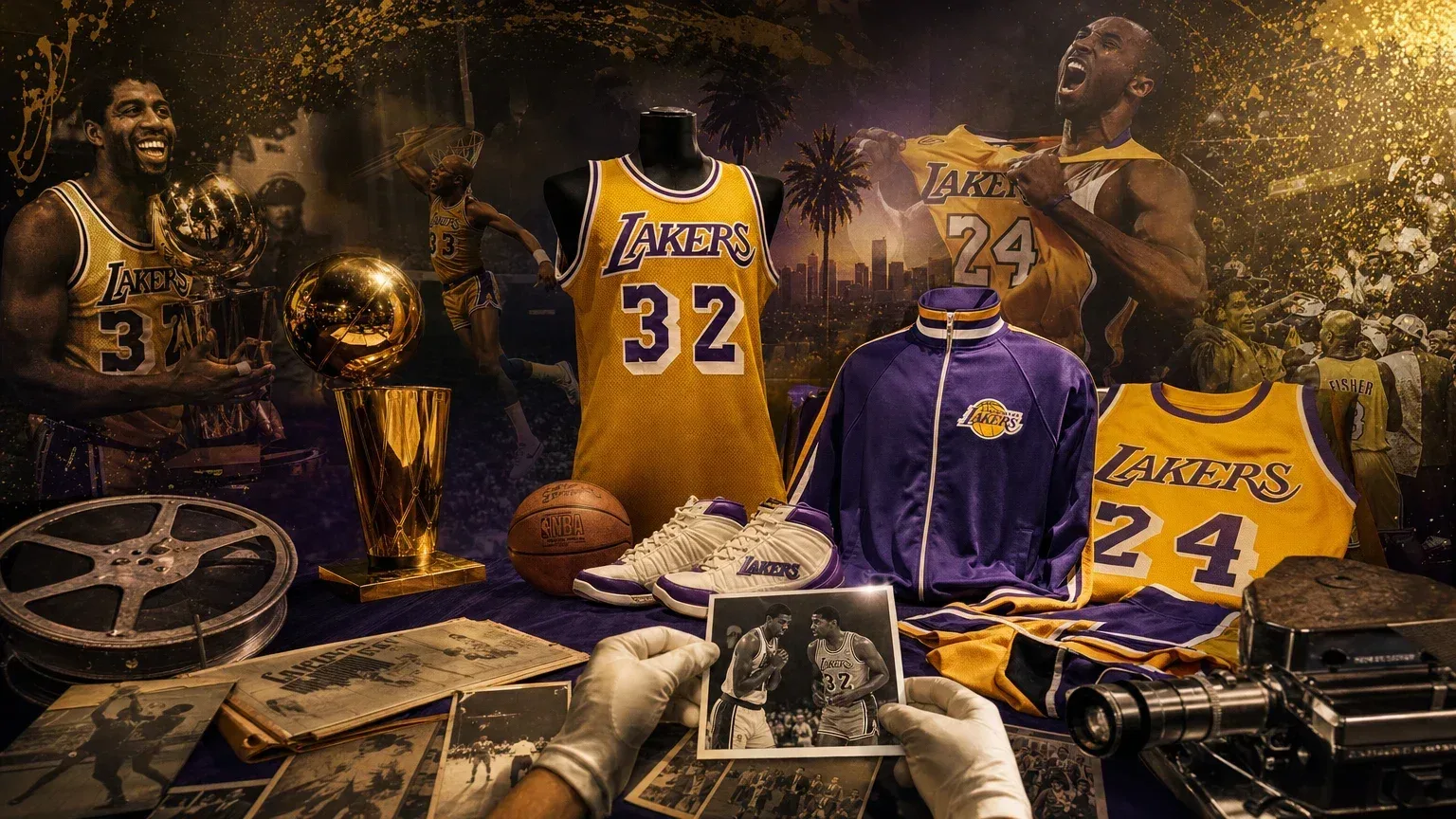
A live Lakers memorabilia sale promoted around Ken Goldin, Magic Johnson, Kurt Rambis and Derek Fisher has all the ingredients that make a collector’s pulse do a little crossover dribble: franchise history, recognizable names, game-used claims and a format designed to make every second feel important.
The listed material includes game-used gear and memorabilia, as well as 2026 Media Day jerseys and a historic game-used ball. Those descriptions are useful context for understanding the kind of items being presented, but the sale format is the bigger lesson. A livestream can show an object from more angles than a static listing, yet it can also transform ordinary buyer caution into a frantic internal monologue: Someone else is bidding. The clock is moving. Surely this is destiny.
It is not destiny. It is a purchasing decision involving a physical object, a specific claim, terms of sale and a budget that would probably prefer not to be treated like a disposable napkin.
For sports-memorabilia collectors, the most productive way to approach a time-sensitive team sale is to separate the show from the item. Enjoy the presentation. Watch how the lot is handled. Listen to the description. But assess the object using the same standards that would apply if it appeared in a quiet listing on a Tuesday afternoon: category, provenance, condition, costs and fit with the collection already on the shelf.
Live presentation is useful only when it adds information
A live sale can genuinely help a buyer. Memorabilia is often difficult to understand from a single catalog image. A jersey has construction, tagging, seams, numbers and visible wear. A ball has panels, surface marks and handling evidence. An in-hand presentation can potentially make these details easier to see and can show whether the seller’s verbal description aligns with what appears on screen.
That does not mean a livestream itself verifies anything. The important question is whether the presentation leaves behind useful, item-level information. Can a buyer identify the exact claim being made? Is the object described consistently on screen and in the listing? Are images, condition notes and documentation clear enough to review slowly after the exciting part ends?
If the answer is yes, the live format has done real work. It has improved inspection. If the event instead relies on atmosphere, celebrity proximity, fast pacing or broad phrases such as “piece of history,” its entertainment value may be much stronger than its value as a research tool.
A sensible rule: treat the stream as an opportunity to observe, not an instruction to act. The listing and supporting material should remain the durable record of what is being offered.
Related coverage includes How Collectors Should Approach Live Lakers Memorabilia Sales Before Bidding.
The category label matters more than the adrenaline
Memorabilia descriptions can sound similar while referring to very different things. The most important distinction in a sale featuring jerseys, balls or equipment is usually the distinction between game-used, team-issued and event-used material.
- Game-used means the claim is that an item was used in competition or another specified game setting.
- Team-issued generally means the item was produced for team purposes, without necessarily establishing that it was worn or used in a game.
- Event-used describes use connected to a particular non-game event, such as a media appearance or photo session, where that connection is actually specified.
All three categories can be desirable. They simply tell different stories, and a collection should not pretend they are interchangeable. A Media Day jersey may have strong display appeal and an identifiable link to a player or team event. It is still not automatically equivalent to an item represented as game-used. Likewise, a clean team-issued piece may be exactly right for a collector building a uniform display, while a visibly worn game-used item may better suit someone focused on competitive history.
The point is not to crown one category as universally superior. It is to buy the category you mean to buy. If a collector wants game-used material, a team-issued item should not become “close enough” merely because the camera is moving, the chat is lively and the lot happens to carry a famous franchise identity.
Keeping separate records for game-used, team-issued and event-used acquisitions can help. That small organizational habit makes later comparison more honest. It also means an item’s purpose in the collection is clear long after the excitement of the sale is forgotten.
Provenance is not decorative copy
Provenance is the documented chain of information explaining where an object came from and why the claim attached to it deserves confidence. In the memorabilia world, that may involve team paperwork, photo matching, an identified event, seller documentation, clear item identifiers or a combination of evidence. The exact support will differ by object and claim.
That is why broad promotional language should be treated as an invitation to investigate, not the investigation itself. “Historic” can describe an exciting story, but it is not a substitute for explaining how the item connects to that story. “Game-used” is a meaningful category, but buyers still need to understand what supports that characterization.
Before bidding or buying, collectors can ask a straightforward set of questions:
- What precisely is the item claimed to be?
- What player, event, date or setting is attached to that claim, if any?
- What documentation, images or identifiers support the connection?
- Will that information be available with the item or in the sale record afterward?
- Can the claim be written clearly in the collector’s own inventory notes without adding guesses?
The fifth question is sneakily useful. If the best description a buyer can preserve is “it was presented during a cool Lakers stream,” then the event is doing most of the work. If the buyer can instead write a specific category, use context and supporting documentation, the object has a firmer collecting identity.
The same caution applies to any discussion of restoration, repair or improvement. An item can be attractively presented while still requiring clear disclosure about its state. Although it concerns another collecting category, the principle behind the difference between card care and alteration translates well: know what is original, what has been maintained and what has changed before deciding what the object means to you.
Condition is evidence, not a one-word grade
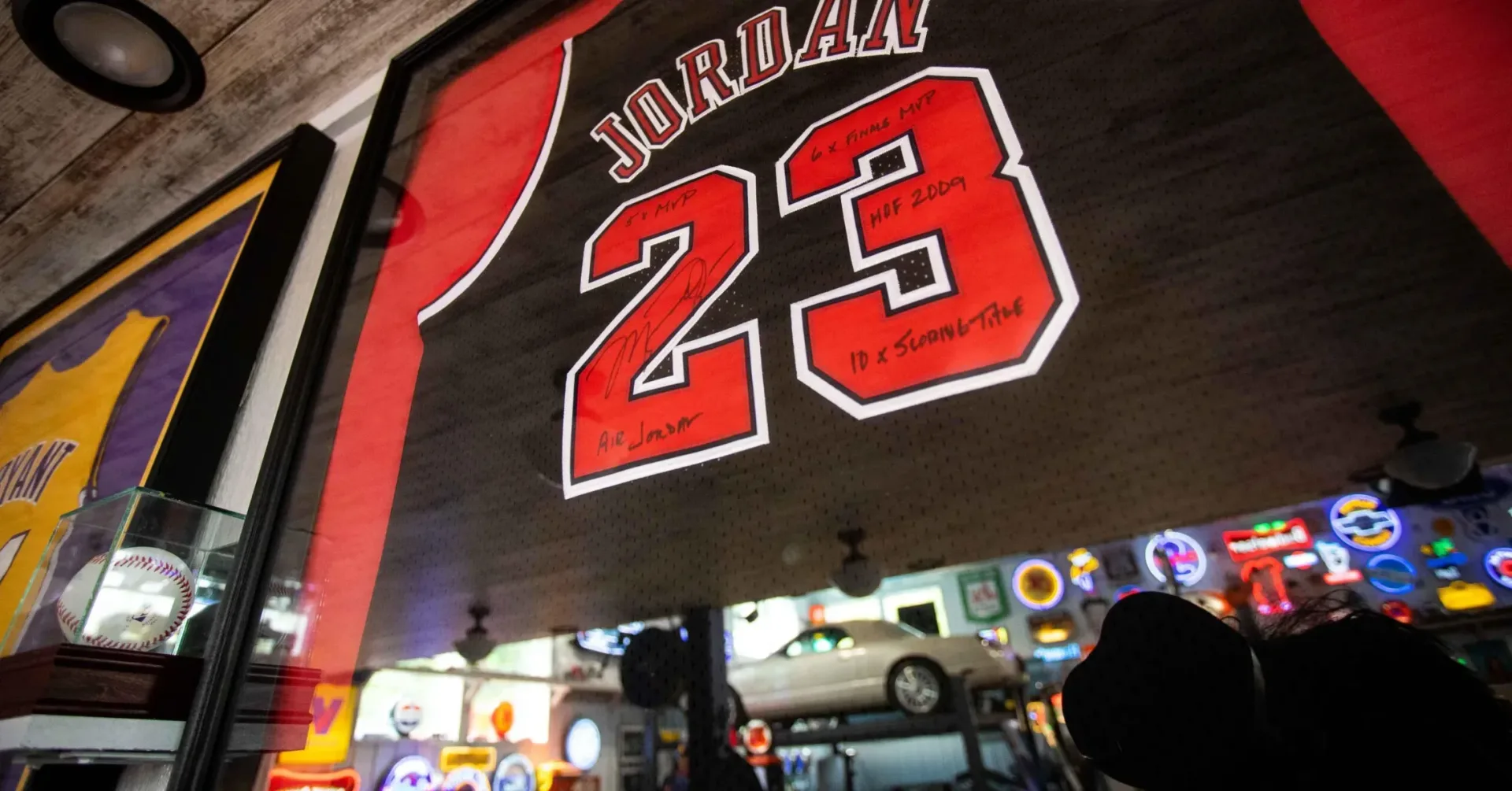
Condition in memorabilia collecting does not operate like a tidy “mint” label on a trading card. Use can be central to an item’s appeal. A game-used ball may be interesting because of surface marks and panel wear. A jersey may carry value in visible signs of handling or wear consistent with its claimed role. But wear does not prove every claim, and it should not excuse an imprecise description.
For jerseys, a buyer should look closely at the areas that are visible in photos or on screen: seams, numbering, tagging and apparent wear. For balls, useful details can include surface condition, panel wear and the placement of any signature, where applicable. The task is not to become an instant manufacturing historian. It is to notice whether the object’s physical condition is explained clearly and whether its appearance makes sense alongside the stated context.
A live format creates a particular problem here: it rewards a rapid glance. That is the opposite of how a buyer should evaluate an object intended to live in a collection for years. Pre-show photos and written condition details deserve more weight than a hurried close-up. If a meaningful detail is not visible, not described or not documented, the buyer does not need to fill the gap with optimism.
Condition also starts a second conversation: what happens after purchase? Jerseys, balls and similar objects need storage and display plans appropriate to their materials and expected handling. A buyer who has considered textile support, display exposure and climate before bidding is making a more complete decision than one who figures it out after the parcel arrives.
Set three limits before the sale starts
Live selling is built around urgency. That is not inherently bad; it is simply the mechanic. The collector’s job is to bring a counter-mechanic: preparation.
Three limits are particularly effective:
- A financial ceiling: decide the maximum total you can spend, including any applicable fees, shipping and related costs described in the event terms.
- A category boundary: know whether you are seeking game-used gear, team-issued material, event-used pieces, a specific player connection or a particular object type.
- A documentation threshold: decide in advance what degree of detail you require before you are willing to own an item.
These limits are not a buzzkill. They are how a collector avoids turning a focused collection into a very expensive pile of objects that were briefly exciting on a screen.
Reading terms in advance is equally important. Live formats may have different rules around payment, shipping, reserves, fees and the relationship between what appears on screen and what is written in a listing. The collector should understand those conditions before the bidding moment arrives, not while trying to type with one hand and talk themselves into a jersey with the other.
This is the broader consumer discipline behind any protection or purchase decision: the unglamorous terms are part of the product. For a useful example of how coverage details can affect the real cost of ownership, see AppleCare+ for Apple Watch SE 3: The Real Cost of Protection, Repairs and Theft Coverage. The product is different; the habit of reading the fine print before the emotional moment is not.
Do not confuse the collectible moment with the collectible object
There is a natural appeal to a Lakers-centered event with prominent basketball figures involved in the presentation. Team history is powerful. Familiar names are powerful. A live setting from Los Angeles can feel like an occasion rather than a transaction.
That occasion may be worth enjoying. It should not automatically increase the long-term collecting strength of every object offered during it.
When the sale ends, the livestream is gone. The item remains. The buyer is left with the object’s category, documentation, physical state and relevance to the collection. That is why the best self-check is so simple: would I still want this piece if it appeared quietly in a standard listing without the live-show energy?
If the answer is yes, the purchase may have a solid foundation. If the answer is no, the buyer may be responding more to a memorable moment than to an object that advances their collecting goals.
This distinction is especially helpful for team collectors. A coherent Lakers collection might focus on a player, an era, a type of artifact or a specific kind of team connection. The collection does not need everything with a logo. It needs pieces that deepen the story it is already telling. A well-documented, less flashy item can do that better than a headline lot whose connection is broad or unclear.
A live sale can also be research
No purchase is required for a live event to be useful. Watching how memorabilia is described can help collectors learn the language used for categories, condition and provenance. It can show how different types of material are positioned. It can also reveal which questions remain unanswered when the pace speeds up.
That makes passing a productive outcome, not a failure to participate. A collector who watches, takes notes and preserves their budget has gained knowledge while keeping options open for a future item that better fits their standards.
The Lakers sale is therefore less a command to buy than a reminder of the basics. Verify the item-level claim. Distinguish game-used from team-issued or event-used material. Inspect condition with patience. Know the terms. Set a ceiling. And make sure the object still makes sense once the countdown, the chat and the showmanship have gone home.
Quick checklist for a time-sensitive memorabilia sale
- Read the written lot description before relying on a live description.
- Identify the exact category: game-used, team-issued or event-used.
- Look for specific support for the stated player, event or use claim.
- Review visible condition and note what is not shown.
- Understand costs and sale terms before bidding.
- Set a maximum total spend.
- Ask whether the item strengthens a defined collecting lane.
- Be comfortable passing if the evidence or fit is weak.