Some collectibles leave the shelf with a dignified farewell. Others vanish in a puff of secondary-market chaos, leaving shoppers to stare at resale listings and ask the only sensible question: “What’s this?” LEGO’s The Nightmare Before Christmas display set appears to be approaching the second route. The kit is scheduled to retire on December 31, and it is currently listed at $40 below its usual price at both Amazon and Walmart.
That is a meaningful reduction for a licensed display build that has not often strayed far from its standard price. Pricing trackers indicate that discounts of this size have been rare over the past year, although retail prices, stock levels, and promotions can shift quickly. The central fact is simpler than Jack Skellington’s holiday identity crisis: the set is expected to stop production in December, so this may be one of the more notable chances to pick it up at a reduced price before regular retail availability ends.
For collectors, retirement dates are not automatic alarms to buy anything with a brick in it. They are useful context. A retiring model may remain available for a while, particularly if stores have leftover inventory. Equally, a desired licensed set can disappear unevenly: one retailer may have stock while another has none, and prices can rise, fall, or become strangely detached from reality once resellers notice the calendar. The right response is not panic. It is knowing what the set contains, what makes it distinct, and whether it belongs in a collection before the search gets more complicated.
One set, three slices of Halloween Town
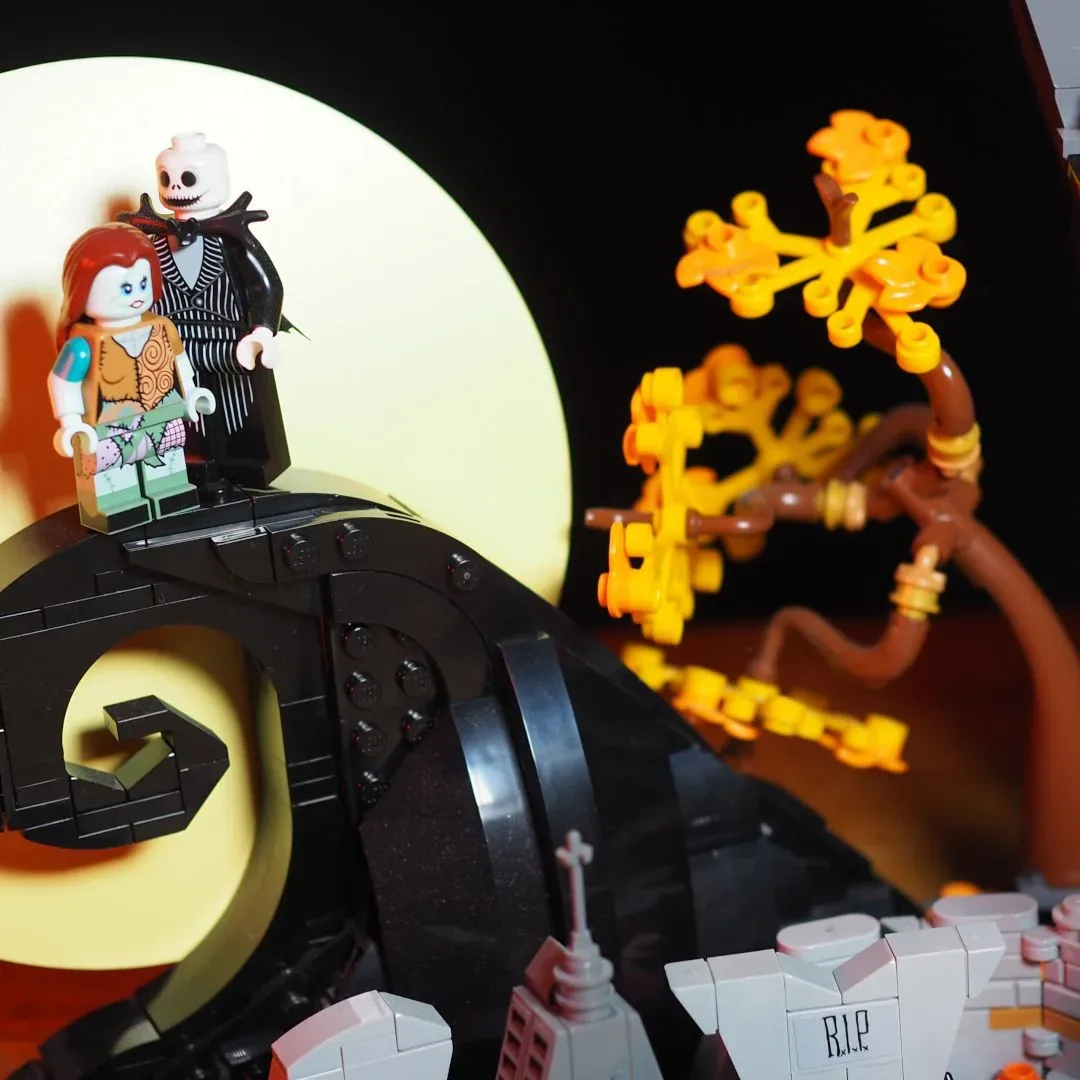
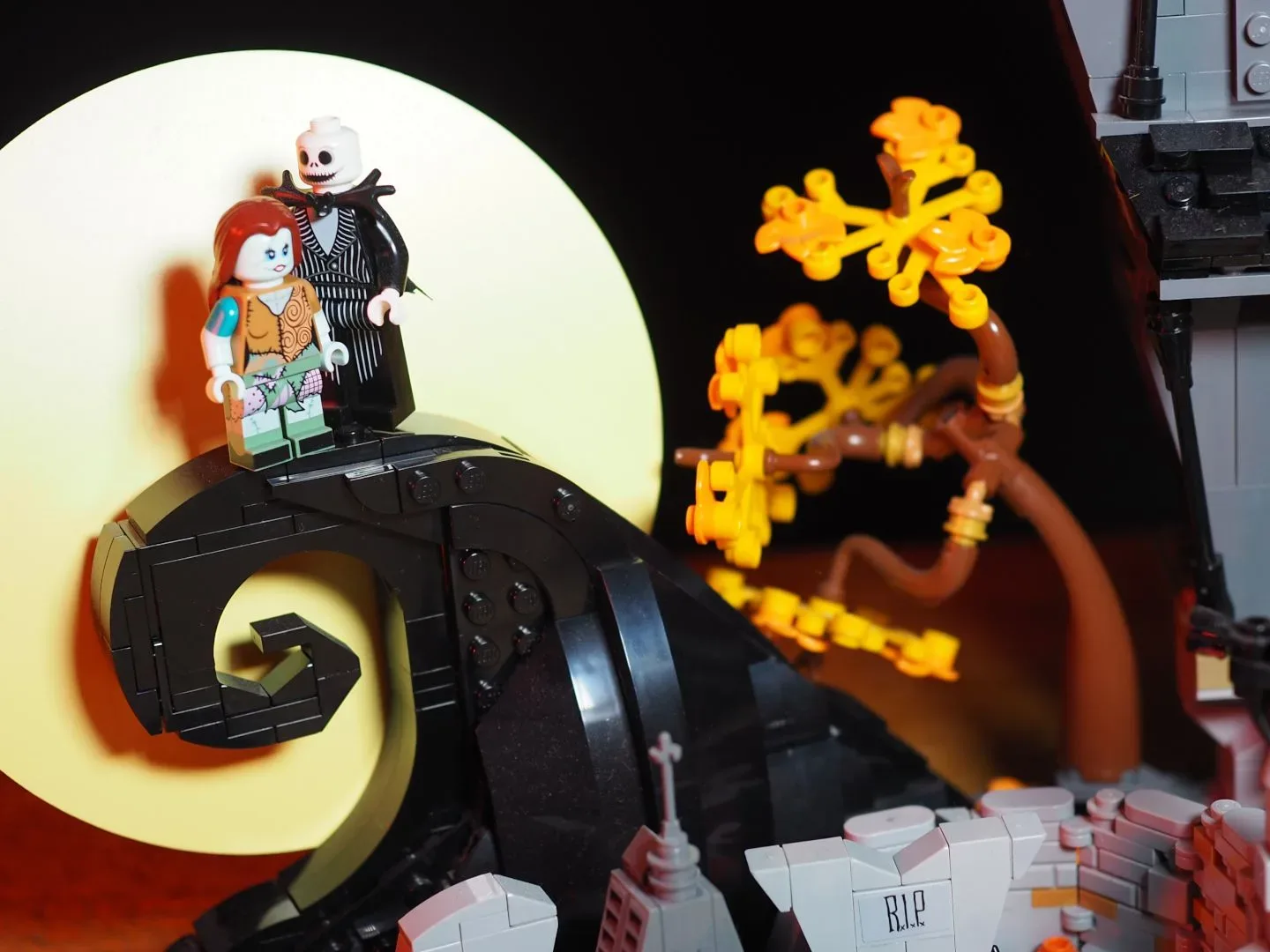
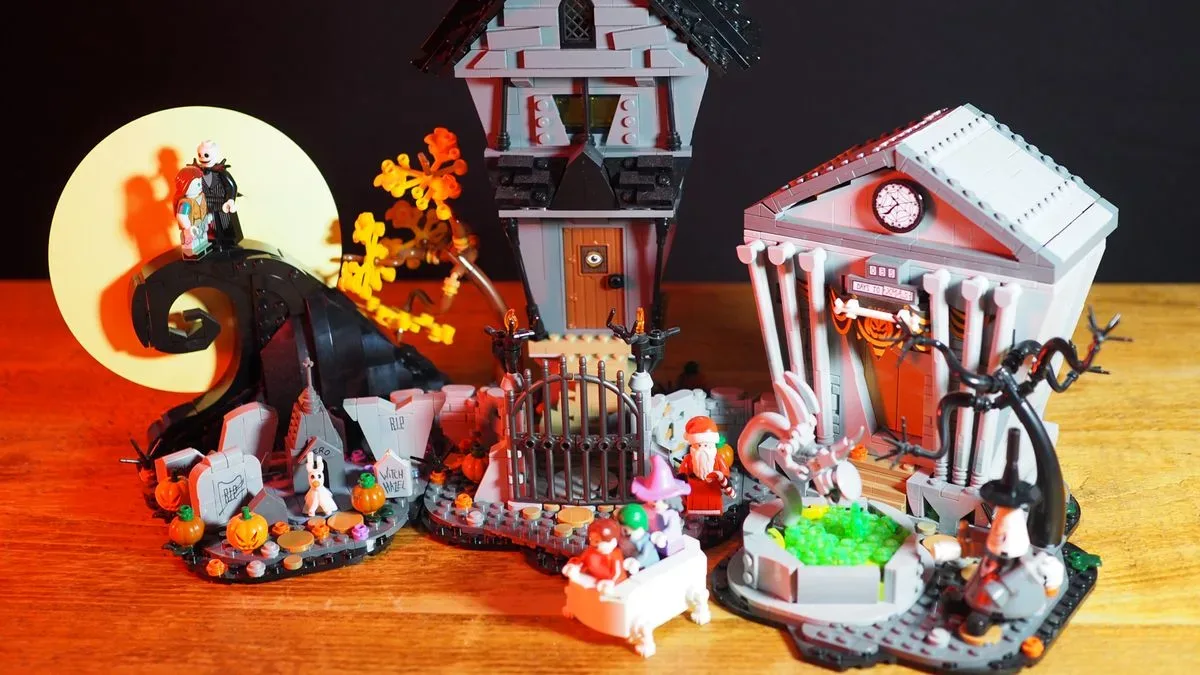
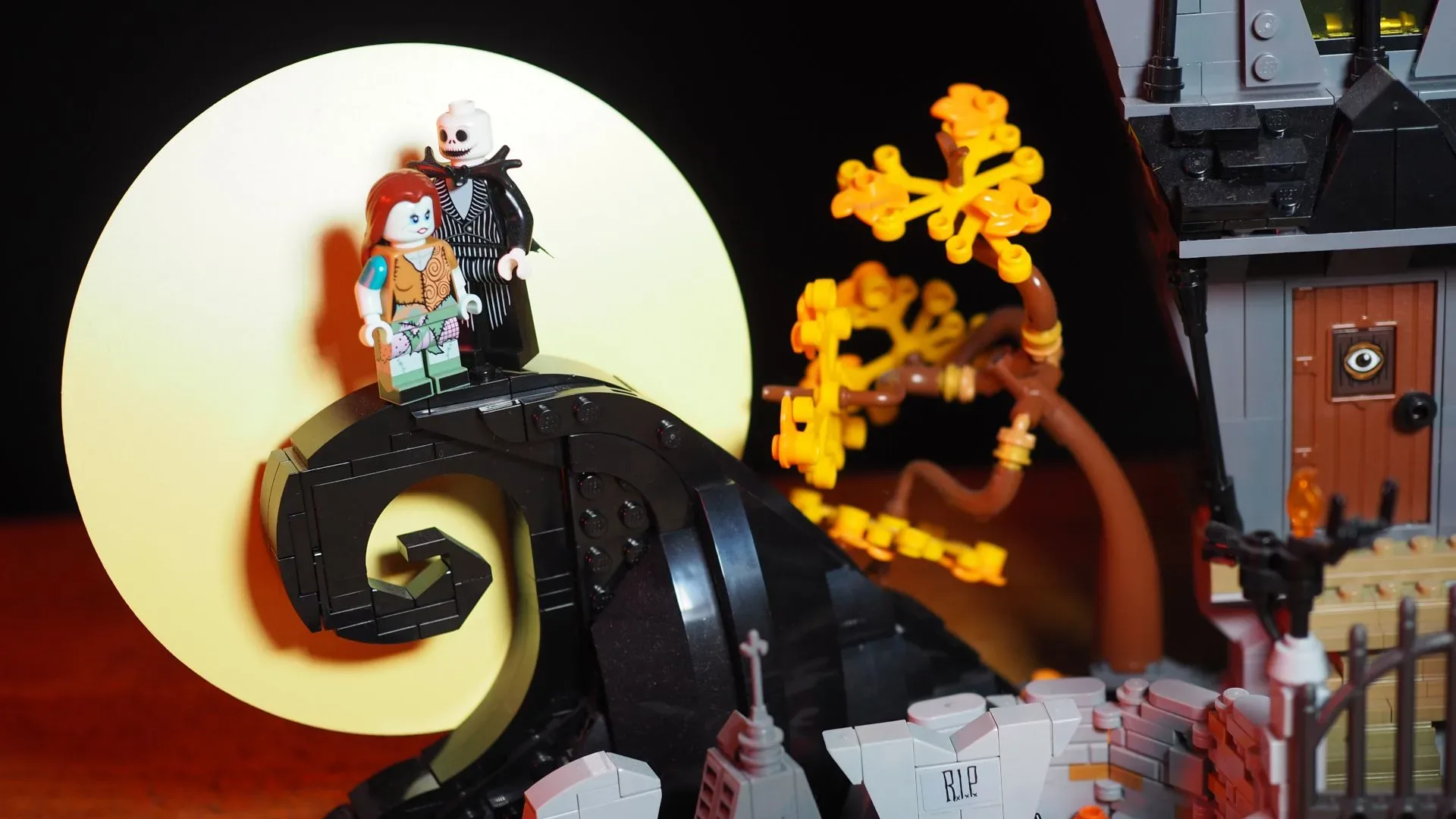
The appeal here is that the build is designed less like a single, sealed-off location and more like a small shelf-scale trip through Halloween Town. It includes three recognizable sections from Tim Burton’s The Nightmare Before Christmas: the curled hill overlooking the graveyard, Jack Skellington’s house, and the town hall. The modules can be arranged together into one continuous scene or displayed separately.
That flexibility is valuable in a set that is likely to be bought as décor as much as a traditional construction project. A collector with one wide shelf can place the three elements together for the strongest sense of place. Someone working around books, figures, framed art, or an existing LEGO display can split the locations up. The build does not force the entire town into one rigid rectangle, which is a small but welcome mercy for anyone whose display space is already losing a battle against their interests.
The character lineup covers the core Halloween Town crew and a few key visitors. The included minifigures are Jack, Sally, the Mayor, Santa, Lock, Shock, and Barrel. Zero, Jack’s ghost dog, is also part of the set. That is a substantial gathering for a model built around environments rather than a pure minifigure pack, and it gives the scene much of its personality. The absence that will probably stand out most to fans is Oogie Boogie, who is not included as a minifigure.
That omission does not erase the value of the roster, but it is worth knowing before buying. Licensed LEGO sets often invite collectors to mentally complete a cast list, and the character-shaped hole is sometimes more noticeable than a missing window tile. Here, the lineup still covers the film’s central couple, Halloween Town’s civic chaos agent, Christmas Town’s most important resident, the three trick-or-treaters, and Zero. It is a strong selection, just not a perfectly exhaustive one.
The difficult trick of building something deliberately crooked
The Nightmare Before Christmas has a visual language that is immediately recognizable and surprisingly awkward to translate into bricks. Its buildings lean. Its silhouettes curve. Its architecture seems to have been drawn after a long night in a haunted wind tunnel. LEGO elements, meanwhile, are famously good at clean lines, crisp corners, and structures that would make a building inspector relax for the first time in their career.
This set leans into that tension. The curled hill, the uneven proportions of Jack’s house, and the town hall all aim for the film’s warped, off-kilter appearance rather than a standardized miniature-city look. Clever structural choices, including offset supports, allow the model to suggest instability without simply becoming unstable. That distinction matters. A display set can look like it has escaped a stop-motion nightmare while still needing to stay upright through ordinary shelf life.
Collectors should still treat the finished model as a display piece, not a portable playset. Jack’s house in particular may require care when moving the assembled build. That does not mean the set lacks structural planning; it means the visual design prioritizes unusual angles and layered scenery, which naturally makes some sections less friendly to being grabbed and relocated in one piece. Moving it with support beneath the base and taking the modules separately where possible is the sensible approach.
The result is a model intended to honor the movie’s stylized production design rather than smooth it out. That is the point. A perfectly level Halloween Town would be like a perfectly normal clown: technically possible, perhaps, but missing the unsettling charm that brought everyone there.
What retirement actually changes for collectors
LEGO’s planned retirement date of December 31 means the company is expected to end production of this set after that point. It does not guarantee that every retailer will sell out on New Year’s Eve, nor does it promise a sudden spike in value. Retirement is a production status, not a crystal ball.
Still, it changes the buying equation. While a set remains in production, a shopper can reasonably expect periodic restocks and at least some chance of future promotions. Once production ends, remaining stock becomes finite. Retailers can clear it out with discounts, hold steady until it sells through, or run out entirely. The experience of other retiring licensed LEGO releases shows why people watch these dates: sought-after builds can become much harder to find after retail inventory is gone.
The LEGO Great Deku Tree, another collector-focused licensed model, was reported to have become difficult to find after its own 2026 retirement. That is not proof that The Nightmare Before Christmas will follow exactly the same path. Different sets have different production quantities, demand, and retailer inventories. It is, however, a useful reminder that waiting for an even larger discount has a trade-off. The hoped-for bargain may arrive, but availability can become the thing that disappears first.
Seasonality adds another wrinkle. The current $40 reduction arrives in the run-up to the period when both Halloween and Christmas naturally put the film back in the spotlight. Black Friday and year-end sales could bring another offer, perhaps even a better one. There is no certainty of that, though, and there is no reason to assume every retailer will have stock by then. Anyone choosing to wait should do so because they are comfortable with that uncertainty, not because retirement sales are guaranteed to obey a collector’s wish list.
A practical checklist before adding it to the cart
A retiring collectible is still a purchase, and the difference between “great deal” and “very decorative regret” is personal. Before deciding, consider a few basics:
- Check the actual listed price and seller. The $40-off offer has appeared at Amazon and Walmart, but promotions and marketplace listings can change. Confirm that the purchase is from a retailer or seller you trust.
- Decide how you would display it. This is a three-part scenery build with irregular shapes. Measure shelf depth and height, and remember that a model with tall or leaning architecture needs breathing room.
- Buy for the theme, not an assumed future return. Retirement may make a set scarcer, but collectible markets are unpredictable. Its most dependable value is as a build and display for fans of the film.
- Think about condition preferences. Builders may only care that the box arrives intact enough to protect the parts. Sealed-box collectors may care much more about dents, creases, tape, labels, and shipping protection.
- Keep the receipt and documentation. This is unglamorous, but it helps with returns, price adjustments where offered, and tracking a collection over time.
That last point sounds mundane until a collection grows beyond the stage where every purchase can be remembered by vibes alone. For a lighthearted look at the emotional roller coaster that can follow a supposedly tiny purchase, revisit The Collector’s Five Stages of Buying One Small Thing. The condition may be incurable, but organization remains available.
Why this one has cross-collection appeal
This is not only a LEGO item. It sits at the overlap of brick collecting, film memorabilia, seasonal display pieces, and character collecting. That makes it attractive to people who may not usually follow LEGO retirement schedules but do care about The Nightmare Before Christmas as a long-running Halloween-and-Christmas ritual.
Its visual identity also separates it from a conventional building facade or vehicle build. The set’s peculiar angles and dark fairy-tale mood give it a clear display purpose: it looks like Halloween Town should look, rather than merely attaching familiar minifigures to a generic structure. The ability to connect or separate the hill, house, and town hall helps it work alongside other movie collectibles rather than demanding an entire shelf kingdom of its own.
Collectors who are accustomed to retired-product terminology from other pop-culture lines may find the comparison useful. “Retired” is broadly similar to the idea of a product no longer being made, but it should not be confused with a guaranteed rarity label. For another example of how status language can be misunderstood in collecting, see What Does Vaulted Mean for Funko?. Labels can describe production status; they cannot predict every future price tag.
For now, the relevant details are concrete: LEGO’s The Nightmare Before Christmas set is expected to retire on December 31, it includes three modular Halloween Town locations and a broad character selection, and it has been listed at $40 below its usual price at Amazon and Walmart. If the set already has a place in a Halloween Town display, the timing may be more compelling than it will be once the production window closes.
Keep reading
Shop the products
Check current price, model and availability at the retailer.