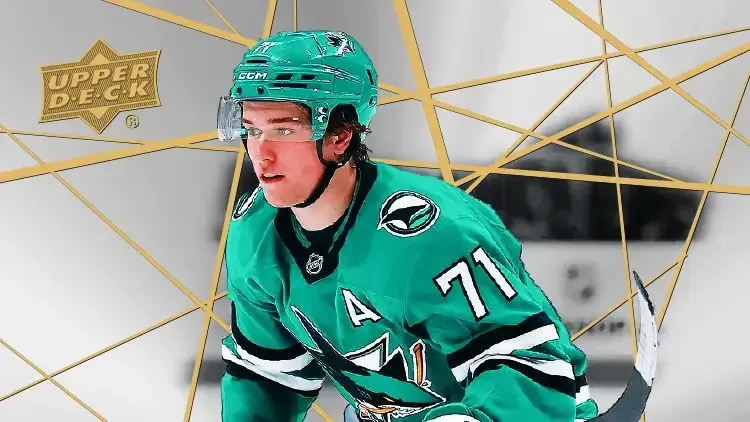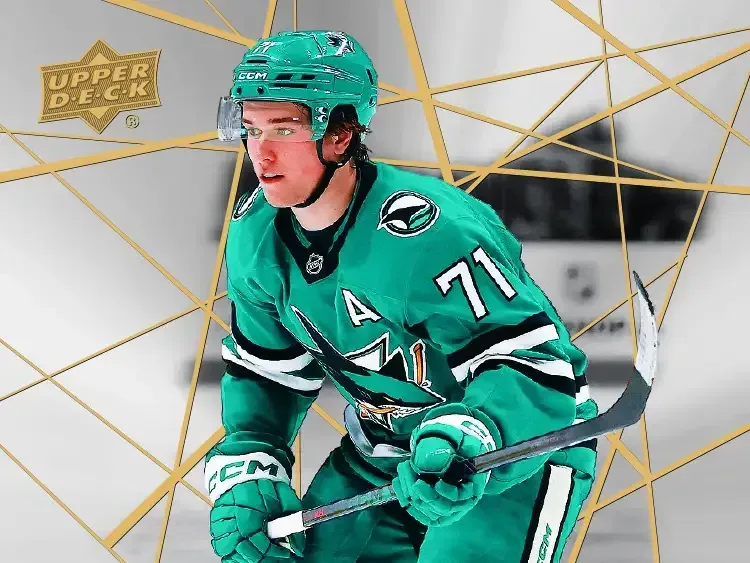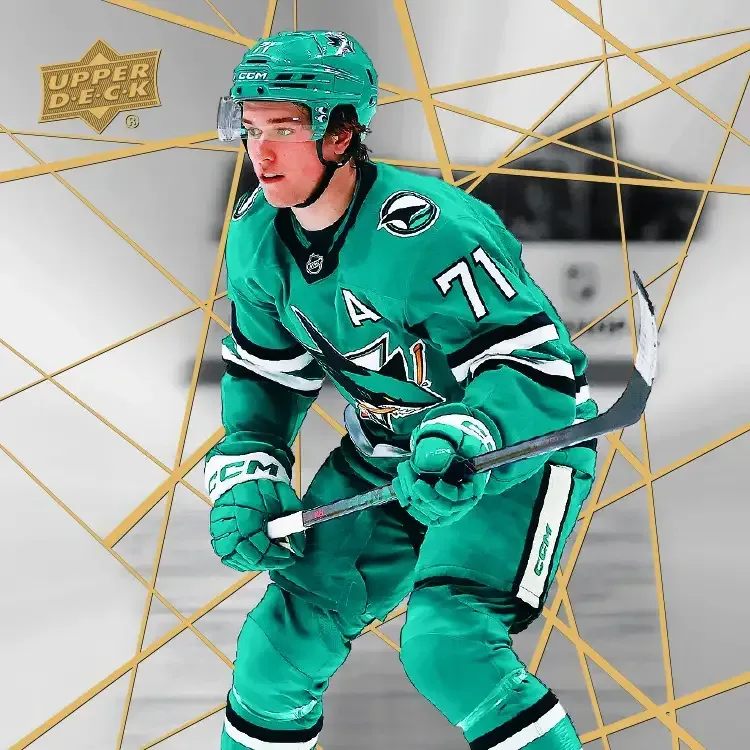
Hockey-card season has arrived with a side of coffee: Tim Hortons has launched its 2026-27 NHL Hockey Cards collection, produced with Upper Deck and sold at participating Canadian restaurants. The 234-card release puts rising names Macklin Celebrini and Matthew Schaefer alongside Sidney Crosby, Nathan MacKinnon and Brad Marchand, while giving collectors several ways to chase beyond the regular base-card run.
The program’s appeal is straightforward. Packs cost $1.50 CAD with a beverage purchase or $1.99 CAD without a beverage at participating locations in Canada. That makes the set an accessible route into licensed NHL cards, although collectors should keep the word participating in mind: restaurant-level availability is part of the program’s terms rather than something to assume at every location.
For collectors who like the ritual as much as the checklist, the 2026-27 set has the ingredients of a season-long project. There are redesigned base cards, premium-style inserts, autograph cards, memorabilia cards, prize cards and scheduled in-person trade events. It is a broad format built for pack opening and social swapping, not simply for buying a single card and calling the job done.
A 234-card release spanning hockey’s present and next wave
The central set contains 234 cards. Tim Hortons’ promotional material emphasizes the mix of new-generation talent and established NHL stars: Celebrini and Schaefer join Crosby, MacKinnon and Marchand in the release.
That player mix matters because a card set often serves two audiences at once. One group wants current headline players and familiar collecting targets. The other is more interested in players whose place in the hobby may develop alongside their on-ice careers. Celebrini and Schaefer give the set that forward-looking dimension, while Crosby and MacKinnon anchor it with names that already have substantial recognition among hockey fans.
Collectors should avoid treating inclusion as a prediction of future card value. A player’s presence in a set confirms that there is a card to collect; it does not establish scarcity, condition, long-term demand or eventual resale performance. For a set like this, completing a personal team, player or insert checklist can be a more dependable goal than presuming any particular pull will become valuable.
What the card types mean
The set includes several categories that are useful to distinguish before opening packs:
- Base cards: The standard foundation of a release. These are the cards that form the main 234-card checklist, with this year’s design described as redesigned.
- Insert cards: Cards placed within a release as a separate themed subset rather than the ordinary base run. The named inserts here include Next Gen Phenoms and Powerhouse Pillars.
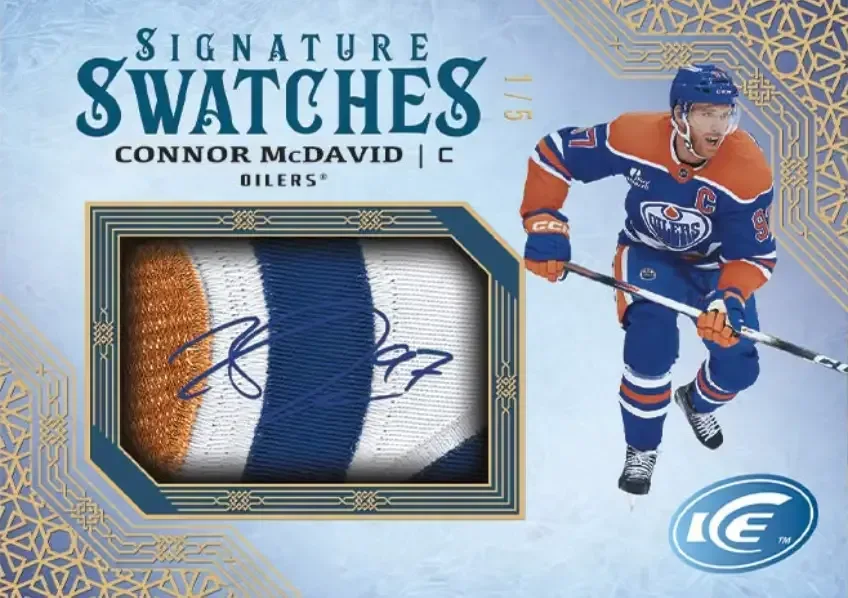
- Autograph cards: Cards signed by a player. The collection includes signed cards from Crosby and MacKinnon, as well as a signed Timbits card featuring Seth Jarvis.
- Jersey relic cards: Cards incorporating a piece of jersey material. This release includes NHL Signature Jersey Relics.
- Golden Prize Cards: Cards that unlock designated prizes or experiences rather than functioning only as a conventional player card.
These categories should not be treated as interchangeable. An autograph is defined by its player signature, while a jersey relic centers on the incorporated memorabilia component. An insert is a structural subset within the product. A Golden Prize Card is a redemption-style opportunity tied to the promotion. Each can appeal to a different kind of collector, whether the priority is a favorite player, a themed design, a tangible memorabilia element or a chance at an experience.
Related coverage includes Tim Hortons Launches 234-Card 2026-27 NHL Set With Crosby Prizes.
Autographs, relics and named inserts broaden the chase
Among the premium elements, Crosby and MacKinnon autograph cards are particularly notable. The collection also includes a signed Timbits card featuring Jarvis. Timbits branding is closely associated with Tim Hortons’ youth-hockey identity, so the signed Jarvis card gives the set a distinct piece of the program’s own visual identity rather than simply another generic NHL autograph format.
The NHL Signature Jersey Relics offer another collecting lane. Relic cards have a different kind of appeal from an autograph because their focal point is the material embedded in the card. For collectors who build displays or binders around physical variations in a set, a relic’s swatch can make it stand apart even when the rest of the collection is organized by player or team.
The release also names Next Gen Phenoms and Powerhouse Pillars as innovative inserts. Without published pack odds or a complete breakdown of those subsets here, collectors should be careful not to infer scarcity levels from the names alone. “Insert” tells us that a card belongs to a special subset; it does not, by itself, say how often it appears. The practical approach is to decide which themes matter most before buying multiple packs, then use local trading to target cards that fit the collection.
Golden Prize Cards add experiences, travel and gear to the promotion
Golden Prize Cards are the biggest departure from ordinary card collecting in the 2026-27 program. The listed rewards include a VIP experience for two with Crosby at a Pittsburgh Penguins game, a trip for two to the 2027 Stanley Cup Final, a 2027 Hyundai KONA, a three-night Prince Edward Island stay for two, custom MyBauer hockey sticks and a $500 NHL Shop gift card, alongside other prizes.
These prizes create a second kind of chase. With an autograph or relic, the result remains within a card collection. With a Golden Prize Card, the potential outcome is an event, trip, vehicle, equipment package or shopping credit. That distinction is important for anyone deciding how to approach packs: the prize component can be exciting, but it should be viewed as an added promotional possibility rather than a reason to spend beyond a planned collecting budget.
In practical terms, keep any potential prize card safe, read the applicable redemption instructions promptly and preserve the card’s condition. Those are common-sense steps for an item that may have a function beyond display. The supplied prize list identifies what is available, but it does not provide odds, redemption deadlines or detailed terms, so collectors should seek those details directly through the official program materials before making assumptions.
Trade nights give duplicates a purpose
Tim Hortons plans Hockey Card Trade Nights at select restaurants across Canada on Oct. 29 and Nov. 5, running from 6 p.m. to 8 p.m. The first 10 guests at each participating location will receive an exclusive Trade Night hockey card.
Trade nights are especially useful in a set sold one pack at a time. Duplicates are inevitable in any collecting project built around random packs, but they become a useful currency when collectors gather in the same place. A duplicate of a player one collector does not need may complete another person’s base set, team collection or player-focused binder.
Anyone planning to attend should confirm whether a nearby restaurant is participating and arrive with cards organized enough to trade clearly. Separating base duplicates from inserts, autographs, relics and any prize-related cards reduces confusion. It is also sensible to decide in advance which players, teams or subsets are priorities. That makes an exchange easier to evaluate without turning a casual meet-up into a lengthy guesswork session.
The first-10-guests detail adds a limited component to each event. It does not mean every attendee is guaranteed the exclusive card, so timing matters for collectors specifically chasing that Trade Night item.
Binders and holders: practical options for a growing stack
Tim Hortons is also offering two collecting accessories: a collectible binder designed to hold the full set for $19.99 CAD, and a ZAMBONI Hockey Card Holder priced at $19.99 CAD that fits up to 200 cards.
The distinction is practical. A full-set binder is aimed at collectors trying to assemble and display the entire checklist. A 200-card holder is a storage solution for a selected group of cards, duplicates or a smaller personal collection. Since the core release contains 234 cards, the stated capacity of the ZAMBONI holder is below the number needed for all 234 base cards; it is not, on its own, a complete-storage answer for the entire base checklist. Add inserts, relics or autographs, and a collector pursuing everything will need to think more deliberately about where each category belongs.
For cards a collector especially values, separating them from everyday duplicate piles can help preserve order and reduce handling. That is less about declaring a card an investment and more about avoiding accidental wear while the collection is being sorted, traded and transported.
A coffee-shop card program with an app-based hockey side quest
There is also a digital companion promotion. Fans can earn Tims Rewards and prizes through the Tims NHL Hockey Challenge on the Tim Hortons app. The card product and the app challenge are separate ways to engage with the hockey campaign: one centers on physical packs and collection-building, while the other offers rewards and prizes through the app.
For fans whose autumn entertainment calendar extends beyond the rink and the binder, Joking Joystick is also tracking games releasing today. The common thread is seasonal routine: an NHL card pack after a beverage, a few app challenges, a trade night, and whichever new game claims the evening.
The 2026-27 Tim Hortons NHL Hockey Cards release is most compelling as a flexible collecting program. It can be a low-cost pack-opening tradition, a 234-card completion challenge, a team-and-player hunt, an autograph or relic chase, or a social trading activity. Its prize cards raise the stakes, but the foundation remains tangible hockey cards featuring players from multiple points in their careers. For collectors in Canada, that is a familiar formula—and one with enough new names and card types to make this season’s binder worth opening.