Upper Deck is preparing a new premium hockey-card line for the 2025-26 season: Tableau Hockey, scheduled to arrive on November 11, 2026. Early card images point to a product built around photography, framing and light rather than a single uniform visual template. Its named inserts include translucent acetate relics, shadow-heavy portraits and motion-inspired photography, while the rookie checklist provides major chase potential.
For collectors, Tableau’s pitch is not simply that it contains autographs and low-numbered cards. The early preview suggests a deliberate mixed-media approach: some cards use darkness as a design component, others use multiple exposures to suggest movement, and one relic insert borrows the visual language of old projector slides. That gives the debut set a relatively clear identity before its full card list has been shown.
2025-26 Upper Deck Tableau Hockey box format
Each Tableau box is listed with eight packs. Each pack contains three cards, and the box also includes three encased premium cards, for a stated total of 27 cards.
- 8 packs per box
- 3 cards per pack
- 3 encased premium cards
- 27 total cards per box
- Either two or three encased autographs per box
- If a box has two encased autographs rather than three, the remaining premium-card slot is described as a card numbered to 100 or fewer
An encased card is a premium card placed in a rigid holder by the manufacturer. It is distinct from a typical pack-pulled card and generally signals a special presentation within the product. The stated autograph configuration matters because it describes a box-level expectation, but it does not identify every autograph subject or parallel that may be available.
The advertised base-card yield is eight per box: four veterans and four cards from the stars/rookies portion of the checklist, with the possibility of Rookie Watch cards appearing in that mix. Those figures describe expected contents, not a promise of specific players in every box.
What is known about the base checklist
Tableau’s base structure is described in three segments: 100 veteran cards, 50 NHL star cards and 30 rookies. The veteran portion includes at least two players from each NHL franchise, while the star segment has at least one player from each team. Rookie subjects are tied to both Rookie Watch and Dark Ice Rookies.
The categories add up to 180 subjects across the outlined base structure. That is useful context for collectors who prefer a defined set-building target instead of a checklist dominated entirely by short-print inserts. At the same time, collectors should distinguish between the base checklist and insert programs: an insert is a separate themed card line that may use different odds, photography and materials.
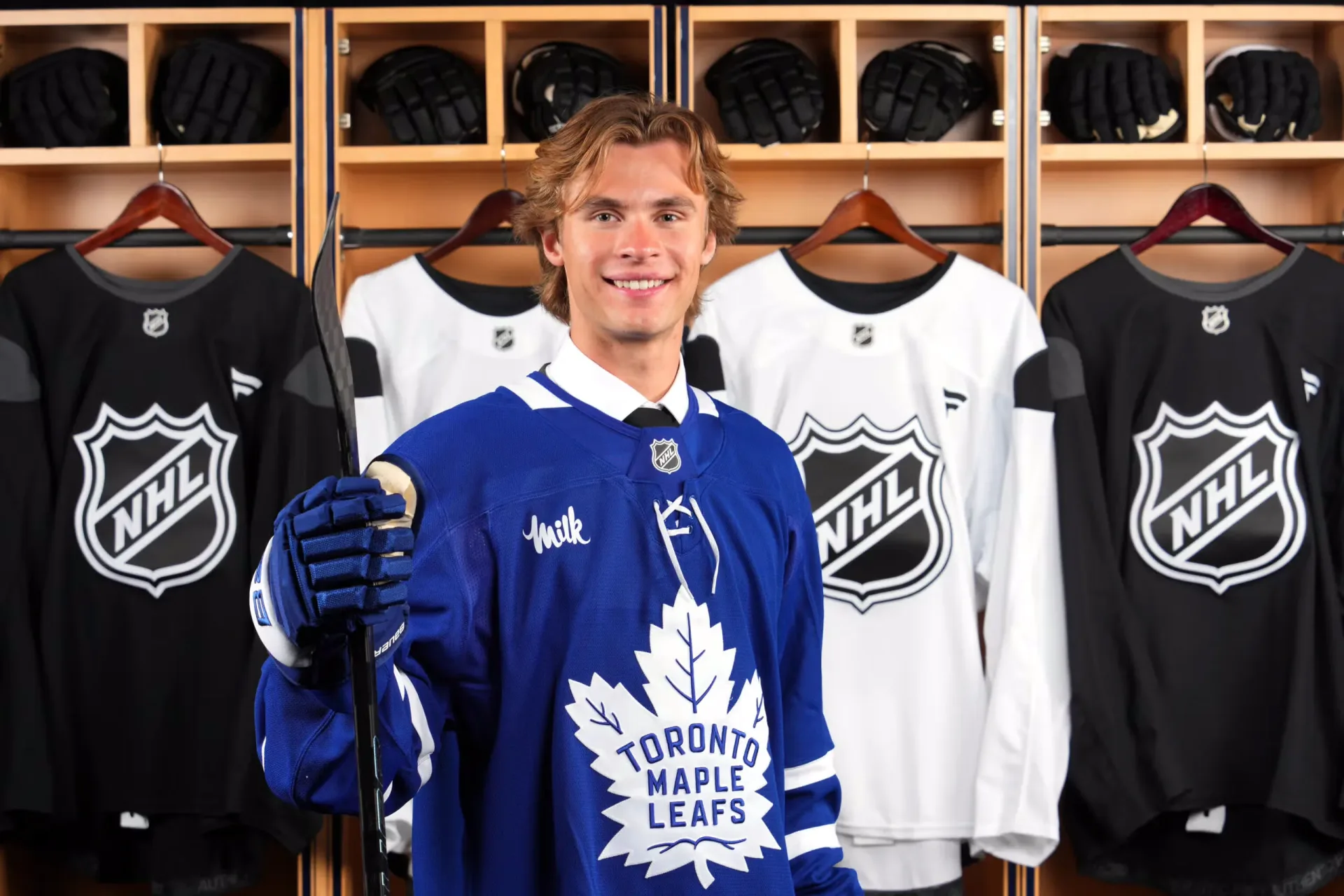
The rookie class is especially central to Tableau’s appeal. Early discussion of the product places Schaefer, Misa, Snuggerud and Demidov among the season’s rookie chases. A rookie chase is the pursuit of cards featuring first-year players whose demand can be especially high among player collectors and set collectors. It is a market and collecting concept, not a guarantee of long-term value.
Related coverage includes 2025-26 Upper Deck Tableau Hockey: Box Format and Early Card Highlights.
Five early Tableau cards that define the set’s approach
1. Shutter Speed Signatures Jimmy Snuggerud /25
The early standout is a Jimmy Snuggerud Shutter Speed Signatures autograph numbered to 25. Numbering such as “/25” means the card is limited to 25 copies. It does not by itself establish scarcity across all versions of that player’s cards, but it gives this specific parallel a clearly defined production ceiling.
The “Shutter Speed” name fits Tableau’s apparent focus on photographic techniques. In photography, shutter speed controls how motion is captured: a quicker exposure can freeze movement, while slower exposure can create blur. The card’s presentation leans into that visual vocabulary instead of treating action photography as mere background decoration.
Snuggerud’s card also stands in for Tableau’s broader willingness to use image-making concepts as insert themes. Triple Exposure, another announced concept, uses three images to simulate motion. Rather than relying on a conventional single player portrait, it is designed to make the sequence of action part of the card itself.
2. Shadow Portraits Quinn Hughes
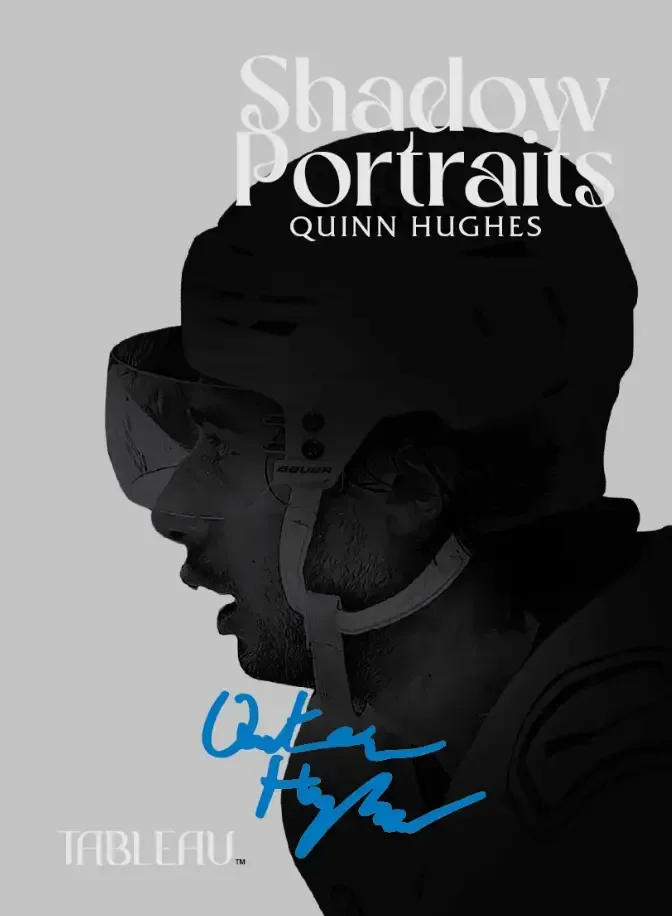
The Quinn Hughes example from Shadow Portraits offers a dramatically different mood. Limited lighting preserves facial and uniform detail while allowing much of the composition to fall into deep black. It is a portrait treatment with a more deliberate, studio-like sensibility than a standard brightly lit hockey card.
For collectors, this is important because Tableau appears to be giving its inserts distinct visual purposes. Shadow Portraits is not simply another color variation. Its darkness and contrast are central to the image. That can make a coherent run more compelling on display, although the full range of player images remains to be seen.
3. Mounted Slide Relics Nathan MacKinnon
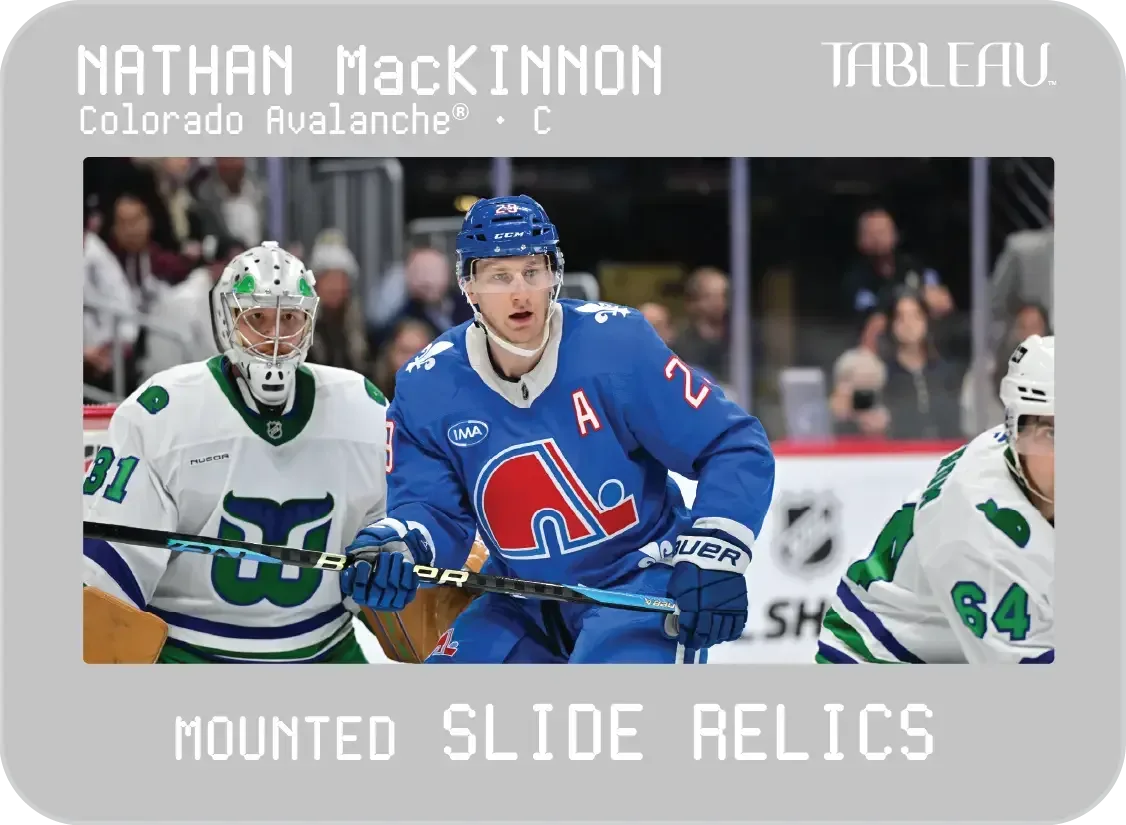
Nathan MacKinnon appears in the Mounted Slide Relics insert, a design inspired by photographic slides used with projectors. The player image is printed on translucent acetate and held within an opaque frame. Acetate is a clear or semi-clear plastic stock, unlike normal opaque card paper. Here, its transparency is functional: light can pass through the player image.
The result is a card that asks to be viewed differently depending on the lighting around it. The opaque border provides a physical-looking frame and contrast for the transparent center, giving the card a tactile, layered appearance. It is an example of a relic card concept where the defining feature is the visual material and presentation rather than a stated piece of memorabilia.
Collectors considering cards with acetate components should also think about storage. Transparency, surface reflections and the raised or layered feel of mixed-media cards can be obscured by poor lighting or unsuitable holders. The source material does not provide handling specifications, so it is sensible not to assume dimensions or protection needs beyond standard careful storage.
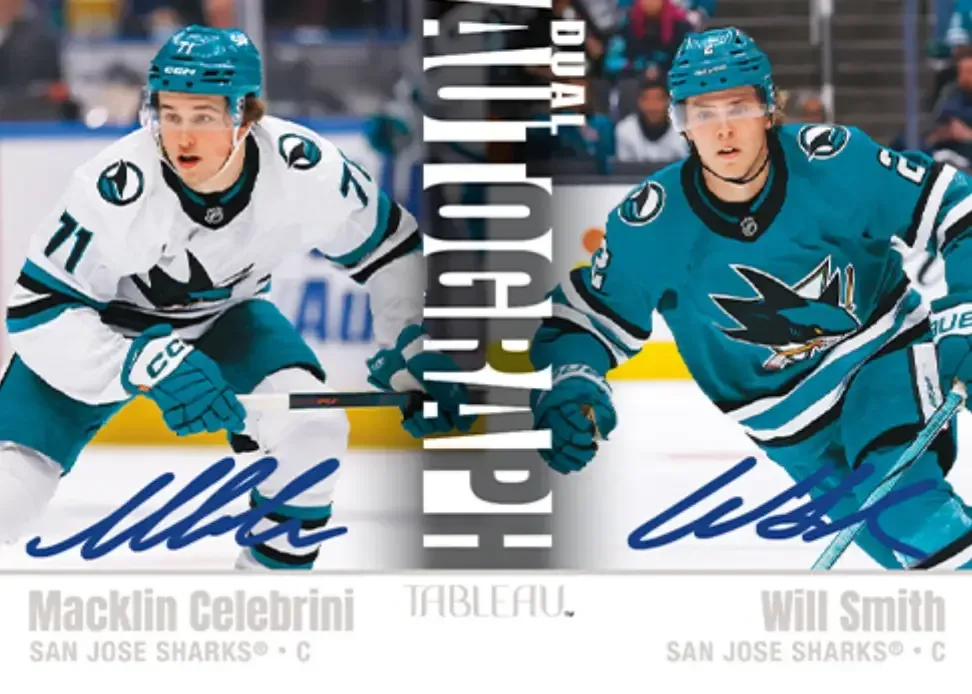
4. Dual Autograph Macklin Celebrini and Will Smith
Tableau’s early cards also include a dual autograph pairing Macklin Celebrini and Will Smith. Dual-signed cards combine two players on one card and can appeal to collectors assembling team-themed displays as well as those focused on either individual player. This one brings together two young San Jose Sharks players, with Celebrini identified as the club’s 20-year-old captain.
A dual autograph does more than double the signature space. It captures a specific player pairing, making the relationship between the subjects part of the item’s appeal. In a set otherwise emphasizing individual photographs and visual technique, that team connection gives the card a different kind of narrative focus.
5. Rookie Watch Beckett Sennecke
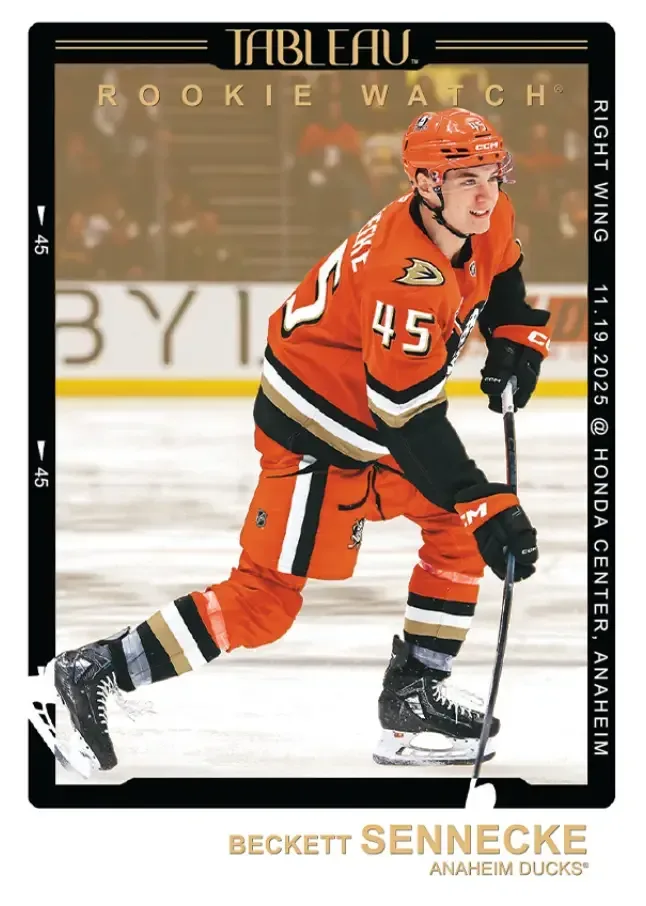
Beckett Sennecke’s Rookie Watch card demonstrates the look of Tableau’s rookie presentation. It uses a black border, white text, and a notation identifying the date and location of the photograph. Those details reinforce the set’s documentary and photographic angle: the image is being treated as a captured moment with contextual information, not just as a player cutout.
Rookie Watch is especially worth watching because it sits at the intersection of the set’s base and rookie-driven identity. The product description places Rookie Watch cards among the possible base-card mix, while rookies also have a separate Dark Ice Rookies insert route. Until the full checklist and odds are available, collectors should avoid assuming how frequently any particular rookie format will appear.
Other named Tableau inserts
Upper Deck has also identified Aspects, Dark Room and Imprints as part of Tableau’s lineup. Specific formats, subjects and odds for those names have not been detailed here, so their exact roles in the product are still unclear. Their titles, alongside Shadow Portraits and Shutter Speed, nevertheless support the impression that Tableau is organized around photographic processes and print-like presentation.
That art-led approach could make Tableau attractive to collectors who value the look of individual cards as much as checklist completion. It also means the final product will need to be judged across its full design range. A single acetate centerpiece or particularly successful portrait cannot tell collectors how consistently the concept works from one insert to another.
What collectors can reasonably take from the preview
The available information establishes the fundamentals: Tableau is a first-year premium hockey release, it arrives November 11, 2026, and its box format pairs standard packs with three encased premium cards. Autographs have a major role, while a numbered-to-100-or-less card fills the third premium slot in boxes that contain two rather than three encased autographs.
It also establishes an aesthetic thesis. Tableau is using black borders, date-and-location text, strong shadows, transparent acetate, slide-inspired framing and multi-image motion effects to push hockey photography to the foreground. That may be its key point of difference, particularly for collectors who want a card to function as a small photographic object rather than simply a player collectible.
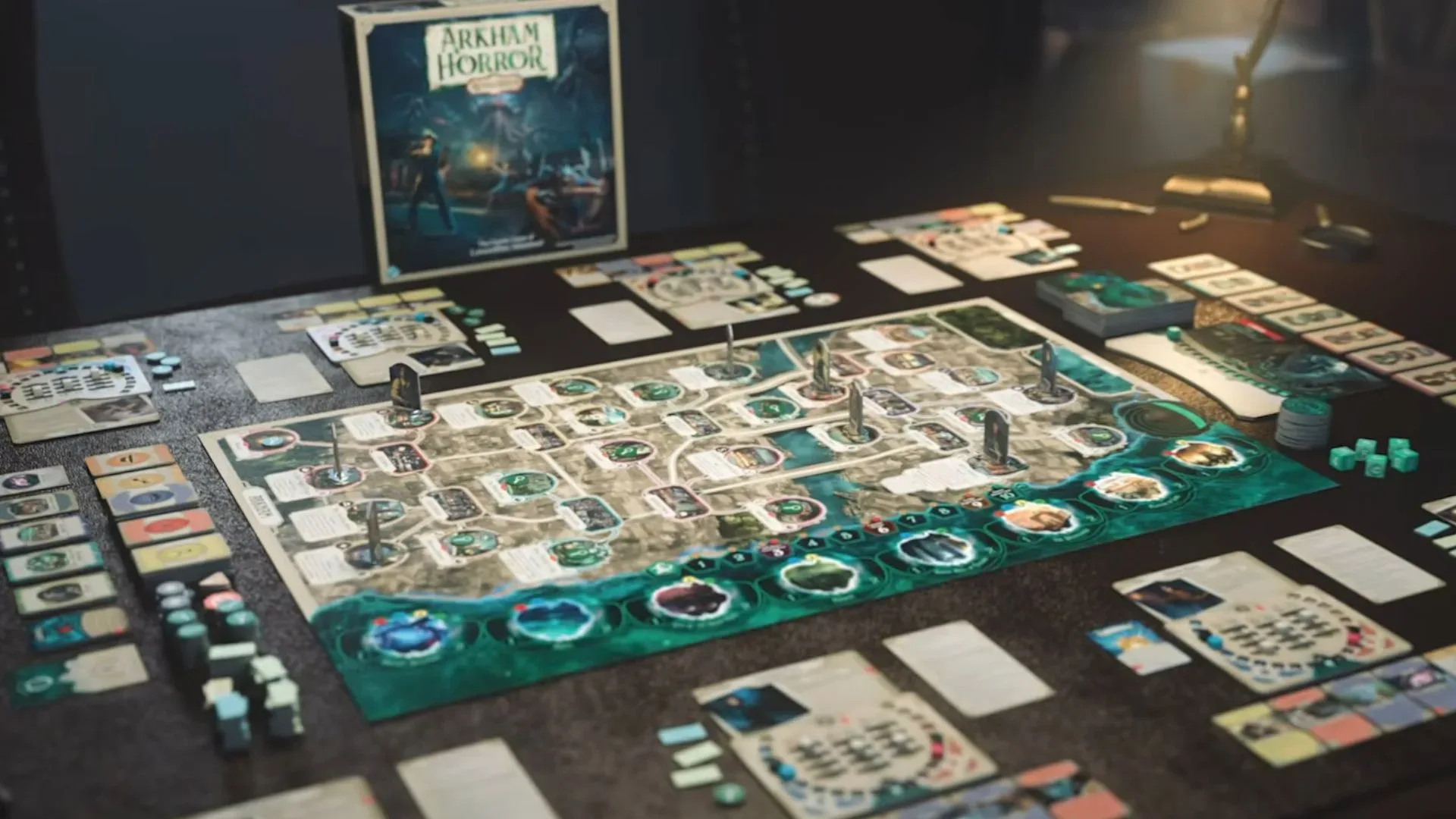
For a broader example of how presentation and completeness can shape enthusiasm around physical hobby releases, see this look at an Arkham Horror Remastered crowdfunding campaign. Tableau is a different category of collectible, but the shared lesson is straightforward: artwork, format and the promise of a well-defined edition all help collectors decide whether a release belongs in their personal collection.
The most prudent approach before release is to separate confirmed product details from the areas still waiting on fuller disclosure. The confirmed early cards make a persuasive case for Tableau’s visual identity. Checklist depth, insert distribution and the full range of premium content will determine how that identity translates into a complete release.