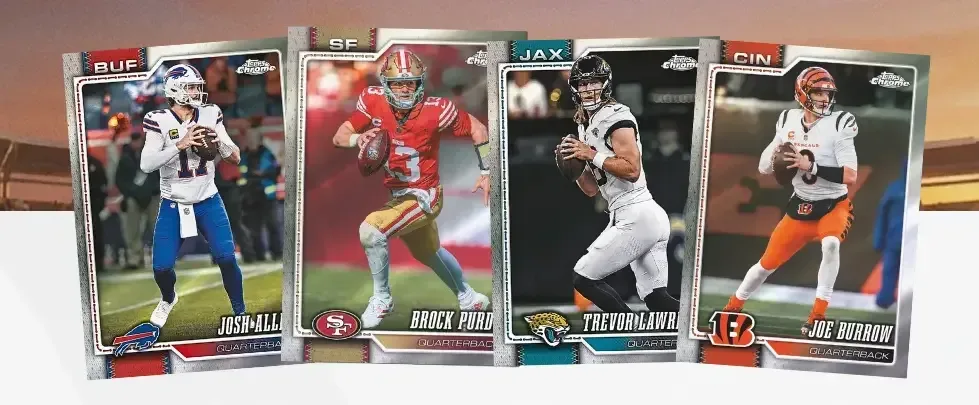
Topps has increased the stakes for its MVP Buyback program ahead of 2026 Topps Chrome Football, raising the store-credit value attached to qualifying cards of the eventual NFL Most Valuable Player. The change turns a qualifying base card from a $20 credit into a $40 credit at participating card shops and eligible retailers.
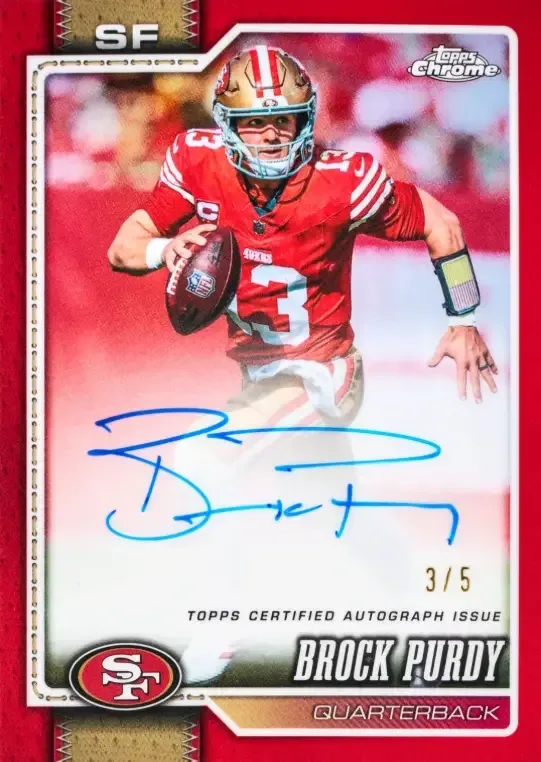
The higher tiers scale with rarity. Topps has indicated that a parallel card carrying a single-digit serial number can be redeemed for $1,000 in credit. That creates a much sharper distinction between simply pulling a card of a future MVP and landing a scarce version of that player’s card.
2026 Topps Chrome Football is scheduled for November 18. The redemption period is expected to open shortly after February 11, 2027, then run through April 30, 2027. Collectors hoping to participate will need to hold qualifying cards until the league’s MVP outcome is known and then redeem within that stated window.
What an MVP buyback is—and what the credit means
A buyback program is a promotional redemption arrangement in which a card manufacturer assigns a fixed value to certain cards after a specified real-world result. In this case, the trigger is the NFL MVP award. Once the winner is known, cards of that player from the designated Topps Chrome Football release become eligible for credit under the program’s terms.
The key word is credit. The stated values are store credit at participating hobby shops and retailers, rather than a guaranteed cash payment from Topps. That distinction matters for anyone planning a purchase around the offer: the practical value depends on where the card is redeemed, what that seller stocks, and the specific program requirements in force at the time.
Topps provides program details through its Topps Ripped information page, including a tool to locate participating shops. Some online retailers also accept eligible cards for store credit. Before mailing, selling, or trading a potential buyback card, collectors should verify both the complete eligibility rules and whether their intended retailer takes part.
Parallel cards, explained
A parallel is a variation of a standard trading card, typically differentiated by design treatment, color, finish, scarcity, or serial numbering. A serial-numbered card is marked as one member of a limited print run—for example, a card numbered out of a stated total. Lower-numbered parallels are generally more limited than base cards.
For this program, rarity is not merely a collector preference; it is directly tied to the redemption credit. The $1,000 example for a single-digit serial-numbered card illustrates the program’s incentive structure: scarce versions of the eventual MVP’s card can carry dramatically more redemption value than the regular base version.
Related coverage includes Topps Doubles MVP Buyback Value for 2026 Chrome Football.
Topps has not, in the information provided here, detailed every tier between the $40 base-card value and the $1,000 single-digit example. Collectors should therefore avoid assuming that every numbered card receives the same high credit. The exact parallel, its serial-number range, and the published program schedule are all likely to determine the applicable amount.
A program built around an award race
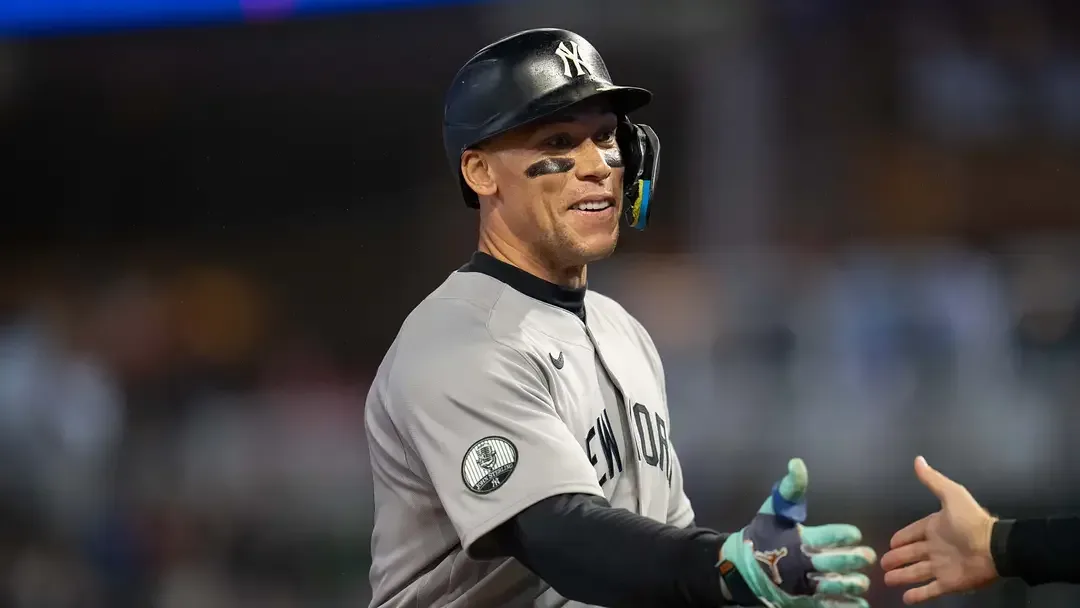
The MVP Buyback concept began with Topps baseball cards in 2022. That inaugural season centered on Paul Goldschmidt, the National League MVP, and Aaron Judge, the American League MVP. The program has continued each year since, giving collectors a reason to revisit cards after an award result is official.
Topps can now extend the same basic premise across football and basketball because it has the licensing needed to produce cards in those sports. The formula is easy to understand: an award transforms an ordinary player card into a time-limited redemption opportunity, while limited parallels of the winner may receive a substantially larger credit value.
That can make the hobby feel a little like an awards-season prediction game. A collector who keeps cards of the right player is not guaranteed a redemption until the award is settled. A collector who chooses the wrong candidate may still own a desirable card, but it will not receive the MVP Buyback credit for that season.
Why timing will matter for 2026 Chrome Football
The product arrives before the NFL MVP is decided. That means values around relevant players may be driven partly by current performance, league narratives, and the perceived chances of an eventual award win. As Week 11 of the 2026 season approaches, Joe Burrow, Josh Allen, Brock Purdy, and Trevor Lawrence are among the prominent names in the MVP conversation, with Burrow described as the short favorite.
Those names are useful context, not a promise of eligibility. MVP races can change, and the buyback only turns on the final award winner. The quarterback-heavy shape of the conversation also reflects a familiar dynamic in NFL MVP discussion: quarterbacks often dominate the public race. No non-quarterbacks were identified among the current leading candidates in the available MVP discussion.
For collectors joining group breaks, this could affect the price assigned to individual NFL teams. In a break, participants commonly purchase rights to cards from one team rather than buying an entire box. If a team has a player viewed as an MVP contender, demand for that team’s slot may rise as buyers factor a possible future buyback into their decisions.
That is an understandable response to a higher potential credit, but it is also speculation. The award has not been announced when the product goes on sale, and the program opens only after the MVP decision. A higher-priced team slot does not make a buyback outcome more likely; it simply reflects the market placing a value on that possibility.
Practical steps before holding cards for redemption
Collectors who pull cards of an MVP candidate have several choices: keep them for the award decision, sell or trade them while interest is high, or use them in their own collection. The buyback adds another option, but it should be approached with the same care as any limited promotional redemption.
- Identify the exact card. Confirm whether it is a base card or a serial-numbered parallel, and record the visible serial number where applicable.
- Protect condition. Keep the card stored safely while the award race plays out. Condition can matter greatly if the card is ultimately sold or traded instead of redeemed.
- Check the final winner. A leading candidate is not automatically the MVP. Wait for the official outcome before treating a card as eligible.
- Read the full program terms. Verify eligible products, card types, tier values, deadlines, and submission instructions directly through Topps’ program information.
- Confirm a redemption location early. Use the participating-shop locator and contact a retailer if necessary, particularly if planning to use an online option.
- Consider the opportunity cost. Store credit can be useful, but it is not interchangeable with cash. Compare the applicable credit amount with the card’s market appeal and your own collecting goals.
The last point is especially important with scarce parallels. A qualifying single-digit serial-numbered card may carry $1,000 in stated redemption credit, but the right decision for an individual collector can depend on the retailer, the available inventory, and whether they would rather retain a rare card of a decorated player. The program establishes a known credit path; it does not eliminate the personal collecting decision.
What the doubled base value changes
Moving the base-card credit to $40 makes the promotion more noticeable even for collectors who do not pull a rare parallel. A base card is the standard version in a release and is usually more common than a numbered variation. By putting a $40 credit on the qualifying MVP’s base card, Topps gives that card a defined use beyond conventional collector demand during the redemption period.
The increase may also make the season-long wait more appealing to collectors who are comfortable making a prediction. Yet the essential risks remain unchanged: the award race is unsettled, redemption is time-limited, and the credit is limited to participating outlets. The sensible approach is to view buyback eligibility as a potential bonus rather than an assured return when opening product or choosing a break slot.
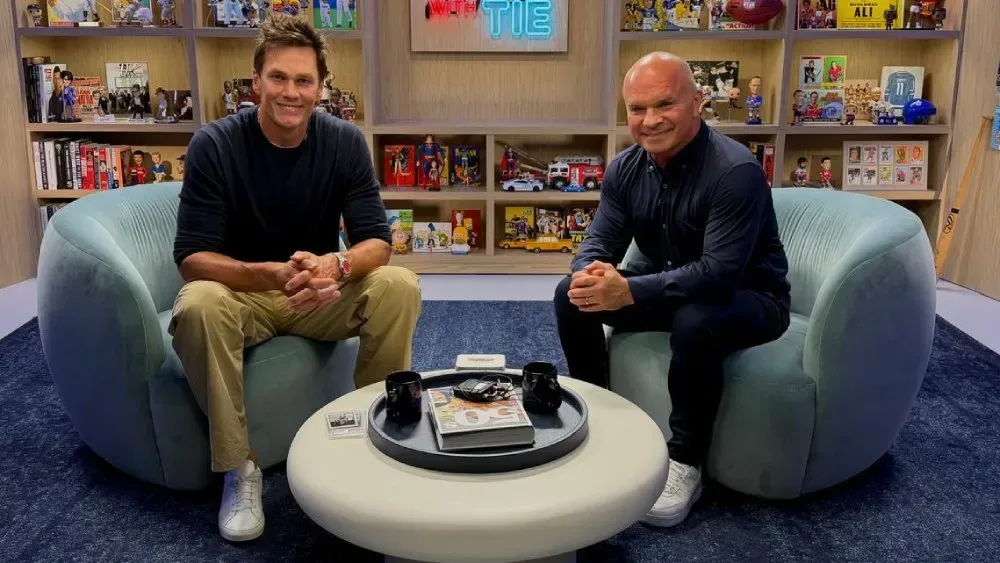
There is a broader sports-collecting appeal in turning an on-field award into a card-market event. The program links pack pulls in November to an award decision in February, giving collectors a reason to follow the race after release day. Football is not short on MVP debate, and even adjacent sports conversations can pull in familiar figures such as Tom Brady; the buyback’s appeal, however, is rooted in the eventual 2026 NFL MVP and the specific cards Topps designates as eligible.
For now, the concrete details are straightforward: 2026 Topps Chrome Football is set for November 18; a qualifying base card of the eventual MVP is worth $40 in participating-store credit; qualifying single-digit serial-numbered parallels can reach $1,000; and the stated redemption window runs from shortly after February 11, 2027, through April 30, 2027. Everything else—from which player wins to which cards collectors decide to hold—is the part that remains in play.