The 2026 NFL rookie-card pecking order is beginning to acquire a little definition, even if it is far too early for anyone to mistake it for permanence. The most useful development for collectors is not necessarily a final stat line; it is a player gaining a role that can create regular, visible opportunities. That is why New York Jets tight end Kenyon Sadiq is the week’s most notable riser.
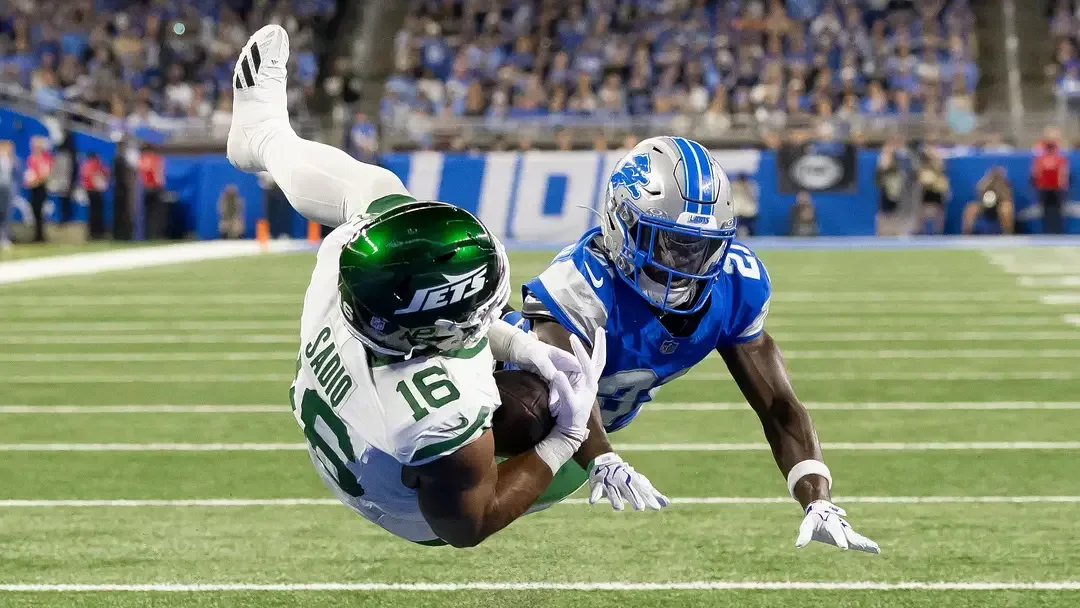
Sadiq moved from eighth to fourth in this 20-player ranking after flourishing against Detroit when starting tight end Mason Taylor left the game with a thumb injury. He also caught a touchdown over Lions cornerback Roger McCreary. The immediate reason for the move is clear, but the longer-term case rests on workload. Garrett Wilson was injured late in the Jets’ Week 3 loss, and a significant absence would create more targets to distribute. Sadiq is therefore not merely a tight end who had a productive Sunday; he is a rookie who could be placed in a more prominent part of the passing offense.
That distinction matters in football cards. A short spike in attention can happen after one score. A sustained collecting case needs a plausible path to continued involvement, whether through starts, targets, touches, defensive production or quarterback snaps. The rankings below are best read as a snapshot of perceived rookie value and opportunity, not a promise that one week, one injury or one depth-chart change settles a player’s long-term standing.
The top tier: position, team context and staying power
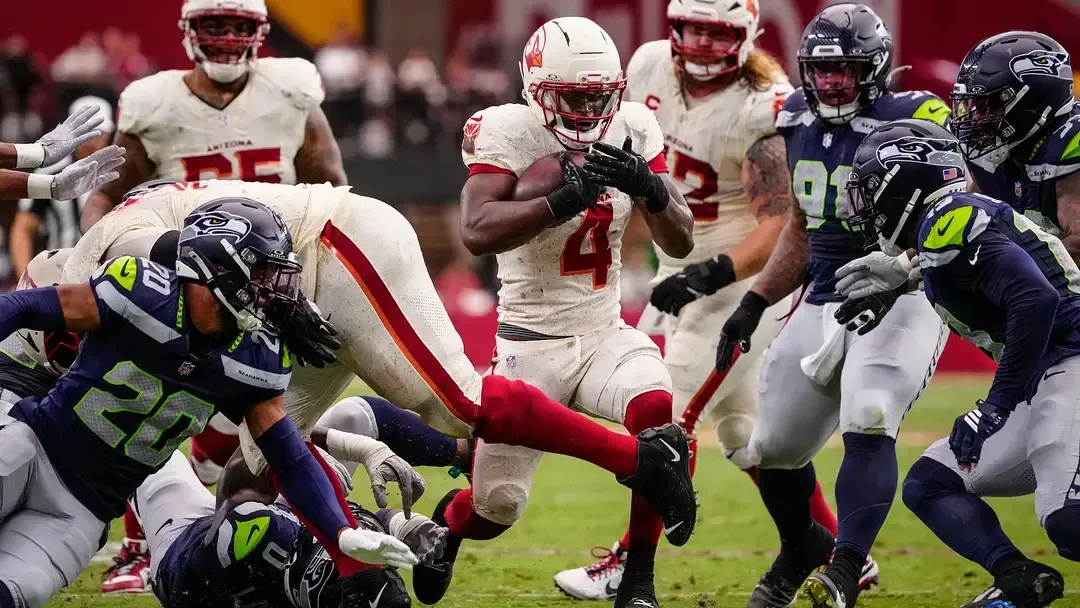
Fernando Mendoza, quarterback for the Raiders, remains No. 1, followed by Cardinals running back Jeremiyah Love at No. 2. The Raiders are 3-0, a result that complicates any assumption that Mendoza’s value depends on his club landing the first overall selection. The more favorable interpretation for his card outlook is that a successful Raiders environment gives him a better chance to succeed when he does play. That is still a projection rather than a certainty, but it underscores how team circumstances can affect a quarterback’s appeal even before he becomes the central on-field story.
Saints receiver Jordyn Tyson holds third, with Sadiq now fourth. These four have separation from the rest of the field in the current ordering. That does not mean the group is immune to change. It means their combination of role, perceived talent and collecting interest presently makes them the names against which the rest of the class is measured.
For practical collecting purposes, the labels used here are worth unpacking. A stalwart is not automatically a low-risk purchase. It is a player whose position in the rookie hierarchy is comparatively durable at this moment. Conversely, a player can be exciting and still speculative if the route to meaningful playing time is narrow or dependent on circumstances outside his control.
Kenyon Sadiq’s jump is about more than a touchdown
Sadiq’s rise carries the clearest opportunity-based story in the rankings. Tight ends are often judged differently from wide receivers because their routes and targets can be shaped heavily by personnel usage. An injury to the starter can quickly increase a reserve tight end’s snaps and responsibilities. If Wilson misses time as well, the Jets could have greater reason to lean on Sadiq as a receiving option.
There are obvious caveats. Taylor’s health, Wilson’s status and the Jets’ weekly offensive plans will determine whether the expanded role lasts. Collectors should not turn uncertainty into a fact simply because the setup is enticing. Still, Sadiq’s move from No. 8 to No. 4 reflects a meaningful change in the available information: he produced when an opening emerged, and further openings may exist.
Bowman Football is also expected this week, creating another reason the rookie market could become more active. A product release can focus attention on a class as collectors compare players, chase new cards and reassess which names have gained momentum. Increased activity does not ensure higher values for every rookie. It does mean that role changes and standout plays may receive more scrutiny than they did before a fresh release arrives.
The next five: draft investment meets early turbulence
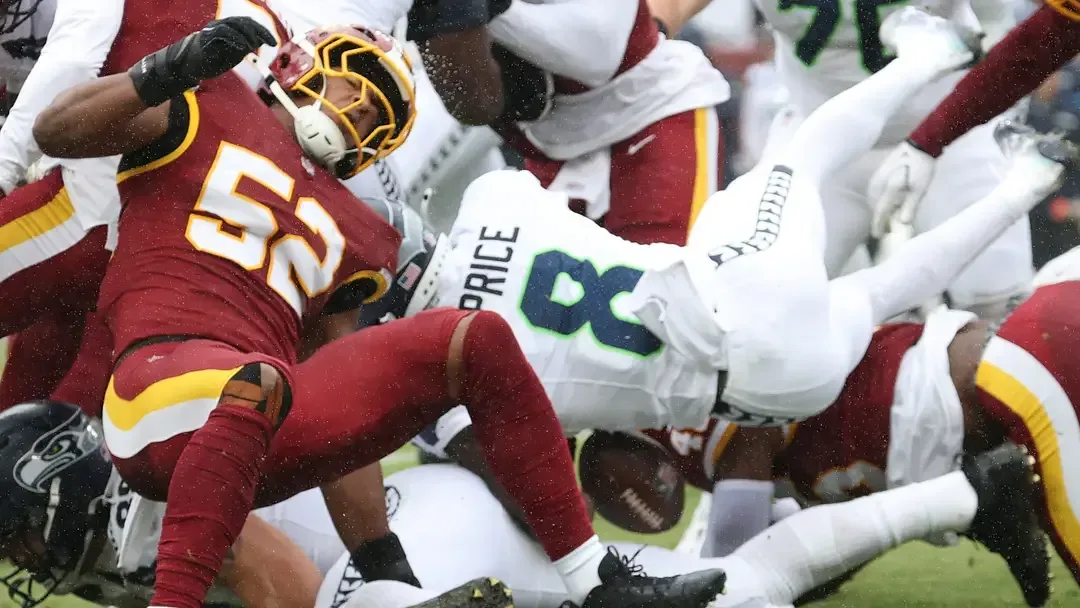
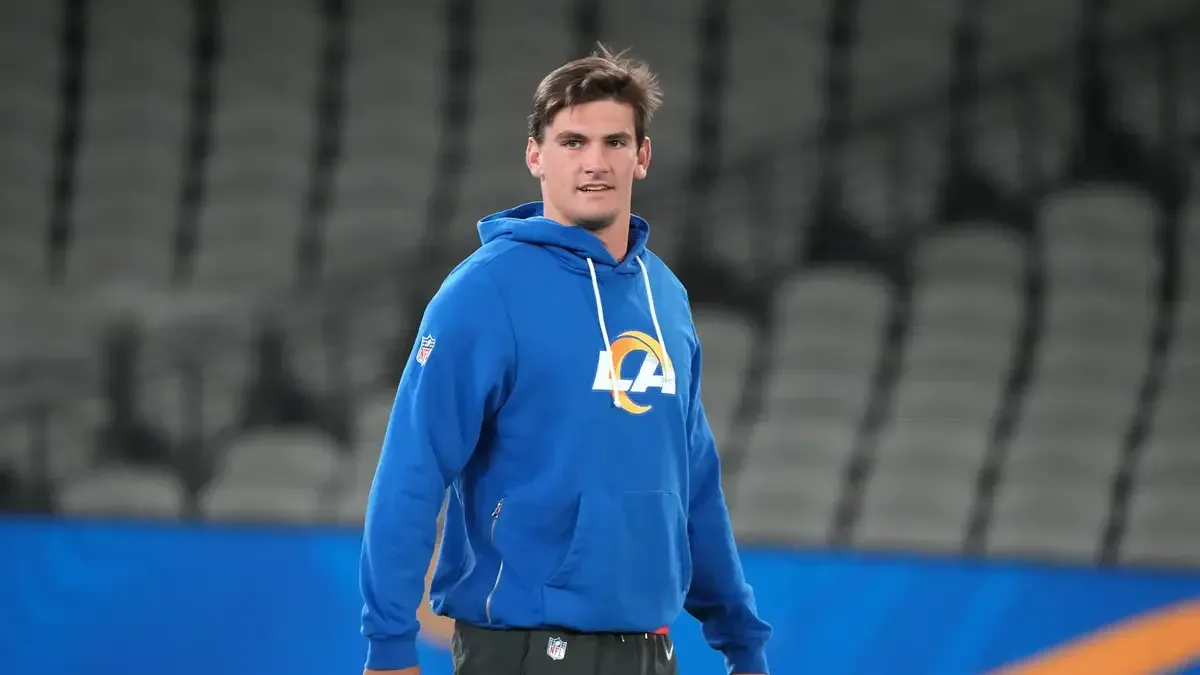
The second tier begins with Rams quarterback Ty Simpson at No. 5. Seahawks running back Jadarian Price falls from fourth to sixth after fumbling in consecutive games. The Seahawks are described as a club with the potential for a lengthy postseason run, a reminder that individual card narratives do not unfold in isolation from team visibility. But the fumbles are a concrete early concern. A running back’s touches and trust can be especially sensitive to ball security, so Price’s next few games carry importance beyond box-score production.
Titans receiver Carnell Tate remains seventh. His situation illustrates the other half of the team-context equation. High draft status can sustain attention, but a difficult team environment can make it harder for a player to generate the moments that keep a broader collecting audience engaged. Draft capital matters because it signals that an organization has made a significant investment in a prospect. It does not eliminate the need for production, nor does it guarantee a smooth early path.
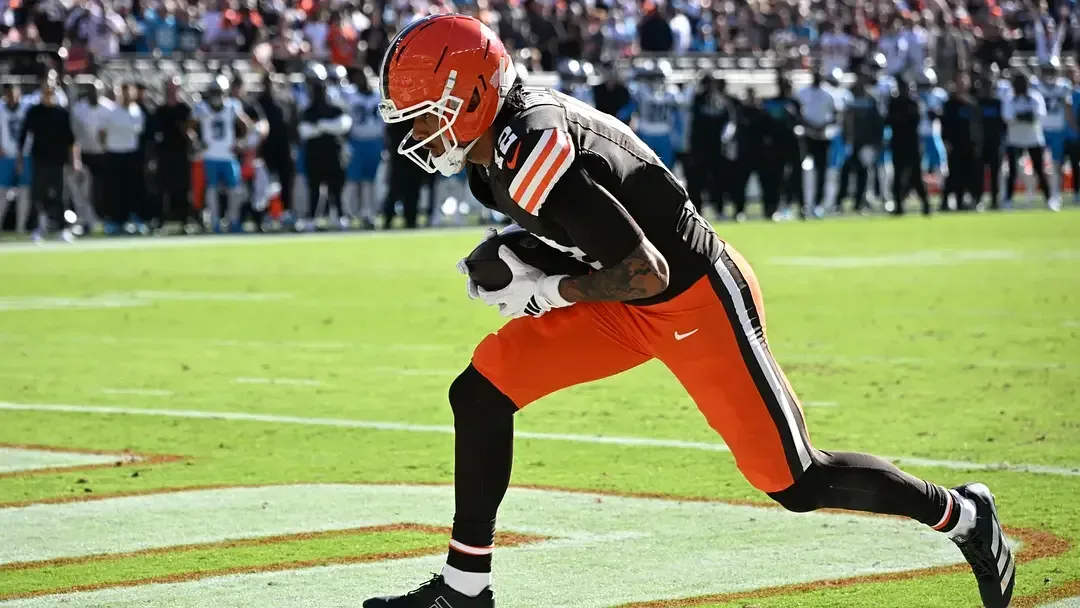
Cleveland provides a more optimistic receiver story. Denzel Boston is eighth after scoring a two-point conversion against Carolina, while teammate KC Concepcion jumps from 11th to ninth. The Browns’ young receiving group has become a notable feature of this rookie conversation. Two players on the same offense can rise together when the group itself becomes a reason to pay attention, though they can also compete for targets. At No. 10, Eagles receiver Makai Lemon slips one position from ninth.
For collectors, this middle section may be where patience is most important. The top names have entrenched attention; lower names may offer clearer but riskier swings. Players ranked five through 10 carry enough perceived standing to matter while remaining exposed to weekly changes in performance, role and team narrative.
Speculative receivers, uncertain offenses and the meaning of opportunity
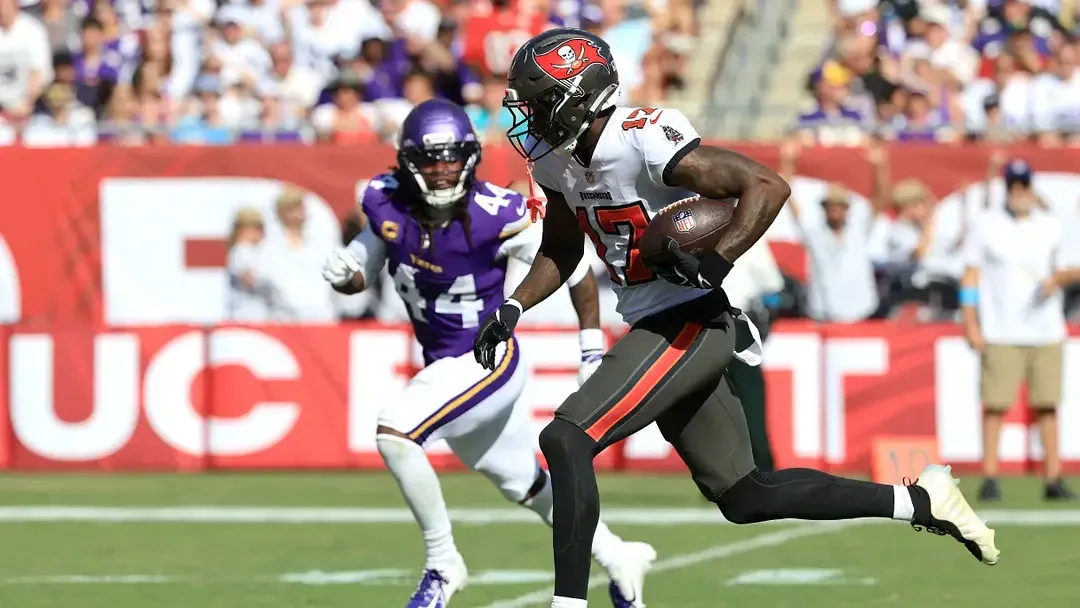
The third tier opens with Cardinals quarterback Carson Beck at No. 11, down one place. The most striking movement is Buccaneers receiver Ted Hurst III, who enters at No. 12 after being unranked. Hurst is a third-round selection from Georgia State, and his 18.1 average depth of target signals a downfield role.
Average depth of target, often shortened to ADOT, measures how far downfield a receiver is targeted on average. An 18.1 figure suggests Hurst’s opportunities have come well beyond the line of scrimmage. That can be attractive for card attention because deep targets can produce explosive, highly visible plays. It also carries volatility: longer throws are generally more difficult to complete, so a player with a downfield role can have quieter stretches even if the underlying opportunity remains compelling.
Hurst’s outlook is tied to quarterback health. Baker Mayfield is sidelined with a dislocated thumb on his throwing hand, leaving Tampa Bay in a potentially bleak spot until he returns. The ranking’s argument is therefore conditional: if Mayfield returns, Hurst could become a major part of the offense. The condition is crucial. A collector evaluating Hurst is not only evaluating his big-play profile, but also the uncertainty around the quarterback situation.
Dolphins receiver Caleb Douglas is 13th, followed by 49ers running back Kaelon Black at 14th. Dolphins receiver Chris Bell debuts at No. 15. Bell’s arrival gives Miami another interesting rookie pass catcher, but the wider offensive outlook is clouded by running back De’Von Achane being sidelined for the rest of the year with a knee injury. The Dolphins are also characterized as a team expected to struggle. That makes their two receivers intriguing but difficult to assess: individual flashes can draw interest, while a poor collective season can limit the consistency and optimism that normally support a sustained hobby narrative.
Players to monitor: athletic upside and a possible quarterback window
The final tier is explicitly a watch list, and Washington linebacker Sonny Styles may be its most unusual card case. Styles enters at No. 17 after being unranked. Through three games, he has a sack and an interception. At 6-foot-5, with a 4.46-second 40-yard dash at the combine, he has the athletic profile that stands out immediately. His speed has also been evident on the field.
Defensive players are not evaluated through the same weekly lens as quarterbacks, running backs and receivers. A sack, interception, forced fumble or decisive tackle can bring attention quickly, but their opportunities are inherently different from targets or carries. Styles’ ranking recognizes that he has already paired measurable athleticism with tangible early impact, including the tackle and fumble against Seattle’s Price. The next question is whether those splash plays continue.
San Francisco receiver De’Zhaun Stribling is 16th, Ravens receiver Ja’Kobi Lane is 18th and Jets receiver Omar Cooper is 20th. All three fell one spot from the prior order, though a one-place move in this range should not be read as a verdict on their prospects. It is largely a consequence of new entrants and new developments elsewhere.
The other major name to watch is Buccaneers quarterback Jalon Daniels, who debuts at No. 19. With Mayfield injured, Daniels is expected to become the second rookie quarterback to take a snap this season. He spent six collegiate seasons at Kansas and is described as a highly athletic passer. Tampa Bay’s Week 4 opponent is Green Bay, a defense portrayed as one of the league’s weakest, creating an opening for Daniels to make an immediate impression.
Yet Daniels also represents the purest short-term scenario on the list. His card value could become a quick flip because he is filling in for an established quarterback. In collecting language, a quick flip is a short-horizon attempt to benefit from a surge in attention rather than a conviction that the player’s place is secure over a full season. That approach can be driven by opportunity, but it is also particularly exposed to changing news and depth-chart decisions.
The full rookie-card ranking after Week 3
- Fernando Mendoza, QB, Raiders
- Jeremiyah Love, RB, Cardinals
- Jordyn Tyson, WR, Saints
- Kenyon Sadiq, TE, Jets
- Ty Simpson, QB, Rams
- Jadarian Price, RB, Seahawks
- Carnell Tate, WR, Titans
- Denzel Boston, WR, Browns
- KC Concepcion, WR, Browns
- Makai Lemon, WR, Eagles
- Carson Beck, QB, Cardinals
- Ted Hurst III, WR, Buccaneers
- Caleb Douglas, WR, Dolphins
- Kaelon Black, RB, 49ers
- Chris Bell, WR, Dolphins
- De’Zhaun Stribling, WR, 49ers
- Sonny Styles, LB, Commanders
- Ja’Kobi Lane, WR, Ravens
- Jalon Daniels, QB, Buccaneers
- Omar Cooper, WR, Jets
The lesson from this week is simple: the rookie market is currently rewarding players with a believable next step. Sadiq has a chance at more targets. Hurst has a deep-target role awaiting a healthier quarterback situation. Daniels may get an immediate starting opportunity. Styles is creating impact plays at linebacker. Those are not identical cases, and they should not be collected with identical expectations. They are, however, the kinds of developments that can move a player from background noise to a name collectors track closely.
Collecting attention stretches well beyond football, too; for another example of story-driven collectible coverage, see this look at Avengers: Armageddon #4.