Major spoilers for Avengers: Armageddon #4 follow.
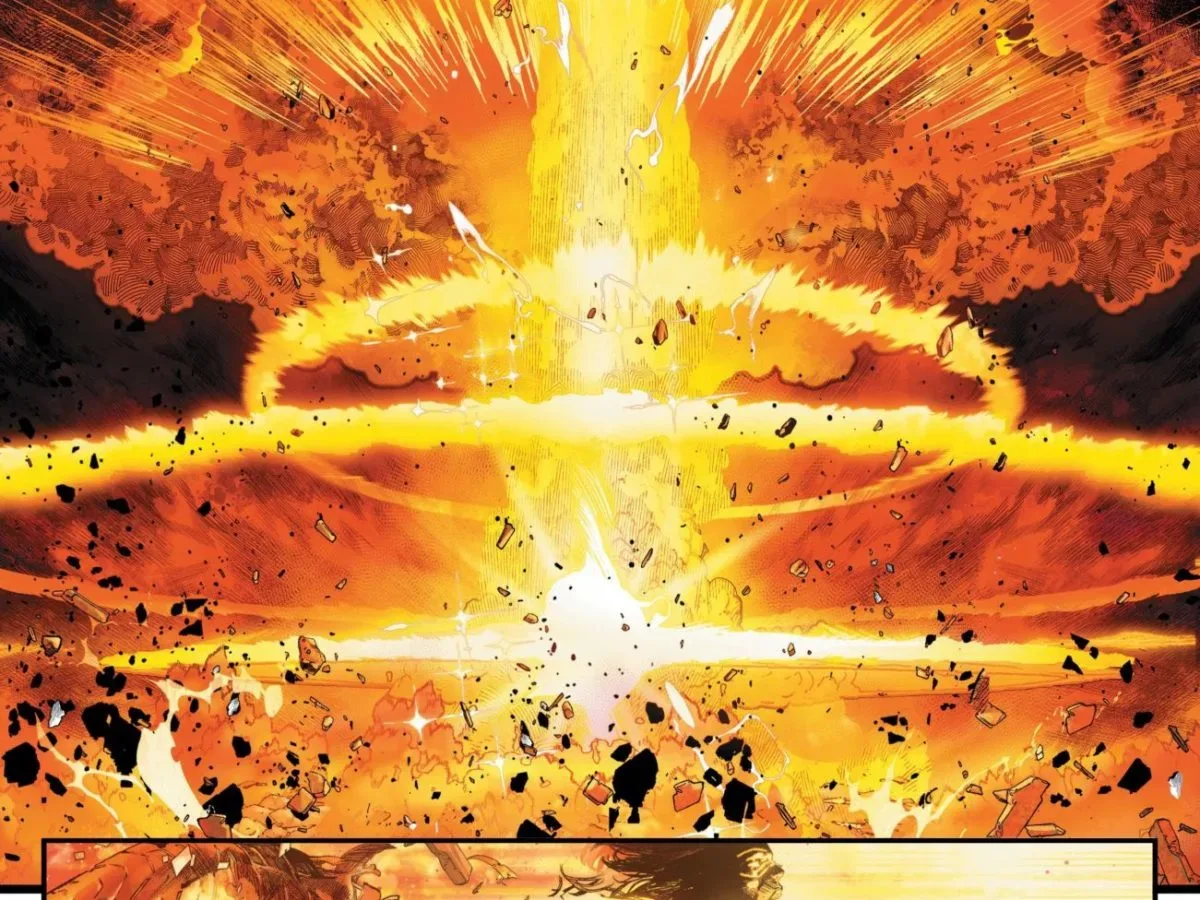
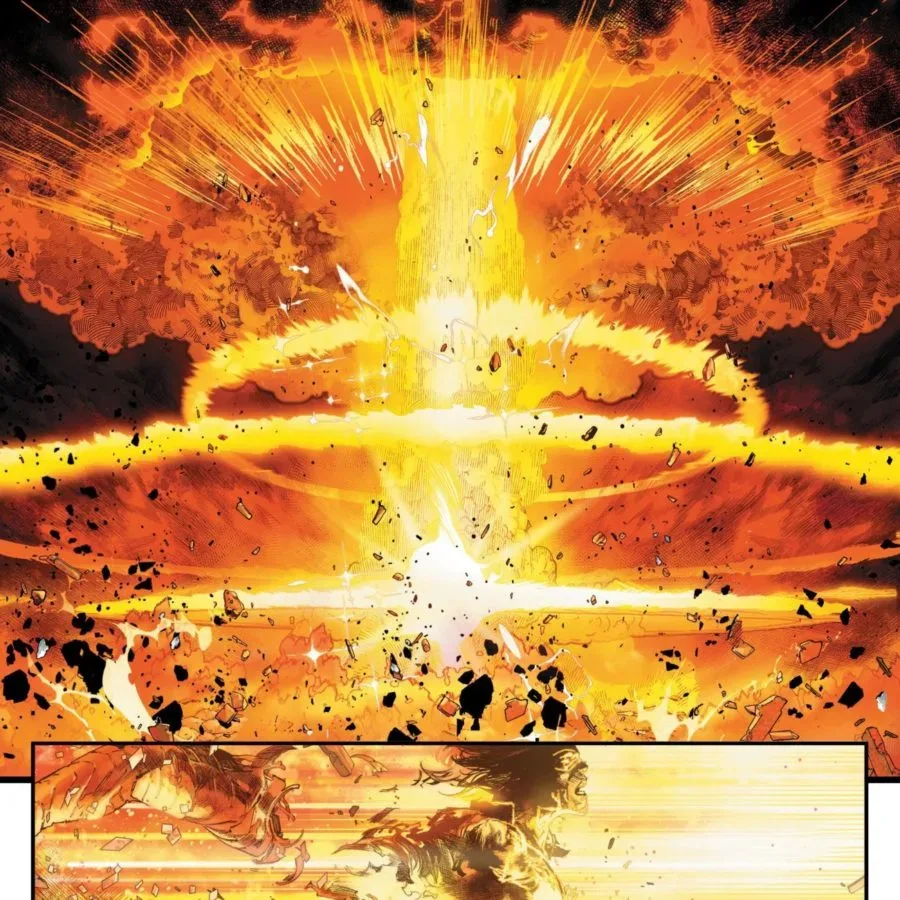
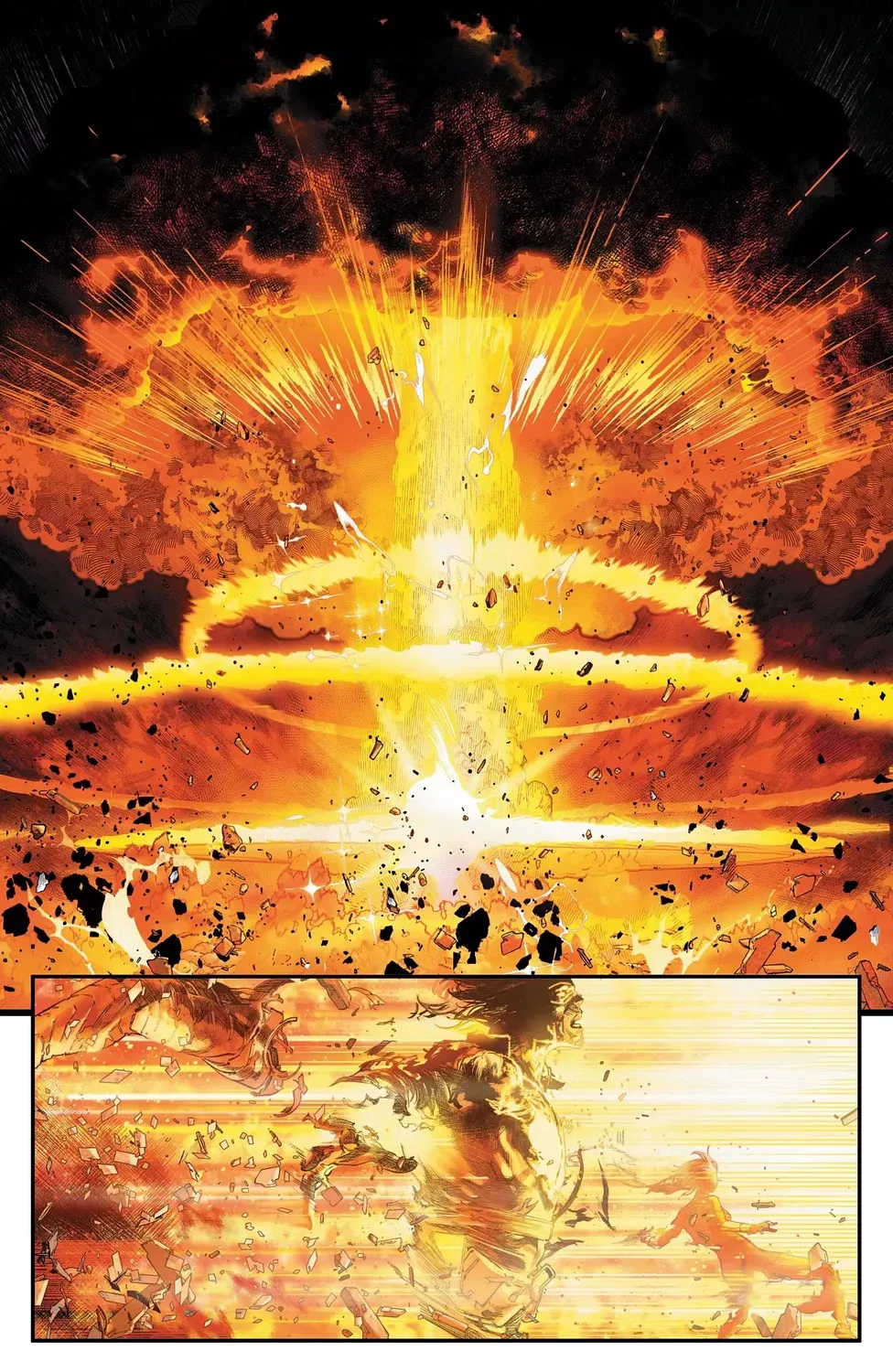
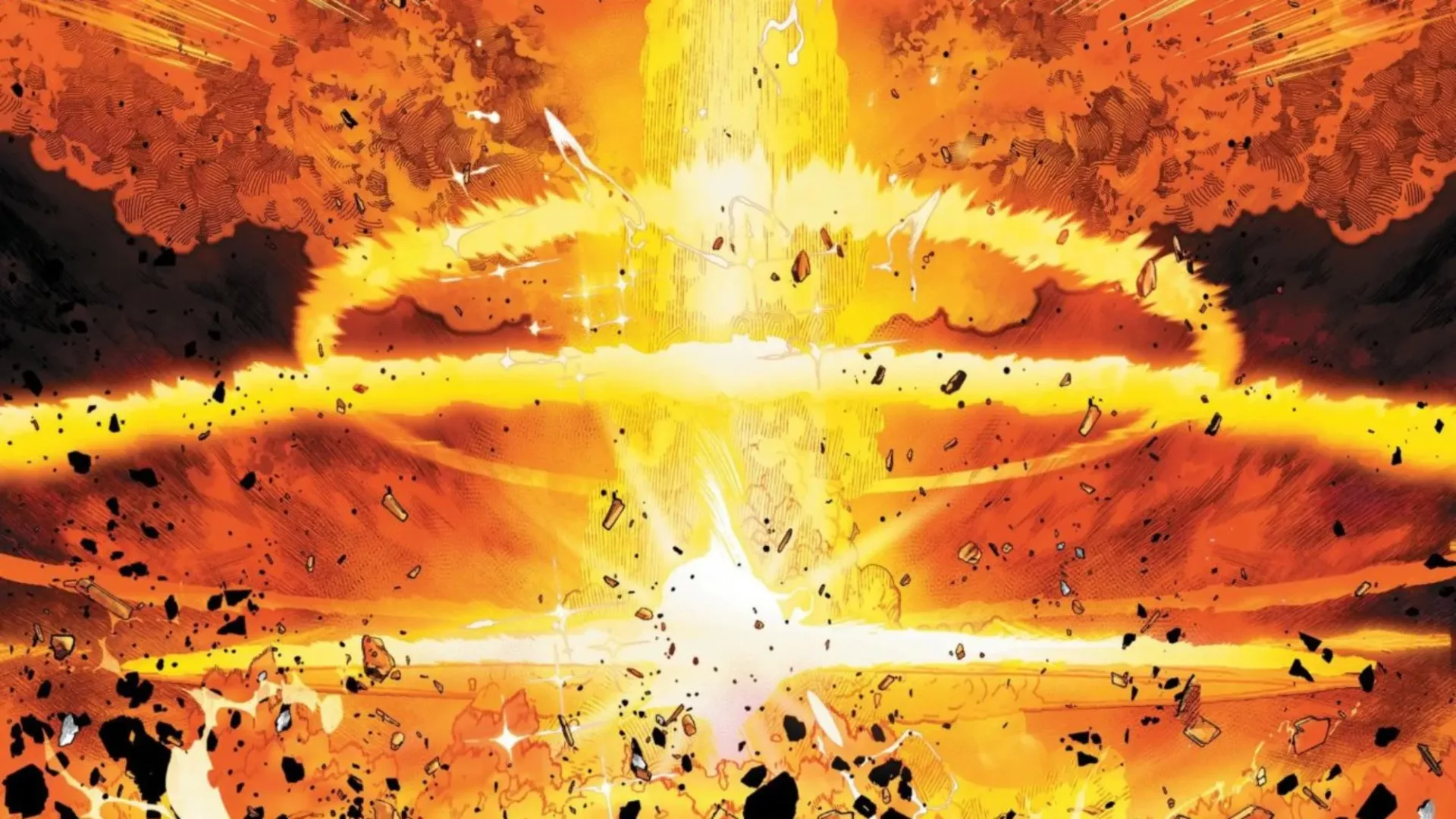
Avengers: Armageddon #4 places a huge spotlight on David Colton, the new figure whose emergence is positioned as a turning point for the Marvel Universe. But amid the issue’s most immediately dramatic revelation—Colton surviving Red Hulk’s nuclear explosion after saying “Kimota”—another development is easy to overlook: Bucky Barnes, the Winter Soldier, appears to die.
“Appears” matters here. The issue’s events leave substantial room for a different explanation, particularly because Colton has access to the Qys wardrobe dimension, a realm associated with bodies and costumes. The available evidence supports an apparent death, not a confirmed permanent exit for Bucky. That distinction is central to reading the issue, especially with its sequel setup explicitly pointing toward a fractured world, a public backlash against super heroes, and a new Avengers #1 from Chip Zdarsky and Marco Checchetto.
What happens to Bucky in Avengers: Armageddon #4?
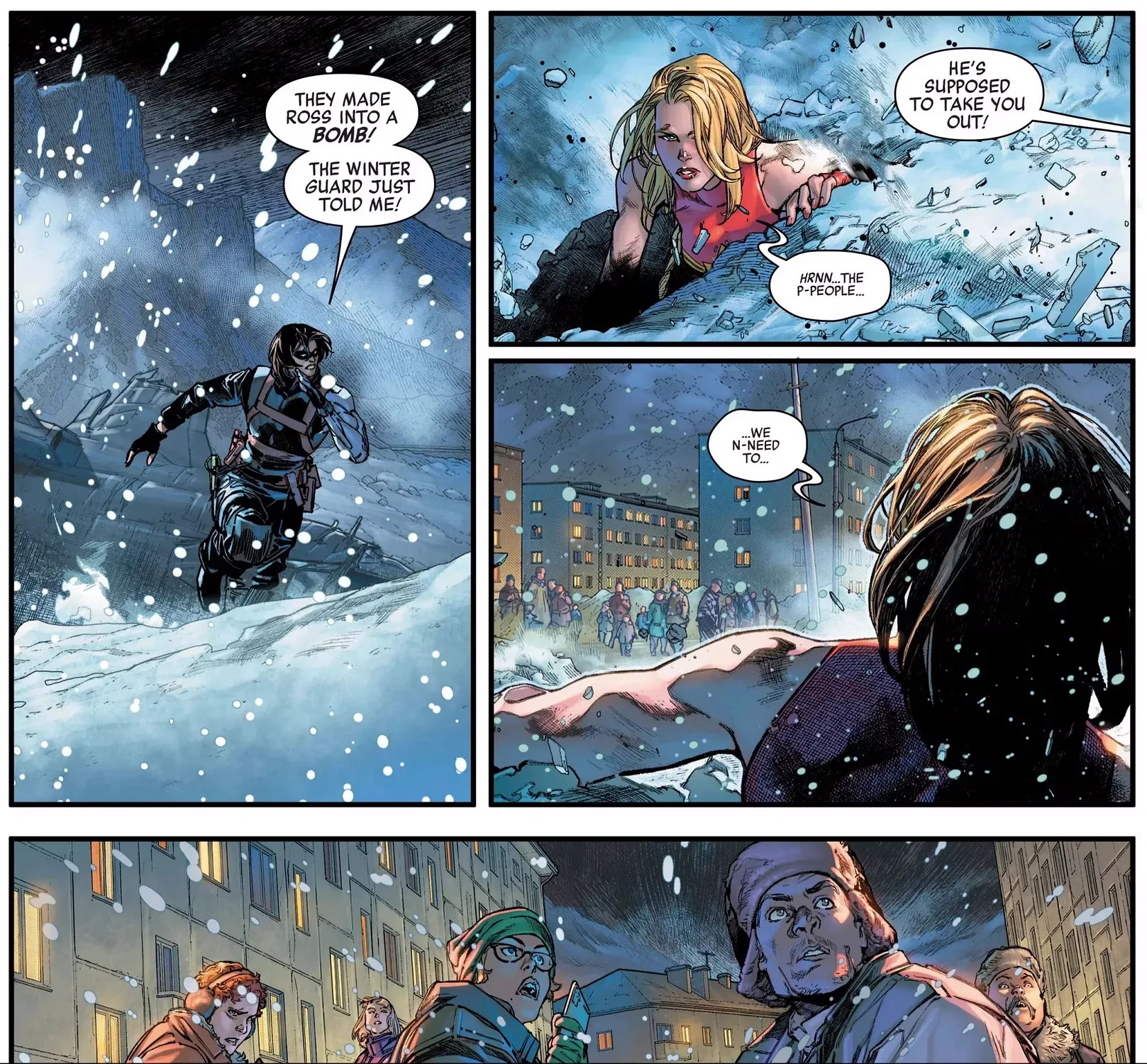
Bucky is operating alongside David Colton when the issue reaches its devastating sequence. The story frames the moment as Bucky’s death, adding another grim chapter to the long and often traumatic history of the character once known as Captain America’s wartime partner and later remade as the Winter Soldier.
Yet the issue also gives readers a plausible reason not to take the scene only at face value. Colton has gained access to the Qys wardrobe dimension. As described by the story’s setup, it is a dimension of bodies and costumes, creating the possibility that someone caught in Colton’s intervention has been displaced rather than destroyed. Bucky is therefore not merely a character whose fate is uncertain because superhero comics often keep doors open; he is caught in a narrative with a specific supernatural or science-fiction mechanism that could explain his absence.
Captain Marvel, Carol Danvers, may be in similar danger. The population of Plesetsk in Russia’s Arkhangelsk Oblast is also implicated by the scope of the disaster. The comic does not establish that Bucky, Carol, or the people of Plesetsk have definitely been sent to the Qys dimension. It establishes a troubling possibility, and it does so at the precise moment Colton’s capabilities become dramatically broader.
David Colton’s “Kimota” moment
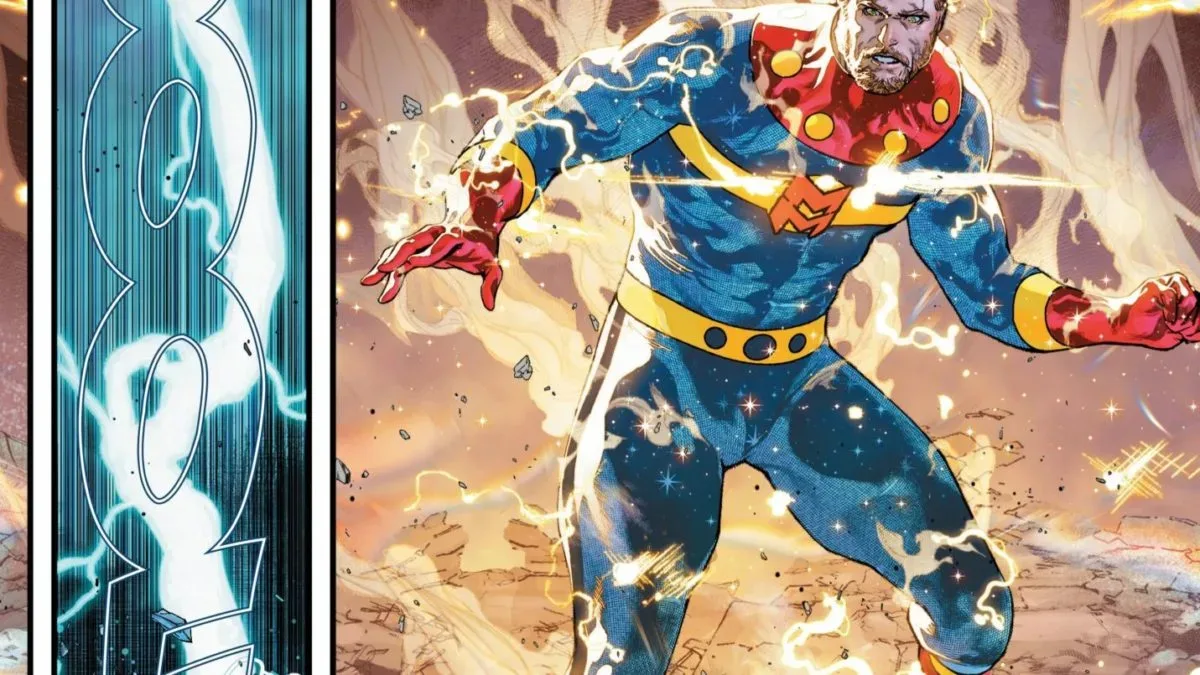
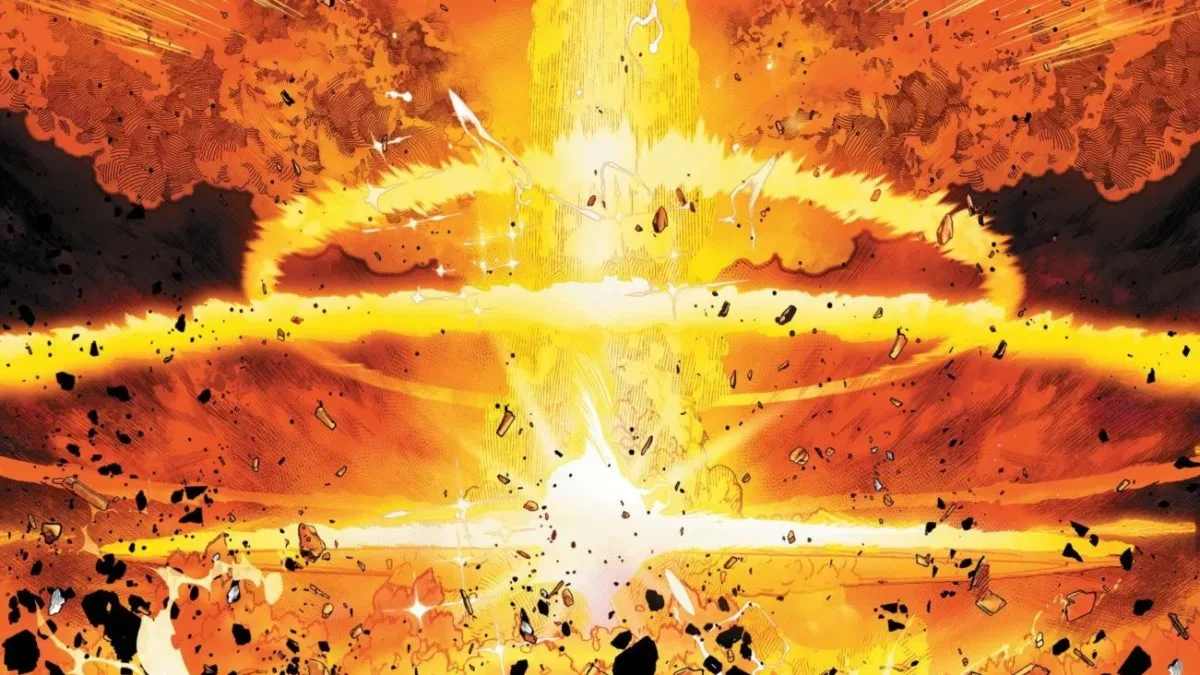
The issue’s headline event is David Colton surviving Red Hulk’s nuclear detonation. He does so by saying “Kimota,” a transformation word that immediately links the scene to Marvelman/Miracleman mythology.
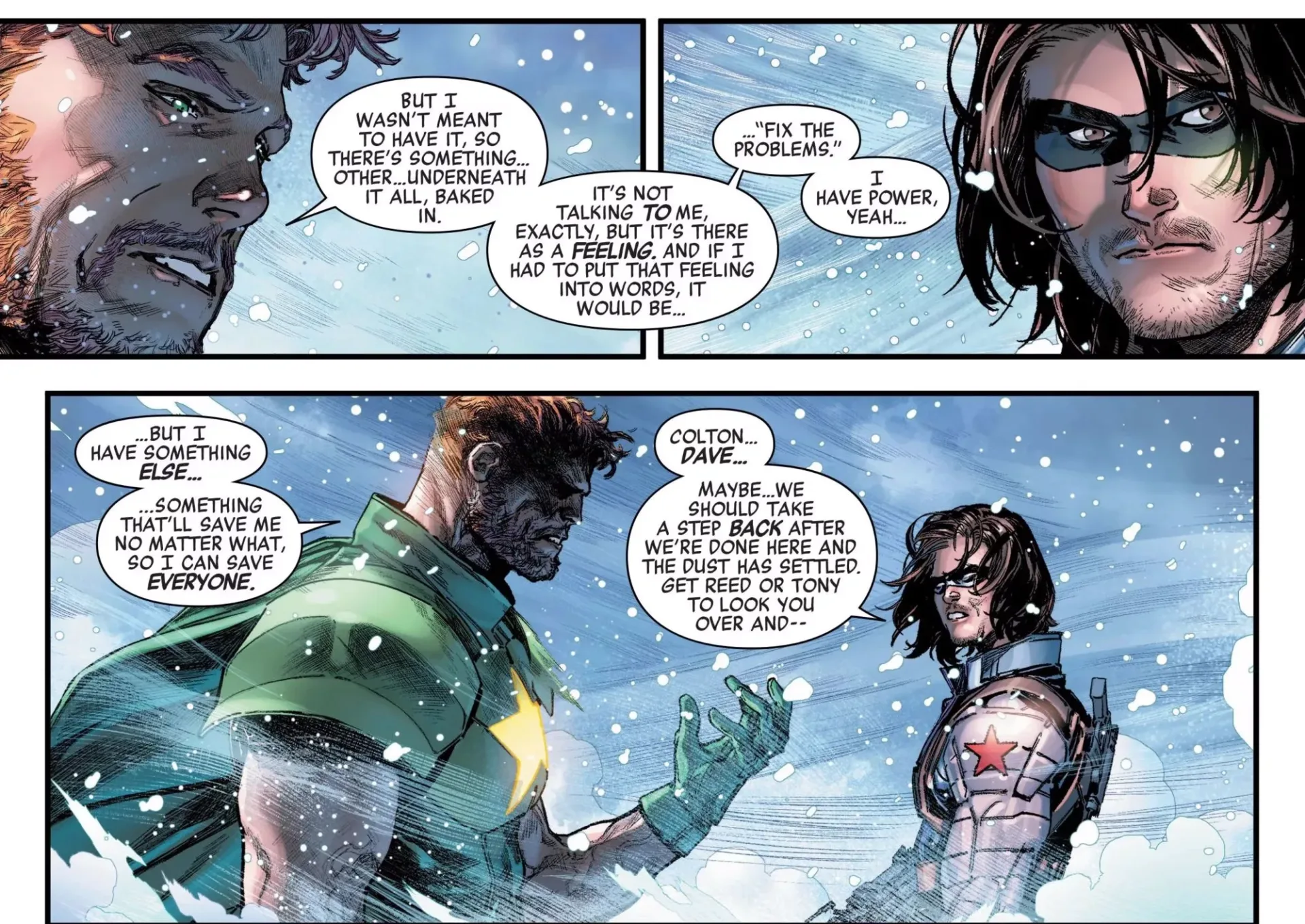
In this context, the word is more than a flashy callback. It signals that Colton’s power has crossed into a new, potentially world-altering phase. He is presented as having Miracleman-like abilities originating with an Origin Box created by Ultimate Reed Richards. Colton’s backstory also deliberately echoes the broad structure associated with Mike Moran: both are tied to government experimentation intended to turn a person into a weapon of war, both are deceived, and both are effectively buried by the institutions involved.
That parallel does not mean David Colton and Mike Moran are the same character, nor does it resolve exactly what Colton will do next. It does explain why “Kimota” is such an important storytelling signal. The issue wants readers to understand that Colton is no longer just another powered participant in an Avengers-scale crisis. His existence opens a different level of threat—and perhaps a different level of intervention—in the Marvel Universe.
Colton’s stated ambition is already expansive. He seeks to eliminate nuclear weapons, with the prospect of further sweeping changes to come. The setup evokes a familiar superhero dilemma: extraordinary power may allow someone to act where governments and heroes have failed, but the ability to impose change on a global scale also raises the question of consent, accountability, and unintended consequences.
What is an Origin Box?
An Origin Box is the source of David Colton’s altered status in this storyline. The supplied information identifies the box as a creation of Ultimate Reed Richards and connects it directly to Colton receiving Miracleman-style powers. That makes it a plot device with unusually high stakes: it is not simply an item that upgrades a hero for one fight, but a mechanism capable of creating a person who can survive a nuclear blast and potentially reshape the world.
It also makes the wider Origin Box thread worth watching. Readers following that material can find more context in the ongoing story involving Miles Morales and the Origin Boxes.
Why Bucky’s apparent death is likely intentional setup
Zdarsky had previously indicated that he had major plans for Bucky and that the character would feature prominently at the end of Armageddon. That prior signal makes the placement of Bucky’s apparent death especially significant. A character promised an important role at the end of a story can certainly be killed, but the Qys dimension wrinkle suggests that his disappearance may be part of a larger plan rather than a clean endpoint.
There is also a strong thematic fit between Bucky and the issue’s larger concerns. Bucky is a character whose life has been shaped by weaponization, manipulation, false narratives, and recovery from imposed violence. David Colton’s own history is said to involve being experimented on and used as a prospective weapon of war. Putting the Winter Soldier beside a newly empowered figure with a similarly exploitative past creates an obvious dramatic pressure point.
Colton may believe he is pursuing peace by removing nuclear weapons and remaking the world. Bucky’s history makes him an especially effective character through whom to examine the danger of allowing any person or institution to decide that noble ends justify control over other people. If Bucky has survived and been displaced, his return could carry consequences for both Colton’s project and the Avengers’ response to it.
The Qys body dimension could redefine the casualties
The Qys wardrobe dimension is the biggest unresolved variable after issue #4. Calling it a “body dimension” or a dimension of bodies and costumes suggests an unsettling relationship between identity, physical form, and appearance. At present, the story material supports only the possibility that Colton used it to remove or relocate people—including Bucky, Carol, and Plesetsk’s residents.
That uncertainty matters because it changes the practical meaning of the catastrophe. If the people involved were killed, the Avengers face an immediate tragedy with permanent losses. If they were transported, the next challenge may be a rescue or retrieval operation. If the dimension changes those who enter it, the problem could be still more complicated: getting someone back may not necessarily mean returning them unchanged.
Those are analytical possibilities, not confirmed plot details. The important fact is that the story has supplied a mechanism that prevents readers from treating the devastation as fully explained. The absence of certainty is part of the cliffhanger.
How issue #4 sets up the fall of the Avengers
The solicitation for Avengers: Armageddon #5 describes the fallout in unambiguous terms: after the cataclysm of issue #4, the world is torn apart and humanity turns against super heroes. The series has therefore moved beyond an internal superhero dispute. Colton’s actions, Red Hulk’s detonation, the apparent loss of Bucky, and the danger surrounding Carol Danvers and Plesetsk create a public crisis with worldwide implications.
This is a meaningful escalation for an Avengers story. The team is not simply trying to defeat a villain before damage is done; the damage has already occurred, and the next issue is concerned with who bears the cost. Colton’s stated anti-nuclear objective may sound morally direct, but the aftermath asks whether an individual with immense power can pursue even a defensible goal without breaking the trust and stability that heroes depend on.
The coming issue is also explicitly described as the point of no return and as a bridge into November’s Avengers #1. That makes the apparent fate of Bucky more than an isolated shock panel. It is one of the pieces on the board as the present Avengers lineup is torn apart and a new status quo is prepared.
What readers should watch for in Avengers: Armageddon #5
- Bucky Barnes: Whether his apparent death is affirmed, reversed, or reframed as displacement into the Qys dimension.
- Carol Danvers: Whether she was affected by the same event and what her status means for the remaining heroes.
- Plesetsk: Whether the missing or endangered population becomes proof of Colton’s destructive reach, a rescue objective, or something even stranger.
- David Colton’s limits: Surviving a nuclear explosion establishes extraordinary power, but the next issue may clarify the cost and boundaries of using it.
- Public reaction: With humanity turning against super heroes, the Avengers will have to contend with the political and social consequences of the catastrophe, not only its immediate physical damage.
Avengers: Armageddon #4 is credited to Chip Zdarsky, Dellio Diaz, and Frank Alpizar. Its most visible reveal is David Colton’s “Kimota” transformation and survival, but Bucky’s fate may prove equally important. For now, the Winter Soldier is best described as apparently dead, with the Qys dimension providing a very specific reason to expect the story has not finished with him.
Shop the products
Check current price, model and availability at the retailer.