Ultimate Impact: Reborn #5 is set to put a very simple question at the center of a very large Marvel conflict: who gets to hold the Origin Boxes when every interested party has the power to turn that answer into a catastrophe?
On sale September 30, 2026, the 32-page issue brings Marvel and Ultimate universe characters into a confrontation over the mysterious devices. Miles Morales is aligned with Captain America and Iron Man against Hostilicus, but the fight is not merely a matter of two fixed teams trading punches. Wonder Man, Sightseer and Mogul have all been empowered by Origin Boxes, and their loyalties remain a central uncertainty.
Christopher Condon writes the issue, with Stefano Caselli on interior art and Leinil Yu providing the main cover. The standard edition is listed at $4.99 in the US and is rated T.
The premise: power is portable, and nobody agrees who should control it
In superhero stories, an artifact is often more than a flashy object to be retrieved before the last page. It is a narrative engine: a thing whose ownership changes the balance between heroes, villains and bystanders. The Origin Boxes appear positioned to do precisely that in Ultimate Impact: Reborn #5.
The stated conflict is over the fate of the boxes and, by extension, the world. That framing makes the boxes a strategic resource rather than a personal MacGuffin. A MacGuffin is a story object chiefly valued because characters pursue it; the identity of the object may matter less than the pursuit it creates. Here, however, the premise gives the boxes direct story weight because they can empower people. Whoever finds one is no longer simply carrying leverage—they may become leverage.
That distinction helps explain why the issue’s cast is so crowded around the same prize. Miles, Captain America and Iron Man have drawn their line against Hostilicus, but new power-holders are not automatically predictable allies. Wonder Man, Sightseer and Mogul are presented as figures who must decide where they stand. The possibility of more boxes awaiting discovery widens the problem even further: winning one battle may not settle an arms race if the source of power is still out in the world.
What the preview establishes about the new power-holders
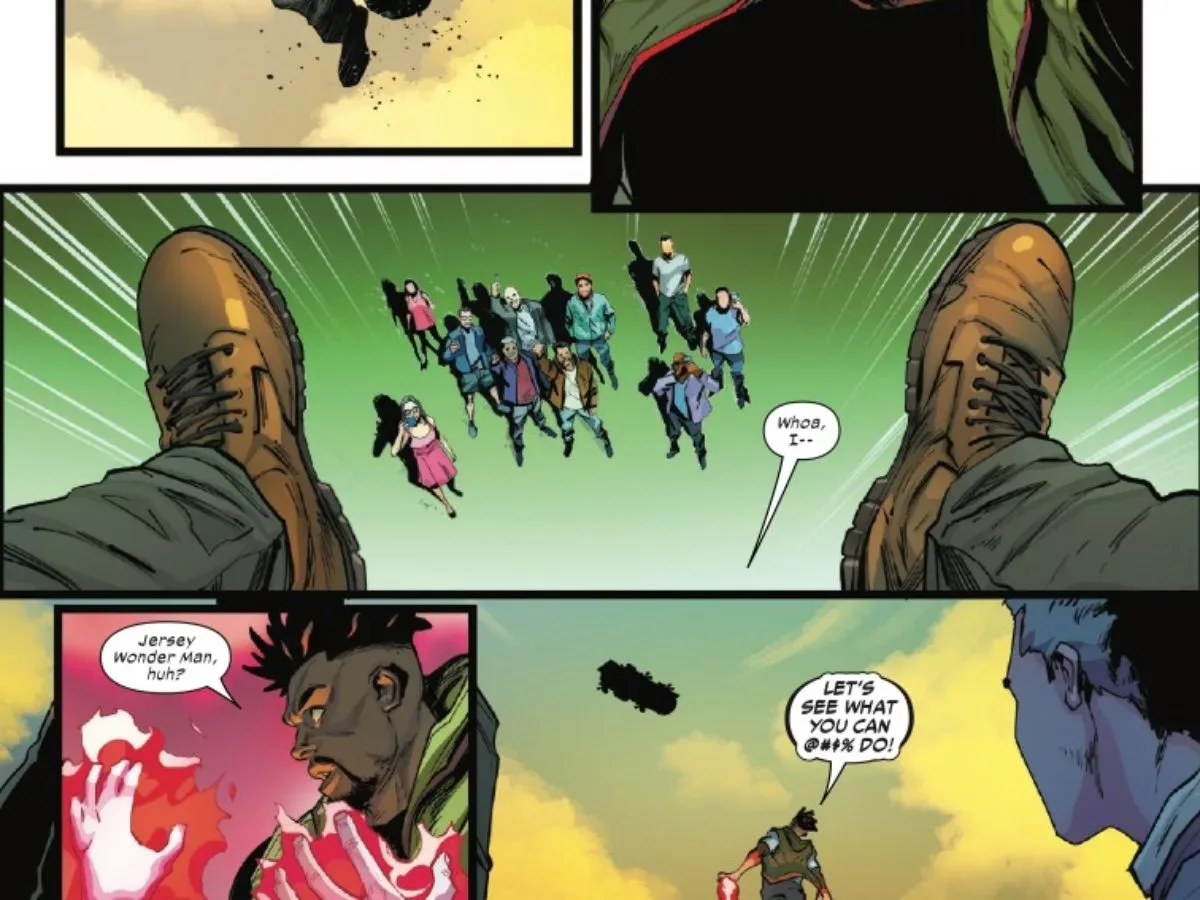
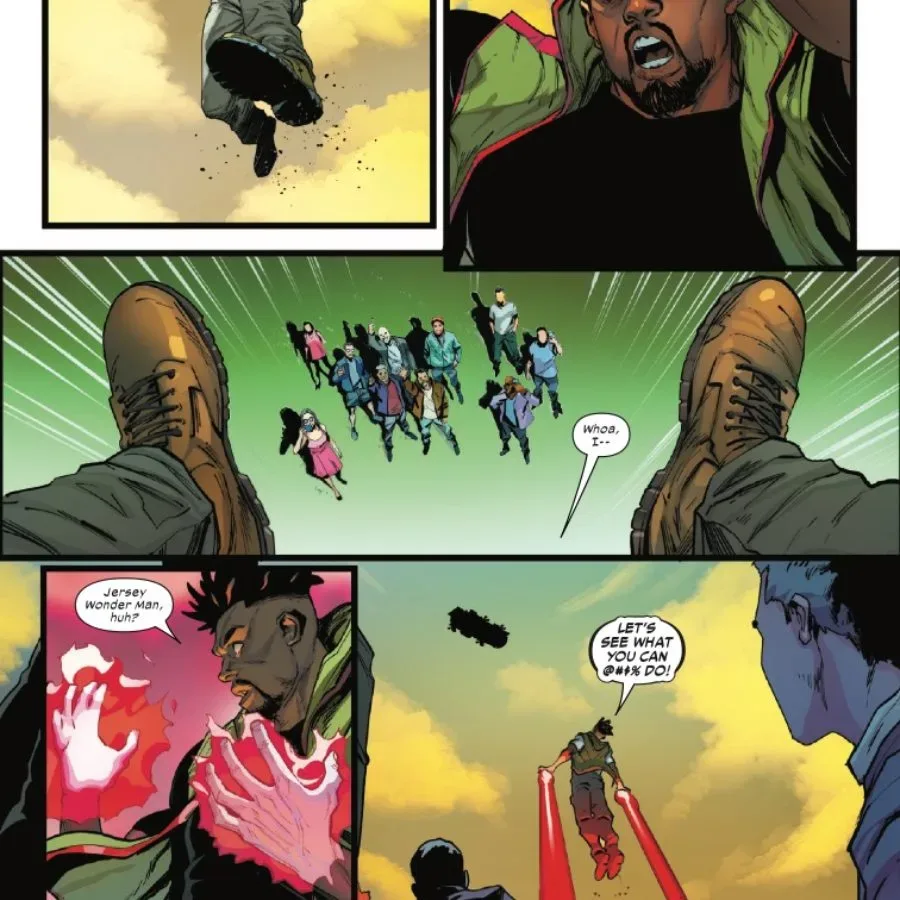
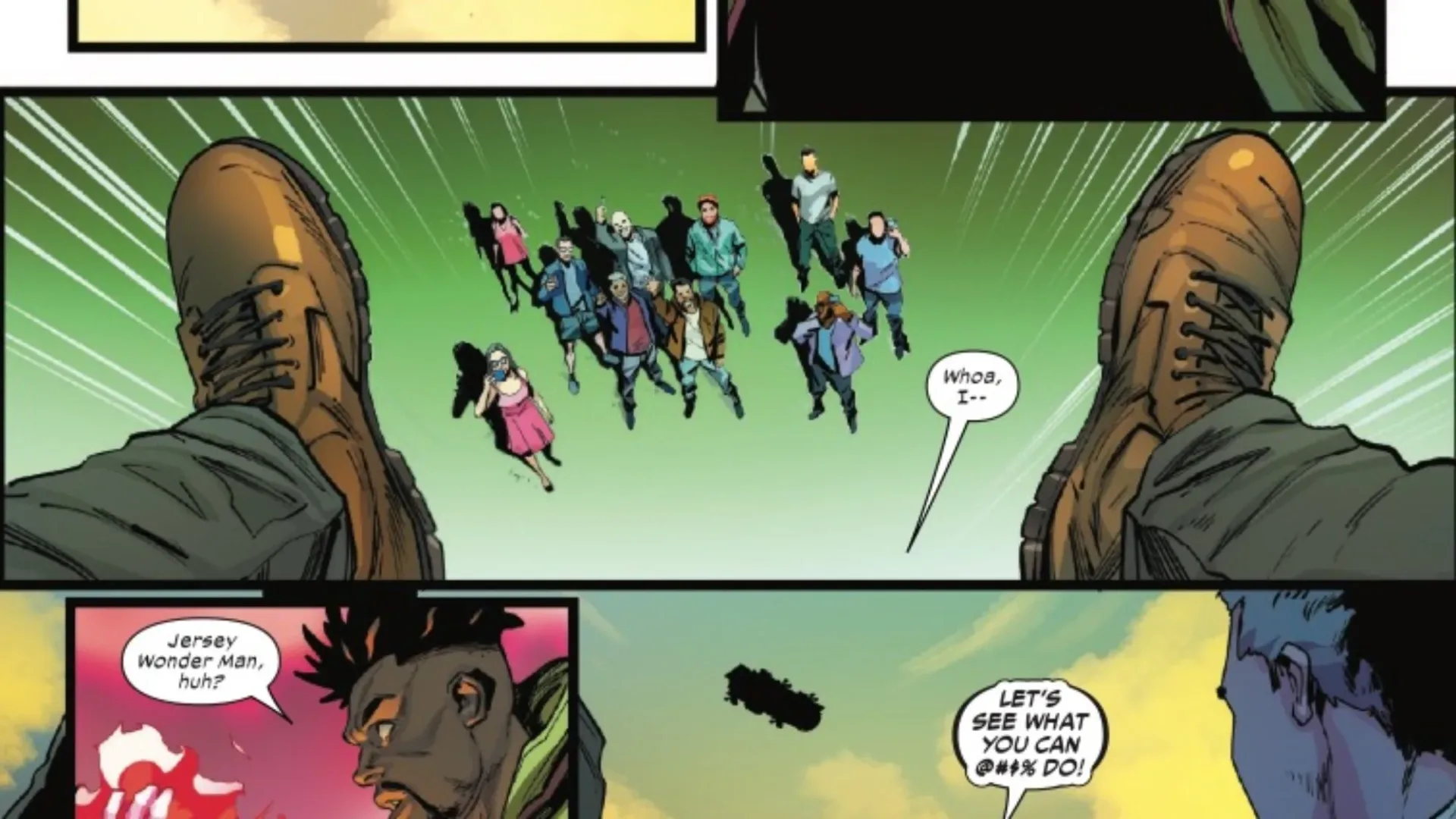
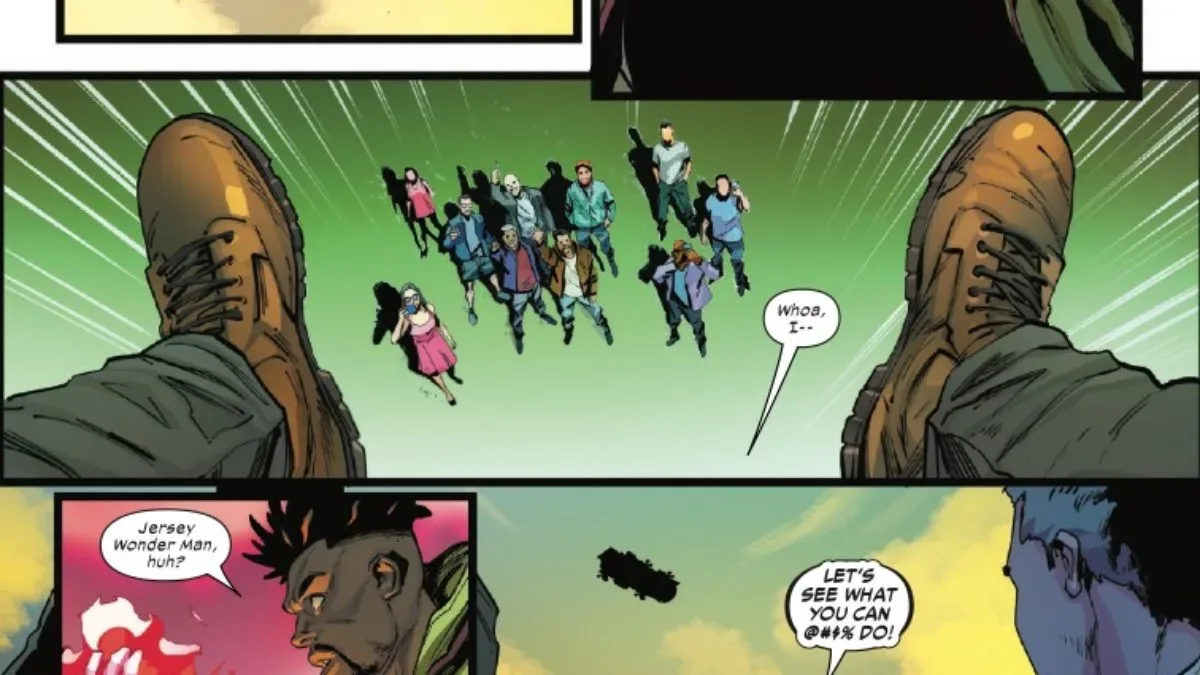
The available preview material points to very different first impressions for two Origin Box-powered characters. Wonder Man is shown launching above a park in Jersey City, then testing red, glowing energy. Sightseer’s arrival is much more abrupt: the character is hurled through an office window in Midtown and emerges in a blue-and-yellow outfit with symbol-marked goggles.
Those images establish spectacle, but they also suggest a useful contrast. Wonder Man’s sequence reads as an early attempt to understand new capabilities. Sightseer’s entrance places an unfamiliar super-powered figure in a dense public setting and gives the character a visually distinctive costume immediately. Neither moment settles the larger question of allegiance, and that is likely the point: receiving power and choosing how to use it are separate decisions.
Mogul is included among the Origin Box-powered characters whose side is unresolved, though the provided material does not detail the character’s abilities or role in the issue. Readers should be wary of treating names, costumes or a single preview scene as confirmation of a final alignment. The solicitation deliberately presents choice—not certainty—as the dramatic pressure point.
Why Miles Morales matters to this crossover conflict
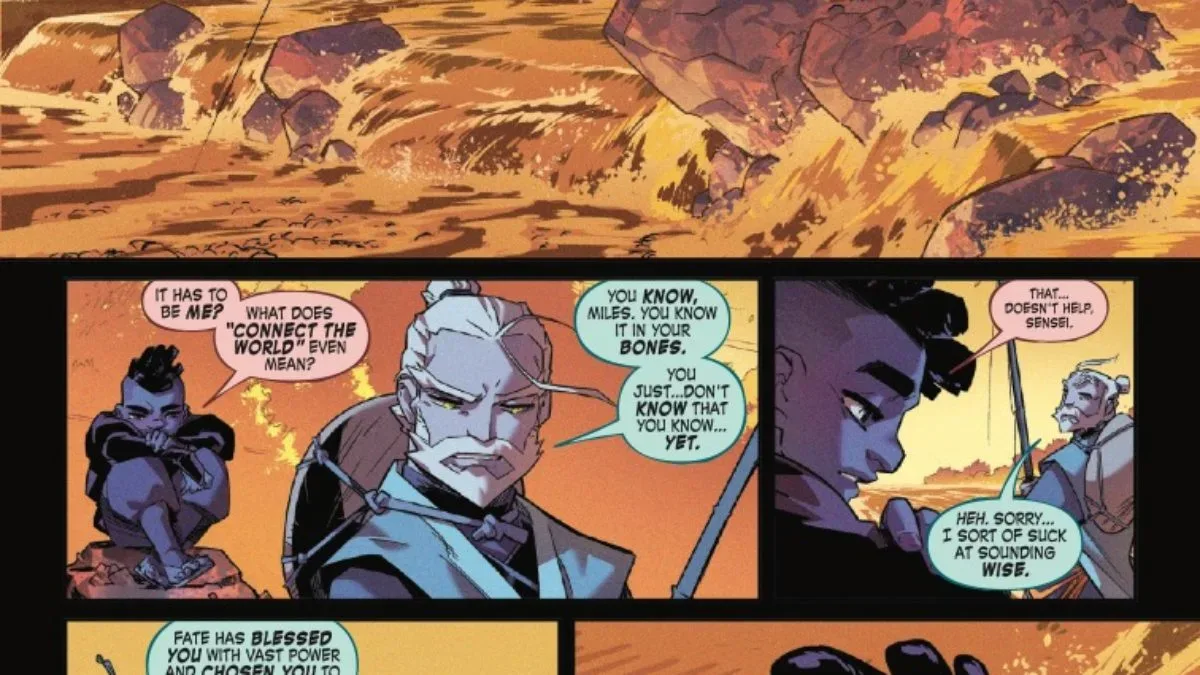
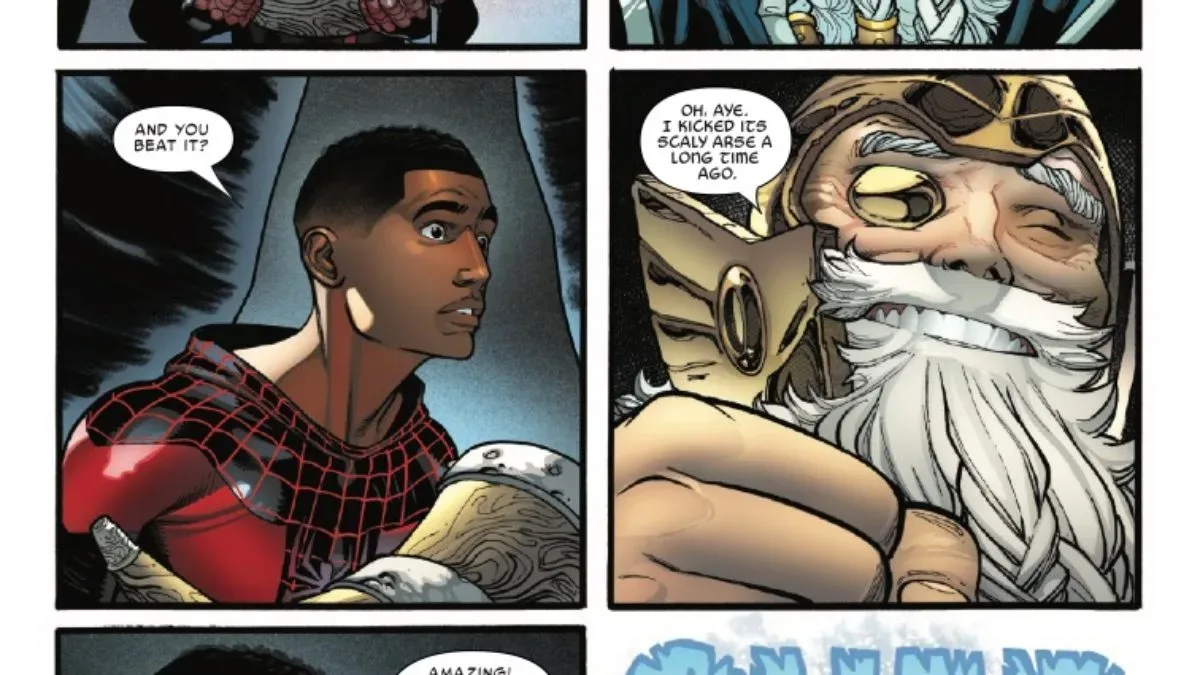
Miles Morales is not alone here, but placing him beside Captain America and Iron Man gives the conflict a cross-generational superhero structure. Captain America and Iron Man are named as his allies against Hostilicus, while the Marvel and Ultimate universes are explicitly said to collide. The result is a premise that operates on two levels: a fight over dangerous objects, and a meeting of characters and stakes associated with separate corners of Marvel continuity.
Continuity is the shared history and ongoing chain of events that connects comic-book stories. A crossover can use continuity to create immediate scale, but it can also ask new readers to identify a lot of players quickly. This issue’s central objective is at least unusually clear. The Origin Boxes are the contested resource; Hostilicus is on the opposing side; and three empowered figures could shift the outcome.
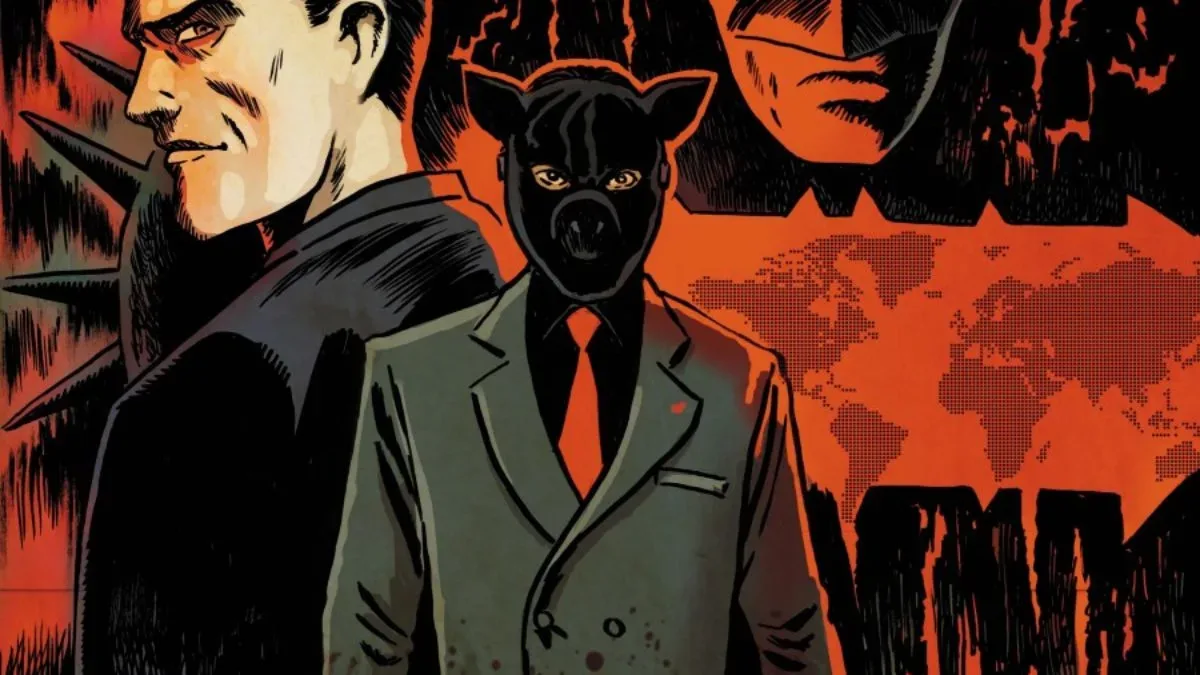
That clarity matters for anyone coming in chiefly for Miles. Even without assuming how much earlier reading is required, the issue presents an understandable core tension: a hero and allies are trying to prevent a dangerous power source from being claimed by the wrong side, while newly empowered people may decide the conflict themselves. Readers looking for another comic-book story built around a consequential institutional threat can also see the latest details on Absolute Batman: Beyond Ark-M.
The interesting wrinkle is not just the boxes—it is distribution
The prospect of additional Origin Boxes is the detail with the broadest implications. A single artifact creates a race. Multiple artifacts create a distribution problem. The question stops being “Who possesses the object?” and becomes “How many people can be empowered, who finds them first, and whether any group can responsibly control their use?”
That is a more volatile setup because every new box can introduce another decision-maker. The heroes cannot assume that a recipient will be grateful, cautious or interested in joining their cause. Hostilicus likewise cannot assume that raw power produces loyalty. In narrative terms, more boxes can keep the conflict from being resolved by one victory, because the conditions that caused the conflict remain active.
It also makes the phrase “to the victor” feel less definitive than it first appears. Victory may mean holding the existing boxes at the end of an encounter. It may not mean eliminating the possibility that someone else finds another. For a crossover, that is a compact way to make the world feel unstable without needing every character to share the same motive.
Issue details and cover options
Ultimate Impact: Reborn #5 is scheduled for comic shops on Wednesday, September 30, 2026. The main issue is 32 pages, rated T and carries a $4.99 US price. Leinil Yu supplies the regular cover.
Three $4.99 US variant covers are also listed:
- Francesco Mobili variant
- Dike Ruan variant
- Paulo Siqueira variant
The Canadian list price for each named variant is $6.25. A variant cover is an alternate cover edition of the same issue; it does not, by itself, indicate different interior story content. For readers buying primarily to follow the plot, the regular edition and variants should be approached as different cover choices rather than separate chapters.
What to watch for when the issue lands
The most important developments will be less about whether the Origin Boxes are powerful—the premise already establishes that—and more about the consequences of that power entering new hands. Readers can reasonably watch for answers to several questions:
- Will Wonder Man, Sightseer and Mogul commit to an existing side, or pursue independent goals?
- How does Hostilicus intend to secure the boxes, and what makes that outcome especially dangerous?
- Does the issue provide meaningful evidence that more Origin Boxes exist, or only leave the possibility hanging?
- Can Miles, Captain America and Iron Man protect the world without turning possession of the boxes into its own form of escalation?
Those questions give Ultimate Impact: Reborn #5 a sharper hook than a routine “heroes meet and fight” event installment. Its big action is tied to a practical dilemma: superhuman capability is becoming transferable, scarce and contested. The people who receive it may be as decisive as the established icons trying to contain it.