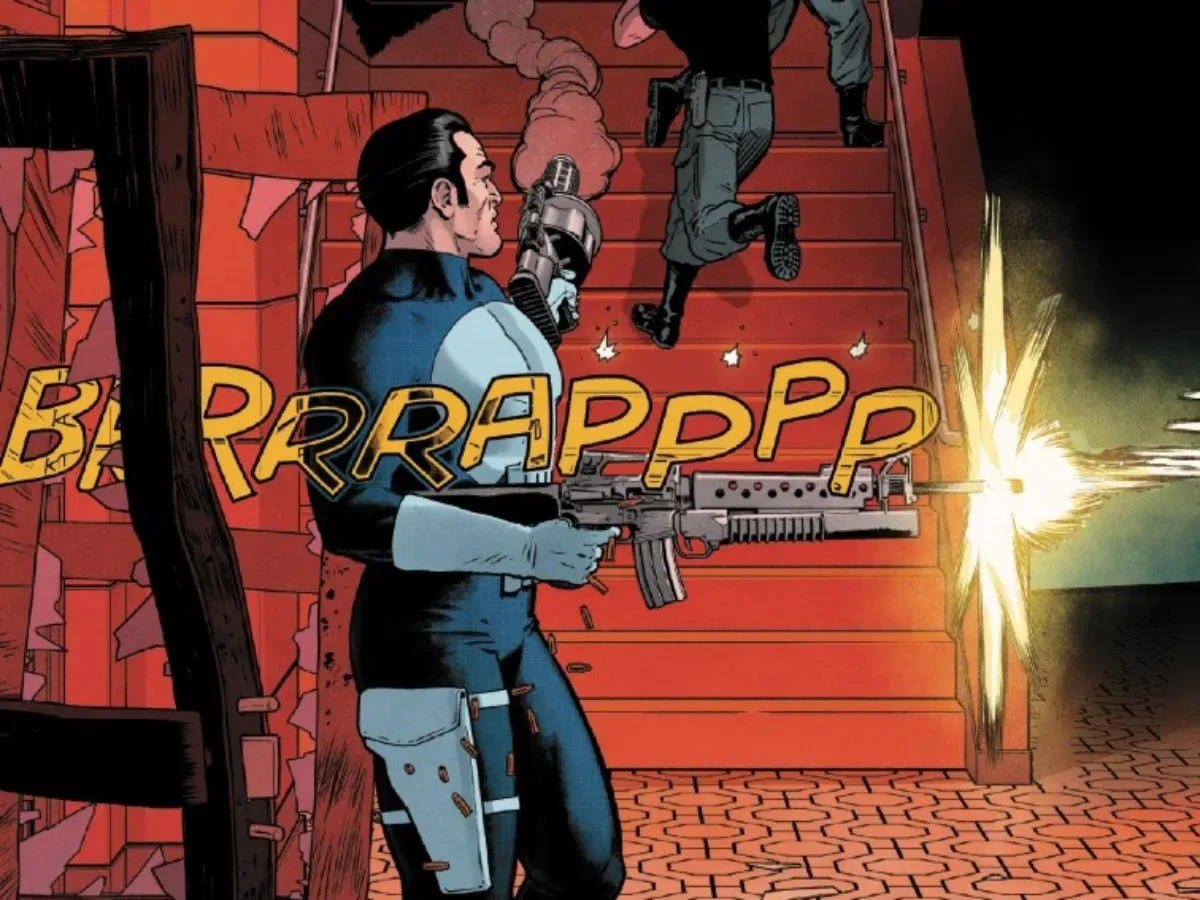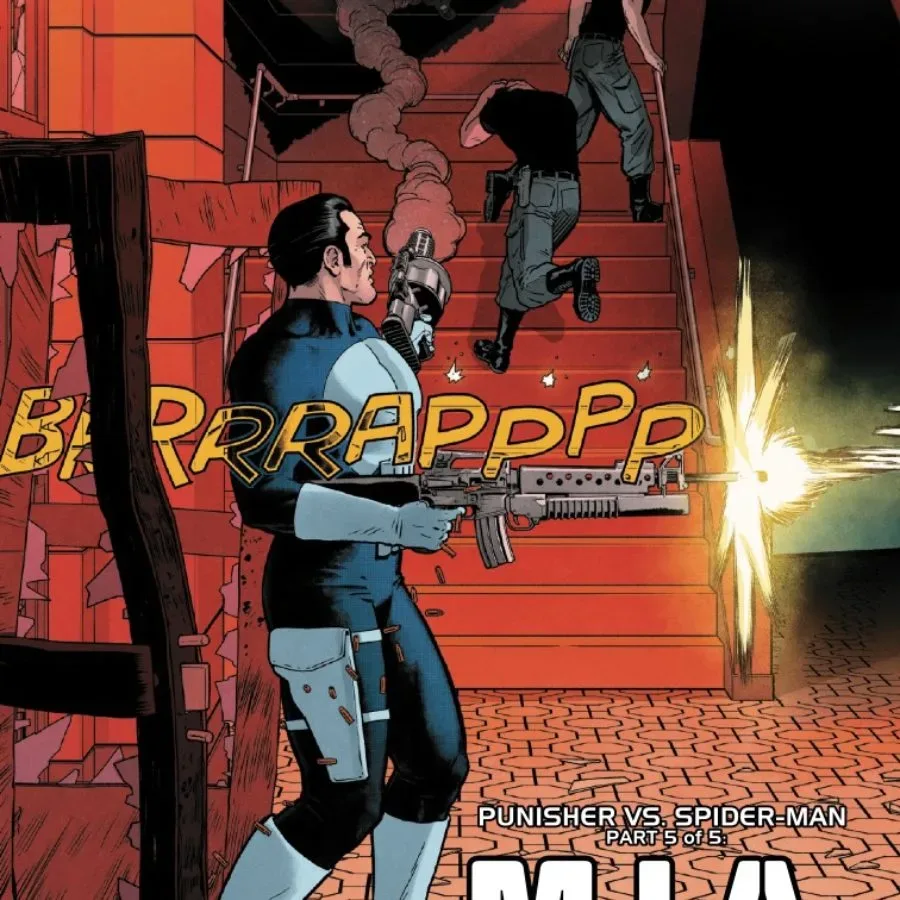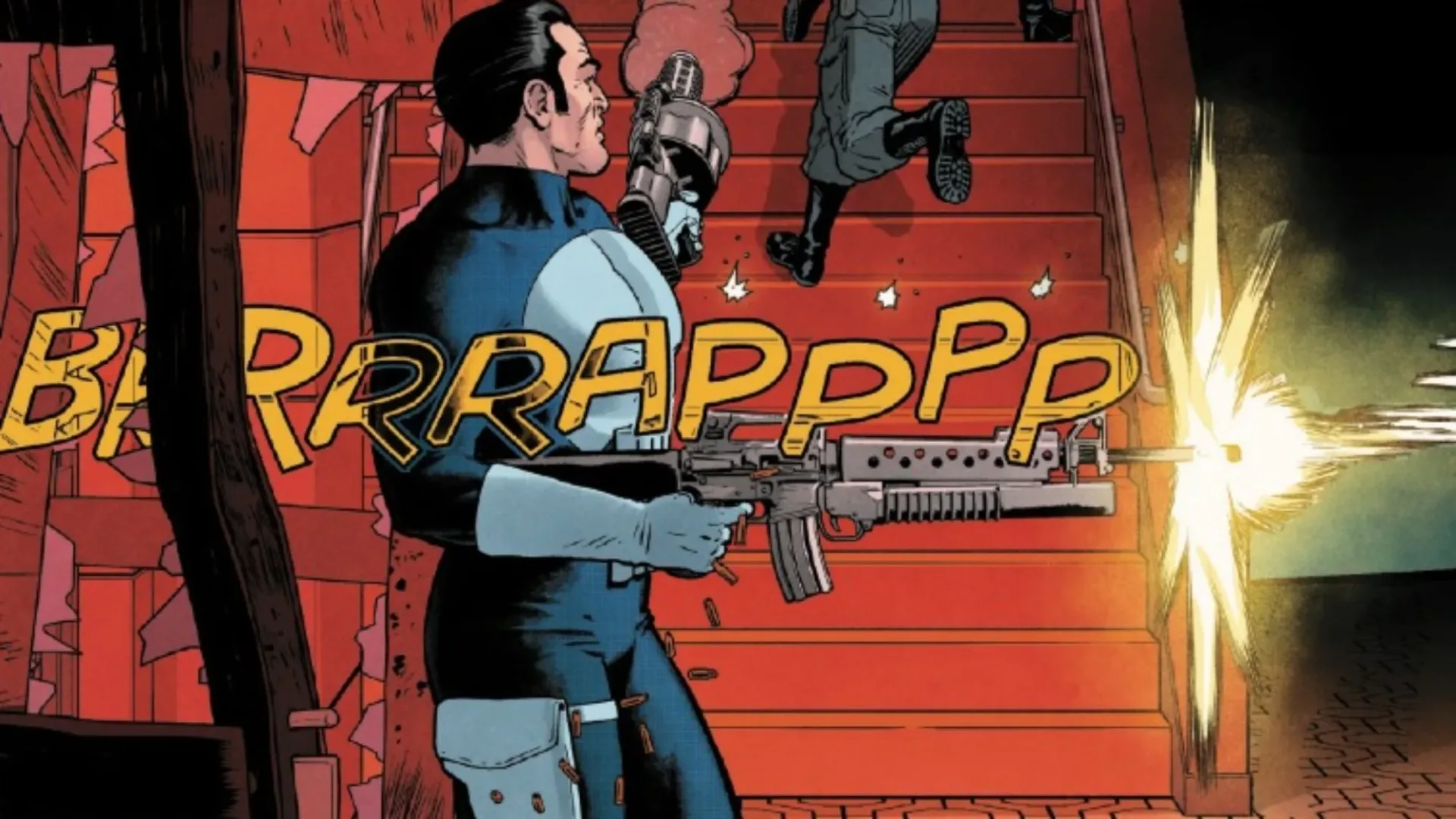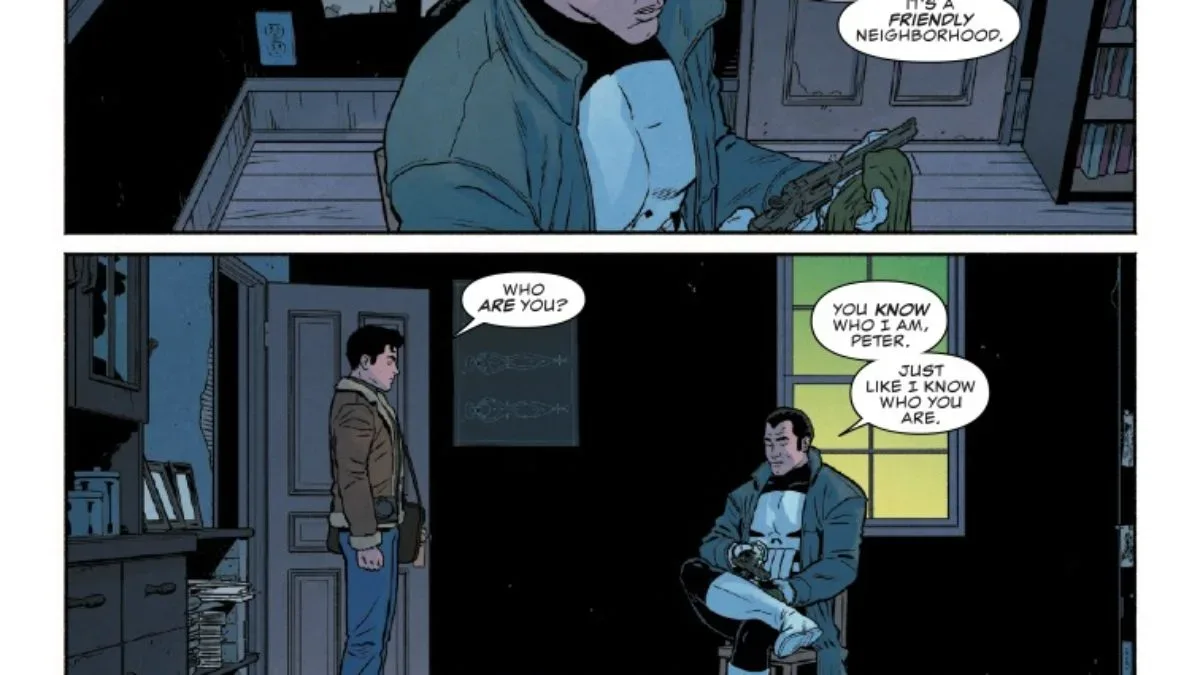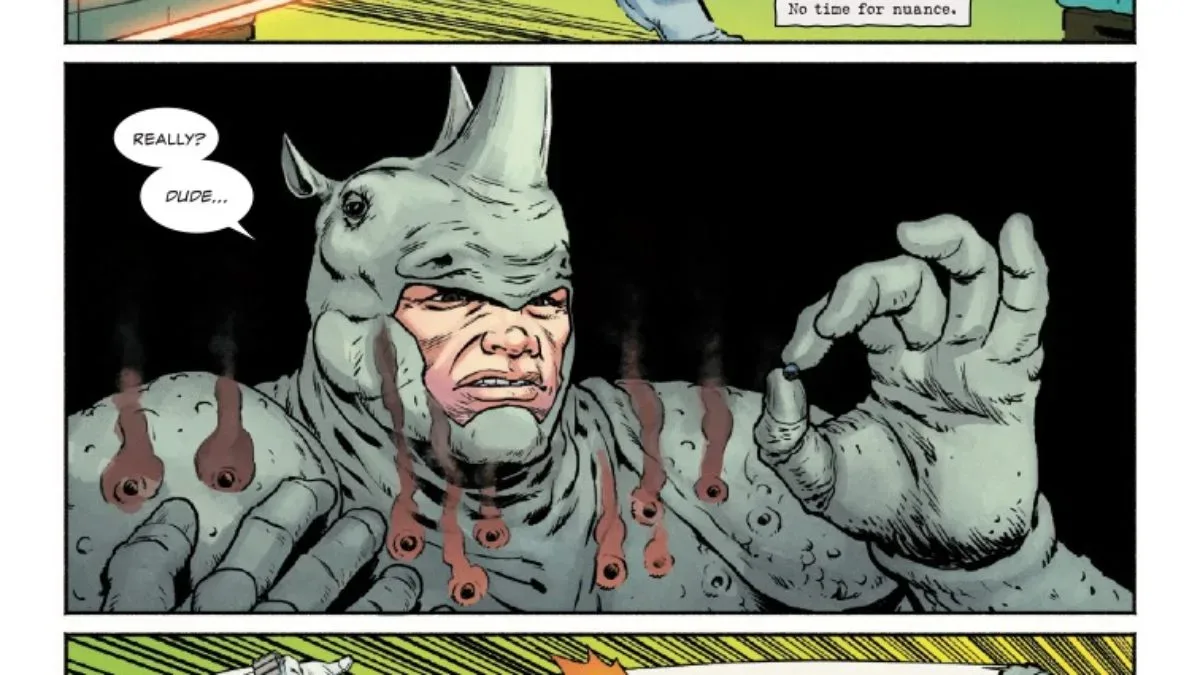
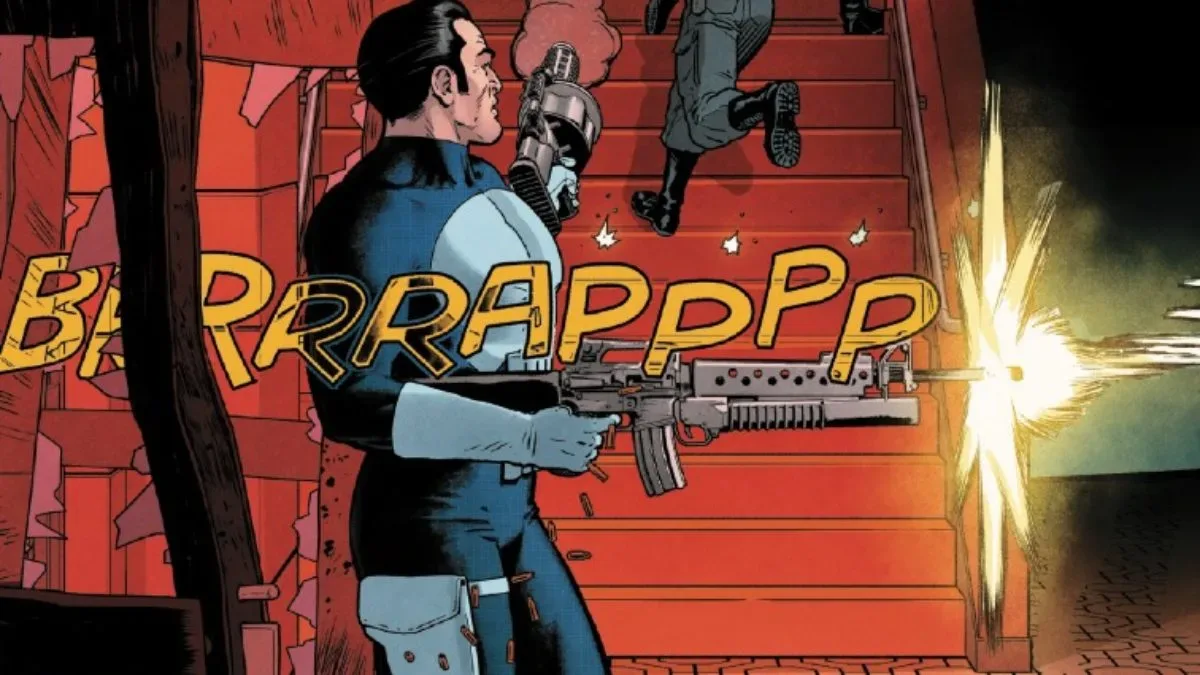
Punisher vs. Spider-Man #5 is positioned as the decisive final chapter in Marvel’s five-part confrontation between Frank Castle and Spider-Man. Written by Dan Abnett, drawn by Alvaro Lopez and featuring a cover by Jonas Scharf, the 32-page issue is scheduled to go on sale November 18, 2026. Its setup is as stark as a superhero conflict gets: the Punisher has selected a target, and Spider-Man is trying to prevent a death—regardless of whether the person in danger is considered good or bad.
That distinction is the engine of the finale. Frank Castle is described as a one-man army who is nearly impossible to deter once he commits to a kill. Spider-Man, meanwhile, is defined by the opposing imperative: lives are on the line, and he has to stop the killing. The issue’s “eye for an eye” framing suggests that retaliation, punishment and consequences will sit at the center of the confrontation rather than merely providing scenery for another hero-vs.-hero brawl.
Marvel has marked the comic Parental Advisory and Rated T+, signaling material aimed at teen-and-up readers. That is consistent with the premise’s serious violence and moral pressure, though a rating is a content guideline rather than a preview of every scene or plot turn. The solicitation promises a climactic ending “with a bang,” but it does not identify the target, reveal the outcome, or confirm which characters emerge unscathed.
What is confirmed for the finale
- Issue: Punisher vs. Spider-Man #5
- Publisher: Marvel
- On-sale date: November 18, 2026
- Format: 32 pages
- Creative team: Dan Abnett and Alvaro Lopez
- Cover artist: Jonas Scharf
- Rating: T+ / Parental Advisory
- U.S. price: $4.99
- Variant: a Paulo Siqueira variant is also listed at $4.99 in the U.S. and $6.25 in Canada.
The issue is not being marketed as a new launch or an open-ended detour. It is explicitly the conclusion to a five-issue series. That matters for readers deciding whether to jump in: #5 is built to pay off existing tension, not to serve as a clean starting point. Anyone new to the mini-series may want to begin with the earlier chapters so that the personal stakes behind Castle’s mission and Spider-Man’s intervention land with their intended weight.
Why this matchup remains difficult
The Punisher and Spider-Man are both street-level Marvel figures in the sense that their stories can focus on crime, civilian peril and immediate consequences. But their approaches to force are fundamentally incompatible. Castle’s role in this issue is plainly lethal: the available description does not hedge around what he intends to do. Spider-Man’s role is equally clear, with the hero attempting to prevent death at any cost.
That makes the question in the solicitation—whether Spider-Man must stop death even when the threatened person is “good or bad”—more important than a simple fight outcome. It moves the conflict beyond who can win an exchange of punches, gunfire, gadgets or webbing. The actual test is whether a hero committed to preserving life can uphold that standard in a situation where the person being saved may not be sympathetic.
It is a useful difference to keep in mind when reading a superhero crossover or limited series. A climactic chapter is the point at which the central conflict reaches its highest pressure and demands an answer. It does not necessarily mean that every long-running relationship or every idea attached to the characters is permanently resolved. In this case, the immediate five-part story is ending; the preview material does not establish any wider status-quo change beyond that.
“Eye for an eye” is a thematic signal, not a plot synopsis
The phrase “eye for an eye” has been attached to the issue’s premise, and it neatly captures the collision at hand. Retaliation is usually about proportionality: one harm is answered by another, with punishment treated as a form of balance. The problem for Spider-Man is that preventing a killing may mean defending someone whose past actions invite demands for revenge. The problem for the Punisher is not whether he can identify wrongdoing, but whether lethal punishment can be treated as a final answer.
None of that tells readers exactly what happens in #5. It is analysis of the stated setup, not a leak or a claim about the ending. The confirmed material only establishes the opposing objectives: Castle is moving toward a kill, while Spider-Man stands between that outcome and the people at risk. The final issue will determine what those objectives cost the characters.
The language around a “seminal period in Marvel history” also deserves a careful reading. It appears in the issue description as heightened framing for the conclusion. Without further story details, it should not be read as confirmation of a particular historical setting, continuity overhaul, character death or franchise-wide event. What can be said confidently is narrower: Marvel is presenting this final installment as a major endpoint for the series’ central conflict.
What the rating and format mean for buyers
Marvel’s T+ designation generally identifies a comic intended for teen-and-up audiences. The added Parental Advisory label makes the tone especially relevant here, given that the book features the Punisher and a plot built around a threatened killing. It is not a substitute for a detailed content breakdown, and the supplied listing does not specify the exact nature or frequency of violent imagery, language or other mature elements. Still, prospective readers and parents have enough information to know that this is not being framed as an all-ages Spider-Man adventure.
The listed 32-page count and $4.99 U.S. price also make this a standard single-issue purchase rather than a collected edition. Readers collecting the full story in single issues can look for the regular edition or the Paulo Siqueira variant. A variant cover is an alternate cover edition of the same comic issue; it is not, on the information available here, evidence of different interior pages or a separate story. Buyers who only want to read the finale should choose based on availability and cover preference rather than expecting a different narrative.
For readers who prefer to keep their ongoing Marvel reading organized by character and continuity, the contrast in tone is worth noting. Spider-Man may be a familiar name, but this particular issue is a Punisher conflict first and foremost, with Castle’s lethal objective driving the stakes. Elsewhere in Marvel-adjacent pop-culture coverage, Anthony Mackie’s comments about Paul Bettany and Avengers: Doomsday offer a separate reminder that Marvel news can range from tightly specified comic solicitations to deliberately limited screen-production details.
The practical reading expectation
Readers should expect a finale built around a direct moral collision, not merely a contest of abilities. The preview establishes a clear asymmetry: Castle pursues death as the mission’s endpoint, while Spider-Man sees the prevention of death as non-negotiable. When two protagonists begin with rules that opposed, a compromise can be difficult to sell. That is why the issue’s final-chapter status is meaningful. It has to deliver some kind of answer to the series’ central argument, even if that answer leaves neither character fully satisfied.
At the same time, readers should avoid treating the promotional copy as a complete map of the book. The named creative team, release date, pricing, page count, rating, cover artist, variant and broad moral setup are confirmed. The identity of the endangered people, the precise target of Castle’s campaign, the manner of the final confrontation and the result are not specified in the available details. Those blanks are where the story itself still has room to operate.
Punisher vs. Spider-Man #5 arrives November 18, 2026, at $4.99 in the U.S. For those following all five chapters, it is the payoff issue. For readers primarily interested in what happens when Spider-Man’s life-preserving code runs into the Punisher’s uncompromising version of justice, it is the chapter that must finally put that conflict to the test.