Week 8 did not settle the 2026 NFL rookie-card picture. It made it messier in the most collectible way possible: several players gained a credible route to more playing time, a few established names remain limited by injury or opportunity, and two running backs abruptly became far more important to monitor.
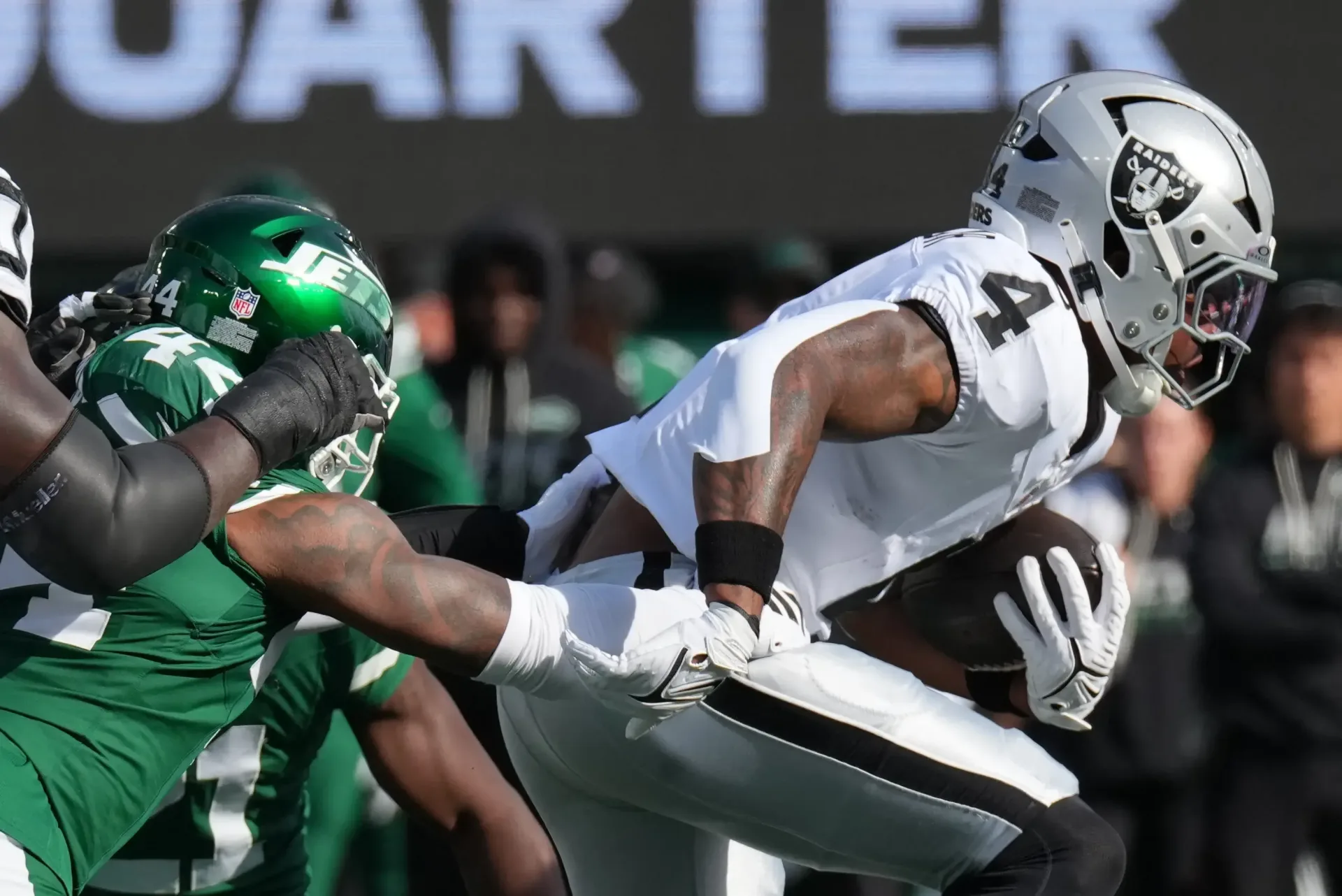
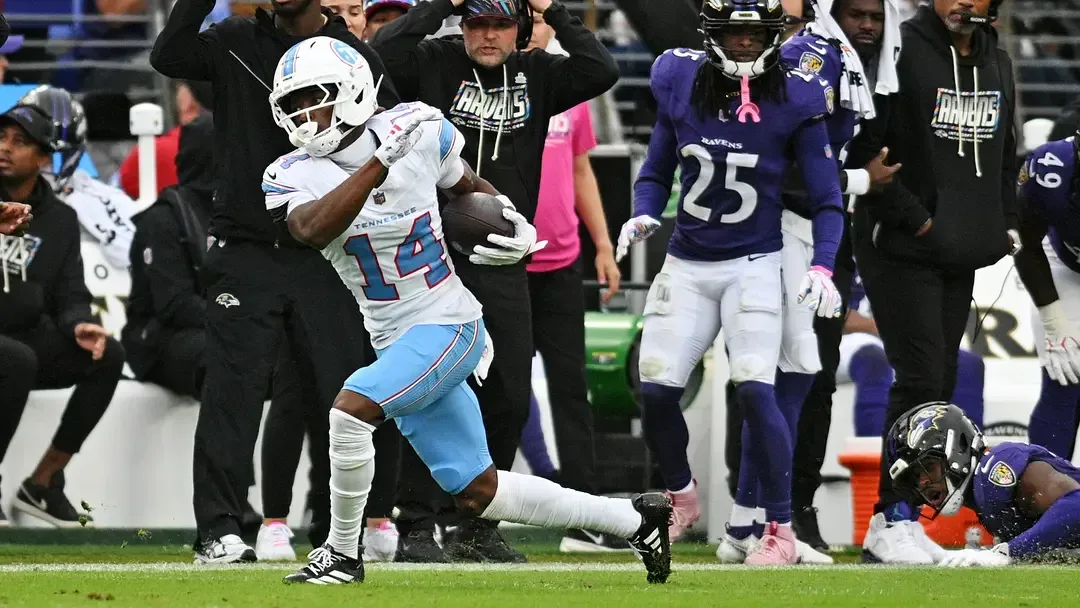
At the top, Raiders quarterback Fernando Mendoza still holds the No. 1 spot, with Cardinals running back Jeremiyah Love, Titans receiver Carnell Tate and Saints receiver Jordyn Tyson rounding out the leading group. But the sharper movement comes below them. Broncos running back Jonah Coleman vaults from unranked to seventh, while Raiders runner Mike Washington arrives at No. 15 after a startling workload shift against the Jets.
For collectors, this is a useful reminder of what a weekly rookie ranking is—and is not. It is not a guarantee that a card will rise in value. It is a snapshot of opportunity: playing time, role growth, health, draft investment and a player’s chance to produce a memorable stretch when collectors are paying attention. The moments that change a hobby narrative often begin with a depth-chart adjustment before they show up in a season-long stat line.
The top four remain intact, but their cases are not equally stable
- Fernando Mendoza, QB, Raiders
- Jeremiyah Love, RB, Cardinals
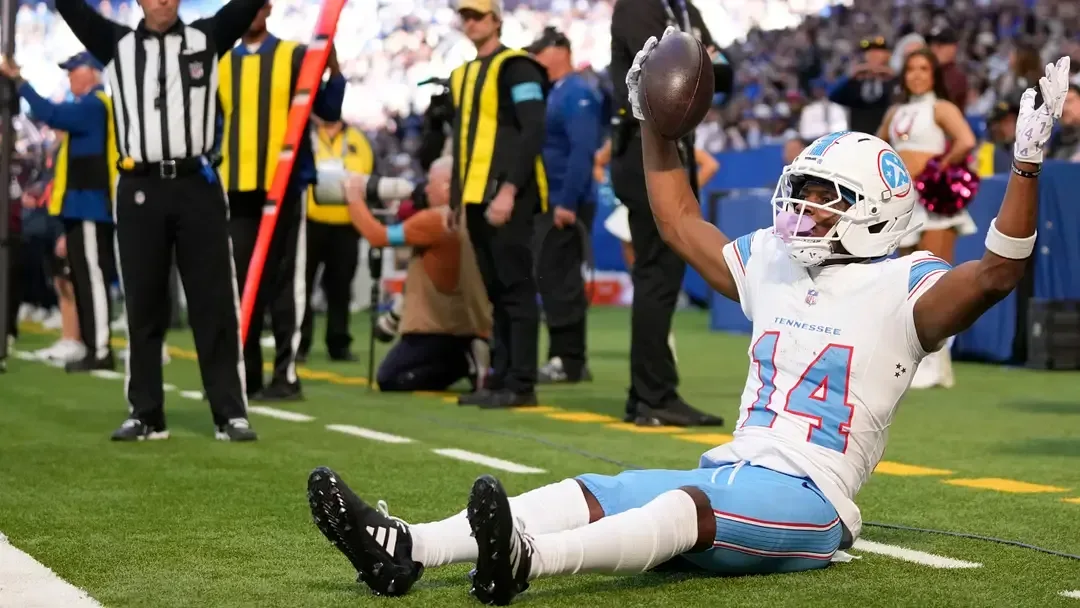
- Carnell Tate, WR, Titans
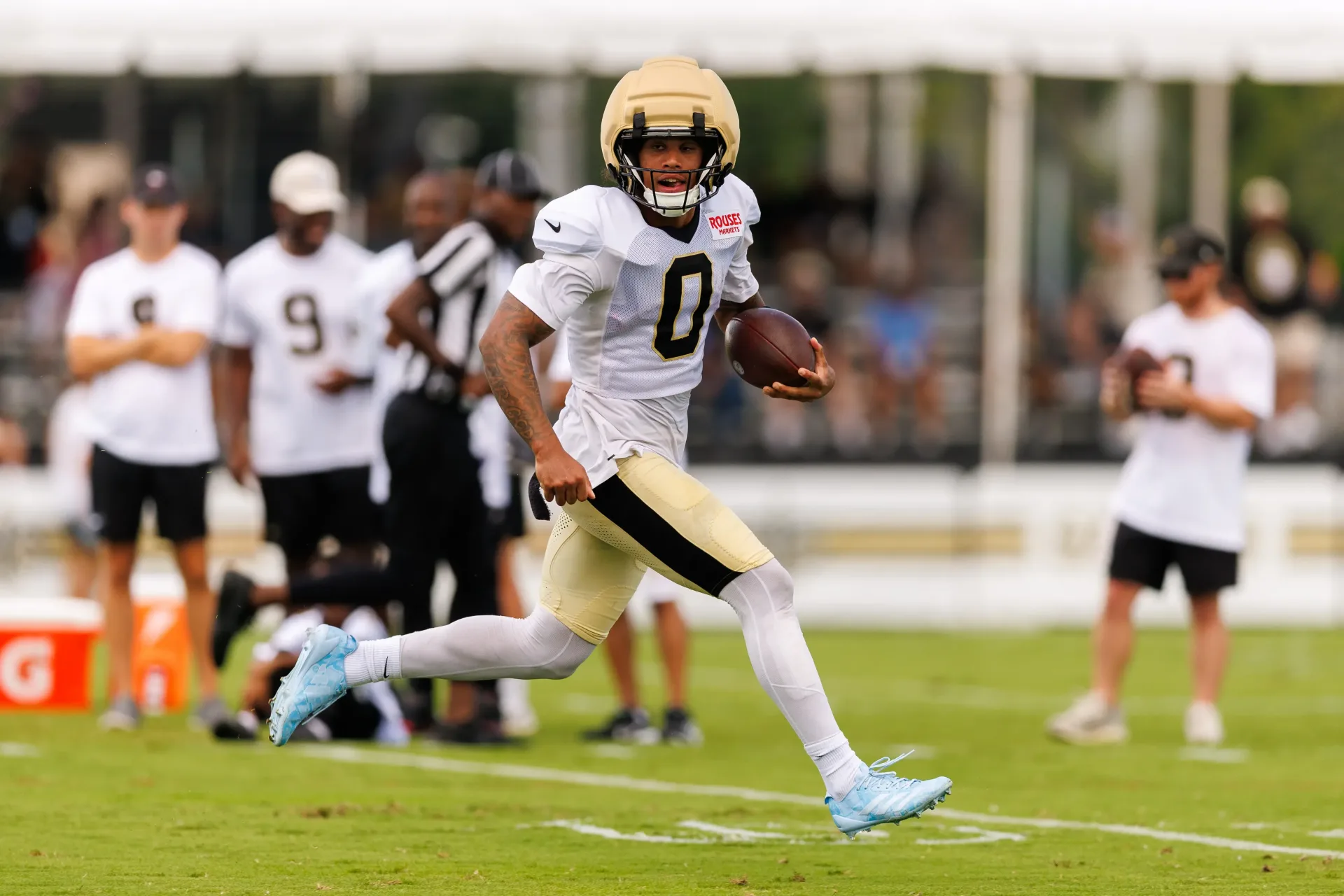
- Jordyn Tyson, WR, Saints
Mendoza continues to lead the class, even though the Raiders’ comeback victory over the Jets reduced the immediate likelihood of his first start. That is the central tension for quarterback collectors: the position generally brings immense upside, but a player who is not starting has fewer chances to create the single-game performances that drive attention.
Love and Tate have each had their ability to establish themselves as the clear No. 2 rookie behind Mendoza complicated by injuries. Tyson, meanwhile, is expected to make his season debut after missing most of the year with a hamstring injury. His return matters because it finally creates the prospect of on-field evidence in a season where availability has been a major separator.
That does not make Tyson an automatic buy, nor does it diminish the others. It simply means the tier may finally receive the real-world test it has lacked. Collectors considering any of these players should distinguish between prospect reputation and current role. The former can create interest; the latter is what can sustain it through an NFL season.
Jonah Coleman’s rise is about a clearer path to touches
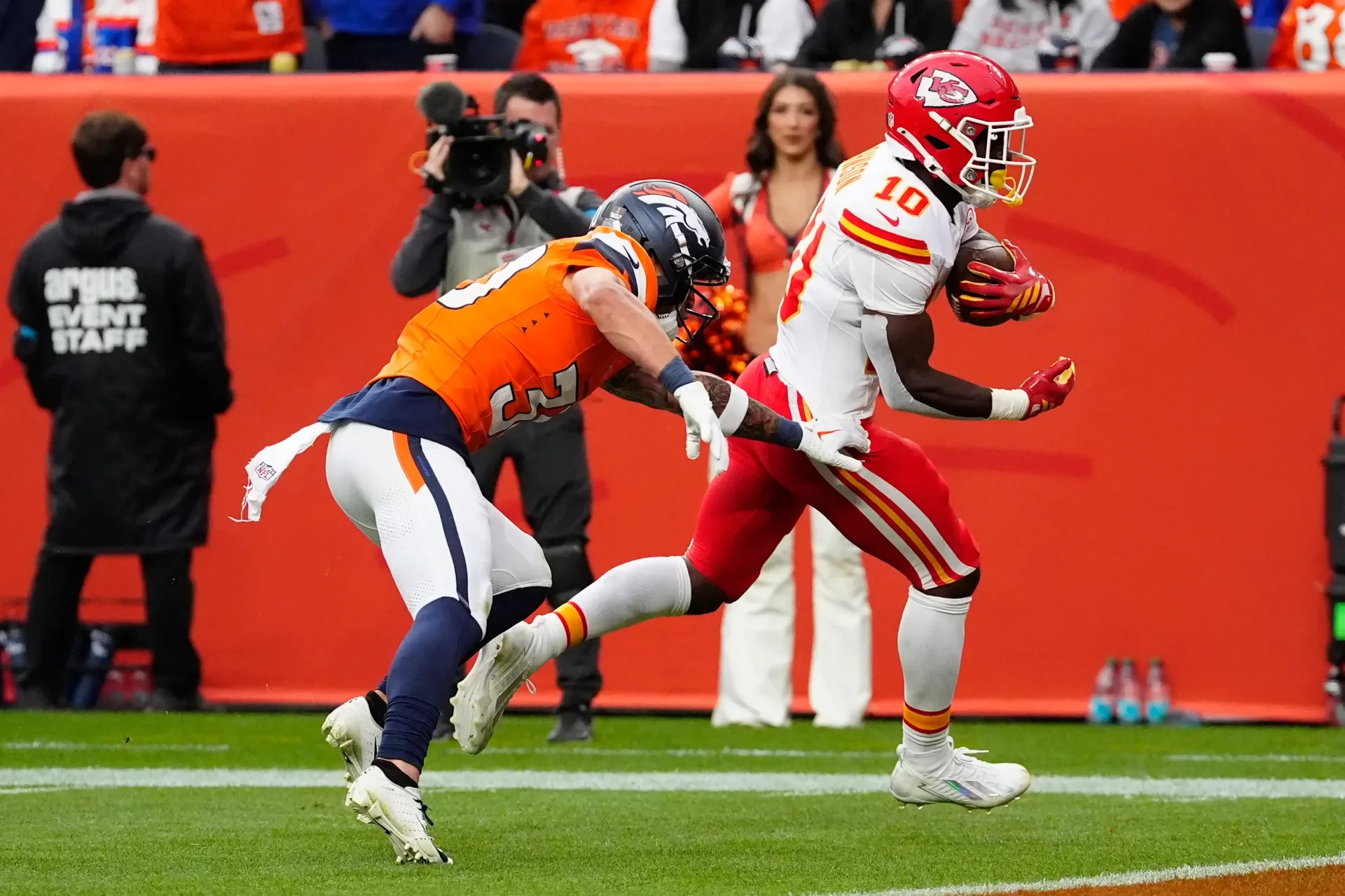
Coleman is the week’s most dramatic top-10 entrant. The Broncos back was unranked previously, then moved to No. 7 after Denver’s win over Kansas City. His raw production before this point was modest—127 total yards across six subsequent weeks—but the context is substantial. A high-ankle sprain cost him the first four games, and Denver has been looking for explosiveness in an offense that has struggled.
The larger reason to watch Coleman is workload possibility. RJ Harvey is on injured reserve for the next four weeks with a knee issue, while J.K. Dobbins has an injury history that clouds the backfield. Coleman could consequently become a featured part of the Broncos offense.
Related coverage includes NFL Rookie Card Watch After Week 8: Jonah Coleman and Mike Washington Rise.
Workload is one of the most important concepts in sports-card evaluation. It means the volume of chances a player receives: carries for a running back, targets for a receiver, or snaps and starts for a quarterback. A player can be talented and still offer little short-term hobby momentum if the opportunities are not there. Coleman does not need collectors to assume a finished breakout story; he needs them to recognize that his chances to establish one have improved.
His No. 7 position places him ahead of Seahawks running back Jadarian Price and Cardinals quarterback Carson Beck. That is a major change in emphasis. Coleman’s case is rooted in a potentially opening role now, not just long-range projection.
Carson Beck becomes the buy-low argument—and the biggest uncertainty in Tier 2
- Denzel Boston, WR, Browns
- Ty Simpson, QB, Rams
- Jonah Coleman, RB, Broncos
- Jadarian Price, RB, Seahawks
- Carson Beck, QB, Cardinals
- KC Concepcion, WR, Browns
Beck’s Week 8 story ran in the opposite direction. Arizona had an opening for meaningful quarterback snaps against Dallas, but turned to Gardner Minshew rather than the rookie when replacing Jacoby Brissett. Minshew helped deliver a win, leaving Beck’s near-term pathway especially unclear.
That uncertainty is why the idea of buying low has surfaced around Beck. In collecting language, buying low means acquiring interest in a player after sentiment has cooled, in the hope that later circumstances reverse the narrative. It is a speculative strategy, not a prediction. Beck was a third-round pick, and the 3-5 Cardinals may still turn to him later in the season, but Week 8 supplied no assurance that will happen.
A disciplined approach is to treat Beck as a role-dependent quarterback prospect rather than a player with a confirmed catalyst. A start, a sustained stretch of snaps or even a public commitment to a larger role would be a concrete reason to reassess. Until then, his ranking can swing sharply on team decisions instead of his own production.
Boston, Simpson, Price and Concepcion remain steadier names in this band. Their unchanged or nearly unchanged placement is meaningful in a volatile class: standing still can be preferable to falling when newer names make noise.
Mike Washington’s 25 carries create the Week 8 backfield puzzle
- Omar Cooper, WR, Jets
- Makai Lemon, WR, Eagles
- Germie Bernard, WR, Steelers
- Kenyon Sadiq, TE, Jets
- Mike Washington, RB, Raiders
Washington’s first appearance on the list comes after he received 25 carries in the Raiders’ win over the Jets. That is a notable development because Ashton Jeanty, a 2025 top-10 selection, was used primarily as the pass-catching option. Washington, a 2026 fourth-rounder, had previously been blocked by Jeanty on the depth chart despite showing explosiveness in the preseason and recording multiple rushes of at least 20 yards early in his career.
One game cannot prove that a split will last. It can, however, establish the correct question for the next several weeks: was this a situational anomaly, or has Washington earned a meaningful early-down role? The answer changes his card outlook considerably. Running backs can gain attention quickly when carries arrive, but that attention can fade just as fast if the workload disappears.
Washington is therefore a classic speculative option. That label does not mean he lacks ability. It means the available evidence points to an attractive possibility rather than a secure conclusion. Collectors should watch carry distribution, pass-game usage and whether the Raiders repeat the division of labor with Jeanty before treating Week 8 as a permanent breakthrough.
The rest of this tier illustrates why stability matters. Cooper followed two excellent weeks with a zero-target game, even as the Jets and Raiders combined for 71 points. Lemon has received more work while DeVonta Smith and Dontayvion Wicks are injured, but Philadelphia has lost six straight and could move multiple pieces. Bernard has become a useful Steelers receiver, though his environment may limit the huge statistical games that often turn casual interest into hobby urgency. Sadiq slips to No. 14 after being No. 11 a week earlier.
The watch list is shaped by blocked paths and injury-created targets
- Kaelon Black, RB, 49ers
- Emmett Johnson, RB, Chiefs
- De'Zhaun Stribling, WR, 49ers
- Ja'Kobi Lane, WR, Ravens
- Antonio Williams, WR, Commanders
Emmett Johnson joins the rankings at No. 17 after scoring against Denver. He was arguably more spectacular than Coleman in that AFC West matchup, but Kenneth Walker remains a major obstacle to a larger role. That distinction is important: highlight plays can spark collector interest, while depth-chart reality determines whether it has room to develop.
Lane drops to No. 19 as Lamar Jackson’s potentially season-ending injury damages the outlook around Baltimore’s offense. Williams, on the other hand, debuts at No. 20 with a concrete reason to track his target share. Terry McLaurin is out for the season with a knee injury, and Williams has collected 11 targets across the last two weeks as that absence has taken effect.
Targets are passes thrown toward a receiver. They do not guarantee catches or production, but they are a valuable indicator of involvement because a receiver cannot create receiving statistics without the ball coming his way. Williams’ recent total is not a promise of sustained volume; it is a sensible reason to check whether Washington continues to feature him.
Black and Stribling maintain their spots for San Francisco, while this entire bottom tier should be viewed as a monitoring list rather than a mandate to chase every rookie card. Collectors who want a wider read on how comics and card-adjacent collecting conversations overlap can also see our coverage of Miracleman’s new Avengers role.
What Week 8 means for NFL card collectors
- Separate performance from role. Coleman and Washington moved because their opportunities changed, not merely because of a single box score.
- Do not confuse a debut with confirmation. Washington’s 25 carries and Johnson’s touchdown warrant attention; neither alone confirms a season-long role.
- Account for injuries in both directions. Tyson’s return may finally let him demonstrate value, while injuries around other teams can either open targets or weaken an offense overall.
- Be careful with quarterback speculation. Beck’s situation shows why a highly interesting prospect can remain difficult to evaluate without starts or meaningful snaps.
- Think beyond grading. Grading is a third-party assessment of a card’s physical condition. It can matter greatly for scarce or premium cards, but it cannot create demand if a player’s on-field case has not developed.
The 2026 rookie hierarchy remains led by Mendoza, but Week 8 supplied the season’s clearest evidence that the middle of the board is in motion. Coleman has a plausible opening to claim more of Denver’s backfield. Washington has forced a closer look at Las Vegas’ running-back split. Williams is seeing targets after a major injury in Washington. Each is worth tracking—but each still needs the next few weeks to turn opportunity into a sturdier collecting case.