The 2026 NFL rookie-card picture is beginning to separate into clearer tiers. With Topps Chrome 2026 nearing release, collectors have more than preseason expectations to work with: early production, changing depth charts, injuries and potential opportunities are creating a more useful—if still highly volatile—map of the class.
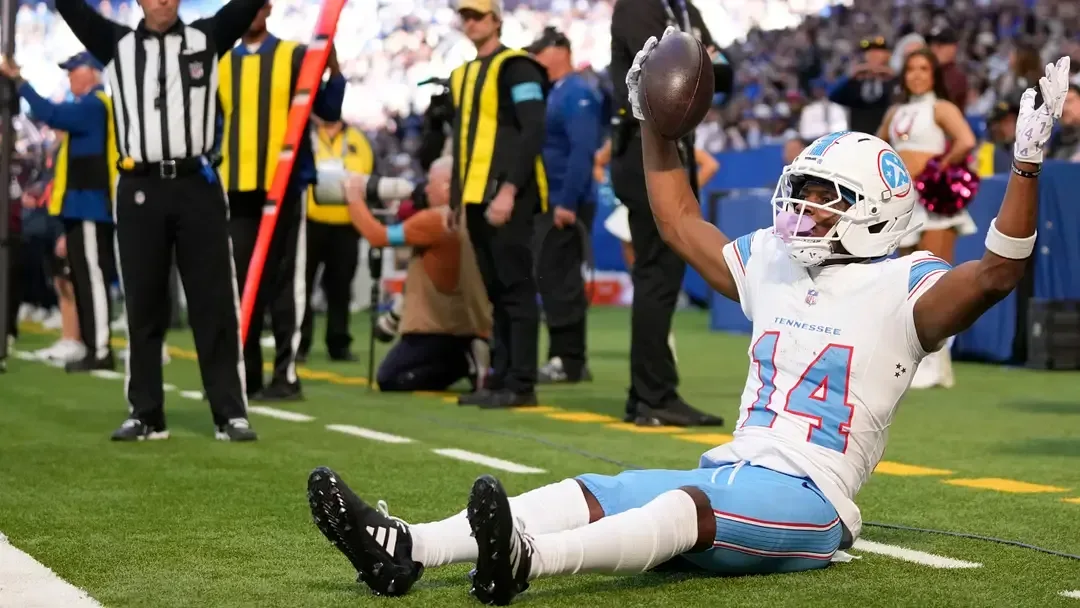
Quarterback Fernando Mendoza and running back Jeremiyah Love retain the first two places in this Week 6 watch, but the week’s most meaningful movement comes from Tennessee receiver Carnell Tate. He rises from No. 4 to No. 3 after building a four-game body of work that suggests he can command a meaningful role even within a struggling offense. Elsewhere, Germie Bernard and Omar Cooper enter the top 20, while David Bailey joins as the defensive exception in a ranking overwhelmingly shaped by offensive skill players.
These rankings should be read as a snapshot of collecting interest rather than a guarantee of future card values. In a rookie market, a player’s on-field ability matters, but so do visibility, position, team context, injuries ahead of him and the prospect of a larger role. That makes the lower half especially speculative—and makes it important to distinguish an established early contributor from a player who has simply been handed an opening.
Week 6 rookie-card ranking
- Fernando Mendoza, QB, Raiders (No. 1 last week)
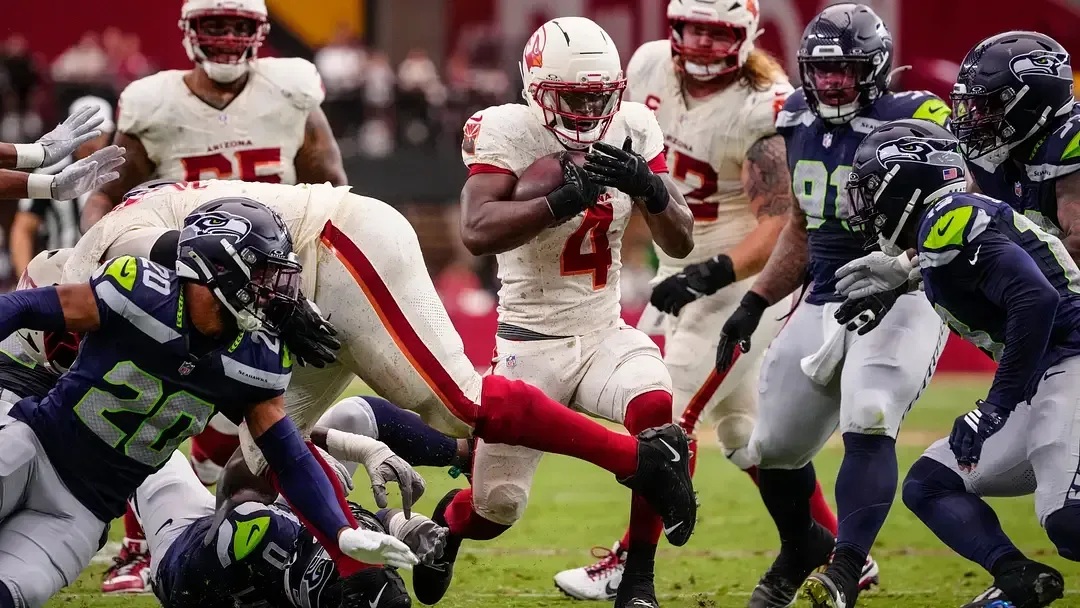
- Jeremiyah Love, RB, Cardinals (No. 2)
- Carnell Tate, WR, Titans (No. 4)
- Jordyn Tyson, WR, Saints (No. 3)
- Denzel Boston, WR, Browns (No. 5)
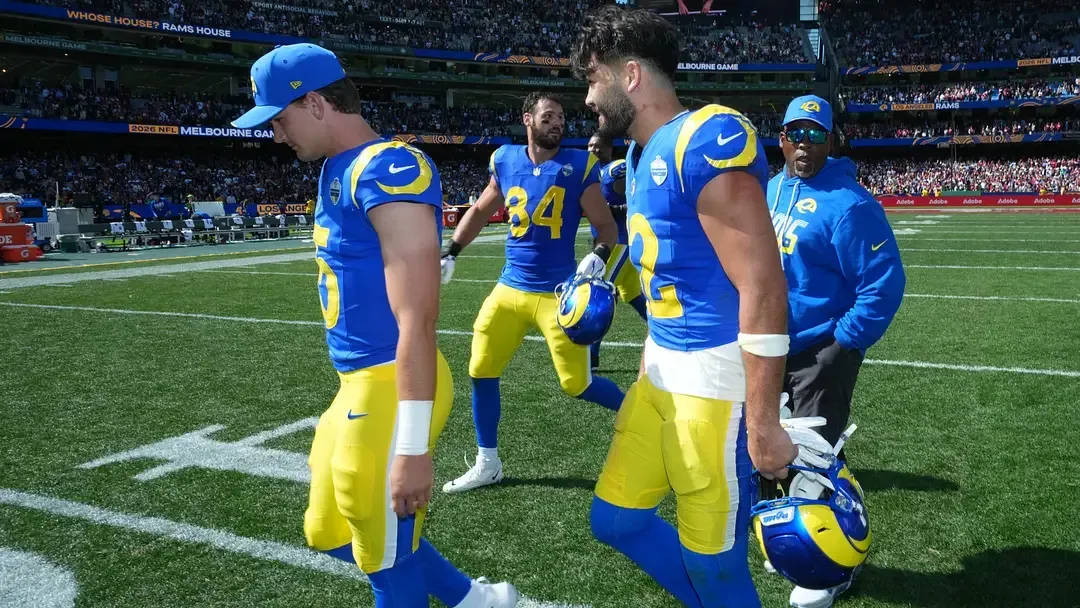
- Ty Simpson, QB, Rams (No. 6)
- Jadarian Price, RB, Seahawks (No. 8)
- Carson Beck, QB, Cardinals (No. 9)
- Kenyon Sadiq, TE, Jets (No. 7)
- Makai Lemon, WR, Eagles (No. 10)
- KC Concepcion, WR, Browns (No. 11)
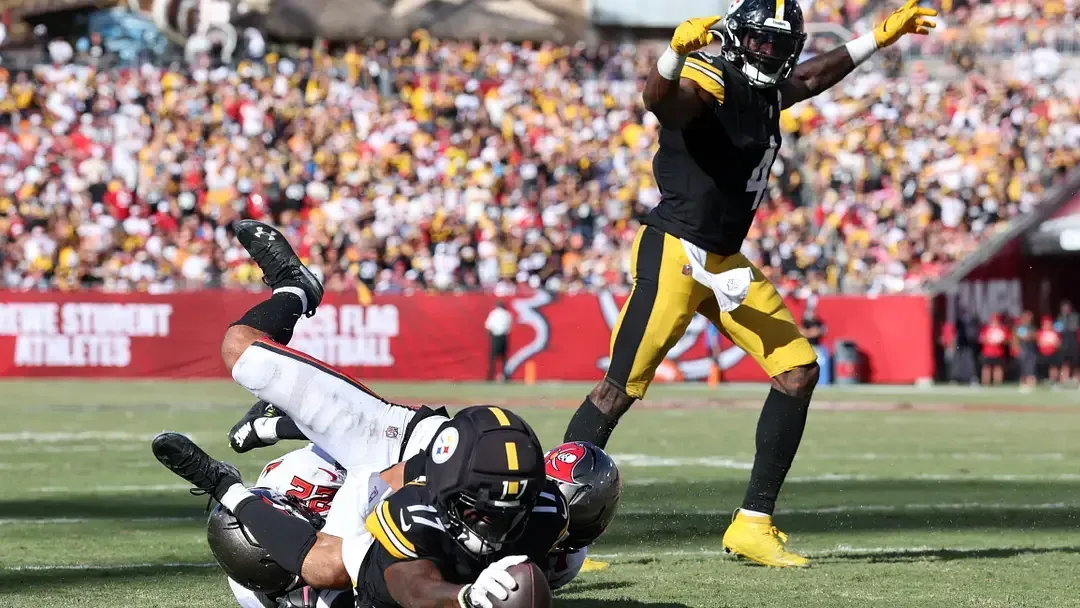
- Germie Bernard, WR, Steelers (unranked)
- Omar Cooper, WR, Jets (unranked)
- Ja’Kobi Lane, WR, Ravens (No. 19)
- Ted Hurst, WR, Buccaneers (No. 12)
- Kaelon Black, RB, 49ers (No. 14)
- De’Zhaun Stribling, WR, 49ers (No. 15)
- David Bailey, DE, Jets (unranked)
- Jalon Daniels, QB, Buccaneers (No. 13)
- Mansoor Delane, CB, Chiefs (No. 16)
Tier 1: the names with the strongest current footing
Fernando Mendoza and Jeremiyah Love hold steady
Mendoza’s hold on the top spot gives the Raiders quarterback the clearest position in the class at this stage of the season. Love remains directly behind him at No. 2. The stability at the summit matters: while several names have moved in the middle and lower portions of the list, the leading pair has not been displaced.
For collectors, positional scarcity helps explain why quarterbacks tend to draw attention. A quarterback can become the visual and commercial focal point of a franchise quickly, particularly when playing time and team belief align. That does not mean every quarterback card is automatically safer than every other card; it means the position has a different upside profile from a receiver or defender. Mendoza’s No. 1 position reflects that broader hierarchy as well as his standing within this rookie group.
Carnell Tate makes the case for No. 3
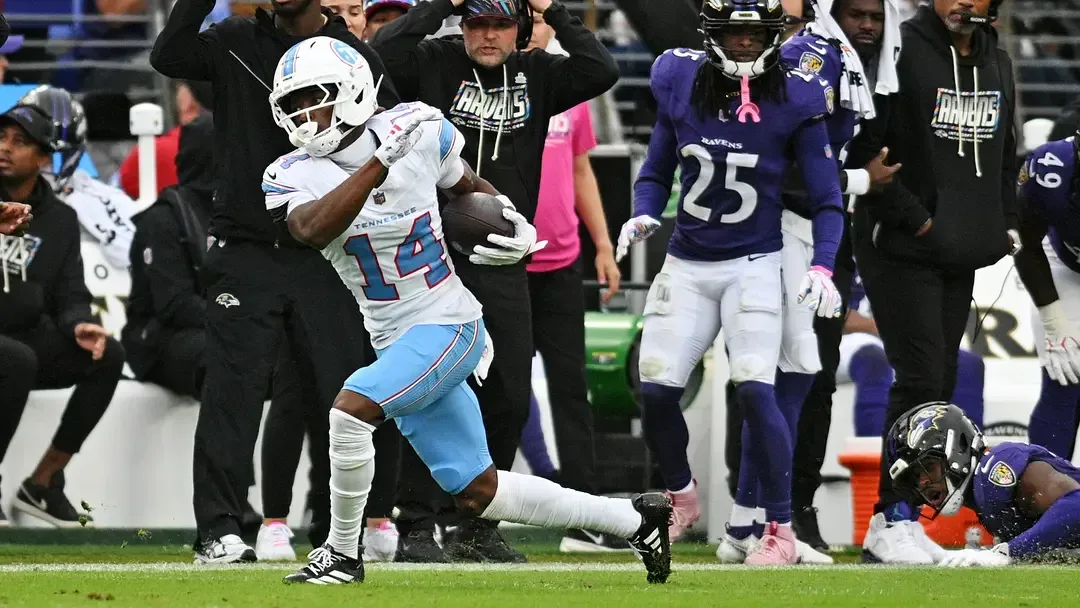
Tate is the clearest riser among the upper tier. The Titans receiver has caught 21 passes for 273 yards and one touchdown across the past four weeks, with the Week 5 meeting with Houston standing out as the difficult matchup in that span. The production is notable because Tennessee’s offense has not created ideal conditions. When a young receiver continues to produce despite that context, it can strengthen the perception that his output is tied to his own development rather than only to a favorable system.
The useful phrase here is alpha receiver: a player who operates as the leading wideout and consistently draws opportunities in an offense. Tate’s recent trajectory suggests he is growing toward that role. It is still early to treat that as a permanent label, but the combination of receptions, yardage and touchdown production makes a stronger collecting case than a single explosive game would.
Tate’s rise also arrives while Jordyn Tyson remains unavailable. Tyson, the Saints’ top-10 pick, has not played in the regular season after a preseason hamstring injury and is not expected to debut until Week 9. The injury carries extra uncertainty because Tyson also missed multiple college games last year with a similar issue. His No. 4 rank preserves the importance of his pre-draft profile, but it also shows the divide between pedigree and current contribution.
Related coverage includes NFL Rookie Card Report, Week 6: Carnell Tate Rises as New Names Break Into the Top 20.
For a collector deciding between the two, the practical difference is straightforward. Tate offers a growing sample of NFL production now. Tyson represents a higher-uncertainty bet on a player yet to establish his pro role. Neither route is inherently wrong, but they are different kinds of decision.
Tier 2: stable top-10 names, waiting for a catalyst
Places five through 10 remain unchanged at the top end, despite slight movement for Price and Beck. Denzel Boston stays No. 5, Rams quarterback Ty Simpson remains No. 6, Seattle running back Jadarian Price rises one spot to No. 7, Cardinals quarterback Carson Beck rises to No. 8, Jets tight end Kenyon Sadiq falls to No. 9 and Eagles receiver Makai Lemon holds No. 10.
The lack of a newcomer in the top 10 for a second straight week is a signal that the early hierarchy is settling. It is not permanent. A rookie receiver can change his standing quickly with an expanded role, and a quarterback’s trajectory can turn on a single personnel decision. But a rank that survives a quiet week is often more meaningful than a rank inflated by a short burst of attention.
Beck is the most obvious example of opportunity still waiting in the background. Arizona’s win over the Rams reduces immediate pressure for a change at quarterback, but Beck is still viewed as a candidate to become the second rookie signal-caller to start during the 2026 season. That possibility explains why he remains in the top 10 despite not yet having that starting opportunity.
This is a useful distinction for card buyers: speculation is not the same as production. Speculation means a card is being considered partly because of a plausible future event—such as a starting job—rather than a fully established track record. Beck’s ranking acknowledges the potential, but the uncertainty around when or whether that opportunity comes should remain part of any buying decision.
Sadiq’s slide from No. 7 to No. 9 is modest, not a collapse. He has shown flashes for the Jets, but those moments have not become a consistent run. Lemon’s No. 10 hold and Boston’s No. 5 stability underline the importance of avoiding overreaction: weekly lists are designed to register change, but not every one- or two-place move signals a radically different outlook.
Tier 3: Bernard and Cooper turn opportunity into movement
The largest reshuffle takes place in the speculative group. Bernard debuts at No. 12 and Cooper at No. 13, joining a receiver-heavy section that also includes KC Concepcion, Ja’Kobi Lane and Ted Hurst.
Bernard’s immediate case is built on recent usage. The Steelers receiver has 17 catches for 167 yards and a touchdown over the last two weeks. His opening is connected to injuries to Michael Pittman, who has a foot issue, and Roman Wilson, who has a finger injury; neither is expected back before mid-November. That context should not be ignored. Increased targets caused by absences can shrink when the depth chart returns to normal.
At the same time, a rookie still must make use of the targets he receives. Bernard has done enough in the short term to make the climb from unranked to No. 12 credible. His connection with Aaron Rodgers is another variable worth monitoring, since rookie receiver trust can shape weekly opportunity. The recent volume provides a reason for attention; the longer-term question is whether he keeps a role once the Steelers are healthier.
Cooper’s debut at No. 13 follows an especially eye-catching return. Back from a four-game absence caused by an ankle sprain, the Jets’ first-round receiver posted six catches for 103 yards and a touchdown. A stat line written as 6-103-1 is shorthand for six receptions, 103 receiving yards and one touchdown. It condenses a performance, but it should not erase the missed time that preceded it.
The Jets have a clear need for another receiver to emerge alongside Garrett Wilson. Sadiq has had early moments, though not sustained ones, and Cooper’s return offers a new possibility. New York’s accumulation of three first-round selections this year and three more projected next year also feeds attention around the franchise. Conversation and hype can influence a player’s visibility in the hobby, even before the on-field picture is complete.
Concepcion remains at No. 11, Lane makes the strongest rise among the returning names by going from No. 19 to No. 14, and Hurst falls from No. 12 to No. 15. The lesson from this range is not that every card should be chased after a good week. It is that collectors should identify why a player moved: enduring skill, a new role, a temporary injury opening, draft status or simply renewed attention.
Tier 4: useful watch-list names, not automatic buys
The final five positions are Kaelon Black, De’Zhaun Stribling, David Bailey, Jalon Daniels and Mansoor Delane. Black slips from No. 14 to No. 16, Stribling from No. 15 to No. 17, Daniels from No. 13 to No. 19 and Delane from No. 16 to No. 20. Bailey is the new entrant at No. 18.
Bailey is the outlier by position: he is a defensive end, or pass rusher, rather than an offensive player. His improving Defensive Rookie of the Year odds have increased his relevance. Defensive award momentum can generate collecting interest because it creates an easy narrative around a player, even though defenders generally do not command the same automatic hobby focus as quarterbacks, running backs and receivers.
That limitation is important. Bailey’s inclusion does not imply that his market will mirror every past Defensive Rookie of the Year winner, particularly in a rookie class described as weak overall. Rather, he has done enough to qualify as one of the class’s more valuable rookies to collect right now. Collectors considering defensive cards should recognize the difference between an award-driven interest spike and the more durable attention that can accompany offensive stardom.
The 49ers’ Black and Stribling are also worth monitoring because the same team can have multiple rookie-card angles. The same applies higher in the ranking with the Browns, Cardinals, Jets and Buccaneers each placing at least two rookies in the top 20. For people considering team-oriented breaks in an upcoming product, that concentration can make certain teams more appealing—but it also means the value proposition depends on which players actually appear in the product and which card formats are pulled.
A team break is a group purchase format in which a participant buys rights to cards from one team in a shared box or case opening. It can offer a focused way to chase a club with several desirable rookies, but it concentrates risk too: an attractive roster does not guarantee a hit. The right approach is to treat a team’s multiple ranked rookies as a reason to research its checklist and break terms, not as a promise of a return.
What to track before Topps Chrome arrives
- Tate’s target share and scoring chances: His four-week production has moved him into the top three. Continued involvement in Tennessee’s offense would make that rise more durable.
- Tyson’s Week 9 outlook: His eventual debut will provide the first meaningful NFL evidence after a preseason hamstring injury and missed regular-season time.
- Beck’s path to a start: His value proposition is closely tied to a potential role change in Arizona.
- Whether Bernard retains work when teammates return: His recent output is real, but its context is inseparable from Pittsburgh’s injuries at receiver.
- Cooper’s health and follow-up: One strong game after an ankle injury gets attention; repeat production is what can turn that attention into firmer standing.
- Bailey’s award momentum: His position makes him a different kind of rookie-card play, with Defensive Rookie of the Year discussion serving as the key driver.
For more hobby-adjacent reading beyond football, Joking Joystick’s trading-card coverage also follows how new releases and collector interest can shape attention around physical media.