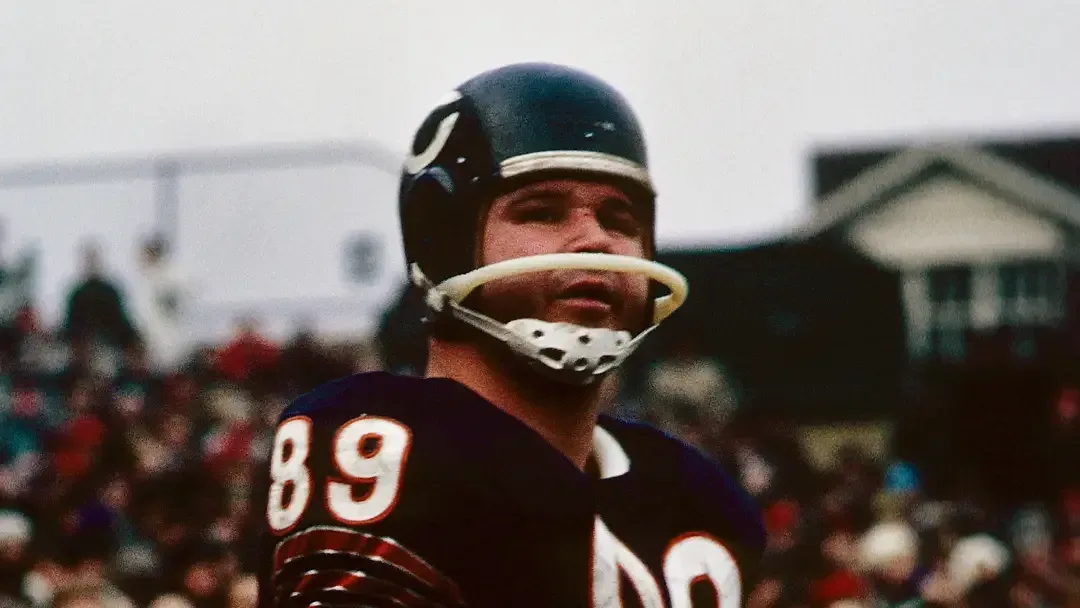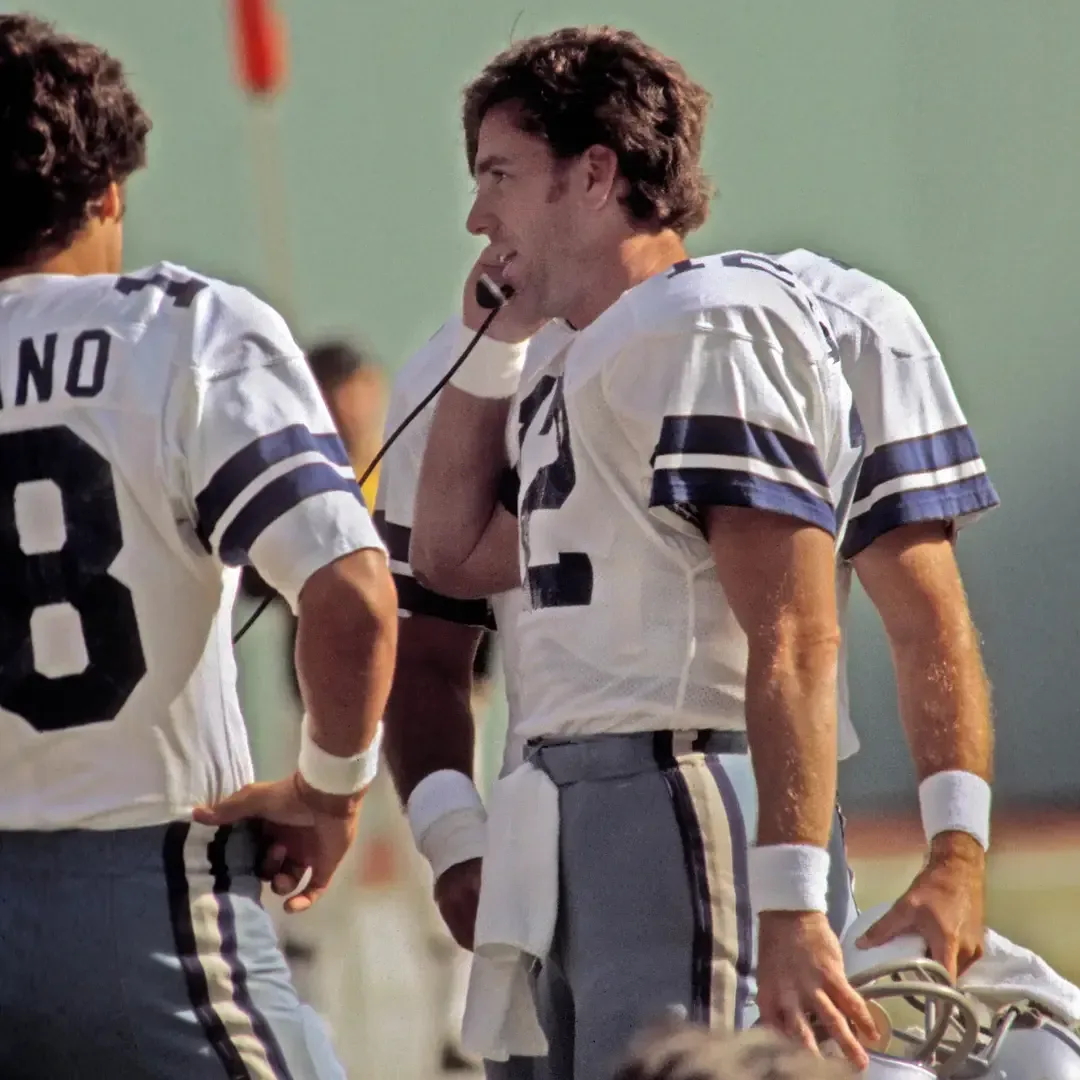
Reports that Mike Ditka has died at 86 have prompted a fresh look at the memorabilia attached to one of football’s most recognizable figures. Ditka’s legacy stretches across several versions of the sport: first-round draft pick, Bears tight end, later player for Philadelphia and Dallas, Super Bowl-winning Bears coach, broadcaster and pop-culture fixture. For card collectors, though, the relevant checklist is remarkably compact.
Ditka played in an era when football cards did not arrive with the predictable annual abundance familiar to modern collectors. Baseball dominated the card market, while football releases could be scarce and inconsistent from year to year. That limited early Topps run helps make Ditka’s foundational cards compelling, particularly when they survive in exceptional condition.
The three cards below are distinct issues rather than a list of repeated sales of the same card. They also show how vintage-card value is shaped by more than a player’s fame. Rookie status, grade, scarcity at the top of the grading scale, visual appeal and the story behind the player’s career all matter. The enormous separation between the top two prices is a useful reminder that a card’s year alone does not determine its market standing.
1. 1962 Topps #17: Ditka’s defining rookie card
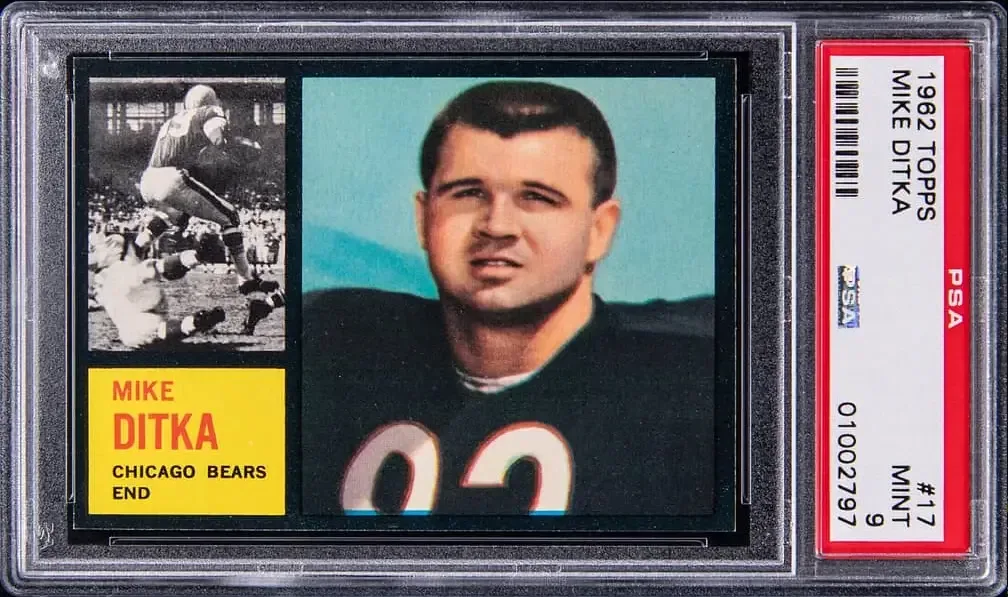
Mike Ditka’s 1962 Topps #17 is the clear centerpiece of his playing-day card catalog. The design combines a portrait of a young Ditka with a smaller action image positioned above his name. The action photograph is generally understood to be from his time at Pittsburgh, where he played for three years before entering pro football.
For more context, explore Dodgers and Vans Bring Sk8-Hi and Skate Era Sneakers to WSS in Blue-and-White Collection.
That college image gives the card an unusual historical breadth. It is a professional rookie card, but it visually connects Ditka’s college career to the NFL path that began in 1961. He had been selected in the first round of both the AFL and NFL drafts, ultimately signing with the Chicago Bears.
One PSA Mint 9 example sold for $207,525.66 at auction on June 21, 2025. The grade is central to understanding that result. A PSA 9, designated Mint, is an exceptionally strong condition assessment for a card printed in the early 1960s. Corners, surface, centering and print quality are all among the factors that can separate one vintage copy from another. A card can remain attractive decades later without being close to Mint; surviving at this level is a different proposition.
PSA’s certification data lists just four copies of the 1962 Topps #17 at PSA 9 and none graded higher. In grading language, that is a population report: a count of cards a grading company has evaluated at each grade. It is helpful context, but it should not be confused with a count of every copy that exists. It describes graded submissions, not every card still tucked away in a collection or left unsubmitted.
The sale demonstrates why collectors should be precise when discussing “the value” of a vintage rookie. The six-figure result belongs to a highly specific card: a 1962 Ditka rookie with an elite grade and a top-population standing. It does not mean every #17 is priced remotely near that level.
2. 1963 Topps #62: A major second-tier vintage target
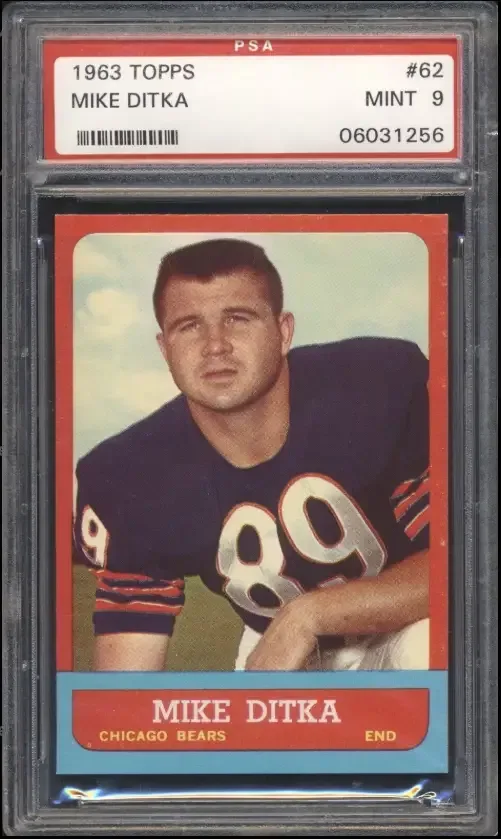
Ditka’s 1963 Topps #62 is his third-year card and the second-highest individual card sale among the three highlighted issues. Like the rookie, it uses a portrait-focused image, though the framing reveals more of Ditka’s uniform and lower body than the 1962 design.
By the release of the 1963 set, Ditka had already made two Pro Bowls and was on the way to the first of his two All-Pro selections. That playing context matters to collectors. It is not a rookie card, so it lacks the category-defining status of #17, but it documents a player who was already establishing himself as a major tight end.
A PSA 9 copy sold for $5,433 on June 26, 2025. A subsequent market estimate placed that particular card’s value at $10,740, though estimates are not completed sales and should be treated differently. An auction result is a record of what a buyer paid at one moment; a valuation is an analytical benchmark that may change as new transactions emerge.
That distinction is especially practical for collectors considering vintage cards. A headline sale can be a useful comparable, but buyers should compare grade first. The difference between a PSA 9 and a lower-grade example can be dramatic, especially for an old card with limited high-grade survivors. It is also wise to compare the exact issue rather than assume that a player’s rookie-card trend moves every later card in lockstep.
3. 1966 Topps #32: A transitional card with a uniform wrinkle
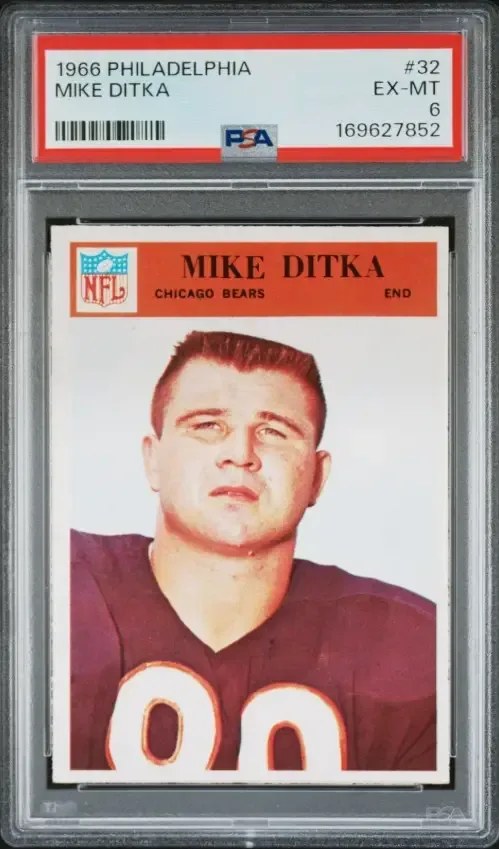
The 1966 Topps #32 is a different kind of Ditka collectible: less expensive at its documented peak, but full of career-transition intrigue. The card shows Ditka in Bears gear without a helmet and identifies Chicago on the card itself. Yet a PSA label associated with an example of the card identifies Philadelphia.
The apparent conflict has a sensible timeline behind it. The 1966 season was Ditka’s final one with Chicago before he was traded to the Eagles. Card production and player movement do not always align cleanly, so a checklist or label can reflect a destination while the available photograph still shows a player with his previous team. The provided evidence does not establish precisely when the set’s photography, checklist decisions or release occurred, so collectors should resist turning that possibility into a firm production narrative. What is clear is that the card preserves a visually Chicago-centered image at the edge of a move to Philadelphia.
The highest reported sale for the 1966 Topps #32 was $3,837, achieved on March 24, 2019. The reported current value is $2,275. As with the 1963 card, those are different kinds of data points: one is a historic auction result, while the other is a present-oriented estimate. They should not be read as proof that every copy has fallen by the same amount, particularly without matching grade, eye appeal and sale circumstances.
For collectors who enjoy cards that reflect roster changes and production oddities, #32 offers an angle the rookie cannot. Its appeal is not simply that it is old. It captures Ditka in a Bears uniform while sitting beside a career change, making it a useful companion piece for someone building a player-focused run rather than chasing only his most expensive card.
Why grade dominates these results
The three-card comparison makes the condition premium easy to see. Ditka’s 1962 rookie in PSA 9 sold for more than $207,000, while the reported peak sale for the 1963 Topps card in the same stated PSA 9 grade was $5,433. Rookie status accounts for much of that gulf. But the condition context remains crucial: both figures concern unusually high-grade vintage cards, not average survivors.
For a collector, grading is the third-party assessment and encapsulation of a card. The numerical grade offers a common language for buyers and sellers, but it does not erase the importance of the card itself. Two cards at the same numeric grade can present differently because of centering, photograph registration, surface appearance or how a specific buyer weighs those traits. With cards from the 1960s, those visual details can be as important emotionally as they are financially.
There is also a practical lesson in the phrase “none graded higher.” It signals scarcity at the summit of the grading census, but it does not make a card automatically a bargain or a guaranteed investment. A population report can change if more copies are submitted. Demand can change too. The strongest use of population information is as one part of a larger evaluation that includes a card’s exact version, grade, authenticity, recent comparable sales and personal collecting goals.
A player legacy that reaches beyond the checklist
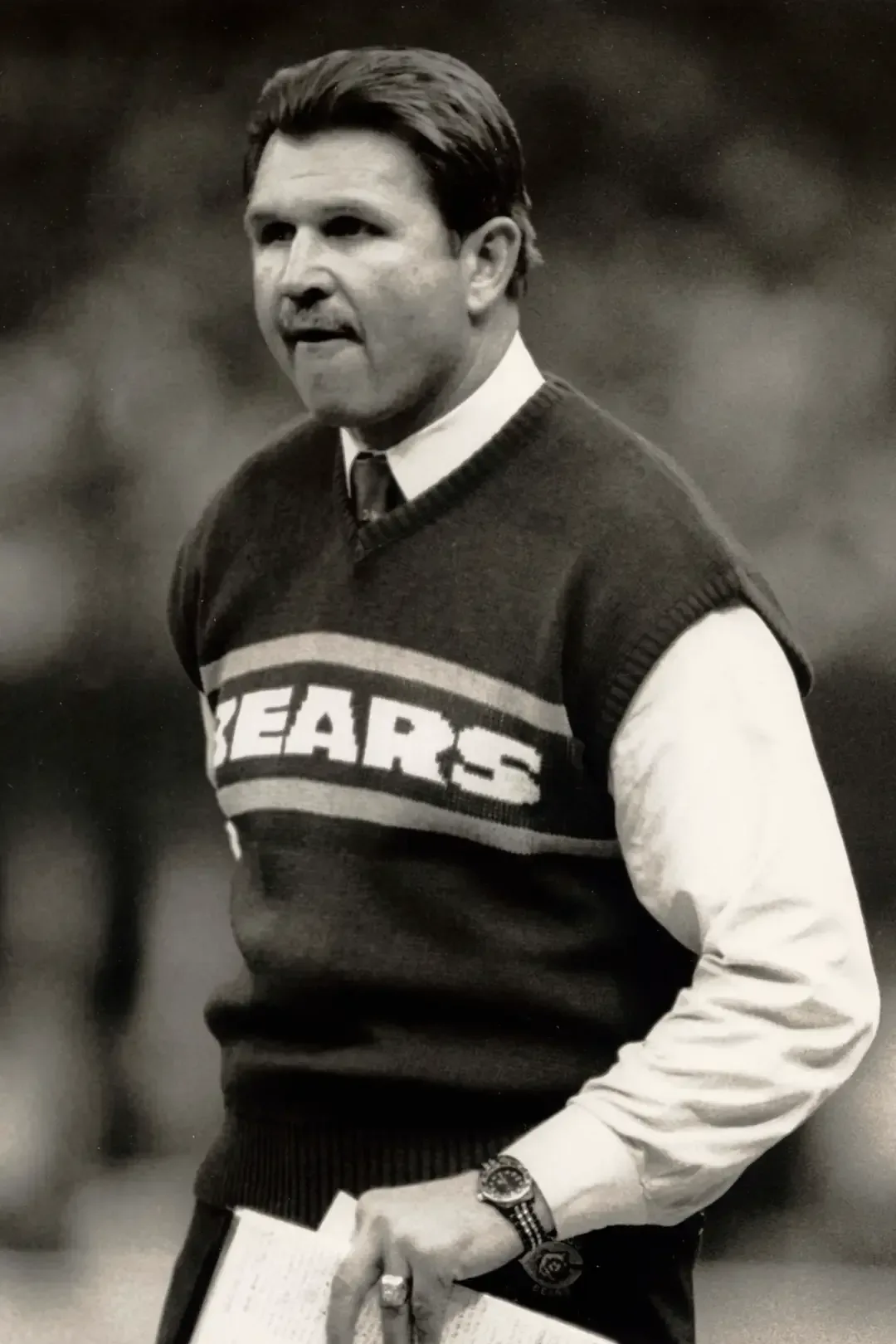
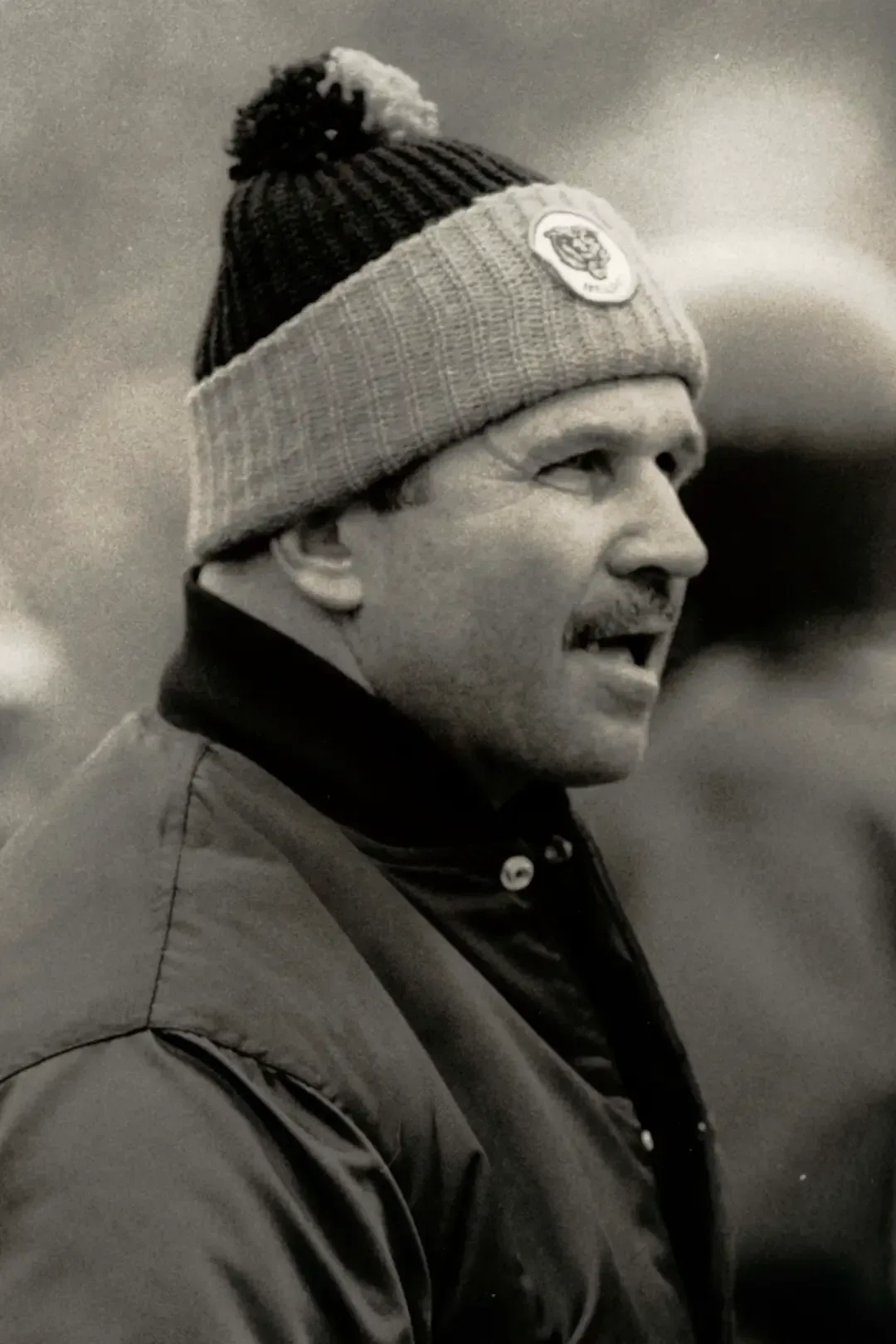
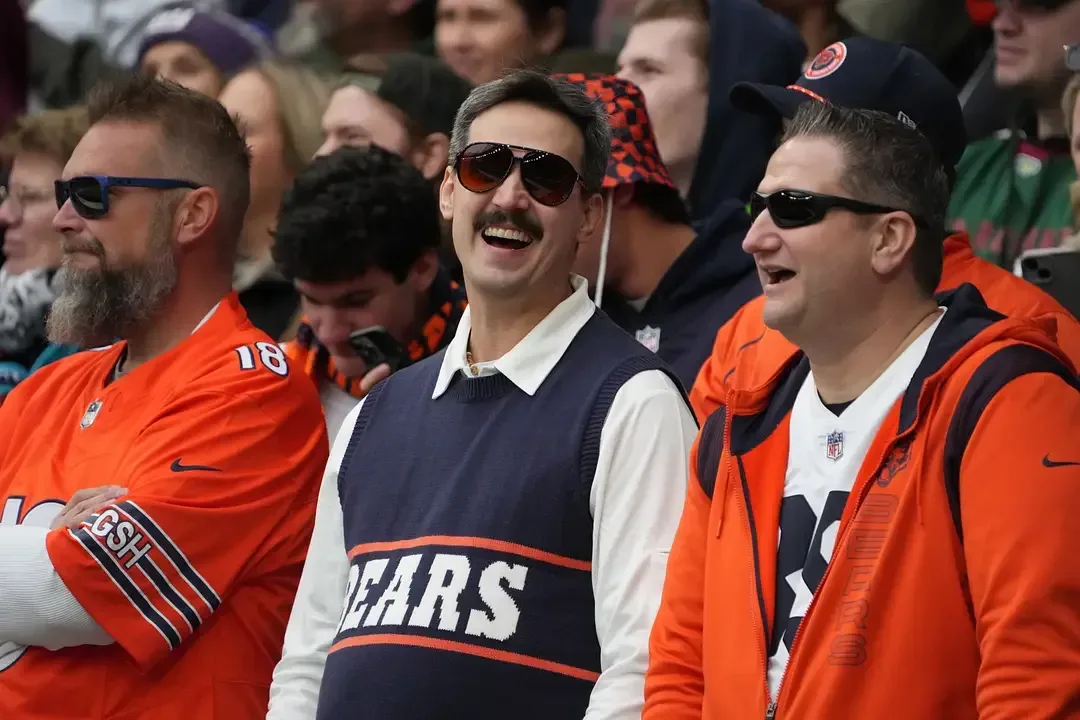
Ditka’s cards carry more cultural weight than many vintage player issues because his public identity never stopped at his playing career. He went from tight end to coach, leading the Bears to their Super Bowl XX win over New England, 46–10. His mustache and knit sweater became lasting Bears imagery, while the “Da Bears” sketches made him familiar beyond the weekly football audience. He later appeared as himself in Kicking and Screaming and worked as a national NFL commentator.
That wide recognition helps explain why his core cards can appeal to more than dedicated vintage football specialists. A Ditka collection can be a Chicago Bears collection, a tight-end history collection, a coaching-legacy collection or simply a record of an unmistakable sports personality. The 1962, 1963 and 1966 Topps cards each meet a different part of that brief: the rookie foundation, the established young star and the player in transition.
For anyone approaching these cards now, the most grounded route is to begin with the exact card number and condition—not the biggest sale headline. Verify the issue, inspect the team and image details, understand whether a quoted figure is a realized auction price or an estimate, and remember what a population count can and cannot tell you. The 1962 Topps #17 may be the trophy, but #62 and #32 give the Ditka checklist depth and tell a fuller story of the player behind the legend.