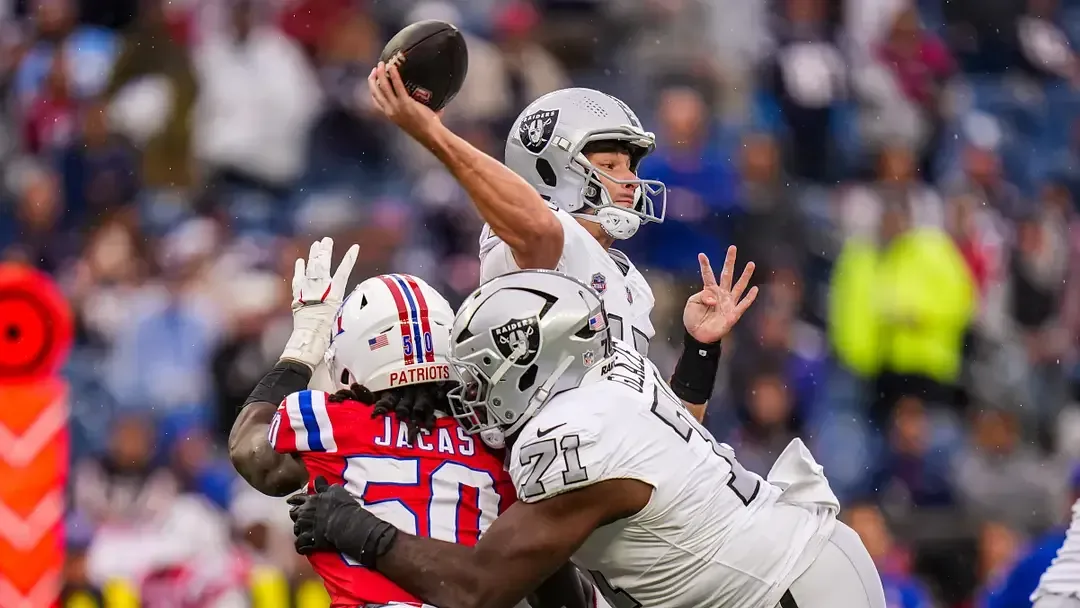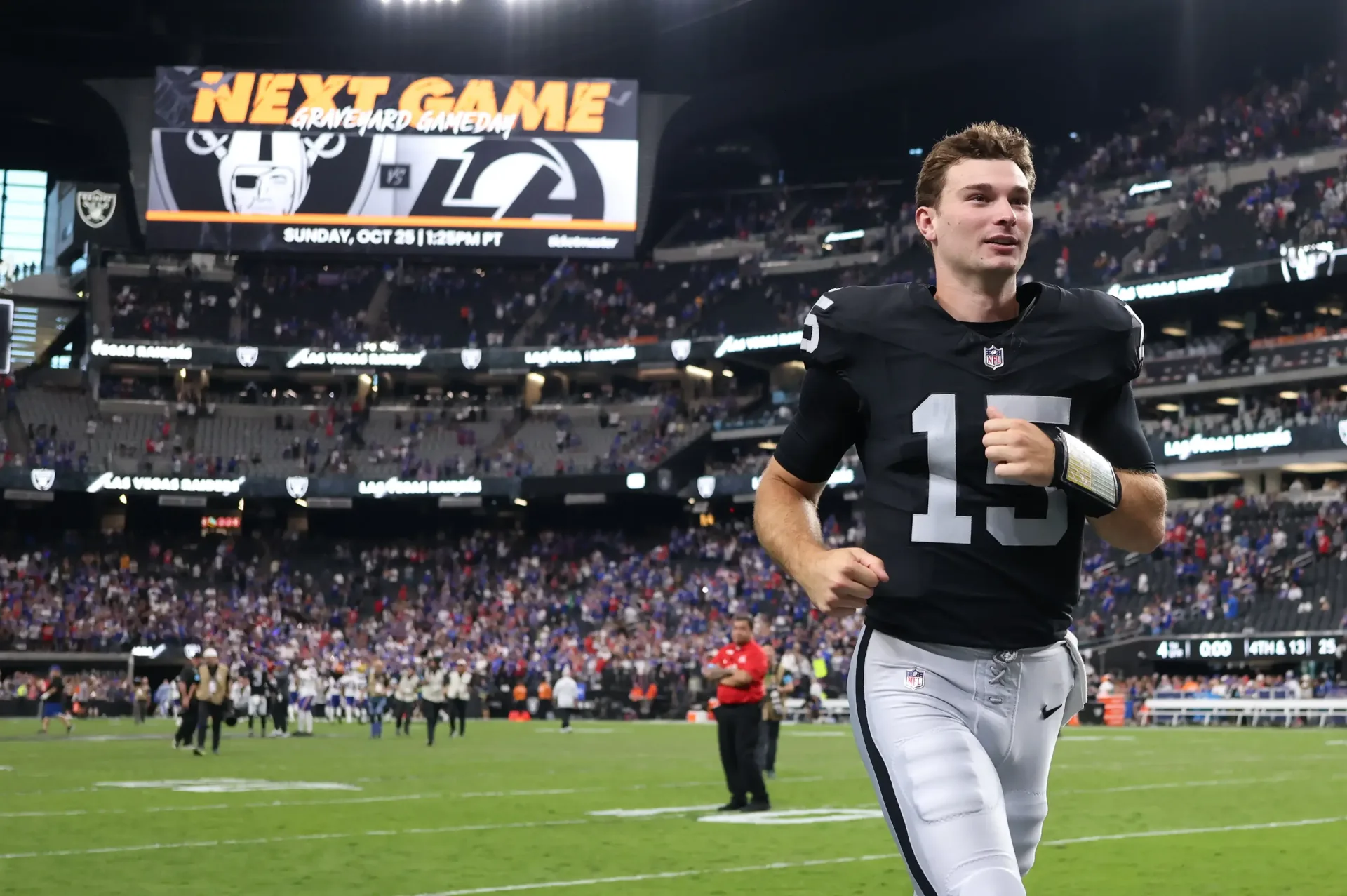
Mark Cuban has added a particularly personal piece of football-card history to his collection: Fernando Mendoza’s one-of-one rookie patch autograph from 2026 Topps Flagship Football.
The sale price has not been made public, which leaves the hobby’s most obvious question unanswered. But the appeal of this card is easier to understand than any hypothetical return on investment. Cuban attended Indiana University, has said he funded the NIL deal that brought Mendoza there, and watched Mendoza’s Indiana team finish 16-0, win the program’s first football national championship and take home the Heisman Trophy before the quarterback became the 2026 No. 1 overall draft pick.
That makes this more than a famous buyer chasing a flashy modern football card. It is a collecting story built around a direct connection to a player and a school, with a uniquely scarce card as the physical receipt.
What Cuban bought
The card is described as a 1-of-1 rookie patch autograph, often shortened by collectors to RPA. That label covers three elements that can matter to modern sports-card buyers:
For more context, explore World of Warcraft: Forever Beta Called the Franchise’s Largest, but the Numbers Need Context.
- Rookie card: a card tied to a player’s first major season or early professional card output.
- Patch: an embedded piece of memorabilia material, rather than simply a printed image.
- Autograph: a signed card, which gives the item a further layer of collectibility.
Most important here is the 1-of-1 designation. It means this exact version was produced as a single copy. It does not mean it is automatically Mendoza’s only important card, or that it will always be his most valuable card. Different sets, designs, autograph configurations, grades and collector preferences can all create rival “best” cards. Still, a true 1-of-1 RPA sits in an especially desirable corner of the modern football-card market because it combines scarcity, memorabilia and signature content in one card.
Mendoza’s card came from 2026 Topps Flagship Football, released near the end of August. His Raiders-era card catalog remains narrow: collectors are limited to 2026 Flagship, Bowman Football and Topps Now releases. That lack of competing pro-uniform inventory makes the first notable Raiders cards more consequential, especially for collectors looking to build a player-focused collection.
A deal reportedly started with an email
The reported route to Cuban’s purchase was unusually direct. A collector pulled the card and reportedly emailed Cuban to ask whether he was interested. Cuban then discussed it with his son Jake, an active sports-card collector, before completing the transaction.
Related coverage includes Mark Cuban Buys Fernando Mendoza’s 1-of-1 Topps Flagship RPA.
Jake Cuban’s assessment, as relayed publicly, was blunt: the value proposition depends on Mendoza’s future. If the quarterback does not develop into the player Cuban expects, paying a substantial amount for the card would look unwise. If Mendoza becomes great, the same purchase could look cheap in retrospect.
That is the central risk of prospect and rookie-card collecting. A card can be genuinely rare without having a fixed value. The athlete’s performance, health, career arc and cultural profile can change how collectors view the same piece. So can the availability of comparable cards. In a private transaction, the uncertainty grows because there is no disclosed final price for other collectors to use as a clean benchmark.
In this case, Cuban may not require that benchmark. The card has a direct link to his university and to a player whose move to Indiana Cuban said he personally supported through NIL funding. Financial upside may be part of any high-end card discussion, but personal provenance can be a major reason to collect even when the public never learns the number on the deal.
Why previous Mendoza sales matter—but only up to a point
There are public Mendoza one-of-one sales that give collectors some context, although none is a perfect match for Cuban’s card.
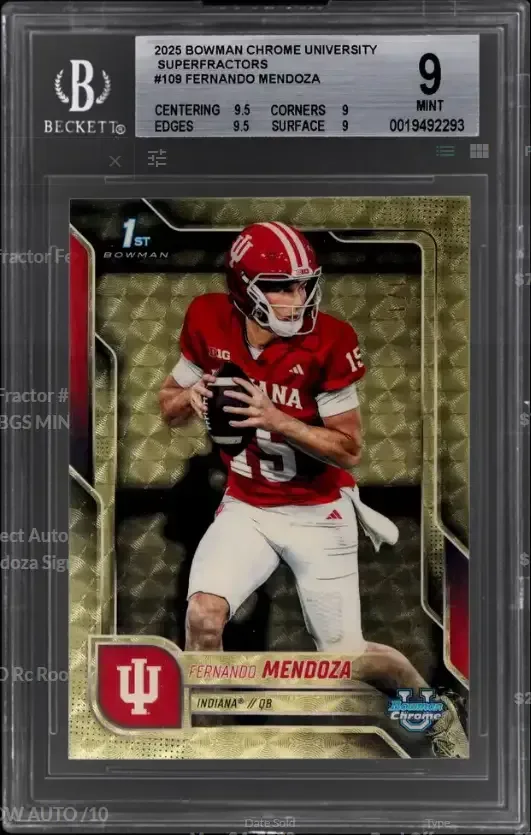
The strongest documented Mendoza 1-of-1 sale cited so far is a 2025 Bowman Chrome University 1st superfractor graded BGS Mint 9. It sold for $78,000 on January 29, 2026, 10 days after Indiana’s FBS national-championship win. The auction drew 50 bids. A later tracked value for that card sits at $84,640.
A superfractor is a one-of-one parallel in the Bowman Chrome ecosystem. It is often among the most recognizable chase versions within a release. The BGS Mint 9 grade is relevant because third-party grading assesses a card’s physical condition, and strong grades can affect collector demand. But that sale involved a college-era card, a particular card design and a graded condition assessment. Cuban’s Flagship RPA is a different product and includes a patch and autograph, so the $78,000 result should be treated as evidence of demand for Mendoza’s elite cards—not as a valuation formula.
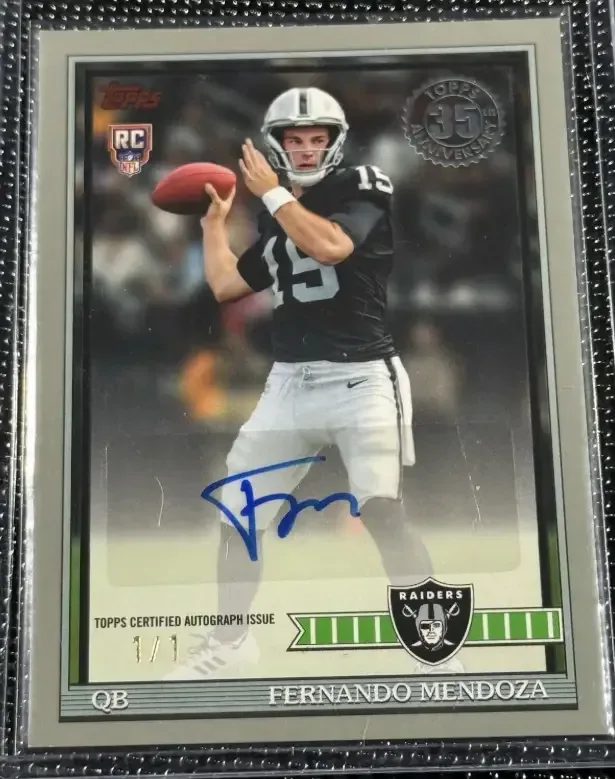
There is also a documented sale for Mendoza’s 2026 Topps Flagship 1991 Platinum 1-of-1 autograph. That card reportedly sold through a best-offer transaction for $25,000 on September 23, after apparently being listed at $37,000. A best offer is negotiated rather than a straightforward fixed-price checkout, meaning the accepted amount can be useful market data while still revealing less about the bargaining process than an open auction does.
The gap between $25,000 and $78,000 is not a contradiction. They are distinct cards sold in different circumstances. One had a visible auction with dozens of bids shortly after a championship; the other was a negotiated sale. Their differences underline a basic card-market principle: “one of one” describes print scarcity, not a universal price tier.
The meaning of a private price
No public price has emerged for Cuban’s RPA, and it may never emerge. That makes it inappropriate to declare the purchase a record, a bargain or an overpay.
Private sales are common at the top end of collecting, particularly when a card is both rare and personally meaningful to the buyer. The lack of a disclosed total does not make the transaction less real, but it does limit what observers can responsibly infer. Collectors cannot use it as a documented comp—short for comparable sale—until a price is confirmed. A comp is not merely another expensive card by the same athlete; it is a sufficiently similar sale used to estimate where a card may fit in the market.
For Mendoza, useful comparisons would ideally account for the card’s product, pro-uniform status, patch-and-autograph configuration, one-of-one status, condition and timing. The player’s small Raiders-era card pool is relevant, but it does not eliminate those distinctions.
Collecting rather than forecasting
The most interesting aspect of Cuban’s purchase may be that it shows how different motivations can coexist in a premium-card deal. The 1-of-1 RPA has obvious speculative appeal because it is tied to a No. 1 overall pick with a major college résumé. Yet Cuban’s relationship with Indiana and stated role in Mendoza’s NIL move provide a more specific explanation than simple prospecting.
For everyday collectors, that distinction is useful. A personal collection does not need to beat an index, win an auction or become a headline. A card can be valuable because it commemorates a season, a team, an athlete or a connection that matters to its owner. Scarcity can intensify that feeling, but it cannot create it on its own.
For market-watchers, the deal adds another data point without supplying a number: Mendoza’s highest-profile cards are attracting serious attention, and his earliest Raiders-uniform issues are limited. The public sales of his Bowman Chrome University superfractor and Flagship 1991 Platinum autograph establish that substantial sums have already changed hands. Cuban’s undisclosed acquisition of the Flagship RPA adds prestige, not a confirmed new price ceiling.
That uncertainty is part of the story. The card has found a buyer with a uniquely close connection to the player’s college journey. Whether it eventually proves to be an exceptional financial purchase will depend on years that have not happened yet. As a personal centerpiece, however, its logic is already clear.