Joe Burrow took the top spot in a five-card snapshot of major football-card sales recorded in late October 2026. His 2020 Panini National Treasures Patch Auto numbered to 99 sold for $81,000 on October 29, giving the Cincinnati Bengals quarterback the highest result among a group that also included two Patrick Mahomes cards, a Tom Brady Prizm and a scarce Randy Moss Precious Metal Gems issue.
The five reported transactions add up to $269,988. That is not a measure of the entire football-card market, nor does it establish a universal value for any of these cards. It is, however, a useful look at where buyers placed substantial money over a seven-day window: established all-time names, a modern quarterback with two different premium rookie-era cards, and a current player whose high-end autograph-and-memorabilia card reached the week’s best price.
The five reported sales
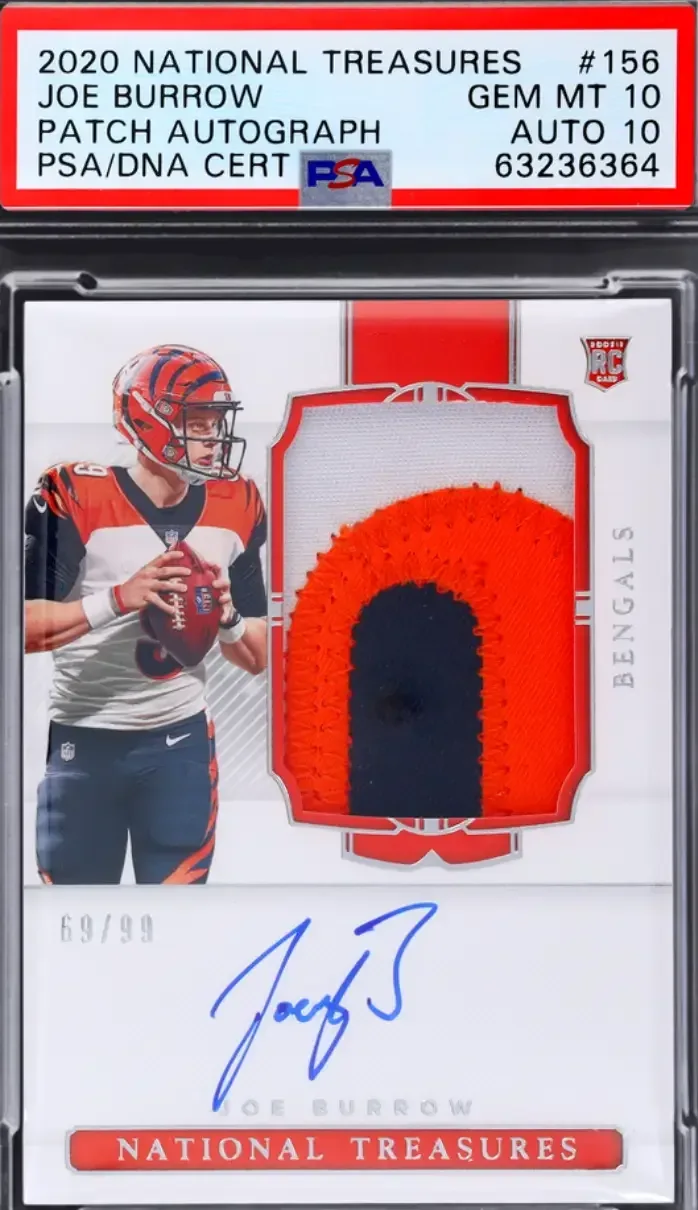
- 2020 Panini National Treasures Patch Auto /99 Joe Burrow, PSA 10 / Auto 10 — $81,000
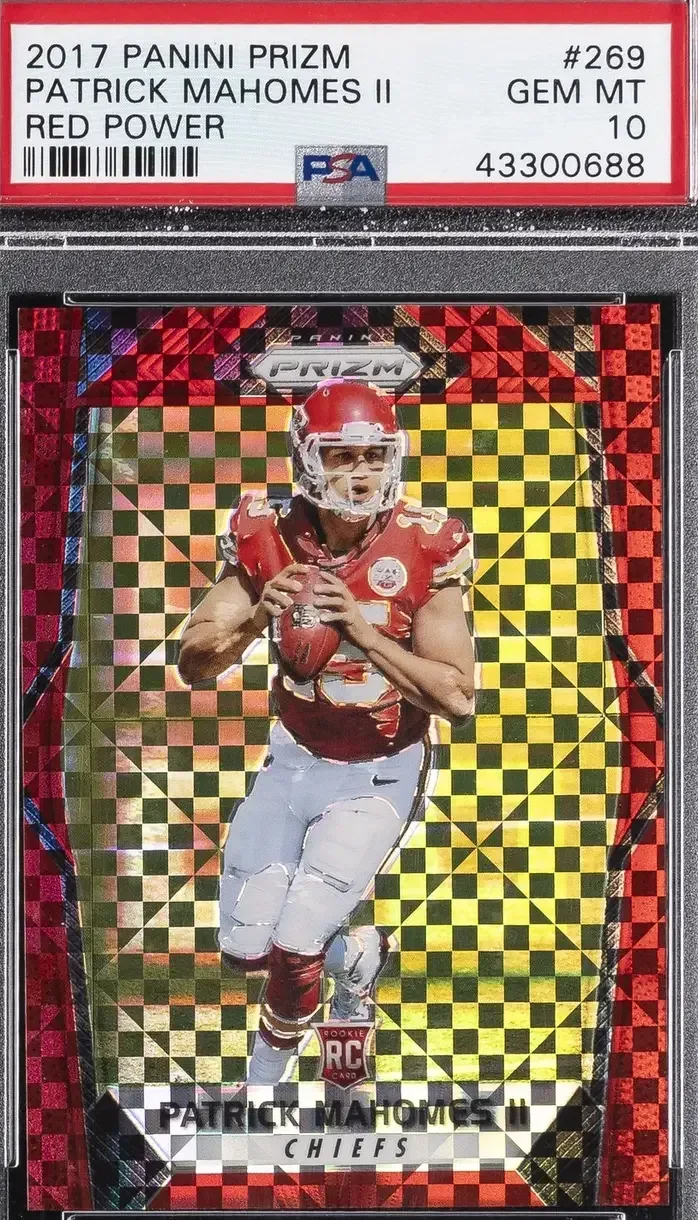
Sold October 29, 2026, via eBay. Reported PSA 10 population: 8. - 2017 Panini Prizm Red Power /49 Patrick Mahomes, PSA 10 — $70,400
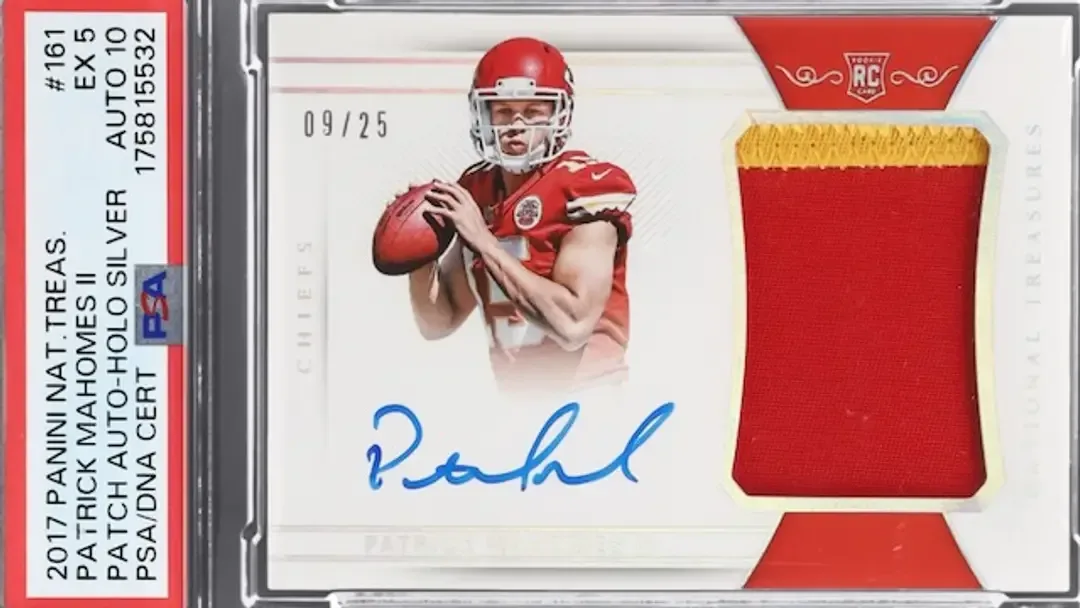
Sold October 25, 2026, via eBay. Reported PSA 10 population: 8. - 2017 Panini National Treasures Patch Auto /25 Patrick Mahomes, PSA 5 / Auto 10 — $45,000
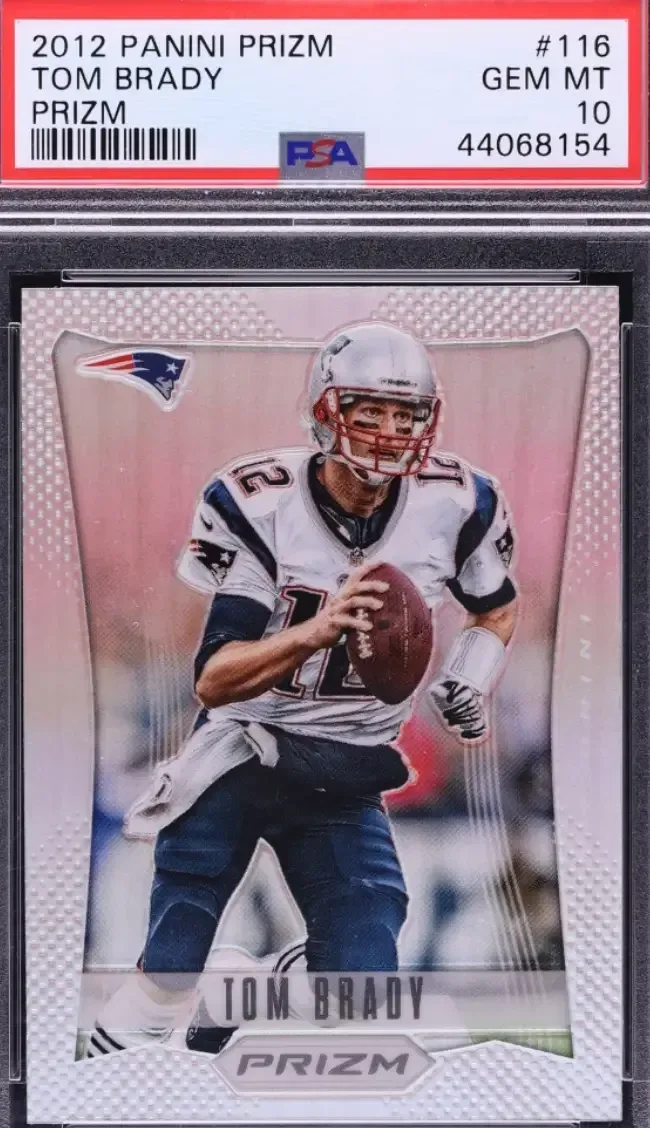
Sold October 29, 2026, through ALT. Reported PSA 5 population: 1; reported PSA 10 population: 2. - 2012 Panini Prizm Silver Prizm Tom Brady, PSA 10 — $43,200
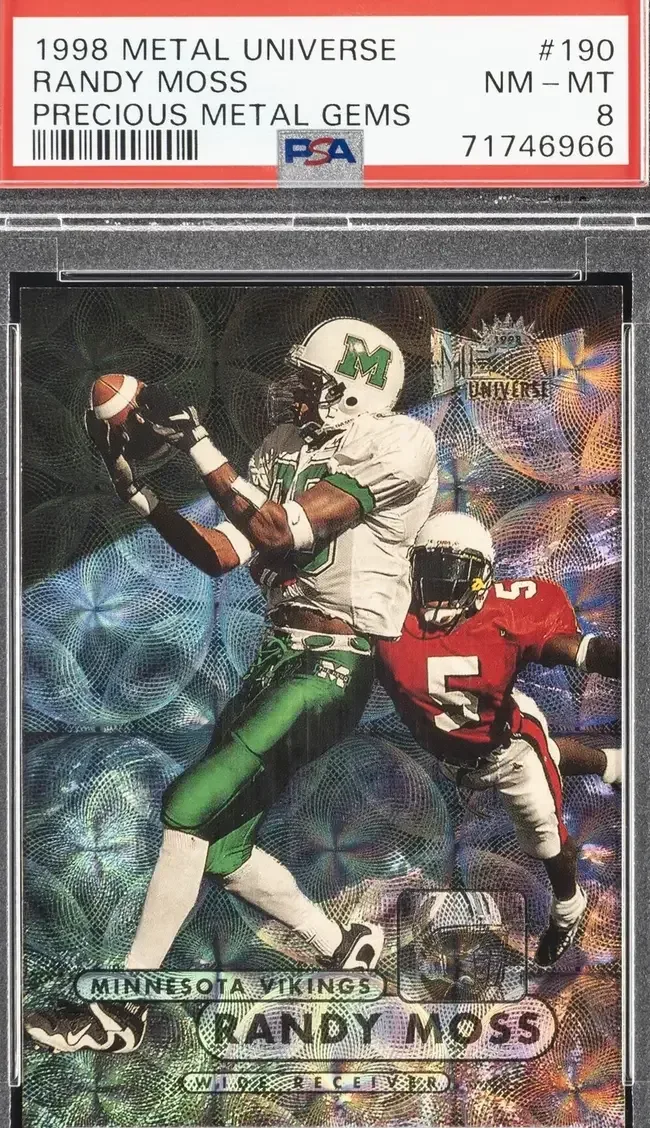
Sold October 25, 2026, through Fanatics Weekly. Reported PSA 10 population: 24. - 1998 Metal Universe Precious Metal Gems /50 Randy Moss, PSA 8 — $30,388
Sold October 25, 2026, via eBay. Reported PSA 8 population: 7; reported PSA 10 population: 3.
Burrow’s card combines several high-end signals
The $81,000 leader is a 2020 National Treasures card carrying three characteristics collectors often evaluate separately: a stated serial number, a patch and an autograph. “/99” means the card is numbered within a run of 99 copies. A patch card includes a piece of material, while an autograph card includes the player signature. The supplied grading notation, PSA 10 / Auto 10, indicates a Gem Mint grade for the card itself and a top grade for the autograph.
Those details do not make every card with similar words in its title interchangeable. A patch-auto’s appeal can vary substantially by serial numbering, the specific patch, the condition of both the card and signature, and the player attached to it. Still, the Burrow result is a clear example of a sale where several premium features aligned in one item.
For more context, explore Xbox vs PlayStation: Console History, Sales and What the Numbers Mean.
The reported PSA 10 population is eight. In collecting language, a population figure is the number of examples a grading company has recorded at a particular grade. It is not the same thing as total production. The card is numbered to 99, but a PSA 10 population of eight does not prove that only eight exist in that grade forever, that every copy has been submitted, or that all eight are available for sale. It simply describes the reported graded count at that level.
Mahomes owns two spots, with two different collector propositions
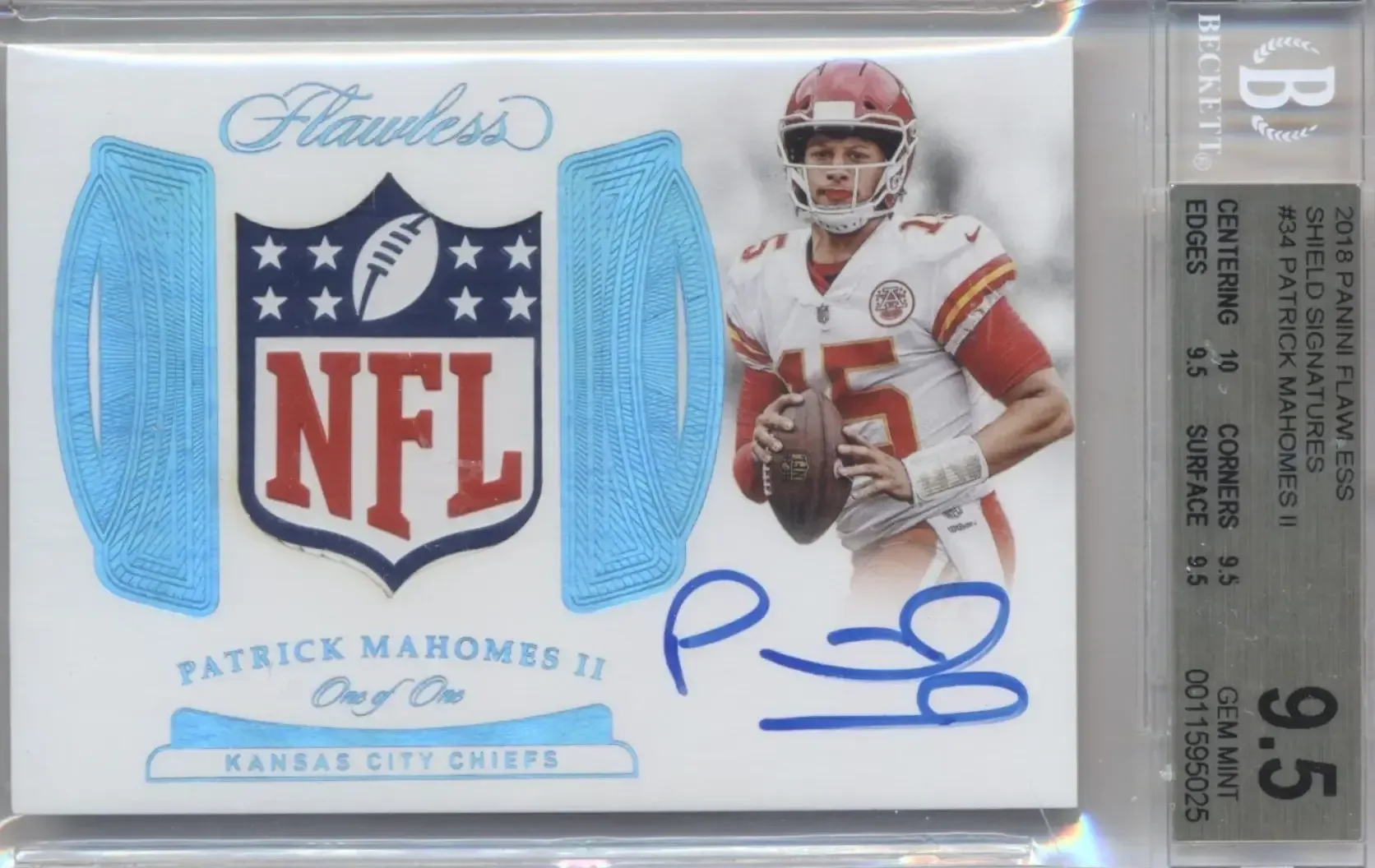
Patrick Mahomes appears twice and accounts for $115,400 of the five-sale total. His higher result, at $70,400, belongs to a 2017 Panini Prizm Red Power parallel numbered to 49 and graded PSA 10. The Red Power design is described as checkerboard-like, helping visually distinguish it from a standard card. More importantly for a collector comparing listings, it is a parallel with a stated production number and a top card grade. The reported PSA 10 population is eight.
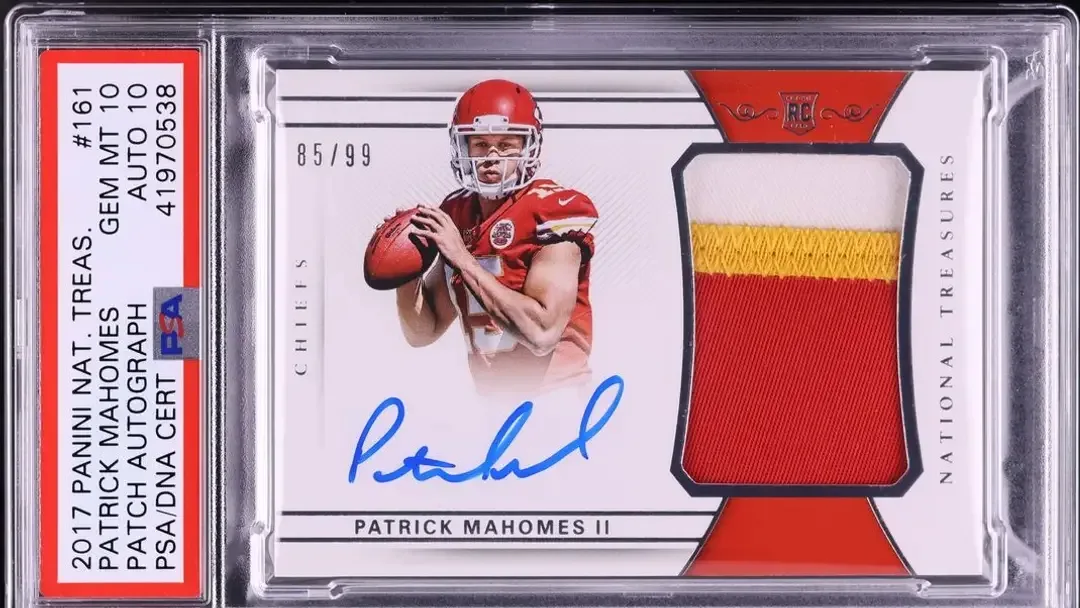
The other Mahomes sale tells a different story. The 2017 National Treasures Patch Auto is numbered to 25, includes an autograph and earned a 10 grade for that autograph, but the card itself received a PSA 5. It sold for $45,000. That contrast is useful because it demonstrates why a card’s grade cannot be read in isolation from the card’s overall makeup.
Related coverage includes Joe Burrow’s $81,000 Patch Auto Leads a Week of Major Football Card Sales.
In straightforward terms, a PSA 5 is a materially lower card grade than PSA 10. Yet this Mahomes card still has several scarcity and format factors: it is limited to 25, it is a patch autograph, and its signature received an Auto 10. A lower-grade card can remain highly valuable when the underlying card is exceptionally scarce or desirable. Conversely, a high numerical grade does not erase the importance of issue, player, serial numbering and card format.
The reported population details add another wrinkle. The supplied information lists one PSA 5 and two PSA 10 examples for the National Treasures Mahomes card, as well as an estimated PSA 10 value of $164,610. That estimate should not be treated as a completed-sale result. A quoted value estimate and a verified transaction answer different questions: the former is a valuation reference, while the latter shows what one buyer paid for one specific example at a given time.
Brady’s Prizm sale shows the pull of a flagship-era issue
Tom Brady’s 2012 Panini Prizm Silver Prizm in PSA 10 sold for $43,200. Its reported PSA 10 population is 24. Unlike the Burrow and lower-ranked Mahomes cards, this entry is not described as an autograph or patch card; its premium rests on the Silver Prizm parallel, the PSA 10 grade and Brady’s lasting place in the hobby.
“Silver Prizm” refers to a parallel treatment rather than a separate player or a different season. Parallel cards are variations of a base design that can have a distinct finish, color or pattern. They are important because a precise card identification needs more than a player and year. “2012 Panini Prizm Tom Brady” can point collectors toward a broad family of cards; “2012 Panini Prizm Silver Prizm Tom Brady, PSA 10” identifies a much narrower collectible.
The sale also places Brady fourth only because this is a ranking by the reported individual transaction prices. It should not be read as a ranking of player legacies, full careers or every card each athlete has ever had issued. Weekly sales lists are about the exact copies that changed hands in the observed period.
Moss brings a 1998 Precious Metal Gems card into the top five
Randy Moss rounds out the list with a 1998 Metal Universe Precious Metal Gems card numbered to 50, graded PSA 8, at $30,388. The supplied population counts are seven at PSA 8 and three at PSA 10. An estimated PSA 10 value of $35,940 was also listed.
This entry is particularly helpful for separating two ideas that are often blurred together: condition scarcity and production scarcity. The “/50” indicates a 50-card serial-numbered run. The PSA 8 and PSA 10 population counts instead refer to grading outcomes. A numbered card can be scarce from the moment it is made, while high-grade copies can become even scarcer depending on how surviving examples grade.
The Moss sale is also a reminder that a card need not be a PSA 10 to command a major price. Its reported grade is PSA 8, but its numbered Precious Metal Gems format and the player’s standing create a distinct collecting case. Grade remains central to condition-sensitive card markets, but it is one input among several rather than a universal shortcut to value.
What this week’s results do—and do not—say
The clearest pattern is variety within premium football cards. The five sales include a modern patch auto numbered to 99, a serial-numbered Prizm parallel, a more limited patch auto with a lower card grade but top autograph grade, a high-grade Silver Prizm, and a late-1990s serial-numbered Precious Metal Gems card. Buyers were not converging on one format alone.
The list also illustrates why collectors should record the complete card description when tracking a sale. Player name is only the starting point. Year, brand, set, parallel or insert, serial number, whether the card has an autograph or memorabilia element, the card grade, the autograph grade and the actual sale date all matter. Two cards of the same athlete can share a season and manufacturer while representing dramatically different collectibles.
There are limits to any small weekly ranking. Five transactions cannot establish a market-wide trend, and a sale price is attached to a particular card in a particular grade at a particular moment. The supplied results were compiled ahead of NFL Sunday activity and may be supplemented later as additional information becomes available. Treat the figures as specific reported sales, not automatic appraisals for every comparable card.
For the week in question, though, the scoreboard is unambiguous: Burrow’s $81,000 National Treasures Patch Auto finished first; Mahomes supplied the only repeat appearance; Brady delivered a significant PSA 10 Prizm result; and Moss showed that a scarce 1998 issue in PSA 8 can still stand beside far newer quarterback cards.