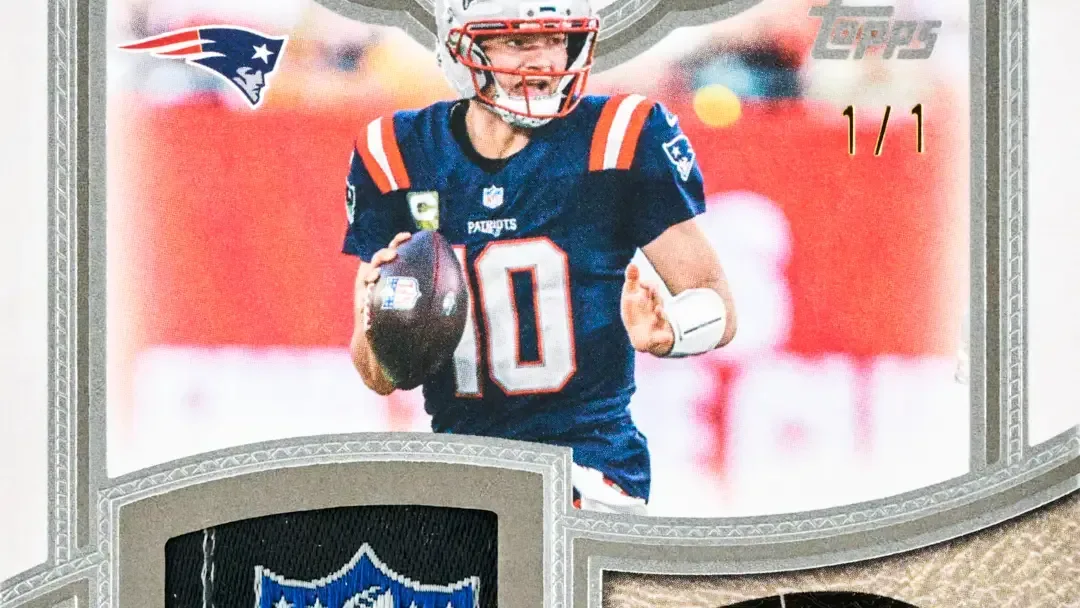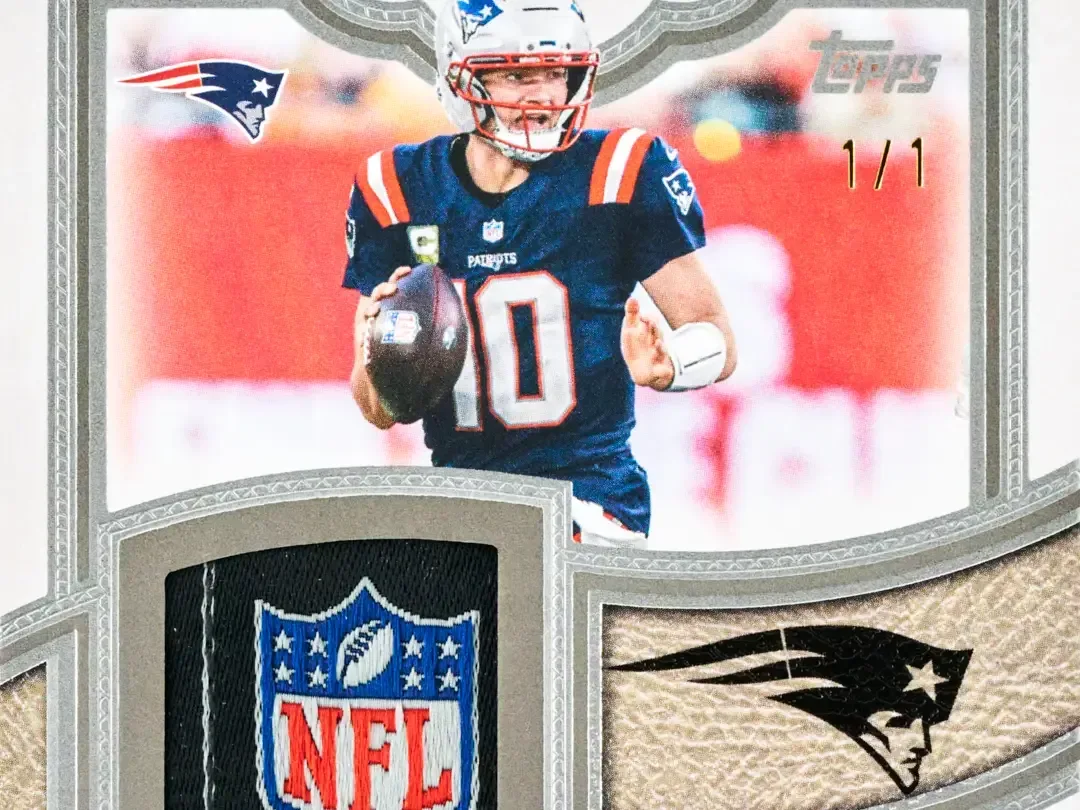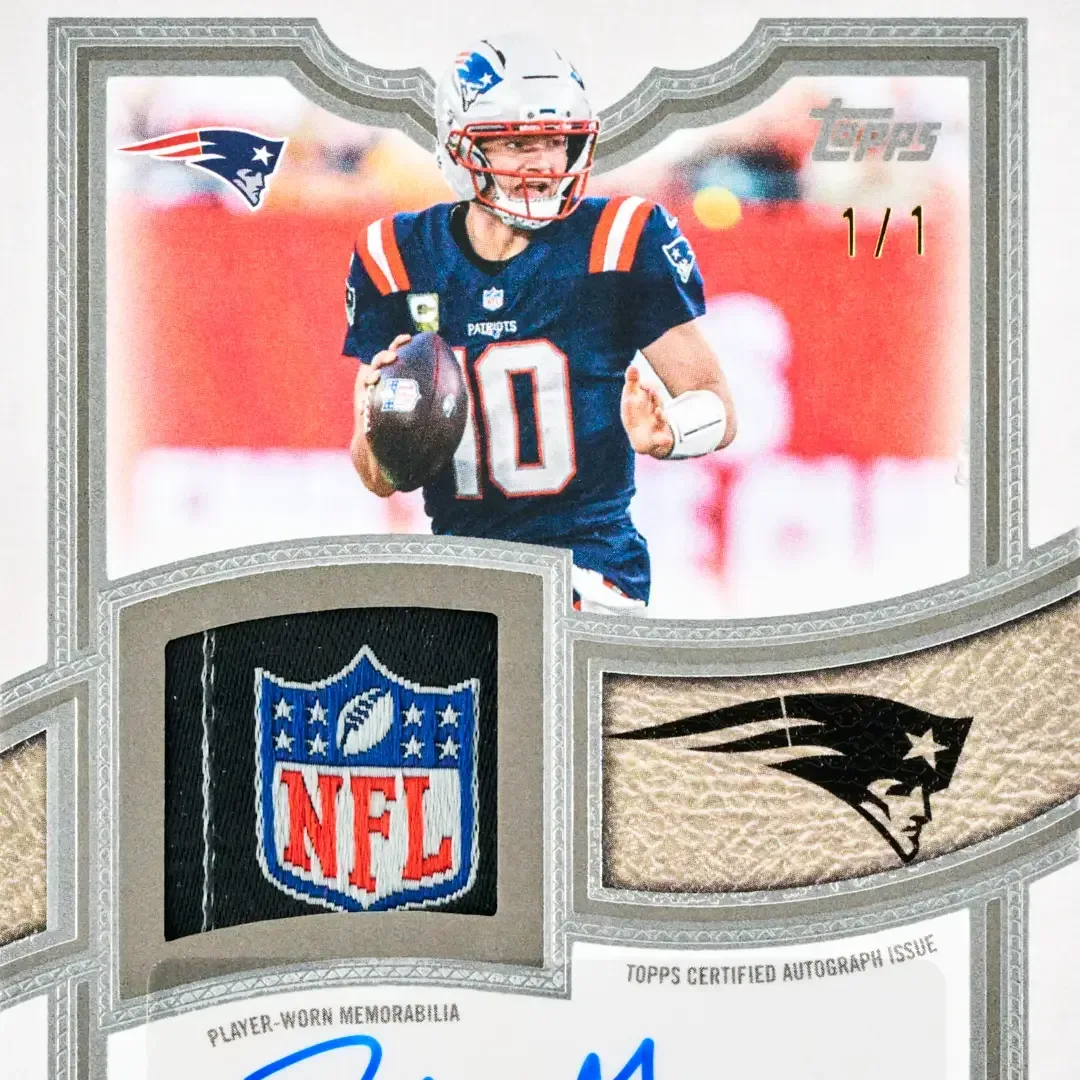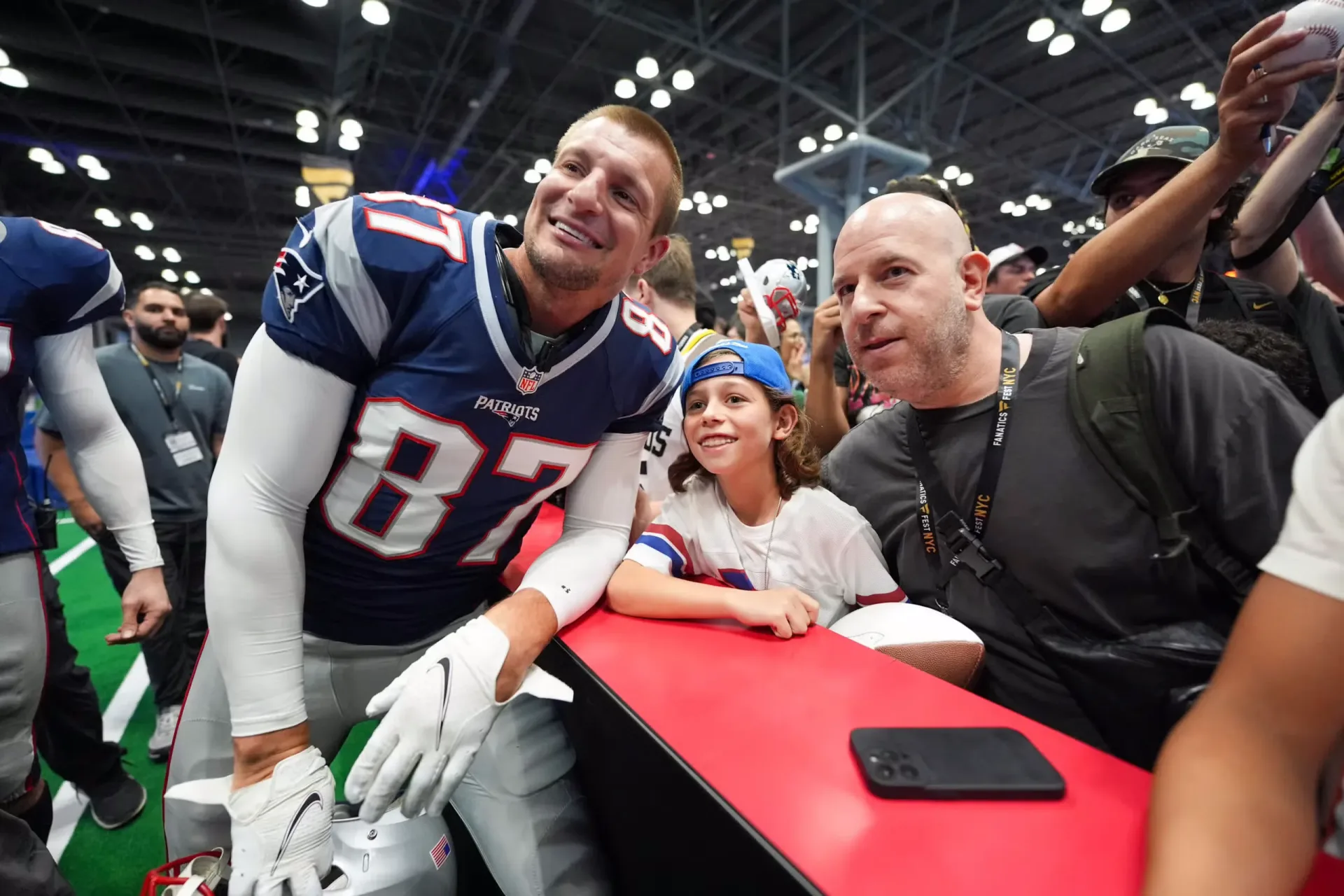
Football cards are headed into the 2026 season with two very different engines running at once. One is the established, trophy-card end of the hobby, where Tom Brady still commands attention that few athletes in any sport can match. The other is a much more speculative race centered on young quarterbacks, rookies and the possibility that a promising season can turn a cardboard collectible into a headline.
That tension is visible in the market’s July figures. Brady collectors spent $5.9 million on his cards during the month, more than twice the total attached to second-place Patrick Mahomes. Brady’s 2000 Bowman Chrome and 2000 Playoff Contenders Championship Ticket rookie issues remain foundational modern football cards, and his long record of winning is precisely why demand has held up so strongly.
Yet the rest of the story is not simply about the retired legend. Football had six names in the top 25 sports-card sales totals for July: Brady was fifth, Mahomes reached $2.6 million and Jaxson Dart and Caleb Williams each hit $1.7 million. Drake Maye and Josh Allen were both listed at $1.3 million. That is a clear snapshot of collectors paying for current relevance and, even more aggressively, projected relevance.
The return of Topps Flagship Football after a 10-year absence adds another wrinkle to the 2026 landscape. Its 100-card rookie run is numbered from #301 through #400, with rookie-focused inserts including 1957 Topps Rookie Variations, Flagship First Signatures, 1991 Topps Football Rookie Autographs, Rookie Real One Autographs and Rookie Premier Autographs. For collectors who enjoy following a season as it unfolds, a major flagship release gives the rookie chase a fresh lane.
Grading tells the quarterback story
PSA had graded more than 1.1 million football cards in 2026 through July. Of the 169,388 football cards it graded in July alone, quarterbacks held much of the spotlight. Jaxson Dart led the player list with 12,255 cards graded, followed by Drake Maye at 9,805. Cam Ward had 5,519, Caleb Williams 5,211, and Tyler Shough 4,184.
Brady was still fifth at 4,682 cards, while Mahomes and Shedeur Sanders were level at 3,943 apiece. Bo Nix recorded 3,580. Ashton Jeanty, a running back, rounded out the reported top 10 at 3,492—a useful reminder that quarterback demand is huge, but it does not erase interest in skill-position players.
- Jaxson Dart: 12,255 cards graded in July
- Drake Maye: 9,805
- Cam Ward: 5,519
- Caleb Williams: 5,211
- Tom Brady: 4,682
- Tyler Shough: 4,184
- Patrick Mahomes and Shedeur Sanders: 3,943 each
- Bo Nix: 3,580
- Ashton Jeanty: 3,492
Grading volume is not a guaranteed measure of lasting value. It can reflect a player’s popularity, a new product cycle, an influx of raw cards or collectors trying to capitalize on a hot moment. Still, it shows where hobby attention is concentrating. In football, the position most connected to wins, awards and franchise narratives is once again absorbing the biggest share of that attention.
That timing also aligns with the wider fan calendar. As games and player storylines take over each week, collectors tracking performance have plenty to monitor alongside their cards; Joking Joystick’s guide to watching the 2026–27 NFL season without cable covers the streaming landscape behind that weekly ritual.
Related coverage includes Young Quarterbacks Are Driving the 2026 Football Card Market, but Tom Brady Still Sets the Pace.
The established names still set the ceiling
Mahomes owns the recorded high-water mark for a football card: his 2017 Panini National Treasures NFL Shield RPA sold for $4.3 million in 2021. Brady occupies the next two reported positions, with two versions of his 2000 Playoff Contenders Championship Ticket Auto selling for $3.8 million and $3.1 million. Another Brady Playoff RPA at $1.3 million gives him three of the five largest football-card sales mentioned here.
Josh Allen sits fourth among those landmark results. His 2018 #1/1 Panini National Treasures NFL Shield Rookie Patch Auto changed hands for $1.7 million in a private sale in August. Earlier in May, a 2025 #1/1 Topps Chrome Honors MVP Gold NFL Shield Auto sold for $1.35 million. Those two million-dollar Allen results stand out because he has achieved them without a Super Bowl victory.
Mahomes remains the premier active benchmark despite coming off a serious knee injury. His premium 2017 National Treasures rookie variations occupy the ultra-high end, but collectors also pursue Panini Prizm and Donruss Optic rookies, plus Panini KABOOM! and Donruss Downtown inserts. Allen’s Prizm, Select and Optic rookie cards remain prominent options at less extreme price points than his one-of-one showpieces.
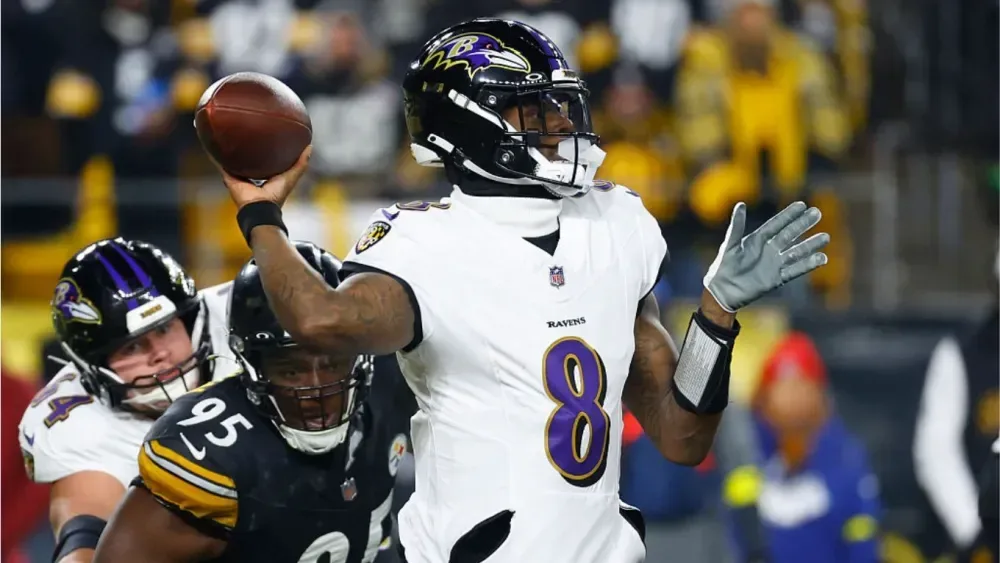
Other proven stars have clear cases, though their markets differ sharply. Joe Burrow’s #1/1 2020 Panini National Treasures RPA sold for $1.7 million. Lamar Jackson’s top reported sale, a 2018 #1/1 National Treasures Platinum RPA, reached $192,000 in 2022, while a 2018 Contenders Optic Gold Vinyl Rookie sold for $93,000. Jackson’s MVP credentials are beyond dispute, but a deeper postseason breakthrough remains the obvious potential catalyst in the collector conversation.
Jalen Hurts is another example of results on the field not always translating proportionately to card prices. His 2020 National Treasures Brand Logo Red RPA sold for $43,200 in 2022, while his 2020 #1/1 Panini Immaculate Collection NFL Shield Auto sold for $35,000 on the day of his 2025 Super Bowl victory over Mahomes and the Chiefs. He owns a Super Bowl MVP and two major Super Bowl performances, yet his top cards have not crossed six figures in the sales cited here.
The young-quarterback pressure cooker
Drake Maye is among the clearest examples of how swiftly a quarterback’s hobby profile can change. Following a breakout 2025 season and a Super Bowl appearance, he had two Pro Bowl selections in two seasons and finished runner-up in 2025 MVP voting. His 2024 #1/1 National Treasures NFL Shield RPA sold for $164,700; two Absolute KABOOM! Vertical cards brought $90,000 and $89,500; and a 2024 Panini Flawless Rookie NFL Shield RPA sold for $84,000.
Maye’s numbers and team results have naturally invited Brady comparisons in New England, but those comparisons also underline the risk in prospecting. Brady is an unusual historical standard, not an expectation a young player can reasonably be required to meet.
Jaxson Dart is the market’s louder volatility lesson. He went 4-8 as the Giants’ starter, but his nine rushing touchdowns and flashes of potential helped fuel major rookie-card sales. A 2025 #1/1 Topps Chrome Kaiju reached $150,000. A 2025 Topps Chrome Sapphire Padparadscha Auto #1/1 brought $105,000, while his National Treasures RPA and KABOOM! cards each passed $70,000. Those prices show how quickly collectors can price in a hoped-for franchise turnaround.
Caleb Williams also has substantial early-market proof. His 2024 Topps NOW #1/1 Draft Day Auto sold for $37,200, and a 2024 #1/1 Topps Black Finite reached $122,000. Cam Ward’s uneven rookie campaign with a 3-14 Titans team has not stopped demand for the No. 1 pick; his 2025 Donruss Green KABOOM! sold for $78,000, with two other reported sales at $50,000.
Bo Nix has combined on-field results with a strong card profile. Denver went 24-10 over his first two seasons as starter, including a 14-3 record last season. His 2024 #1/1 Panini Prizm Black Finite sold for $97,600. Tyler Shough is at a much earlier stage: the 26-year-old rookie went 5-4 across nine Saints starts after playing college football at Oregon, Texas Tech and Louisville. His top card sales have topped $2,000, a far different tier but one tied to considerable attention, as reflected in his grading total.
Beyond the quarterbacks, and into the rookie class
Brock Purdy’s climb remains one of the modern hobby’s most striking stories. The final selection of the 2022 NFL Draft produced a 4,280-yard, 31-touchdown second season, and his 2022 #1/1 National Treasures Stars & Stripes Platinum NFL Shield RPA sold for $186,000. That was reported as the highest-priced 49ers card, above Jerry Rice at $150,000, Steve Young at $120,000 and Joe Montana at $114,000.
The same team’s history provides a necessary dose of caution. Trey Lance’s 2021 Panini Flawless Platinum Rookie sold for $132,000 despite his limited San Francisco playing time; he is now Justin Herbert’s backup. Card markets can reward anticipation long before careers provide a full answer.
C.J. Stroud likewise illustrates both the upside and the uncertainty. His 2023 Absolute KABOOM! Green Horizontal Rookie sold for $82,000 after his Rookie of the Year campaign, and a Vertical Gold version reached $32,940. His performance has dipped over the following two seasons, though his Panini and Donruss rookies remain on collectors’ radar. Aaron Rodgers, meanwhile, offers the veteran counterpoint. His 2005 #1/1 SP Authentic NFL Logo RPA sold for $234,930 in 2020 and a Gold Parallel Patch Auto numbered to 25 later brought $225,000, even as top rookie-card prices have since cooled into the reported $10,000-to-$50,000 range.
The 2026 rookie class broadens the focus beyond quarterbacks. Fernando Mendoza, the Heisman Trophy winner and No. 1 overall selection, joins the Raiders and is set to learn behind Kirk Cousins. Arizona’s Jeremiya Love, chosen third overall, arrives with a path to a featured running-back role. Tennessee’s Carnell Tate was taken fourth overall and has already had early rookie-card sales above $1,000, pairing him with Ward in a young Titans foundation.
Ty Simpson, selected 13th overall by the Rams, is positioned behind Matthew Stafford for now. Saints receiver Jordyn Tyson, the No. 8 pick, enters an offense also featuring Shough. These are compelling stories for set builders and player collectors, but the broader principle remains simple: a card’s scarcity, condition, design and long-term collector appeal matter alongside a player’s box score. The 2026 football market is rich with possibility—but possibility is not the same thing as certainty.