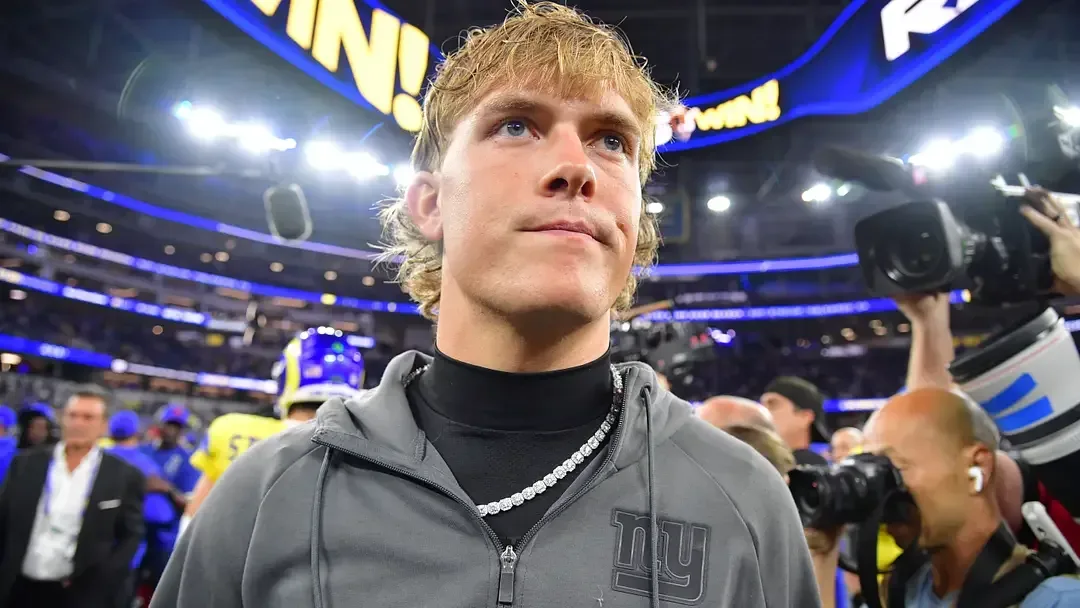
In sports cards, a quarterback injury can turn a market into a stress test almost immediately. Attention moves away from the sidelined player, game-day highlights disappear, and collectors trying to buy the dip are left with a harder question than the usual “is this card cheaper than last week?” A lower price is not automatically a better entry point.
The early-season movement around three young quarterbacks makes that distinction especially clear. Jaxson Dart of the New York Giants, Chicago Bears quarterback Caleb Williams and Washington Commanders quarterback Jayden Daniels have all seen their markets decline while dealing with injury uncertainty. But the severity of their absences, the likelihood of a near-term catalyst and the direction of each market suggest very different approaches.
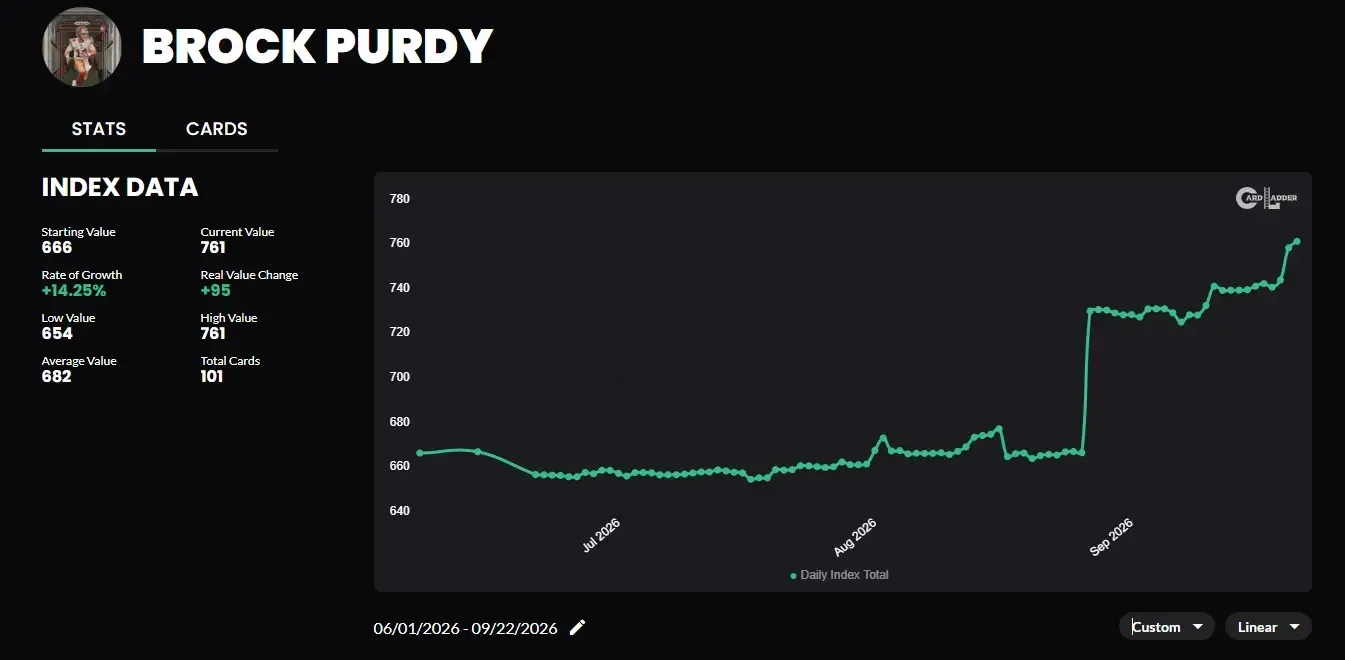
The reported drops are modest enough to resist panic but meaningful enough to show how quickly the hobby can price in lost momentum: Dart was down 5.71% over two weeks, Williams down 5.09% over two weeks, and Daniels down 6.33% over a month. Those figures are snapshots rather than guarantees of a floor. For collectors, the real work is understanding what could change the narrative next.
What an injury dip actually means
An injury dip is a decline in demand or sale prices following news that removes a player from the field. It is often driven by a loss of visibility as much as by a revision of long-term expectations. Quarterback cards are particularly sensitive because the position controls so much of a team’s weekly story: statistics, wins, highlight plays and postseason hopes can all be attached to one player.
For more context, explore Young Thug Says Drake Collaborations Are in the Works as He Considers an R&B Album.
That does not mean every injured player creates the same kind of opportunity. A short absence can create a temporary gap between a player’s on-field outlook and the market’s mood. A season-ending injury is more complicated. With no imminent return, there may be no near-term event to redirect collector attention, and prices can continue falling even when the player’s long-range potential remains intact.
That difference is central here. Daniels has a possible return window that could restore attention quickly. Williams appears closer to a “wait and monitor” situation, with an absence expected to extend beyond Week 5. Dart, who is out for the year, faces the longest stretch without a new on-field case for his cards.
It is also useful to separate a player’s card market from a declaration of his ability. A falling market does not prove a player has lost all upside; it signals that current buyers and sellers are assigning less value to the immediate outlook. Conversely, a rebound can reflect anticipation rather than confirmation. Collectors should be careful not to treat a single percentage move as a complete valuation.
Related coverage includes Injured NFL Quarterbacks Put Card Collectors at a Decision Point.
Jaxson Dart: patience may matter more than the first discount
Dart’s market was down 5.71% across the previous two weeks, but the bigger issue is that he is out for the season. That changes the purchasing equation considerably. The market has already declined by roughly 6%, yet there is reason to expect that it could continue to soften while he is unavailable.
For a collector who already owns Dart cards, the practical read is closer to hold than a rushed exit. A season-ending absence does not erase future potential, and selling into a weakened market can lock in a decline without giving the player time to re-establish momentum. Holding is not a prediction that prices will rise immediately; it is simply an acknowledgment that the available information offers little reason to expect a rapid in-season reversal.
For someone looking to buy, waiting can be more disciplined than chasing the first apparent bargain. The market is still dealing with the reality that Dart will not produce fresh game performances this season. Without those weekly reminders of why collectors were interested, the price discovery process may not be finished.
This is where a collector’s time horizon matters. A buyer focused on the next few weeks has no obvious on-field catalyst to lean on. A buyer who believes in Dart’s future can follow the market, decide which card types fit their collection, and wait for a price that genuinely reflects the risk of a long layoff. The available evidence supports optimism about future upside only in a broad sense; it does not establish where his cards will bottom out.
Caleb Williams: a potential opening, but not necessarily today
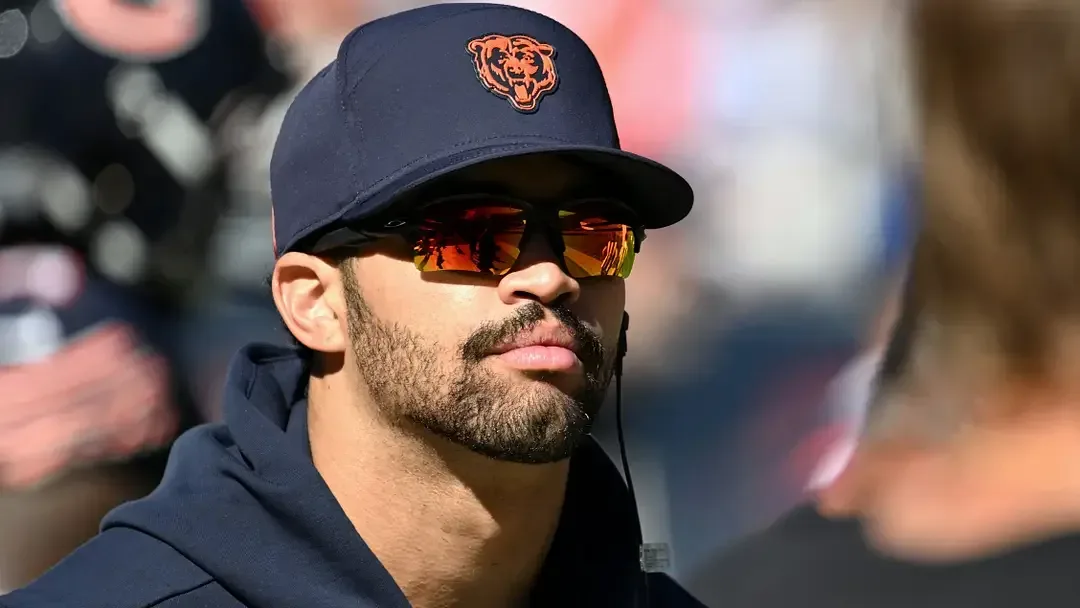
Williams’ market fell 5.09% over two weeks. He has been ruled out for Week 5, and the expectation is that his injury timeline could run roughly another two weeks beyond that. It is a less severe setup than Dart’s, but it still leaves room for additional market weakness before a return becomes a concrete focus.
The most balanced approach is to wait through the immediate absence while remaining ready to act if a desired card becomes available at a price that makes sense. That is different from declaring an all-clear buy signal. The time missed, uncertainty around the exact return and the possibility of further market movement all argue against assuming the current dip is automatically the best one.
There is, however, a coherent case for why Williams could regain hobby momentum once healthy. The Bears are expected to have a strong season, and coach Ben Johnson has spoken of an extremely ambitious offensive aim: becoming the highest-scoring team in NFL history. That target may be unlikely, but it indicates a desire for aggressive offensive output. If Williams returns and produces the statistics and wins that collectors associate with a successful quarterback season, attention could swing back in his direction.
That is still a conditional outlook, not a certainty. Team offensive ambition is not the same as guaranteed production, and card values do not move in a straight line with statistics. But it identifies the relevant future catalyst: Williams returning to an offense designed to generate points, followed by performances that support the broader expectations around the Bears.
In practical terms, Williams is the player for collectors who want to prepare rather than force a purchase. Monitor listings and recent completed sales, distinguish between a price reduction and an actual market trend, and decide in advance what card or price range would justify buying. A collector who finds a specific Williams card they already wanted may reasonably choose to buy during the uncertainty. Someone purchasing solely because the market is down may be better served by allowing the Week 5 absence to pass first.
Jayden Daniels: the narrowest window and the clearest near-term catalyst
Daniels is the strongest immediate buy case of the three, with his market down 6.33% over the past month. The rationale is not that every Daniels card must rise, or that the injury concerns have vanished. It is that the market has already begun to rebound in the past week while a return to the field this weekend is possible.
Before the injury, Daniels showed an ability to create plays and carry the Commanders’ offense. That visible on-field ceiling remains the foundation of the buying argument. The concerns are real: Washington’s offensive line and the skill players around him create reasons for caution. Yet the evidence of Daniels’ individual impact before the injury gives collectors a more immediate reason to believe that renewed playing time could revive enthusiasm.
A possible return against the Giants provides a definable event for the market to anticipate. In card-market terms, a catalyst is a development that could change how collectors evaluate a player. It need not guarantee a price rise; it simply gives buyers and sellers new information to react to. For Daniels, an actual return would be more meaningful than vague offseason optimism because it puts him back in the weekly football conversation.
The challenge is timing. Since the market has already started to bounce, the best buying window may be closing. That does not require collectors to rush into any available listing. Rather, it means the thesis depends on a potentially brief period between injury pessimism and a return-driven reassessment. If a collector wants Daniels exposure, it makes sense to be specific about the card, condition and budget rather than treating the player name alone as the investment.
Three different decisions from three similar-looking declines
The percentage declines can look broadly similar at first glance, but the underlying situations are not. Dart’s season-ending absence removes the short-term catalyst and favors patience. Williams’ outlook supports watchful waiting, with the possibility that a continued absence creates a more attractive entry point before his offensive environment can reassert itself. Daniels combines a larger month-long drop with a potential near-term return, making him the most time-sensitive buying case.
- Jaxson Dart: Hold existing cards if the long-term outlook still fits the collection; potential buyers should not assume the decline has ended.
- Caleb Williams: Wait through the immediate injury news when possible, but a collector who finds a card they already wanted at a suitable price has a reasonable case to act.
- Jayden Daniels: The most compelling buy of the group based on the reported rebound and possible return, though the opportunity may be narrowing.
A more careful way to buy the dip
“Buy the dip” is shorthand, not a complete strategy. The phrase means purchasing after a price decline in the belief that value or demand can recover. Its weakness is that no buyer can know in advance whether a dip is temporary or merely the first part of a longer fall.
For football-card collectors considering injured quarterbacks, a few practical checks can keep the decision tied to the actual situation:
- Identify the next meaningful event. Is there a possible return, a prolonged absence or no remaining in-season action? The three quarterbacks illustrate why this comes before the percentage decline.
- Know whether you are collecting or speculating. A personal-collection purchase can be worthwhile even if the market slips further. A short-term purchase depends far more heavily on timing and the return narrative.
- Focus on the individual card. Do not assume all cards of one quarterback behave alike. Decide what you want before searching, rather than allowing a broad market drop to dictate the purchase.
- Accept uncertainty as part of the price. Injuries, supporting casts, offensive line concerns and team outcomes can all change the story. A lower number on a listing is not a promise of future value.
For now, the quarterback injury market is less about finding one universal bargain and more about matching a decision to an absence timeline. Daniels has the clearest reason for immediate attention. Williams offers a possible opportunity that may improve with patience. Dart’s situation asks collectors to think beyond the current season. The dip matters, but what happens after it matters more.