Stephen Curry’s place in basketball card collecting is built on a combination that is difficult to reproduce: a long elite career, four NBA championships, a game-changing reputation as a shooter and a rookie-card class with several very different collecting lanes. He entered the NBA as the No. 7 pick in the 2009 draft and is now in his 18th season, yet cards tied to his earliest professional year remain the foundation of the market.
For collectors, Curry is not simply a case of buying the rarest card possible. His major cards range from a recognisable Topps base rookie to serial-numbered refractors, college-uniform autograph cards, patch autographs, bold insert designs and one-of-one memorabilia pieces. That spread matters. It gives collectors choices based on budget, preferred design and what they value most: rookie status, autograph content, verified scarcity, visual appeal or a link to a major career moment.
Jesse Craig, co-founder and CEO of private-card-sales broker Acquir, places Curry just behind the hobby’s commonly cited Jordan-LeBron-Kobe tier. Craig’s view is that Curry’s shooting legacy and Golden State’s sustained success have made him a durable blue-chip name. The card-market takeaway is straightforward: Curry’s best cards are supported by more than a single short-term chase. They are tied to a player whose story has accumulated significance over many seasons.
Why the 2009-10 rookie cards remain central
Topps and Panini both issued Curry rookie cards for 2009-10, while Upper Deck’s Exquisite Collection supplied a high-end autograph option. Not every collector agrees on the ideal rookie, and that disagreement is part of what makes the checklist interesting.
Some collectors may prefer Curry pictured with the Warriors. Others may like the Davidson image on the Exquisite Rookie Auto. Some will prioritise an autograph or patch; others will be wary of event-worn material rather than game-used memorabilia. Event-worn means the player wore the included material in connection with an event, but it does not establish use in an NBA game. That distinction is especially useful when comparing expensive patch cards.
Craig’s preference is the 2009 Topps Chrome Gold Refractor /50, in part because it is a numbered rookie without a non-game-used patch and because strong Curry rookie options are not unlimited. That is an opinion, not a universal rule. Still, it identifies an important practical point: a card’s appeal can come from its specific mix of rookie status, scarcity, image choice and construction—not merely the presence of a swatch or signature.
2009-10 Topps #321
Curry’s standard Topps rookie is the entry point with the broadest name recognition. Its clean, uncomplicated design has helped it become an essential card for collectors building a Curry rookie run. Topps also made numbered Gold /2099 and Black /50 parallels.
The base version is hardly a cheap afterthought in high grade. A PSA 9 has been reported at roughly $7,500. PSA 9 denotes Mint condition on Professional Sports Authenticator’s 10-point grading scale; it is not the top Gem Mint 10 grade. The example illustrates how player demand and iconic rookie status can make a mass-issued base card significant when condition is strong.
2009-10 Upper Deck Exquisite Rookie Auto #64
The Exquisite Rookie Auto offers a different sort of prestige. It is numbered to 225, with an even scarcer /30 version, and shows Curry in his Davidson days. That college imagery may narrow its audience compared with a Warriors-uniform card, but it also gives the piece a distinctive pre-NBA identity.
A PSA 9 has been valued around $30,000. The card’s autograph, limited numbering and high-end Exquisite branding explain why it occupies a different tier from the ordinary Topps rookie. For a collector comparing the two, the key question is not which is objectively “better.” It is whether an NBA rookie image, a signed card, a much smaller print run or the Davidson connection is the priority.
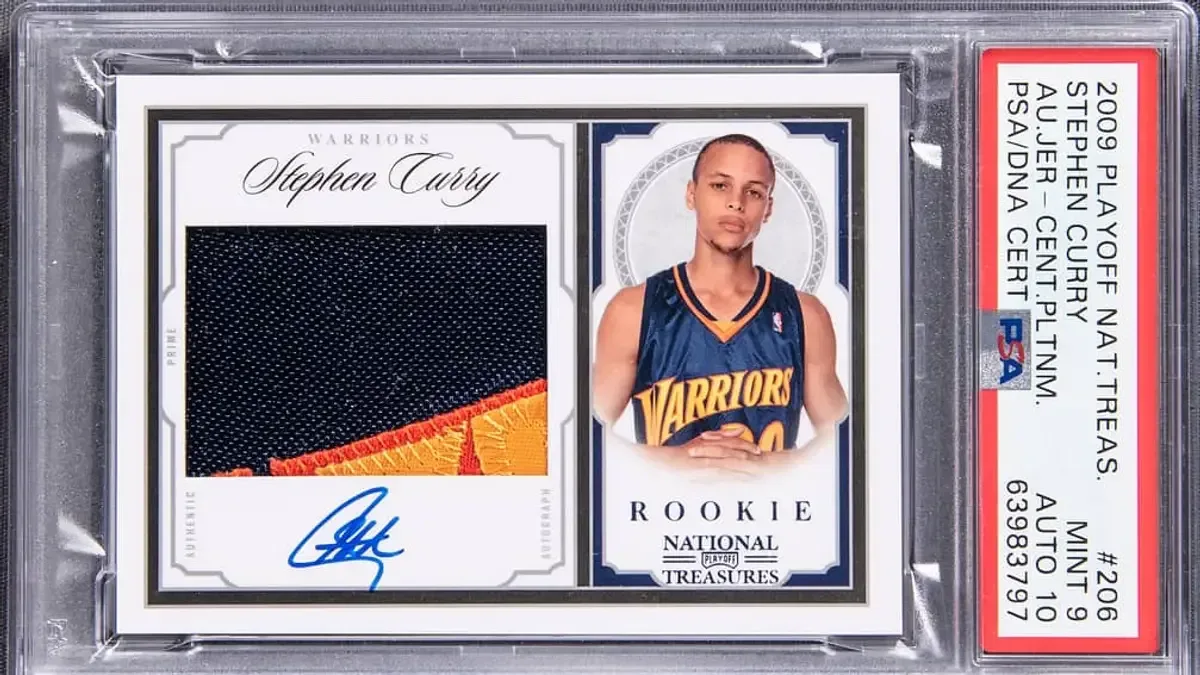
2009-10 National Treasures Rookie Patch Auto /99 #206
Panini introduced National Treasures in 2009-10, and Curry’s Rookie Patch Auto quickly became one of the defining cards from the product. Numbered to 99, it combines a blue-ink signature with an event-worn patch. A more limited parallel is numbered to 25.
A BGS 8 with a 10 autograph sold for $312,000 in late August 2026. BGS refers to Beckett Grading Services, and the split notation is worth understanding: the card itself received an 8, while the autograph earned a 10. Buyers should always read those separate grades rather than assuming the autograph score describes the card’s physical condition. This is one of Curry’s major rookie cards, but its event-worn designation remains relevant context for anyone placing a premium on game-used memorabilia.
2009 Topps Chrome Gold Refractor /50 #101
The Topps Chrome Gold Refractor uses the same Curry image as the regular Topps card but brings a dramatically tighter stated print run: 50 copies. The Chrome cards were inserted into standard Topps packs at nine cards per box, making the product’s packaging history part of the card’s story.
A refractor is a card finish associated with a reflective, light-shifting surface; numbered versions often serve as premium parallels of a base design. For Curry, the Gold /50 is especially coveted because it pairs that finish with a cornerstone rookie image and very limited supply. The Chrome family also includes cards numbered to /999 and a one-of-one Superfractor. Curry’s Superfractor has not surfaced publicly. Any prediction that it would exceed $5 million if it appears is necessarily speculative, not a recorded sale.
Scarce non-rookies that broaden a Curry collection
Rookies may anchor Curry’s market, but several later cards show how a non-rookie can become a major collectible. These cards tend to rely on a more specialised appeal: a famous insert line, extremely low graded population, spectacular design, direct memorabilia provenance or an image tied to an international career highlight.
2013-14 Panini Innovation KABOOM! #5
Panini’s KABOOM! inserts have become a prominent modern-card category, and Curry’s 2013-14 Panini Innovation version is among the most popular. The inserts debuted in a product distributed through Panini’s online rewards program, in two-card packs.
Its grading-population figures underscore the card’s scarcity in the holdered market: by the end of September 2026, PSA had graded 88 copies, with 24 receiving Gem Mint 10 status. A population report is the number of examples a grading company has processed at each grade. It is helpful evidence, but it is not the same thing as a definitive print run. It describes graded copies recorded by that specific company, not every copy that exists or remains ungraded.
2019-20 Panini Spectra Color Blast #12
The Spectra Color Blast is another later Curry card where design and scarcity work together. Its orange, red, green and blue backdrop surrounds Curry as he drives toward the basket, creating an immediately distinctive visual identity.
PSA had graded only 27 copies by the end of September 2026, 15 of them Gem Mint 10s. That is a small recorded population for a non-rookie card. The lesson for collectors is that later-career cards do not need rookie logos to matter. When a design is memorable and examples are hard to locate in top condition, a non-rookie can become a defining card in a player collection.
2024 Topps NOW Olympics #27
Not every memorable Curry card is scarce. Topps NOW Olympics #27 has a stated print run of 89,838, including numbered cards, autographs and a short-print photo variation. Its pull is instead the photograph: Curry’s sleep-celebration pose after the United States defeated France for gold at the 2024 Paris Olympic Games.
That makes it a useful counterweight to the ultra-low-numbered material. A large print run does not erase cultural or visual importance. For collectors who want a card tied to a sharply defined basketball moment, this Topps NOW issue offers an image-first alternative to a premium rookie parallel. Those seeking a more specialised version can distinguish between the main issue and its numbered, autograph or short-print variation.
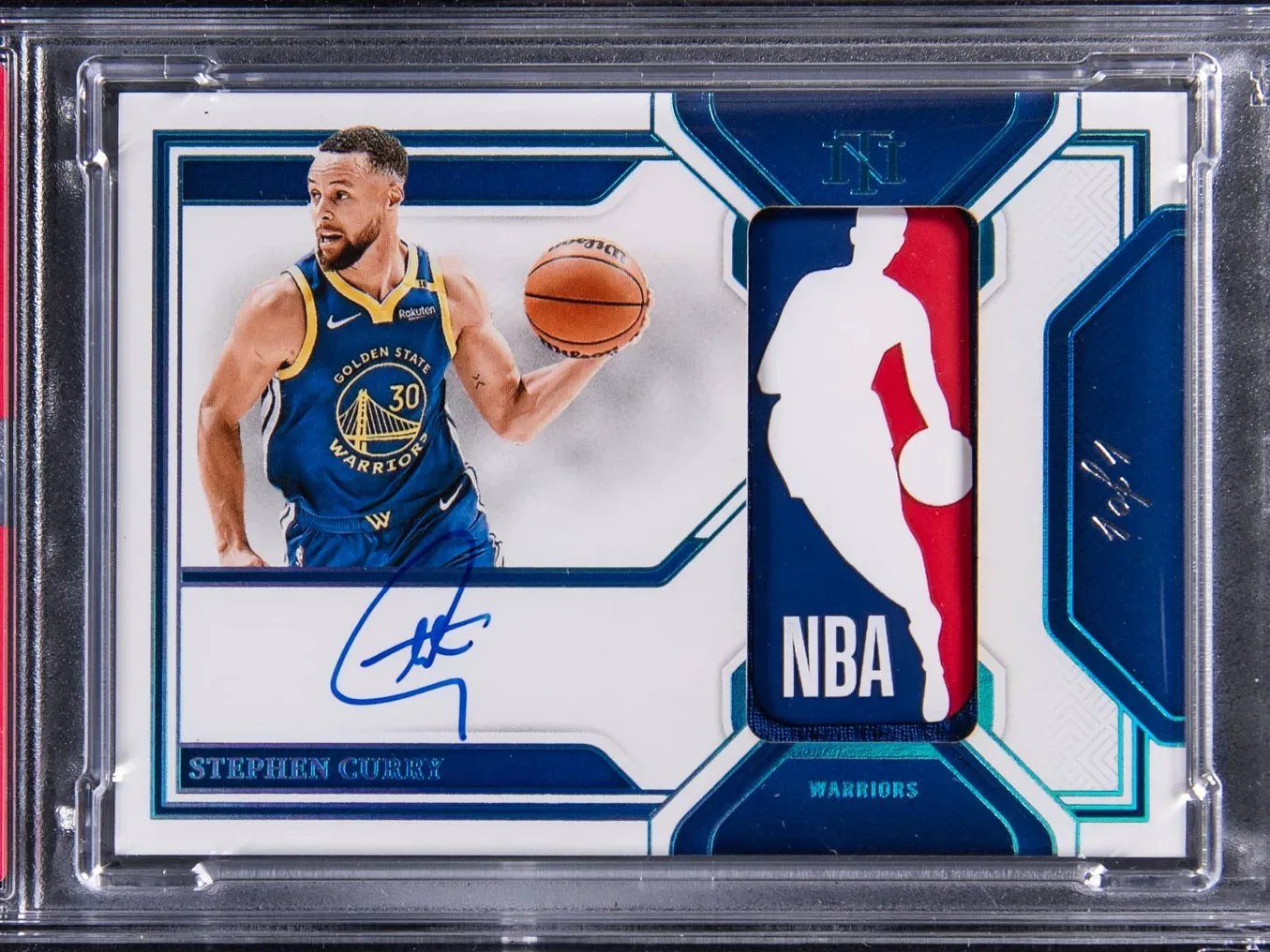
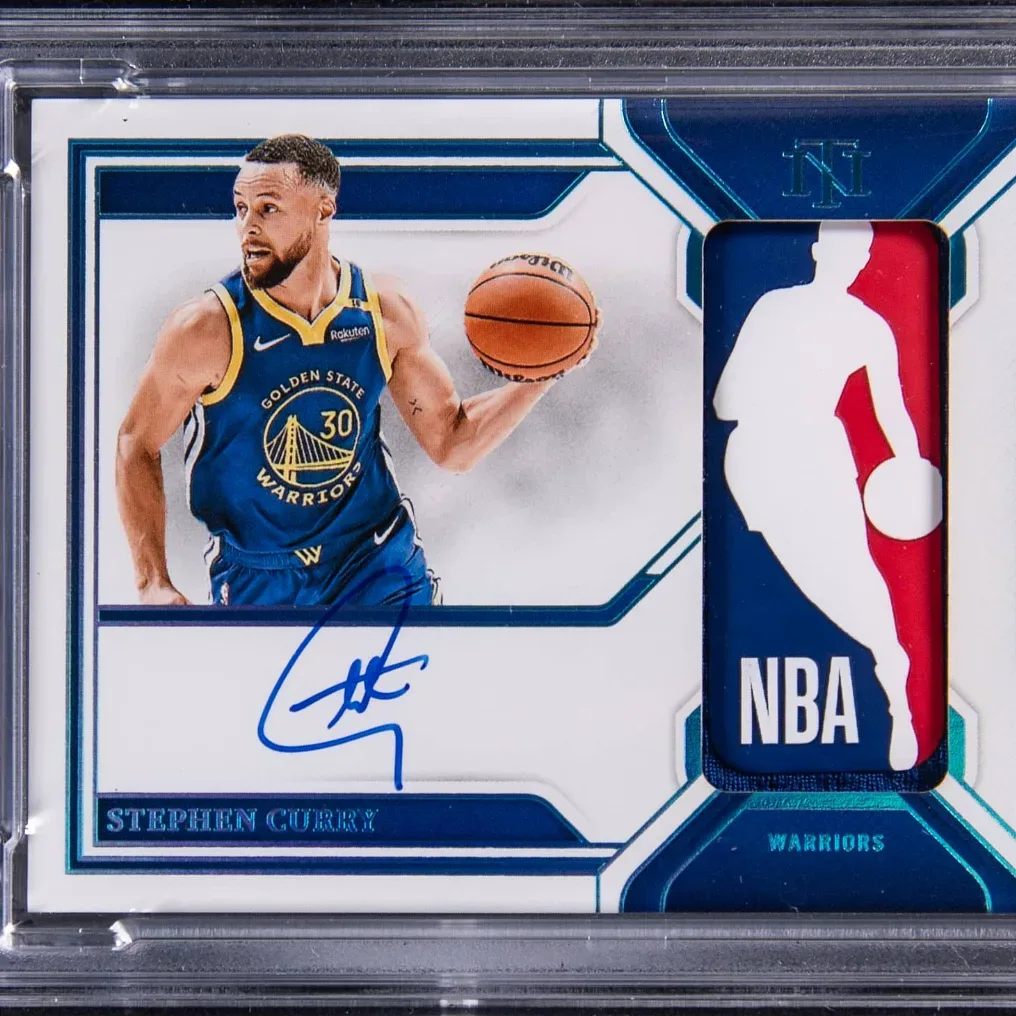
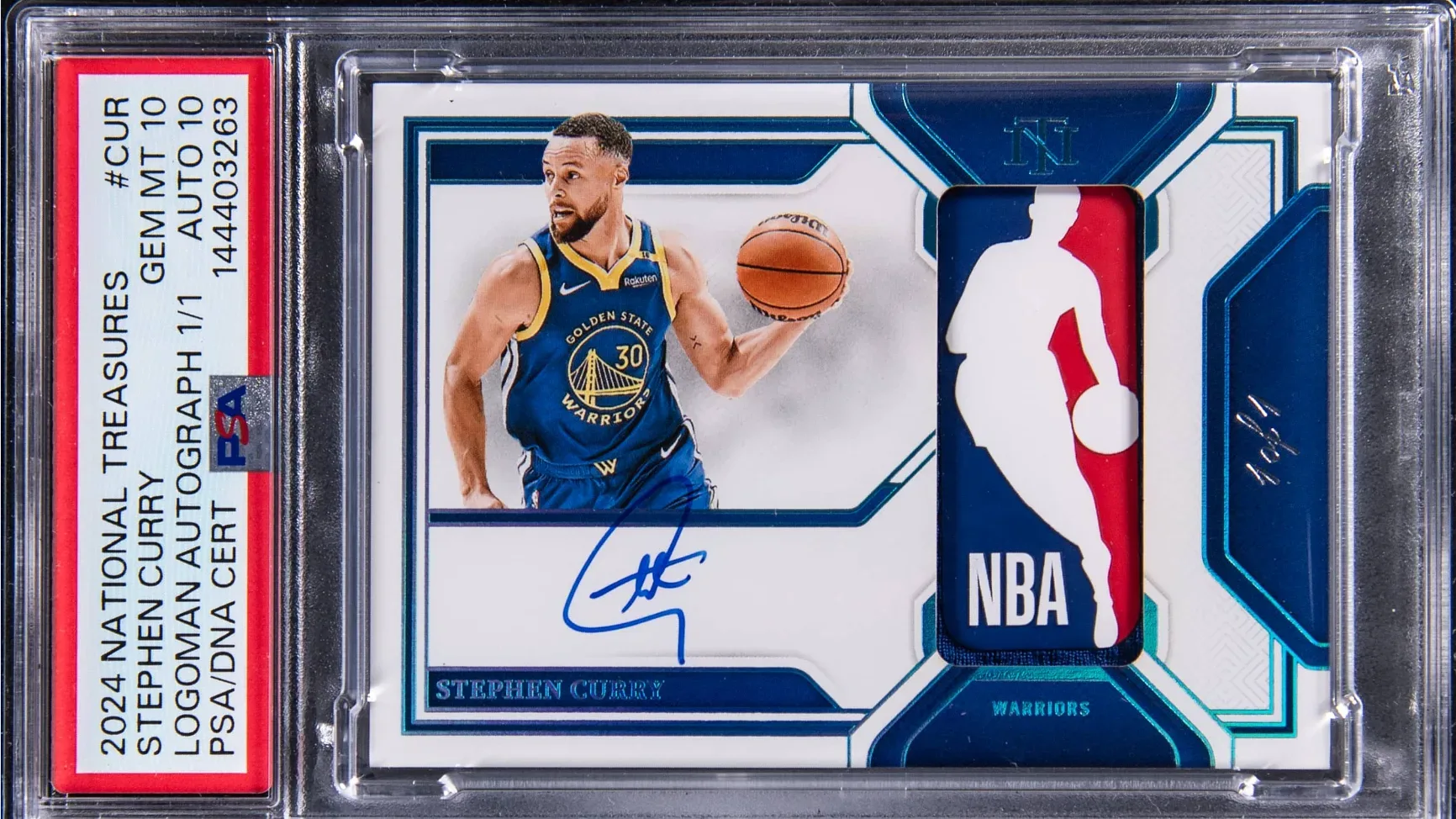
2024-25 National Treasures Logoman Auto 1/1 #CUR
The 2024-25 National Treasures Logoman Auto occupies Curry’s high-end non-rookie summit. It sold for $1,040,697 on March 7, 2026, the highest reported sale for a non-rookie Curry card. The PSA-encapsulated card received 10s for both the card and autograph, and includes a patch worn by Curry in a game in January 2024.
Logoman refers to memorabilia incorporating the NBA logo patch, while 1/1 means the card is designated as a one-of-one. In this instance, the game-worn provenance is particularly significant: it provides a more specific connection to on-court use than the event-worn material on the 2009-10 National Treasures rookie patch autograph. The seven-figure result reflects an unusually powerful convergence of one-of-one status, signature, top grades and game-worn patch content.
How to approach a Curry card purchase
There is no single correct Curry collection. A practical approach is to decide what the purchase is meant to represent before focusing on a listing or grade.
- For rookie-card history: start with 2009-10 Topps #321, then consider the numbered Topps or Topps Chrome versions.
- For a signed early-career card: compare the Exquisite Rookie Auto with the National Treasures Rookie Patch Auto, keeping their different imagery and memorabilia descriptions in mind.
- For low-population modern design: examine the KABOOM! and Spectra Color Blast, while remembering that a grading population is not a print-run disclosure.
- For a moment card rather than scarcity: the 2024 Topps NOW Olympics issue captures an unmistakable celebration and gold-medal context.
- For elite memorabilia provenance: the National Treasures Logoman Auto shows why game-worn details can be pivotal at the top end of the market.
Condition, parallel identification and memorabilia language should be read carefully. A Black /50 is not the same card as a Gold /2099; a PSA 9 is not a Gem Mint 10; event-worn and game-worn are not interchangeable. Those details can substantially alter both collectibility and price expectations.
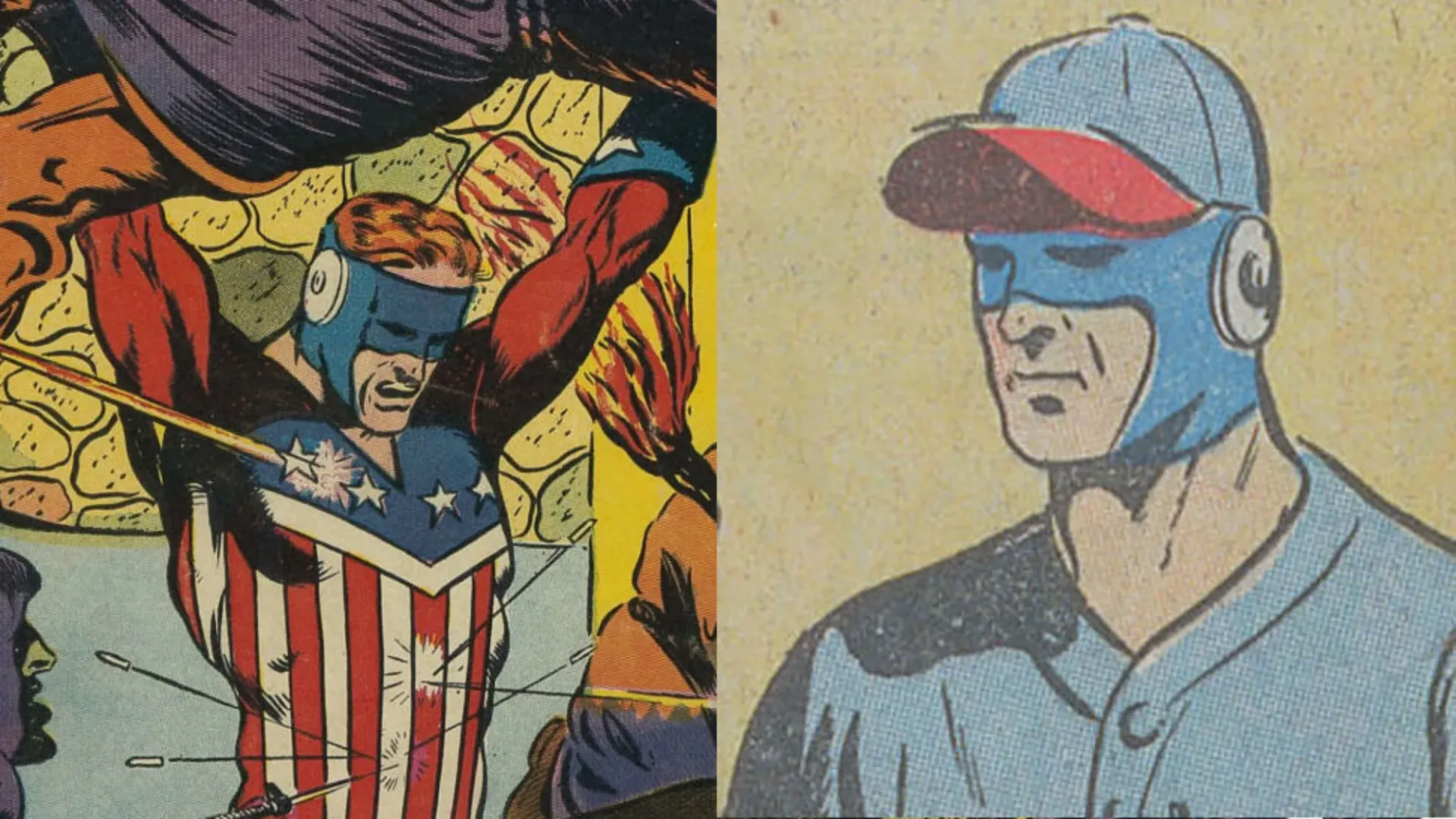
Prices also move. The cited estimates and sales are snapshots reported through the end of September 2026, with the Logoman sale dated March 7 and the National Treasures rookie sale occurring in late August. They describe past market activity, not a promise of future value. Collectors interested in a broader range of card-adjacent collectibles can also see how storytelling shapes demand in this look at Pep Comics #7 and its baseball-racket plot.
Curry’s strongest card checklist ultimately gives collectors a rare degree of flexibility. The standard Topps rookie provides a recognisable foundation. The Gold Refractor offers a limited-numbered flagship. Exquisite and National Treasures bring autographs and high-end presentation, while KABOOM!, Color Blast, Topps NOW and the Logoman show that Curry’s collectibility extends far beyond his rookie season. That breadth is a major reason his cards remain so compelling.