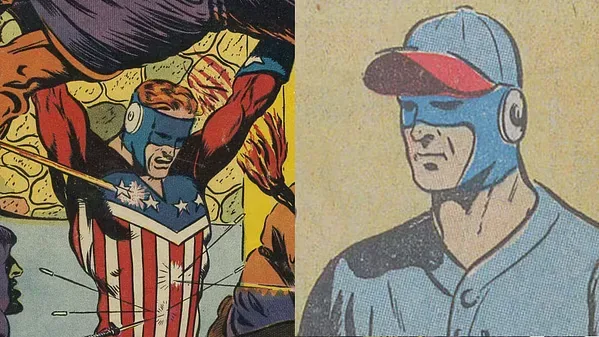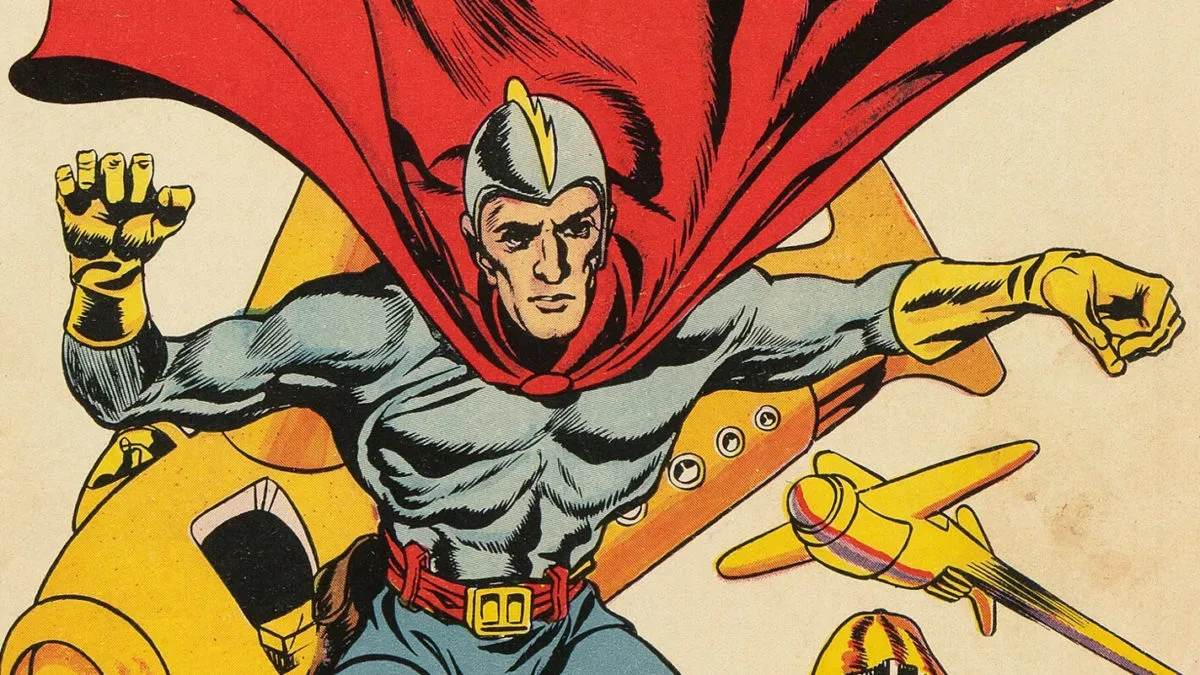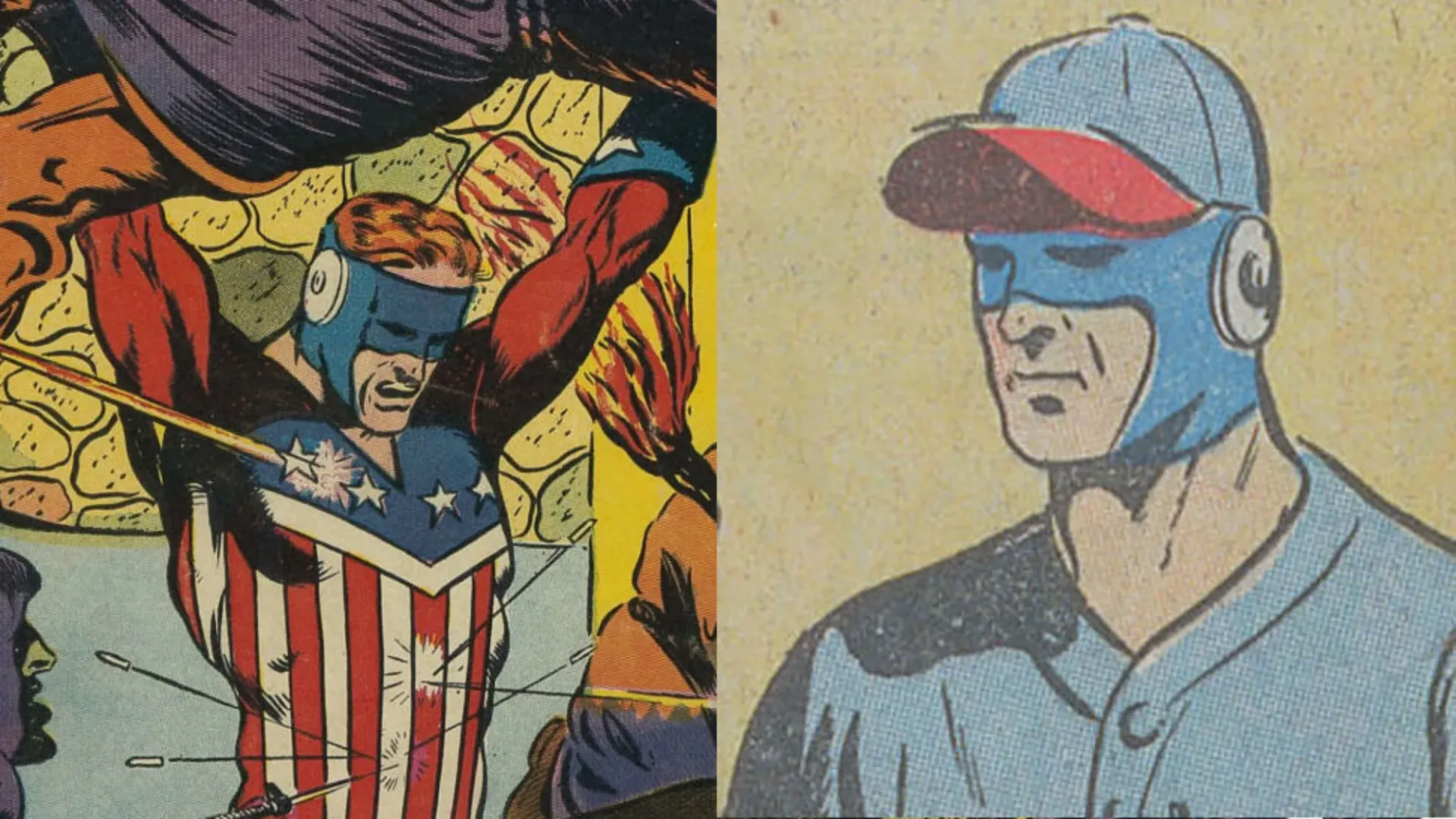
Pep Comics #7, published by MLJ in August 1940, takes an unusually direct swing at the sporting culture of its moment. Its lead Shield story turns a baseball protection racket into superhero material, populating its New York setting with fictional names that strongly evoke major real-life stars and teams. The plot mixes murder mystery, undercover work and impossible athletic feats as FBI agent Joe Higgins enters the lineup as the Masked Marvel.
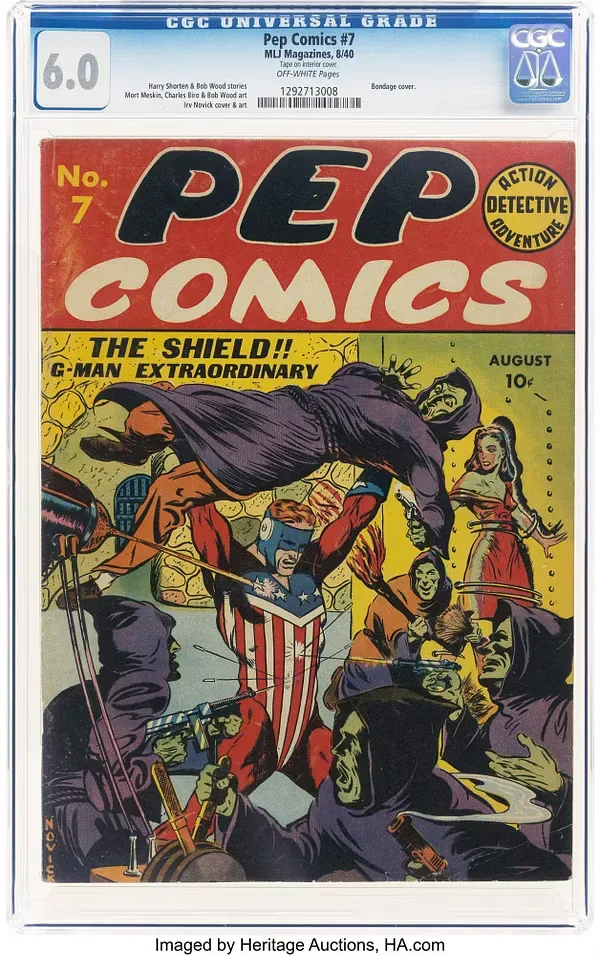
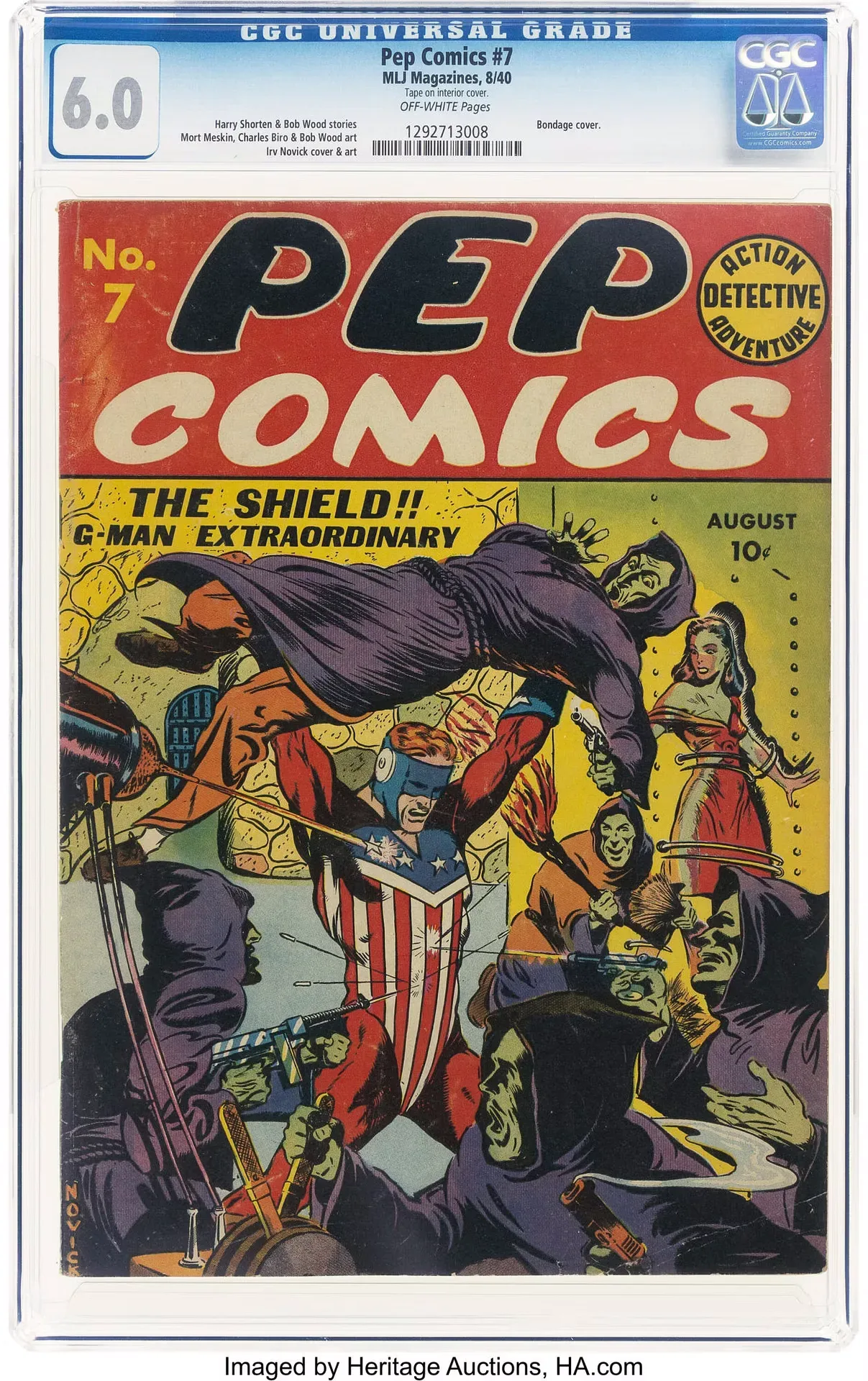
A CGC FN 6.0 copy with off-white pages is listed for the November 5, 2026 Golden Age Century Comics Showcase Auction VI, catalogued as #40378. For collectors, the appeal is not merely that this is an early superhero comic: it is a period piece where comics, baseball and boxing overlap in a particularly concentrated way.
A gangster plot built around baseball’s biggest names
The Shield feature is credited to writer Harry Shorten and artist Irving Novick. It begins with Higgins in the stands as a baseball fan, before a player’s murder draws him into an investigation. The villain, gangster Al Moroni, is coercing players into paying for “protection.” In the story’s heightened comic-book logic, refusal does not just bring intimidation. It brings lethal attacks.
Slugger Joe Madaggio is killed by an explosive baseball. A separate player is murdered with an incendiary bullet at another ballpark. The story is plainly using fictional identities, but its signals are not especially subtle: Madaggio’s widow calls him Joe, making the intended association with Yankees star Joe DiMaggio difficult to miss.
That approach matters because it captures one way early comics could borrow the electricity of contemporary celebrity without simply reproducing every real name. Rather than documenting the sport, the story reshapes familiar public figures into an adventure setup. A popular slugger becomes the victim that tells readers the criminal threat is serious; a famed pitcher and manager become nearby reference points in a New York baseball world already recognizable to the audience.
The next target is Cal Bubble, pitcher for the New Yorkers, working under manager Terrier. Those names strongly suggest Giants pitcher Carl Hubbell and manager Bill Terry. The use of “strongly suggest” is important: the comic presents its own fictional characters, and the real-world identifications rest on the clues supplied by names, positions and team context rather than an explicit statement on the page.
Why the setting does more than decorate the story
Sports are not background wallpaper in Pep Comics #7. Baseball determines the shape of the investigation. Higgins needs access to the threatened players and the criminal scheme, so The Shield joins the Giants under the identity of the Masked Marvel. His superhuman pitching and batting turn the disguise into a spectacle while allowing the hero to stay inside the world Moroni is targeting.
That structure gives the story two kinds of wish fulfillment at once. The Shield is a crime-fighter, but he also becomes an extraordinary player on a New York club. The superhero’s physical advantages are translated into baseball terms, making the sport an active vehicle for the action rather than a setting that could be swapped out without changing the plot.
The case ultimately leads to Moroni’s confession at Coogan’s Bluff. The place name supplies another specifically New York detail. Later stadiums carrying the Polo Grounds name were situated below the bluff in upper Manhattan, grounding the fictional confrontation in the geography associated with Giants baseball.
For readers today, that combination makes the comic useful as an artifact of its era, even though it remains a piece of sensational fiction. Its names are altered and its violence is exaggerated, but the narrative clearly expects readers to understand the baseball allusions. The fun lies in recognizing the cultural shorthand while watching the book escalate it into booby-trapped sports equipment and undercover superheroics.
Shorten and Novick’s sports-comics connection
Shorten’s route into this material had a sports background. Before writing comics, he coauthored a football book with Mal Stevens in 1937 and contributed football material to Radio Guide in 1938. That prior experience does not prove every detail of the Shield story came from personal expertise, but it helps explain why a sports-centered premise sits comfortably in his comics work.
Novick, meanwhile, had another baseball-related MLJ credit: he drew a story in Zip Comics #25, written by Robert Kanigher, involving the Brooklyn Dodgers and New York Yankees. Taken together, these credits show that baseball was recurring material at MLJ, not an isolated experiment in Pep Comics #7.
The issue’s cover is also part of its collecting conversation. Novick provided an intense bondage image, a dramatic visual that is distinct from the baseball story’s appeal but contributes to the book’s overall Golden Age identity. A collector assessing a vintage comic is often looking at several layers at once: the cover image, character significance, story content, creator credits, historical associations and physical condition.
In this case, the listed grade needs careful reading. CGC FN 6.0 refers to a third-party graded copy assigned a Fine 6.0 condition designation. “Off-white pages” describes the interior paper color. Neither phrase guarantees how any individual bidder will value the comic, but together they identify the particular copy being offered rather than making a blanket claim about every surviving issue.
Joe Louis gives the issue a second sports anchor
The sports theme extends beyond baseball. Bob Wood’s Kayo Ward feature includes heavyweight icon Joe Louis, this time under his real name. The story takes a straightforward route with the celebrity appearance: Louis sees that Kayo is already injured, refuses to continue hitting him, and the referee stops the fight.
The contrast with the Shield story is revealing. The baseball feature uses altered names and a web of hints to invoke real sports figures. The Kayo Ward installment puts Louis on the page directly. Both choices make the issue feel tied to popular sport, but they do so through different storytelling tools: one through coded resemblance and crime melodrama, the other through a recognizable champion appearing as himself.
This concentration of athletic subject matter gives Pep Comics #7 a focus that goes beyond a single novelty cameo. Baseball supplies the main narrative engine, famous New York names shape the allusions, and boxing supplies another real-world sporting figure. For a comic published in 1940, the result is a remarkably compact snapshot of the sports personalities and city mythology that could be folded into superhero entertainment.
What collectors can take from the listing
The central collectible is an August 1940 MLJ comic featuring The Shield, but its potential points of interest are unusually specific. Buyers researching the issue can distinguish among several source-supported elements:
- The Shield story: Joe Higgins investigates Al Moroni’s protection racket and goes undercover as the Masked Marvel.
- Baseball allusions: Joe Madaggio, Cal Bubble and manager Terrier point toward DiMaggio, Hubbell and Terry without being exact real-person portrayals.
- Creators: Harry Shorten wrote the feature and Irving Novick drew it.
- Sports crossover: the issue also contains Bob Wood’s Kayo Ward story with Joe Louis.
- Cover and condition: the offered copy is described as a Novick bondage cover, CGC FN 6.0, with off-white pages.
Those distinctions are practical. “Golden Age” is a broad collecting label, while a book’s actual appeal may rest on a far narrower intersection: a particular early superhero, a sports-themed crime plot, veiled New York baseball references, a Joe Louis appearance, or Novick art. A prospective bidder may care about one of those qualities more than the others.
The story’s mix of racketeering and city sports spectacle also makes it an interesting companion piece for readers who enjoy comic-book crime stories driven by urban pressure rather than cosmic stakes. That tradition remains visible in later superhero publishing, including the street-level gang conflict at the center of Gangs of Gotham #1, even if Pep Comics #7 approaches it through 1940 baseball melodrama.
No auction result is established by the listing itself. What is clear is the identity of the offered copy and the qualities that make the issue notable: The Shield’s ballpark undercover assignment, its recognizable but fictionalized baseball cast, and a second story that places Joe Louis in the same sports-minded package.