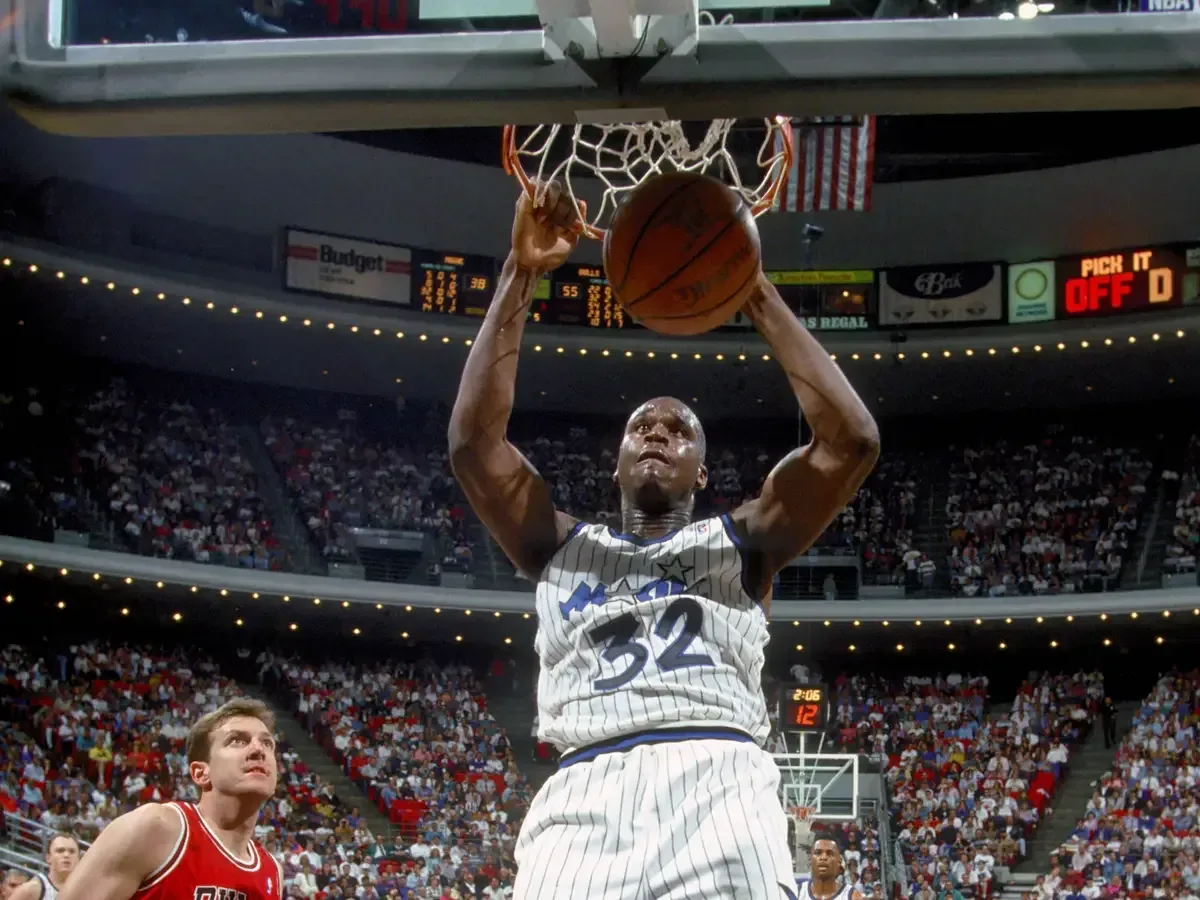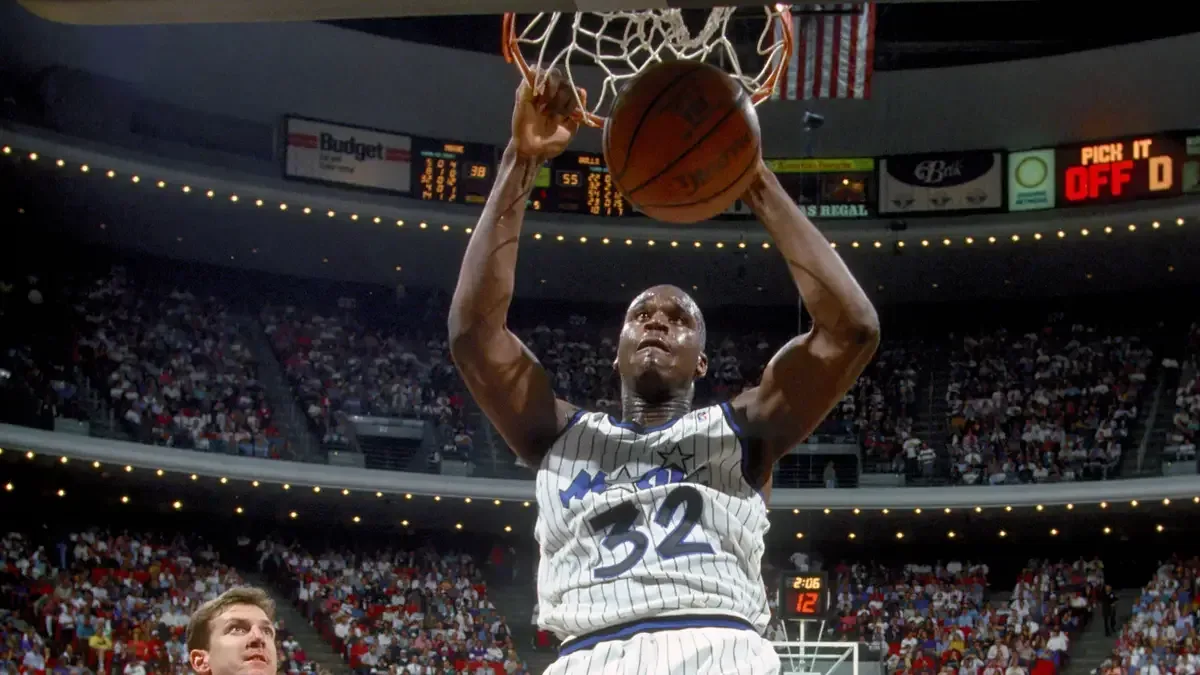
For a generation of basketball-card collectors, Shaquille O’Neal’s 1992 Upper Deck rookie card was not merely another card in the binder. It was the card that made a childhood collection feel important. The familiar No. 1 card, featuring a multi-image dunk sequence, arrived during an era when a star rookie could dominate playground trade talk without needing a serial number, a refractor finish, a swatch of jersey or an autograph.
Decades later, the market is treating O’Neal’s early cardboard with a renewed level of urgency. High-grade examples of his key rookie cards have climbed considerably, but the movement is not confined to the obvious headliners. Non-numbered inserts, subsets and raw cards from his early NBA seasons are also drawing newfound attention. That breadth is important: it suggests collectors are looking beyond a single trophy card and reassessing the wider Shaq catalog.
It is a notable change for a player whose hobby reputation has often lagged behind the scale of his basketball legacy. O’Neal was one of the defining centers of his era, a four-time NBA champion and a larger-than-life public figure whose profile continued through film, music, television and advertising. In collecting, however, other modern basketball icons often commanded more sustained attention while many of Shaq’s cards remained accessible.
The current surge does not mean every O’Neal card will hold a straight upward line forever. Card markets can move quickly, reported sales may vary by condition and eye appeal, and thinly traded cards can produce dramatic-looking percentage changes. Still, the recent numbers across several different issues show why collectors are pulling old Orlando-era stacks out of storage and taking a closer look.
A 1992 rookie card gets a much bigger spotlight
The 1992 Upper Deck Shaquille O’Neal rookie card is the natural starting point. It was widely distributed, meaning the card itself is not a mystery to longtime collectors. The real separator is preservation. Cards that spent years in loose stacks, nine-pocket pages or school binders often picked up soft corners, edge wear and surface flaws. Getting a truly elite grade on a mass-market card from the period is a much tougher proposition than simply locating a copy.
A PSA 10 example could be obtained for less than $2,000 roughly two years ago. Around six months ago, that level had moved only modestly, to approximately $2,600. A sale recorded on August 29 reached $8,000. That represents roughly 205% growth from March, a major leap for a card collectors once encountered everywhere.
The distinction between availability and high-grade scarcity is crucial. A collector might remember seeing the Upper Deck rookie constantly in the 1990s and assume there must be endless pristine copies. But the survival rate for cards kept in gem condition is a different question entirely. The same principle is now influencing interest in other early Shaq releases, especially issues with dark borders, delicate foil, glossy surfaces or designs prone to chipping.
The increase reaches far beyond one iconic rookie
Across the last three months, an index tracking O’Neal cards showed a 120% overall increase. Of the 86 rookie-year Shaq cards in that database, more than half had doubled, while 19 were up by at least 200%. Those figures capture an unusually wide rally across cards at different price points and levels of perceived importance.
Related coverage includes Shaquille O’Neal Card Market Surges Across Rookies and 1990s Inserts.
Among the clearest examples is 1993 Ultra Scoring Kings. A PSA 9 copy that was around $750 three months earlier is now in the $4,500 to $4,800 range. In the next grade down, PSA 8 sales rose from about $235 to more than $1,800, a 676% jump. That is the kind of escalation that makes condition-sensitive inserts central to any conversation about the current market.
Scoring Kings has the visual appeal and period identity collectors expect from a 1990s basketball insert, but its rise also illustrates a broader shift. The hobby has increasingly shown interest in cards that feel distinctive rather than simply scarce on paper. Inserts from this period frequently combine bold graphics, memorable photography and manufacturing quirks that make clean copies difficult. For collectors who grew up with the product, that design language is part of the appeal.
Several once-overlooked 1992 cards have also posted sharp gains:
- 1992 Ultra Rejectors #4: PSA 9 sales climbed from $37 to $190, while PSA 8 copies rose from $15 to $100.
- 1992 Stadium Club Members Only #201: A PSA 9 that sold for $70 90 days earlier has reached $336.
- 1992 Ultra All-Rookies #7: In PSA 9, the card moved from $47 to $211 over the same general period.
None of these cards needs to be a hobby blue-chip on the level of a flagship rookie to matter. Their performance instead points to deeper buying interest in O’Neal’s rookie-year checklist. For collectors, that can be more exciting than a single record-breaking sale because it expands the conversation to cards that may have been ignored in a bargain box only months earlier.
1995 SkyBox cards offer the wildest recent swings
The momentum extends beyond 1992 and beyond graded examples. Shaq’s 1995 SkyBox Premium Meltdown, a card from his early Orlando years, reportedly rose from $73 in early June to as high as $763 on August 24. That is a more than tenfold difference within a short window, though collectors should remember that raw-card pricing can be particularly sensitive to condition, listing quality and the number of sales available for comparison.
The ungraded 1992 Topps Gold #362 has also moved. Long obtainable below $25, it has surpassed $100, more than tripling even if its increase is less extreme than some of the insert spikes. Topps Gold is a useful reminder that a familiar issue can gain traction when a player’s entire early-career market catches fire.
Perhaps the strangest recent example is 1995 SkyBox Premium Electrified #293. A subset card that recently could be found for under $2 has reportedly sold from $25 to $40, with some sales reaching $60. Such a move is a signal worth watching, not a guarantee of a new permanent floor. Yet it demonstrates that collectors are searching farther down the checklist and putting money behind cards that historically attracted little notice.
That kind of discovery process is part of what makes 1990s basketball collecting compelling. The decade’s products were packed with visual experiments: foils, embossed surfaces, unusual acetate-like treatments, aggressive color and insert concepts that often feel more playful than later premium releases. Today’s collectors are not only pursuing rarity; many are responding to the aesthetic personality of the era.
Why Shaq may be connecting now
There is no single confirmed explanation for a market move of this size. A renewed appreciation for 1990s basketball is an obvious possibility. So is a collector base that has become more selective after years of intense focus on emerging prospects and modern product hype. When people reconsider established legends, O’Neal offers an unusually strong combination of dominance, championships, name recognition and cultural staying power.
His identity outside basketball matters, too. O’Neal has been continuously visible for decades, giving younger collectors a point of familiarity while older collectors reconnect with cards from their formative years. Pop-culture legacies are rarely limited to one medium; the way personalities revisit and defend the parts of their own public story can be seen elsewhere, including Mr. T’s reflections on the legacy he values most. Shaq’s cards benefit from a similarly broad, multi-generational presence.
The top end remains a major factor as well. Scarcer 1990s parallels, including Precious Metal Gems, SkyBox Rubies and E-X Credentials, naturally command attention because few examples have surfaced and public sales are limited. But the current story is more expansive than elite parallel scarcity. The movement in base rookies, standard inserts and raw subset cards is what gives the surge its unusual texture.
What collectors should take from the boom
Collectors revisiting old Shaq cards should separate sentiment from condition. Centering, corners, edges, print defects and surface quality can produce enormous differences in value, particularly where PSA 9 and PSA 10 examples are concerned. A card remembered as “pack fresh” may still have flaws that become obvious under close inspection. For glossy or foil-heavy 1990s releases, careful handling is especially important.
It also pays to look at actual completed sales rather than assuming an asking price represents a card’s value. Limited public transactions can make a card appear to leap overnight, and a raw copy is not automatically comparable to another raw copy. Grade, visual quality, authentication and market timing all matter.
Even with those cautions, O’Neal’s resurgence has made one thing clear: the collecting world is giving his early cards a more serious second look. From the famous 1992 Upper Deck rookie to Ultra inserts and overlooked SkyBox Premium subsets, a player once viewed as comparatively undervalued is becoming one of the most closely watched names in 1990s basketball cards. Somewhere, a shoebox full of old Orlando Magic cardboard has become a much more interesting piece of household inventory.