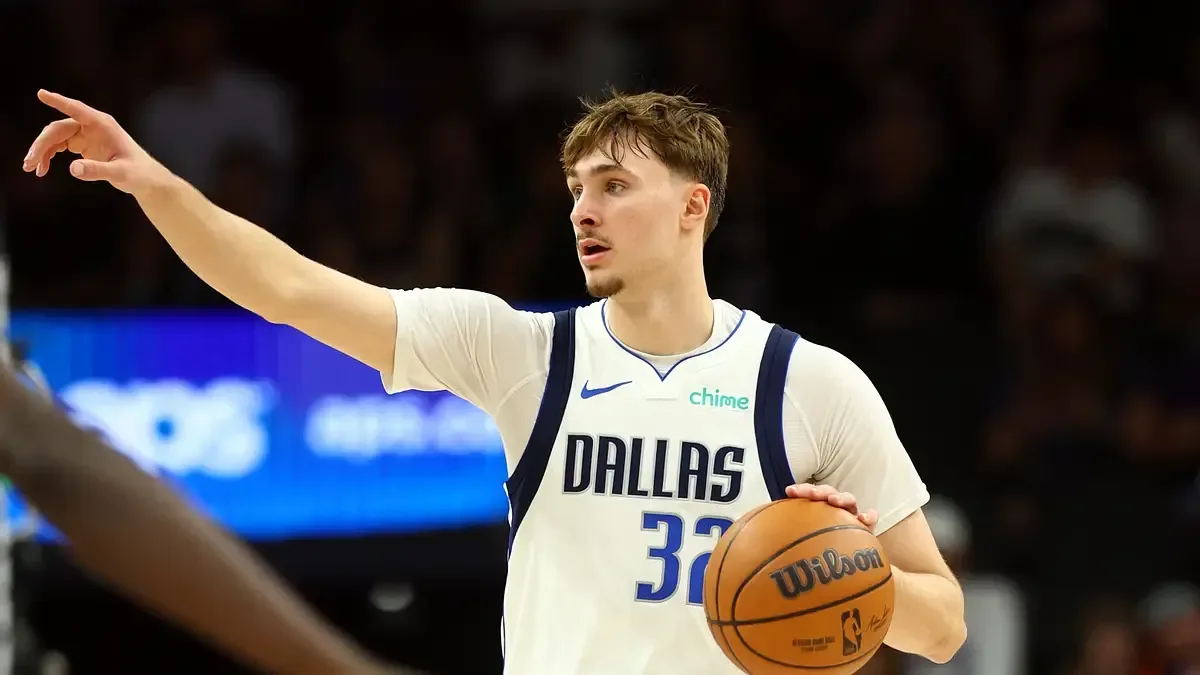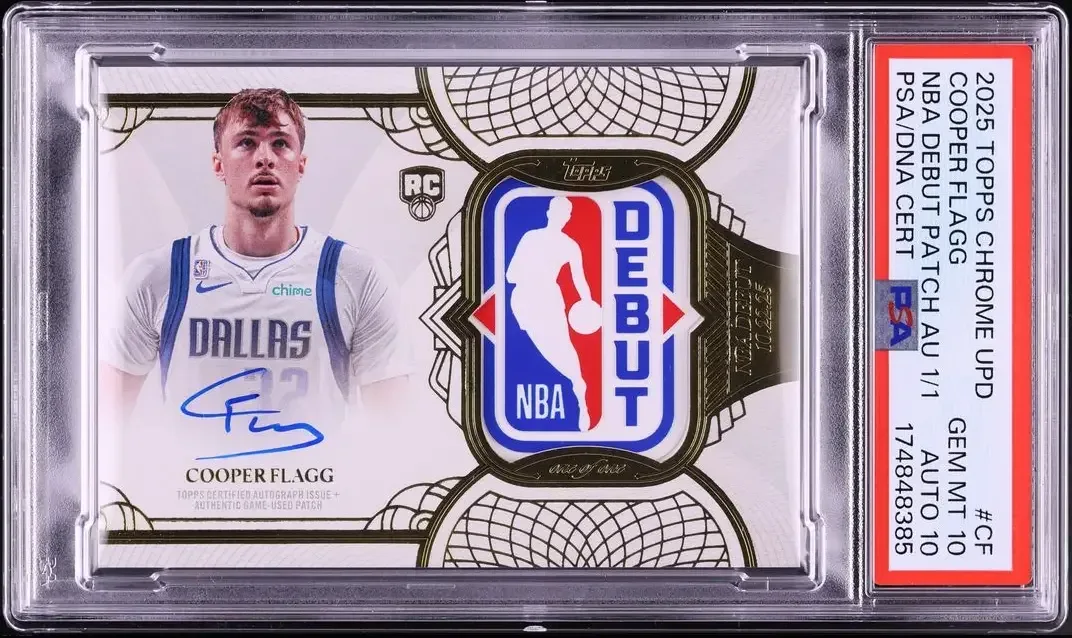
Cooper Flagg’s unique Rookie Debut Patch autograph card has a new destination after its $8.04 million sale on September 25, 2026: a digital repack chase.
PrizePicks has identified itself as the buyer and says the card will be available through its newly introduced PrizePicks Packs product. That makes the Flagg card—described as a 2025 Topps Chrome Update Rookie Debut Patch autograph graded PSA GEM MT 10, with a 10 autograph grade—the central prize in a system built around digital pack openings rather than a conventional single-card auction or a sealed hobby box.
The scale of the card’s previous sale is the headline, but the more unusual development is what happens next. Instead of staying with one collector after a high-profile purchase, the card is set to become a possible pull for customers buying into a tiered repack program. PrizePicks says Packs will be available in all 50 states, will offer nine purchase tiers from $1 to $2,500, and will display both pull odds by rarity tier and the minimum and maximum values associated with possible pulls.
From private winning bid to public chase card
The identity of the Flagg card’s buyer was not initially known following the September sale. PrizePicks’ plan resolves that mystery while changing the role of the card entirely. It is no longer simply a singular, elite basketball-card holding; it is inventory meant to anchor an ongoing customer experience.
That distinction matters. A conventional sale transfers a collectible to a specific buyer at a known final price. A repack model instead places a card into a pool from which buyers can receive a result at a lower entry cost. The buyer of a digital pack is not purchasing the Flagg card itself. They are purchasing a chance at a pull governed by the offering’s stated structure and odds.
For the card market, the arrangement puts an unusually expensive modern basketball card at the center of a format that can begin at $1. The low starting price does not mean every tier offers the same likelihood of landing top inventory. PrizePicks says higher tiers provide better odds at higher-tier cards. The practical point for collectors is straightforward: the advertised possibility of a grail card and the probability of receiving one are separate things, and the tier-specific odds are the information that connects them.
What a digital repack means in this case
A repack is a product assembled from existing cards rather than a newly issued trading-card release. Here, “digital” refers to the way the pack-opening and collection experience is presented through PrizePicks Packs. The company says customers can request the physical card they pull, so the underlying prizes are not described solely as digital items.
That physical-card option is significant for collectors who care about holding, displaying, storing, grading, or eventually selling a card outside the platform. It also helps separate the concept from an experience where a customer receives only a digital representation. PrizePicks is presenting Packs as a way to access actual rare sports and Pokémon cards while using a digital process to buy and open the product.
Related coverage includes Cooper Flagg’s $8.04M Debut Patch Auto Joins PrizePicks Packs.
The company also says it will offer a 100 percent fair-market-value buyback option. In practical terms, that means a customer can elect to sell back a pull rather than request delivery of the physical card. The details supplied do not define how fair market value will be calculated, when that value is set, or how values might change after a pull. Those mechanics are important considerations for anyone comparing the convenience of a buyback with taking possession of a card.
Similarly, published minimum and maximum card values can help a buyer understand the stated range of outcomes available within a pack offering, but they should not be treated as a prediction that any particular opening will produce a high-value result. The relevant disclosures are the odds for the selected tier, the pool of potential cards, and the value terms that apply to that particular purchase.
The headline inventory goes beyond Flagg
PrizePicks says its inventory will also include several other high-value cards: a 1998 Pokémon Japanese CoroCoro Comic Promo Holo Illustrator Pikachu graded CGC MINT 9; Dylan Harper’s Rookie Debut Patch autograph graded PSA Mint 9; and Kon Knueppel’s Rookie Debut Patch autograph graded PSA GEM MT 10. The company has estimated each of those cards at more than $2 million.
The mix is notable because it combines modern basketball rookie material with a landmark Pokémon promotional card. Rather than restricting the chase to one audience, the proposed inventory speaks to several collector interests at once: current-player rookie cards, patch-autograph cards, vintage-era Pokémon material, and encapsulated, third-party graded cards.
Grading language is a key part of how these cards are being presented. PSA and CGC are grading companies whose labels communicate an assessment of a card’s condition. “GEM MT 10” is a top PSA card grade, while an autograph grade evaluates the signature itself. A card grade and autograph grade are related but separate assessments: one addresses the card, and the other addresses the signed ink. Collectors weighing an autographed card’s appeal may also want to understand the circumstances surrounding its signature, an issue explored in why the timing of an autograph can matter.
In Flagg’s case, the combination of a unique Rookie Debut Patch autograph, a PSA GEM MT 10 card grade, and a 10 autograph grade is central to its presentation as a top chase. “Patch” generally identifies memorabilia embedded in the card, while “autograph” identifies the player signature. The supplied details characterize this Flagg example as unique, which explains why it drew exceptional attention before the buyer was identified.
Transparency claims are the practical focus
PrizePicks says Packs will provide complete transparency across its tiers, including the odds of pulling each rarity tier and the minimum and maximum value customers can expect from available cards. For a product centered on randomized outcomes, those disclosures are more useful to a prospective buyer than the mere presence of a marquee card.
There are three separate questions collectors can ask before buying into a repack:
- What can be pulled? The checklist or stated prize inventory establishes the possible outcomes, including the Flagg card and the other named premium cards.
- What are the odds at the selected tier? A $1 entry and a $2,500 entry may both have access to major chase cards, but PrizePicks says the higher tiers carry better chances at higher-tier results.
- What happens after the pull? PrizePicks says collectors can use its fair-market-value buyback option or request the physical card.
That framework does not eliminate the inherent uncertainty of a randomized product. It does, however, give buyers a way to evaluate the offer based on disclosed information instead of focusing solely on its most spectacular card. A buyer interested chiefly in physical ownership may prioritize the process for requesting delivery. Someone who prefers not to receive the card may care more about how the buyback works. And a buyer drawn to the potential upside should concentrate on the odds for the specific purchase tier, not simply the fact that the Flagg card is in the wider pool.
Why the model changes the conversation around an eight-figure card
High-end cards are often inaccessible because the transaction itself demands an enormous amount of capital and may occur through auctions. PrizePicks’ stated aim is to offer a more direct digital route into premium sports and Pokémon inventory. The Flagg card is an extreme example of that pitch: a card that sold for $8.04 million can be advertised as a possible result in a product whose entry tier begins at $1.
But accessibility to a chance is not the same as accessibility to ownership. The model lowers the cost of participating in the chase, not the rarity of the prize. That is why odds, tier differences, value ranges, and post-pull choices matter so much. They establish the terms under which a collector is taking part.
PrizePicks is also framing Packs as an entertainment and collecting product informed by customer feedback. Its CEO, Mike Ybarra, said the goal is to make acquiring rare premium cards more seamless for casual fans and collectors, while describing the initiative as a responsible experience. The company’s announced structure—nine tiers, odds disclosures, stated value ranges, buyback availability, and physical-card requests—will be the practical test points for that promise.
For now, the clearest takeaway is that one of 2026’s most closely watched card purchases has become an inventory story rather than an ownership story. The Cooper Flagg Rookie Debut Patch autograph remains a singular card, but the path to obtaining it is set to be divided among many potential pack buyers. Whether that feels like broader access or simply a different kind of high-end chase will depend on how collectors assess the published odds and the terms attached to each tier.