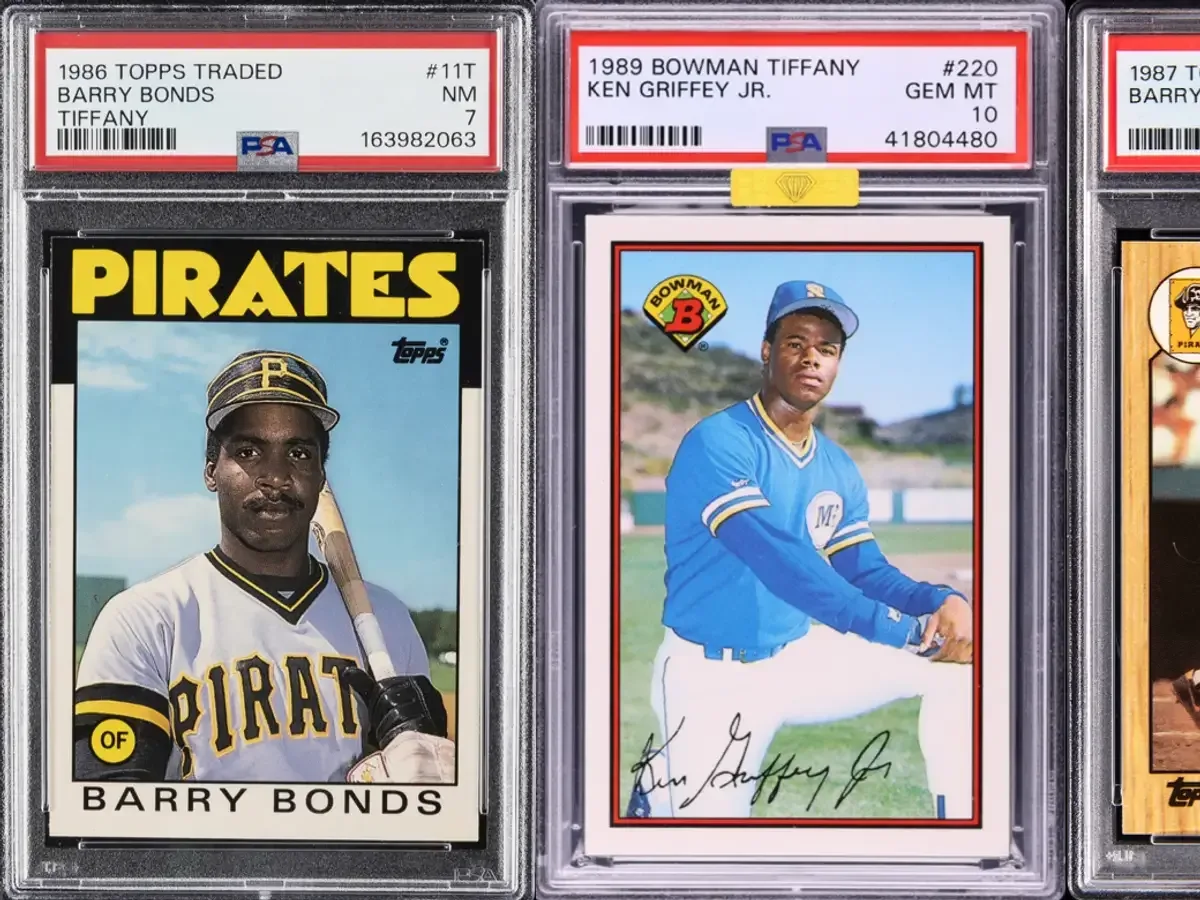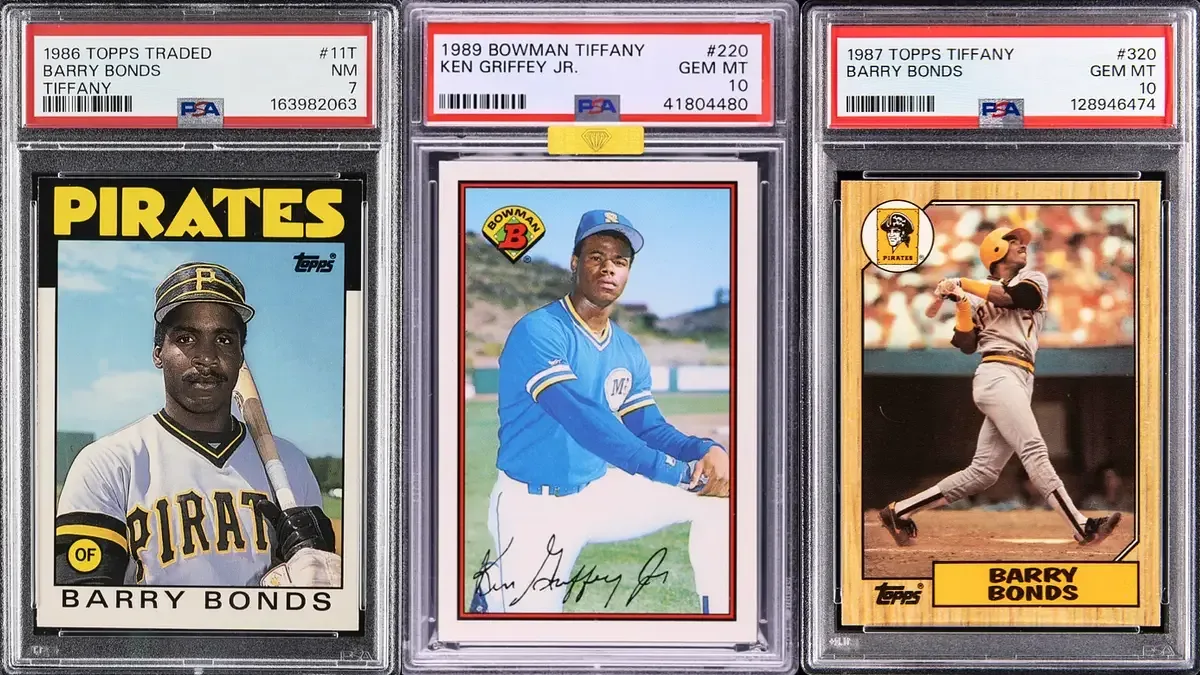
The 1980s baseball-card boom is often reduced to a simple punchline: too many cards, too much wax, too little scarcity. That description fits plenty of the decade’s mass-market output, but it misses a premium corner of the hobby. Beginning in 1984, Topps issued limited complete-set releases branded as Collector’s Editions. Collectors later gave these glossy, bright-white-stock versions a more memorable name: Tiffany.
The nickname is fitting. Compared with ordinary Topps cards, the Tiffany editions present the same familiar designs with a polished finish, cleaner-looking cardstock, and far smaller production totals. They were sold as complete sets rather than inserted into regular packs, making them a distinctly different proposition from the standard cards that flooded stores and collections.
That combination of a beloved rookie-card era and constrained supply has made the best Tiffany releases serious targets for set builders, registry competitors, autograph collectors, and investors alike. Condition matters enormously, especially because glossy surfaces can reveal scratches and because surviving examples have spent decades being handled, stored, signed, or simply enjoyed.
The ranking below weighs historical importance, approximate set production, rookie-card strength, and the market evidence supplied by high-grade sales and PSA population comparisons. Prices are snapshots rather than guarantees; individual card appeal, centering, eye appeal, grading outcomes, and timing can all dramatically change a result. For a broader hobby perspective on the era’s premium releases, collectors can also read this overview of 1980s Tiffany baseball card sets.
For more context, explore Primetime Turns Chris Hansen’s Ratings Chase Into a Suffocating Media Horror Story.
Why Tiffany cards command a different kind of attention
A regular card and a Tiffany counterpart may share photography, card number, and checklist placement, but they do not share the same scarcity story. The premium cards generally combine shinier fronts with noticeably whiter backs than their grayish standard counterparts. In several years, small pieces of back text—or the absence of asterisks—offer more reliable confirmation than a quick look at the front.
The result is a category where familiar rookie cards acquire a second tier. A base issue may be iconic and plentiful; its Tiffany version is the same iconic card in a much harder-to-find format. The difference becomes especially sharp in gem-mint populations. A 1989 Bowman Ken Griffey Jr. Tiffany PSA 10, for example, has a reported population of 157, versus 2,674 PSA 10 examples for the standard edition. Those gaps help explain why the two formats can trade in entirely different price ranges.
5. 1987 Topps Tiffany
The faux wood-grain look of 1987 Topps is instantly recognizable, and the Tiffany treatment gives that design a welcome visual upgrade. The glossy surface makes the set feel more refined without removing any of the appeal of a classic mass-market Topps issue. Approximately 30,000 Tiffany sets were produced—large next to certain other Tiffany runs, but microscopic compared with standard 1987 Topps production.
Related coverage includes Top 3 Tiffany Baseball Card Sets of the 1980s Collectors Still Chase.
Its rookie lineup earns the set a spot in this ranking. Barry Bonds, Bo Jackson, Mark McGwire, Rafael Palmeiro, and Barry Larkin make it a compact roster of enduring hobby names.
- Barry Bonds rookie, #320: A PSA 10 Tiffany copy has reached $5,934, with 309 reported PSA 10s. The standard PSA 10 has been reported at $1,150, with a population of 1,776.
- Bo Jackson rookie, #170: A Tiffany PSA 10 has recently sold for $1,550; the reported gem-mint population is 566. A standard PSA 10 has recently brought $350, with 2,535 reported examples.
Identification guide: Look for the glossy front first. On the reverse, Tiffany cards use bright white stock while regular cards look grayer. Standard 1987 Topps cards also carry “Printed in U.S.A.” near the copyright information; that text is absent from the Tiffany version.
4. 1989 Bowman Tiffany
Bowman entered the premium experiment in 1989, and it did so at precisely the right moment for rookie-card history. The oversized 1989 Bowman design is not universally loved, but its Tiffany edition contains one of the era’s most consequential cards: Ken Griffey Jr.’s #220 rookie. With only about 6,000 sets produced, the premium version is scarce by any late-1980s standard.
The checklist runs deeper than Griffey. John Smoltz, Gary Sheffield, and Sandy Alomar Jr. give the set a meaningful Hall of Fame and star-player foundation, while Bo Jackson remains a popular non-rookie chase.
- Ken Griffey Jr. rookie, #220: A Tiffany PSA 10 has recently sold for $22,200, and a PSA 10 sale of $25,000 has also been reported. The reported PSA 10 population is 157. Standard PSA 10 copies have recently been reported around $681, with 2,674 examples in the population count.
- Bo Jackson, #126: A Tiffany PSA 10 has been reported at $1,550. Its PSA 10 population stands at just 16, compared with 121 for the standard version, which has been reported at $206.
Identification guide: The premium Bowman cards have glossy fronts and white backs. Standard 1989 Bowman cards have a flatter surface and a duller gray-backed stock.
3. 1984 Topps Tiffany
The first Topps Tiffany set earns its high placement on historical grounds alone. It established the premium template: a flagship Topps design, a gleaming front, high-quality white cardstock, and a limited complete-set distribution model. Its approximate 7,000-set run also places it among the tougher Tiffany releases.
History is not the only draw. The 1984 checklist includes 49 Hall of Famers and two signature rookie cards in Don Mattingly and Darryl Strawberry. Mattingly, in particular, remains an essential card for collectors of 1980s Yankees material and vintage-style rookie-card portfolios.
- Don Mattingly rookie, #8: A Tiffany PSA 10 has sold for $11,800. The reported PSA 10 population is 54, compared with 964 standard PSA 10s; a standard gem-mint copy has been reported at $2,033.
- Nolan Ryan, #470: A Tiffany PSA 10 has recently sold for $5,655, with only 28 reported PSA 10s. The standard PSA 10 has been reported at $1,450 with a population of 418.
Identification guide: This is one of the simpler comparisons. Tiffany cards have a shinier face and a brighter reverse than regular 1984 Topps. Still, a careful back-to-back comparison is wise when buying raw cards.
2. 1985 Topps Tiffany
Few sets can match 1985 Topps Tiffany for big-card firepower. Mark McGwire’s USA Baseball card and Roger Clemens’ rookie are both towering entries in their respective player markets, while Kirby Puckett, Dwight Gooden, Eric Davis, and Orel Hershiser expand the checklist’s appeal.
The premium issue also matters because regular 1985 Topps is known for print-quality variation, including examples with a greenish cast. Tiffany cards carry their own condition risks, but the format is regarded as having stronger quality control and a more attractive presentation.
- Mark McGwire USA Baseball rookie, #401: A Tiffany PSA 10 has recently sold for $29,000, with 35 reported PSA 10 examples. The standard PSA 10 has been reported at $5,000 and has a population of 306.
- Roger Clemens rookie, #181: A Tiffany PSA 10 has recently sold for $22,600. Its PSA 10 population is reported as 49; the standard edition has been reported at $2,652 with 383 PSA 10s.
Identification guide: Tiffany copies have glossy fronts and distinctly brighter backs. The most useful detail is in the fine print: standard 1985 Topps cards have an asterisk on the back, while Tiffany cards do not.
1. 1986 Topps Traded Tiffany
The top spot belongs to a set built around an outrageous rookie-card lineup. With a reported production run of only 5,000 sets, 1986 Topps Traded Tiffany is already a scarce premium issue. Add Barry Bonds, Bo Jackson, José Canseco, and Will Clark, and it becomes one of the defining baseball-card releases of the decade.
It is not merely a set of good rookie cards in a nicer finish. For several of these players, this is the Tiffany rookie collectors most want. The base 1986 Topps Traded set is itself famous, but the premium counterpart creates a far rarer tier of the same rookie images and checklist numbers.
- Bo Jackson rookie, #50T: A Tiffany PSA 10 has sold for $25,500, with a reported PSA 10 population of 37. A standard PSA 10 has been reported at $2,100, while its PSA 10 population is 1,154.
- Barry Bonds rookie, #11T: A Tiffany PSA 10 has recently sold for $18,000. The reported PSA 10 population is 456, against 5,145 for the standard version, which has been reported at $1,003 in PSA 10.
Identification guide: This is the trickiest set in the top five because both standard Traded and Tiffany cards have white backs. Check the fine print closely: standard 1986 Topps Traded cards have two small asterisks on the reverse, while Tiffany cards have none. The Tiffany front also has a glossier finish, but the asterisk check is the more decisive test.
Buying priorities for a difficult premium niche
These five releases show why “Junk Wax” should never be used as shorthand for “all 1980s cards are common.” A collector choosing among them can take several paths. The 1986 Topps Traded Tiffany set is the pure rookie-card powerhouse. The 1985 issue is an elite McGwire-and-Clemens destination. The inaugural 1984 set offers historical significance and Mattingly. The 1989 Bowman set is the high-end Griffey play. And 1987 Topps Tiffany supplies a broad, star-studded rookie class in a particularly recognizable design.
For raw-card buyers, the key is to verify the physical tells before paying a Tiffany premium. Gloss alone can be difficult to judge in marketplace photos, particularly under heavy lighting or scanning artifacts. Back-stock color, copyright-line text, and asterisk details are more useful safeguards. For graded copies, check that the label identifies the intended premium issue, then assess the card itself rather than treating the plastic holder as a substitute for close inspection.
At their best, 1980s Tiffany cards preserve the visual language of the hobby’s most overproduced era while adding the rarity it often lacked. That contradiction is precisely what makes them so compelling.