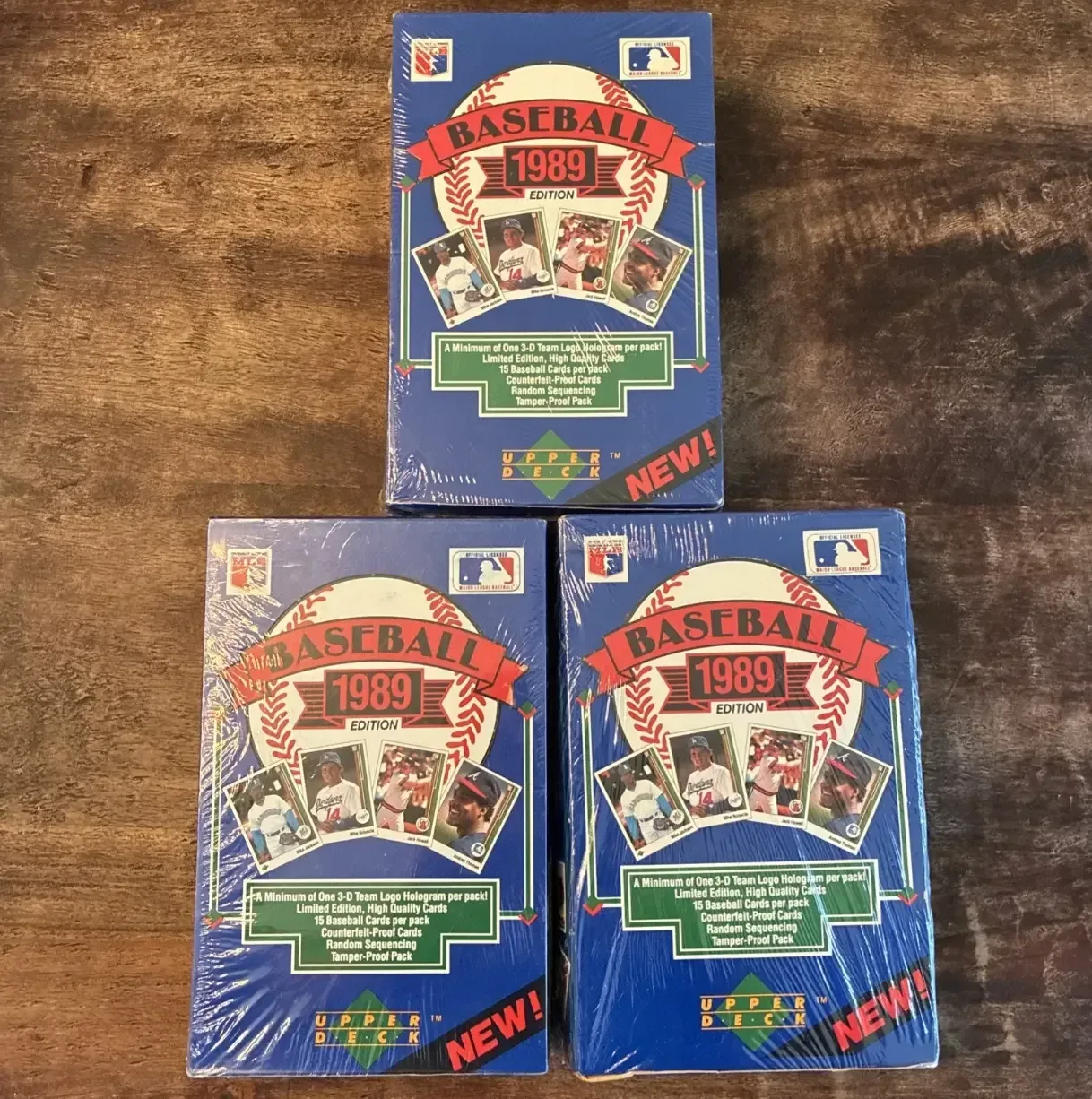
In 1989, a 99-cent baseball-card pack was a bold ask. Topps packs sold for 45 cents, so Upper Deck’s entry point was more than twice as high. The gamble was not simply to charge more, though. Upper Deck built its debut baseball release around a presentation intended to feel materially different from the wax-pack norm: tamper-resistant foil wrappers, sharp full-color photography on both sides, no gum stick that could damage cards, and a hologram on every card back.
That package turned an 800-card set into a lasting hobby landmark. Demand reportedly pushed 99-cent packs to multiples of their suggested price in the original market, while an unopened 36-pack hobby box sold for $4,650 in July 2026. The sealed-box result should not be read as a simple price for every loose pack or every individual card; sealed condition, unopened-product demand and the appeal of a famous set can all shape an auction result. It does, however, underline the set’s unusual durability as a collecting object.
Ken Griffey Jr.’s No. 1 Star Rookie is the unmistakable centerpiece. Yet reducing 1989 Upper Deck to one card misses why the checklist continues to matter. It contains rookie cards of Randy Johnson, John Smoltz and Gary Sheffield, a memorable Nolan Ryan image, and two variations that show how a small printing issue can create a very different collecting proposition. Below is a closer look at six key cards, what separates their standard and scarce forms, and what the reported grading data actually tells buyers.
What made the set feel premium
Upper Deck did not enter the market by merely changing the logo on a conventional product. Its foil packs were presented as a safeguard against tampering, and the hologram on the reverse was meant to make counterfeiting more difficult. The photography also mattered. Full-color images on both card surfaces and action-oriented shots were a major visual departure from many of the posed portraits and head-and-shoulders photos collectors associated with the period.
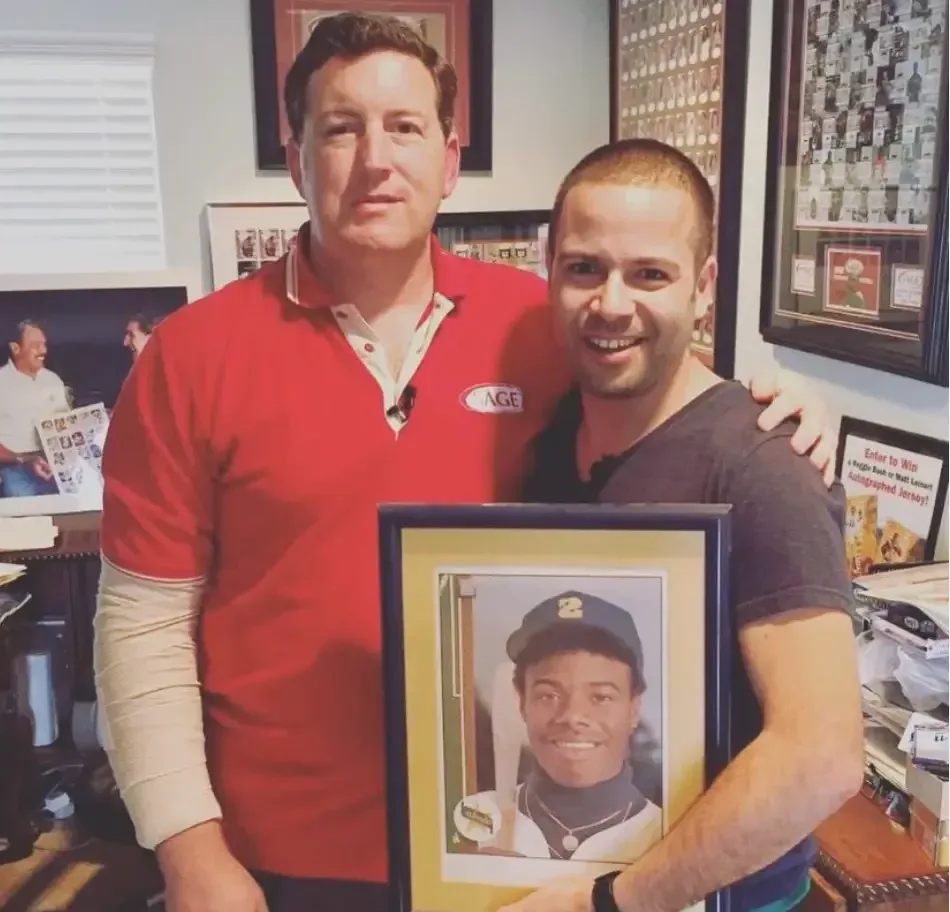
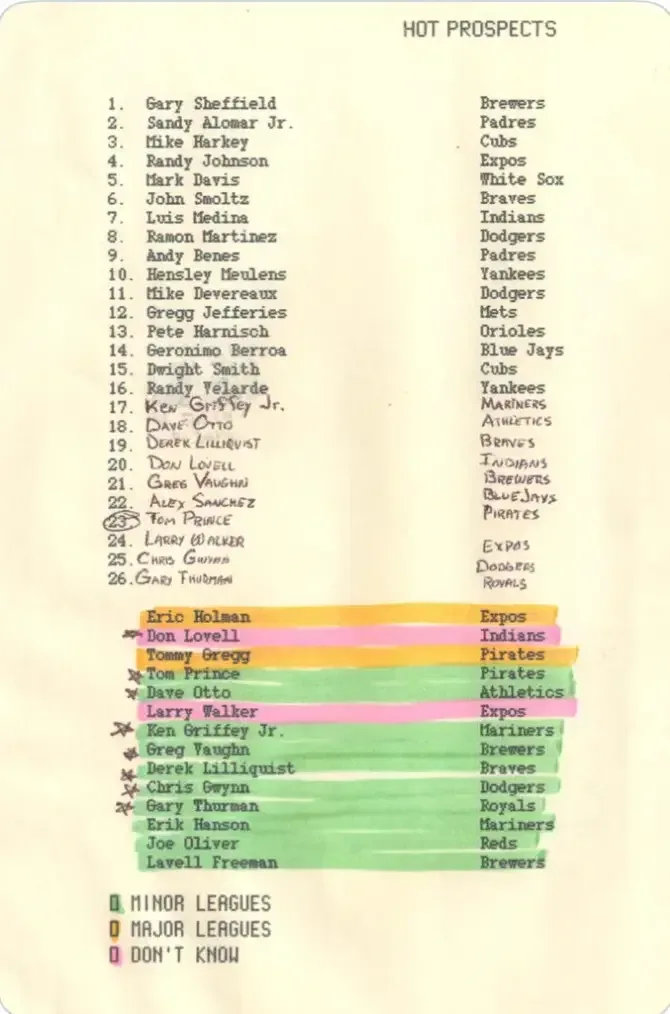
The product’s flagship decision was also a prospect bet. Tom Geideman, Upper Deck’s first employee at age 18, helped choose the player who would lead the Star Rookie subset. Reports describe him narrowing the field to Gregg Jefferies, Gary Sheffield, Sandy Alomar Jr. and Griffey, consulting a prospect publication in the process. Griffey was not the obvious conservative pick: he had not played above Double-A or appeared in a Major League game. Jefferies, meanwhile, had reached the majors and came into 1989 with enormous attention.
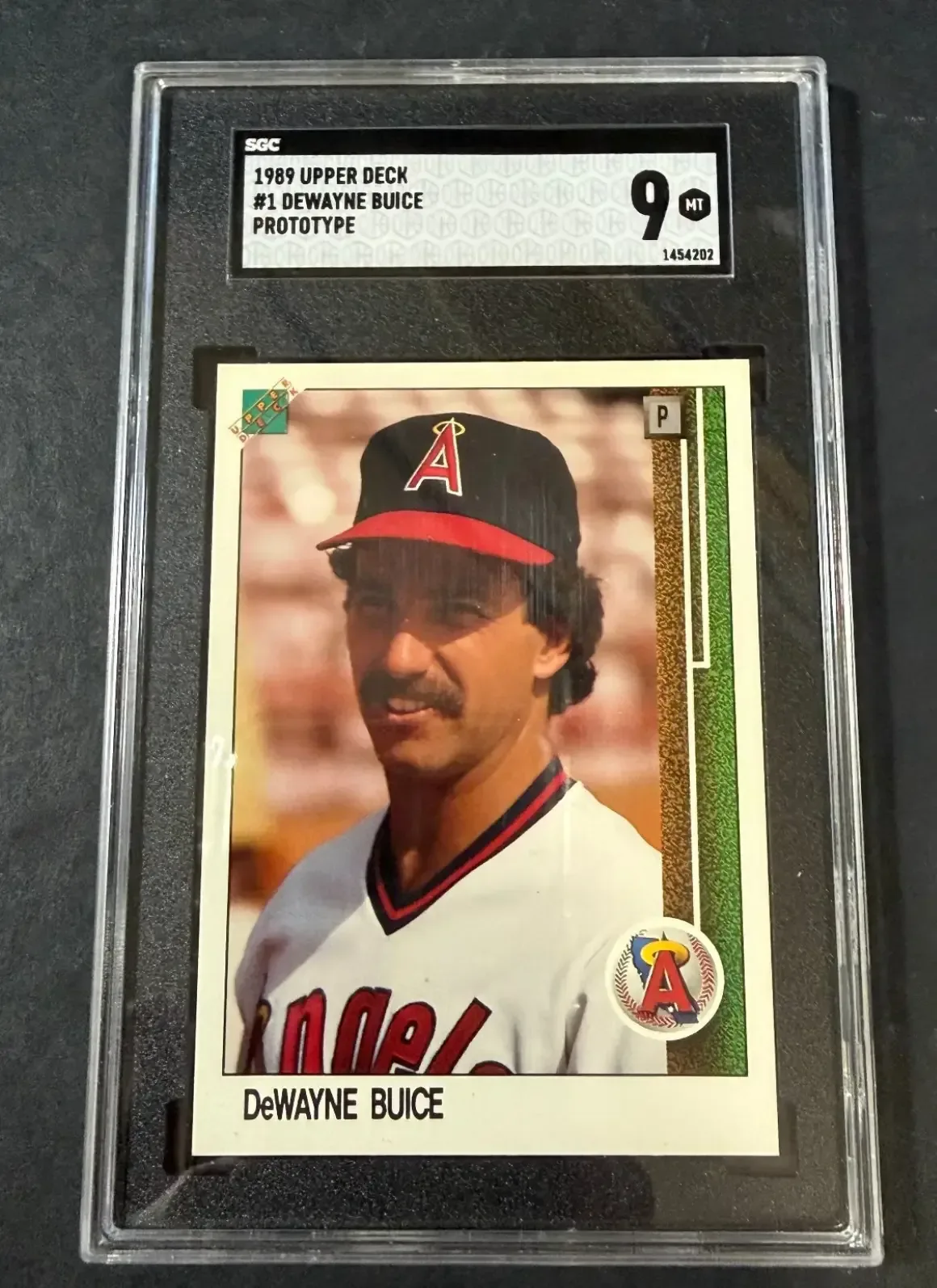
Geideman chose Griffey, in part while approaching the decision as a Mariners fan, and Upper Deck placed him at card No. 1. That selection became an enduring piece of hobby history. The company had previously made DeWayne Buice prototype cards to introduce the brand to dealers, so Griffey was not literally the first card bearing a No. 1 in the company’s promotional history. But he became the No. 1 card collectors remember.
1. Ken Griffey Jr. #1 Star Rookie
Reported sales: PSA 10, $6,215; PSA 9, $496.
Reported PSA population: 130,663 total, including 4,252 PSA 10s and 33,866 PSA 9s.
Few cards better capture the gap between iconic and scarce. Griffey’s 1989 Upper Deck rookie is exceptionally recognizable and has enormous grading volume. The supplied figures describe more than 200,000 graded copies across the broader grading landscape and identify it as the most graded sports card ever. That does not make every copy interchangeable. A PSA 10 is a top-grade specimen under PSA’s standards, while a PSA 9 is one step below it; the reported $6,215 versus $496 sales make clear that condition can dominate the value conversation even for a heavily submitted card.
Related coverage includes The 1989 Upper Deck Baseball Cards That Still Define the Set.
The card also has a famous visual alteration. The original photograph showed Griffey in a San Bernardino Spirit cap and uniform. Upper Deck airbrushed the image, removing the Spirit branding and adding a Seattle Mariners “S.” Reportedly, demand was strong enough that Upper Deck printed special 100-card sheets made up entirely of Griffey rookies. The result is a card whose supply is substantial but whose cultural pull remains exceptional.
2. Dale Murphy #357 Reverse Negative
Reported sales: PSA 10, $2,000; PSA 9, $400.
Reported PSA population: 1,134 total, with 141 PSA 10s and 411 PSA 9s.
The Dale Murphy reverse negative is the most important true error card among these six. During the printing-plate process, the photograph was flipped. Murphy batted right-handed, so the reversed image makes him appear to be a left-handed hitter. The issue was corrected quickly, which is central to its appeal: compared with a standard card printed at scale, fewer examples of this early version entered circulation.
Murphy’s résumé adds a strong player-collection case beyond the printing mistake: he was a two-time National League MVP, seven-time All-Star and five-time Gold Glove winner. Still, the reverse negative’s market premium is fundamentally a scarcity and error-identity story. Its reported PSA 10 sale of $2,000 sits far above the other cards here apart from Griffey’s top-grade rookie.
There is a practical caution. The card’s popularity has attracted counterfeits. A prospective buyer should check for the metallic Upper Deck hologram in the lower area of the back. That feature is not a comprehensive authentication guarantee by itself, but it is an important basic detail in a category where an altered or fabricated error can otherwise be difficult for inexperienced collectors to assess. More broadly, authentication and condition standards matter whenever imagery and printing variations drive the premium; the same need for clear presentation arises in other collecting conversations around viewer trust and altered versions of media.
3. Randy Johnson #25 Star Rookie
Reported sales: PSA 10, $267; PSA 9, $36.
Reported PSA population: 37,878 total, including 5,604 PSA 10s and 18,563 PSA 9s.
Randy Johnson’s Star Rookie offers an accessible route into a major Hall of Fame pitcher’s early-card catalog. The supplied information places raw copies below $5, while the recent reported graded sales show a sharp condition premium, from $36 for a PSA 9 to $267 for a PSA 10. That price separation illustrates why buyers should decide before shopping whether they want a representative copy, a high-grade card, or a long-term grading candidate. Those are different goals, with different budgets and risks.
Collectors should also avoid a frequently repeated mix-up: the sought-after Marlboro error associated with Johnson is on his 1989 Fleer rookie, not the 1989 Upper Deck card. The distinction sounds minor, but it changes the item entirely. A seller or listing that implies this Upper Deck issue has that variation should prompt extra scrutiny. Johnson’s five Cy Young Awards and historical standing make the card compelling without assigning it an error it does not have.
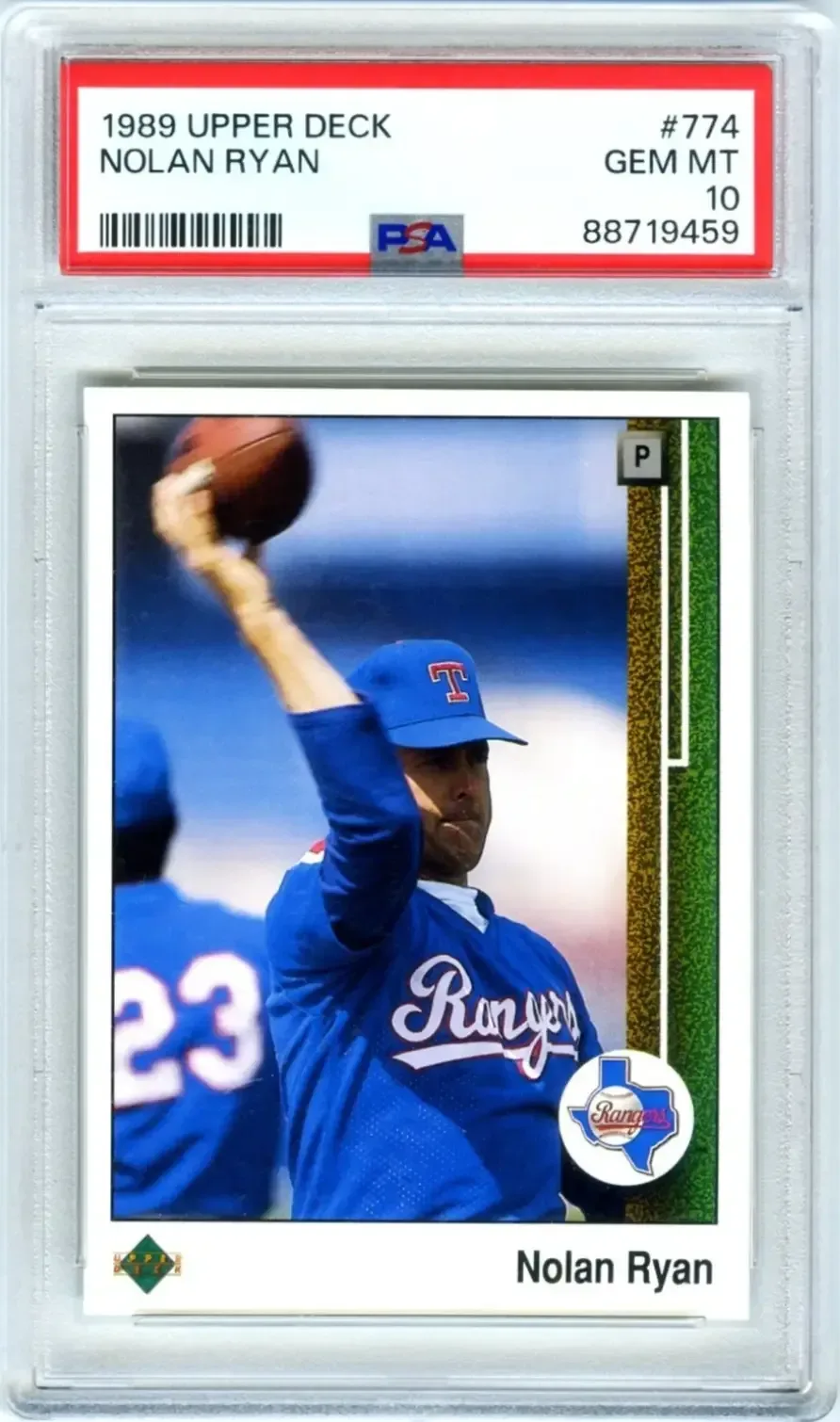
4. Nolan Ryan #774, the football photo
Reported sales: PSA 10, $198; PSA 9, $38.
Reported PSA population: 3,401 total, with 918 PSA 10s and 1,369 PSA 9s.
Nolan Ryan appears twice in the set, but card No. 774 is the memorable one because it shows him throwing a football rather than pitching a baseball. Ryan routinely used football throws in warm-ups and between starts, employing the heavier ball and its throwing mechanics to stretch his arm and keep his shoulder loose. It is a card built around personality and routine rather than a standard game-action frame.
The other Ryan card, No. 145, uses a triple-exposure pitching image. Together, they are a useful example of Upper Deck’s visual ambition: an established superstar could be presented through a striking concept rather than a generic portrait. The football card also has an autograph market; a signed example reportedly set an all-time high of $1,078 on September 1. That signed result should not be treated as the value of an unsigned copy, since the autograph changes the collectible being sold.
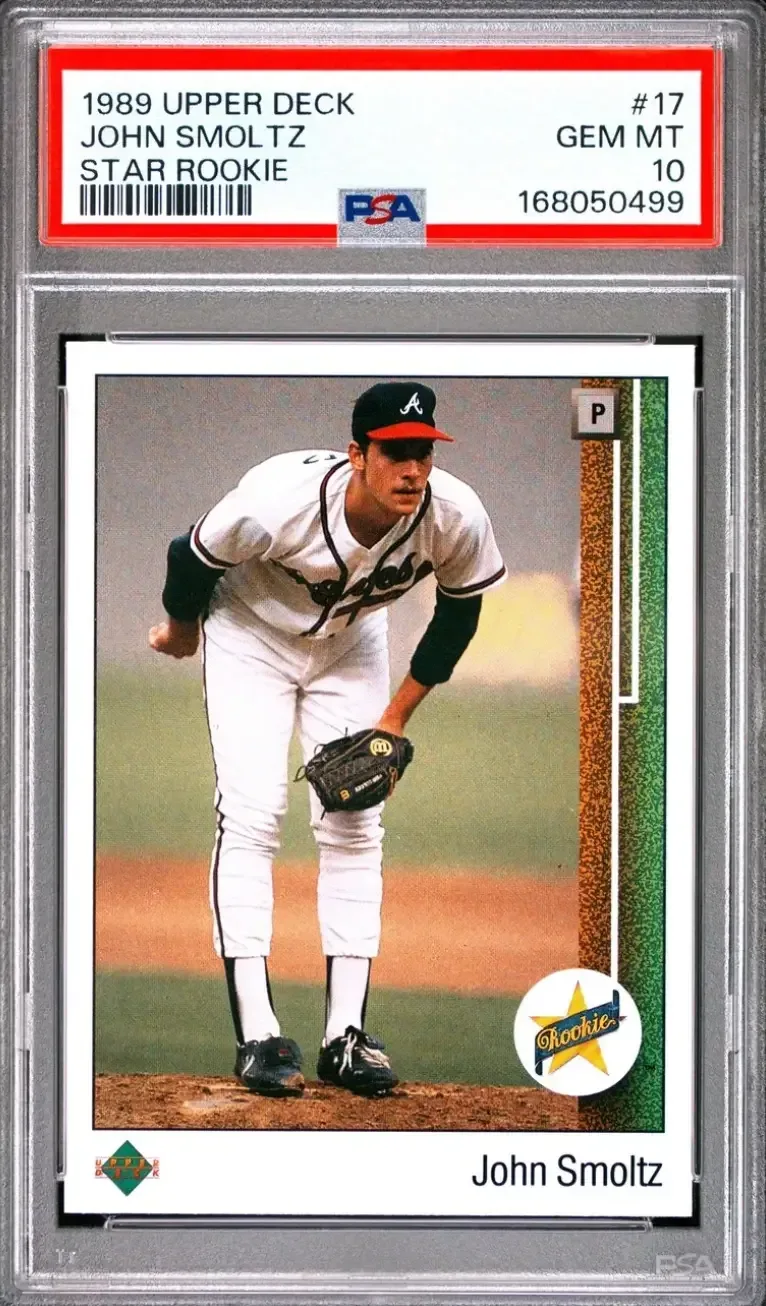
5. John Smoltz #17 Star Rookie
Reported sales: PSA 10, $75; PSA 9, $15.
Reported PSA population: 7,252 total, including 2,674 PSA 10s and 2,430 PSA 9s.
John Smoltz’s No. 17 Star Rookie is widely regarded as his most desirable mainstream rookie card. Its action photograph is important to that reputation. At a time when posed shots and close-up portraits were common, the image offered an energetic alternative that aligned with Upper Deck’s broader design approach.
Smoltz’s Hall of Fame status makes the card an essential checklist stop for player and Braves-focused collectors, while its reported $75 PSA 10 and $15 PSA 9 sales keep it considerably below the biggest numbers associated with Griffey and the Murphy error. A PSA 10 autographed copy recently sold for $491, another reminder not to blend unsigned-card transactions with signed-card transactions. Autograph quality, authentication and the base card’s condition all potentially affect the final result.
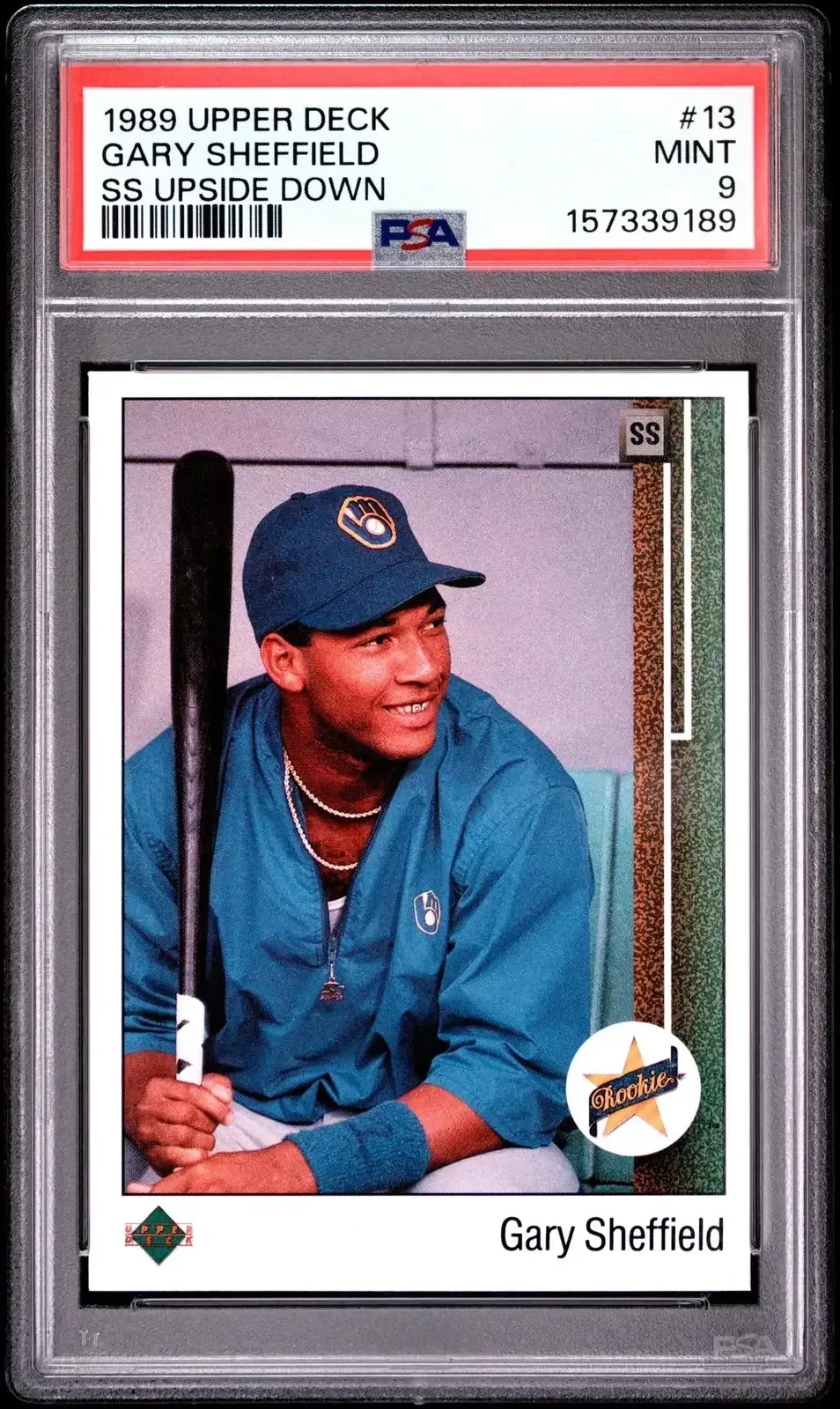
6. Gary Sheffield #13 Star Rookie and the upside-down SS
Regular card, reported sales: PSA 10, $56; PSA 9, $5.50.
Upside-down SS variation, reported sales: PSA 10, $500; PSA 9, $35.
Reported PSA populations: 9,884 regular cards and 670 upside-down SS examples.
Gary Sheffield was ranked first on Geideman’s original prospect list, well ahead of Griffey. His career reached a Hall of Fame-caliber level, although alleged performance-enhancing drug use has complicated his Hall of Fame case. In 1989 Upper Deck, however, Sheffield offers something the Griffey card does not: a distinct early-printing variation.
On the regular No. 13 Star Rookie, the small “SS” position graphic is correctly oriented. On the error, it was printed upside down. Only 43 PSA 10s and 180 PSA 9s are listed for that variation in the supplied population figures, which helps explain why a reported PSA 10 error sale reached $500 compared with $56 for the regular card. The PSA 9 gap is much narrower, at $35 versus $5.50, but still substantial in percentage terms.
For buyers, the essential lesson is to inspect the precise detail being advertised. “Gary Sheffield rookie” is not enough to identify the higher-premium variation. Confirm the orientation of the position graphic, compare it with a verified regular copy, and distinguish the version before using any sale as a pricing reference.
How to read the numbers without overreading them
Population reports count cards graded by a particular company, not every surviving copy and not necessarily every card in circulation. They are useful evidence of how frequently an issue has been submitted and how many examples earned each grade, but they are not a definitive census. A card can also be resubmitted, and grading data cannot by itself establish the entire supply of raw cards.
Recent sales are similarly snapshots rather than fixed price lists. The sale figures supplied here are useful benchmarks tied to stated grades, yet a sale can be influenced by eye appeal, centering, auction timing, autograph status, variation identification and collector demand. The practical comparison is always like for like: same card number, same variation, same grading company and grade, and unsigned versus unsigned unless the autograph is specifically the object of comparison.
That is what makes 1989 Upper Deck unusually rewarding to study. The set has a universally known rookie, but it also invites closer looking. The difference between a football and pitching photo, an ordinary shortstop label and an inverted one, or a correctly printed image and a reverse negative is the difference between a standard checklist card and a specialized collecting target. Its original 99-cent price may have seemed extravagant, but the set earned an identity that is still easy to recognize card by card.