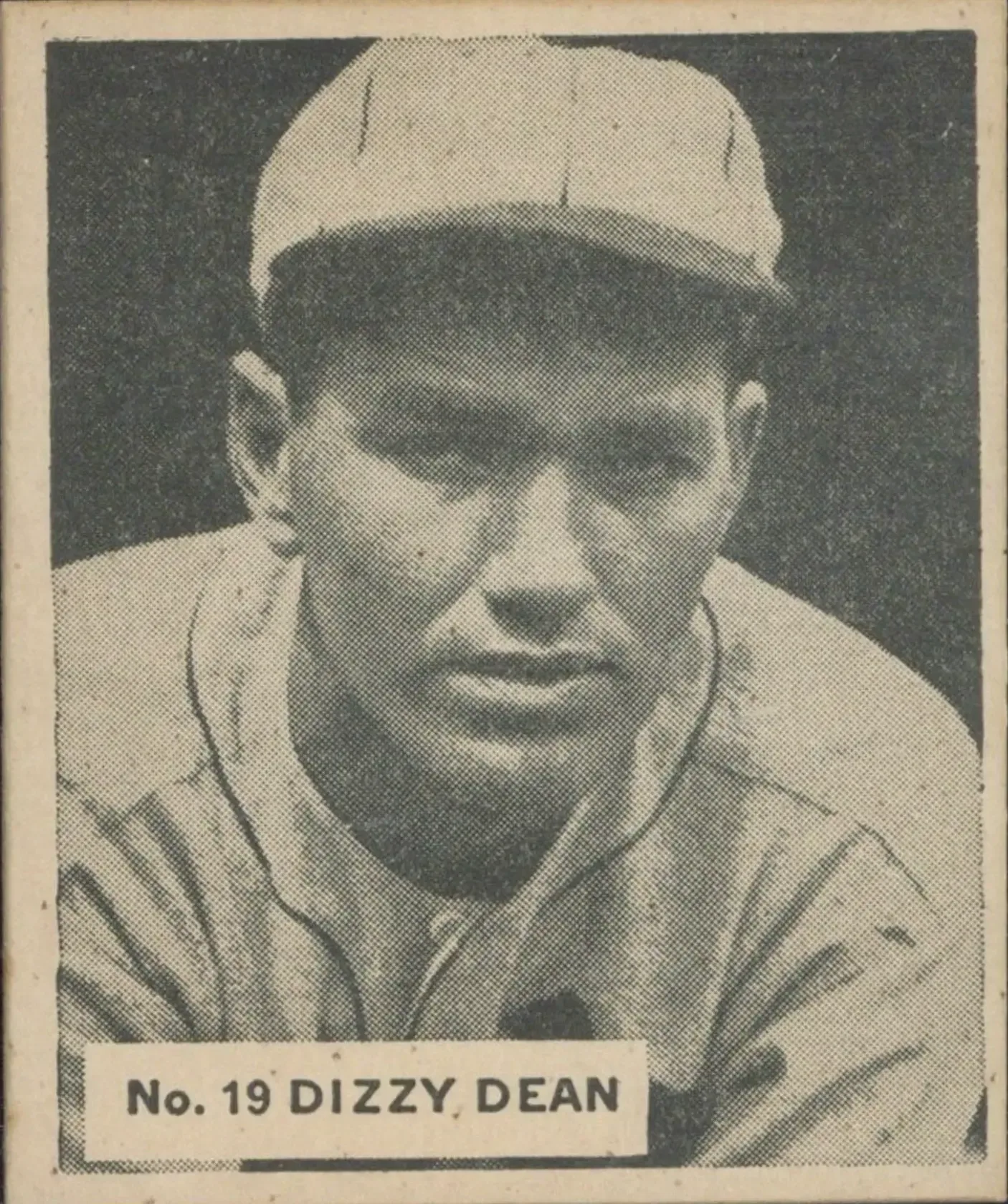
T206 is the tobacco-card giant: a 524-card issue distributed from 1909 through 1911, laden with famous names and famous scarcity stories. But treating it as the entire prewar baseball-card universe leaves two unusually revealing companion sets in the background. The 1911–12 T205 issue, remembered as the Gold Borders, and the 1912 T207 issue, called the Brown Backgrounds, share an American Tobacco Company origin and broadly similar era with T206 while taking remarkably different visual and collecting paths.
Neither set needs to impersonate the more celebrated one to matter. T205 turns the small tobacco-card format into ornate, varied display art, then complicates the chase through brittle gold edges, advertising backs and a long list of versions. T207 pares that visual energy down to dark-brown backdrops and sparse layouts, but its shortage cards and reverse-side complexity make it no less serious a project. Together, they show that a set’s character is not simply a matter of star power or a checklist total.
T205’s number is misleading; its gold is not
The catalog designation can create a false timeline. Jefferson Burdick assigned the T205 label in 1939 when developing the classification system still used for American sports cards, even though T205 was issued after T206, in 1911 and possibly into early 1912. The “T” classification is a catalog convention, not a release-order guarantee. That is a useful starting lesson for anyone approaching early cards: catalog numbers organize a hobby; they do not necessarily narrate production history.
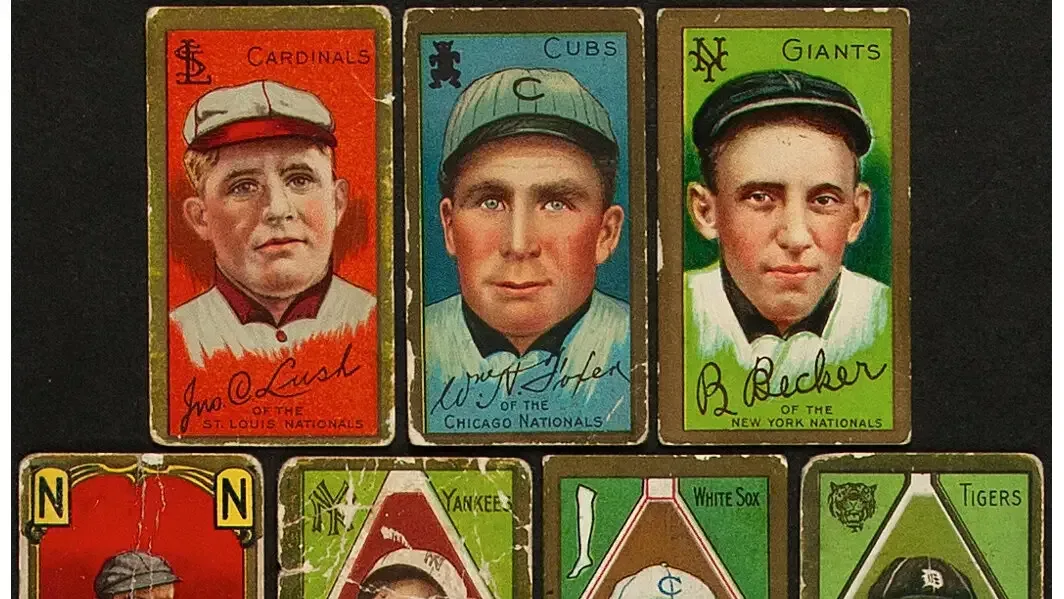
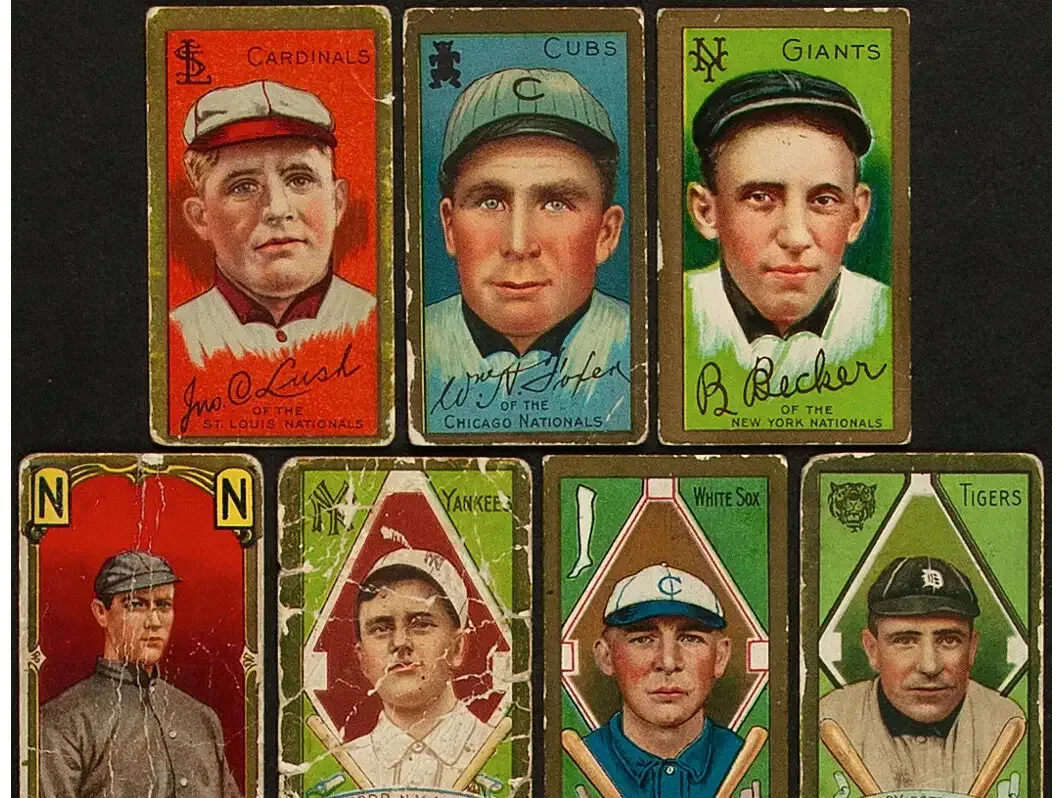
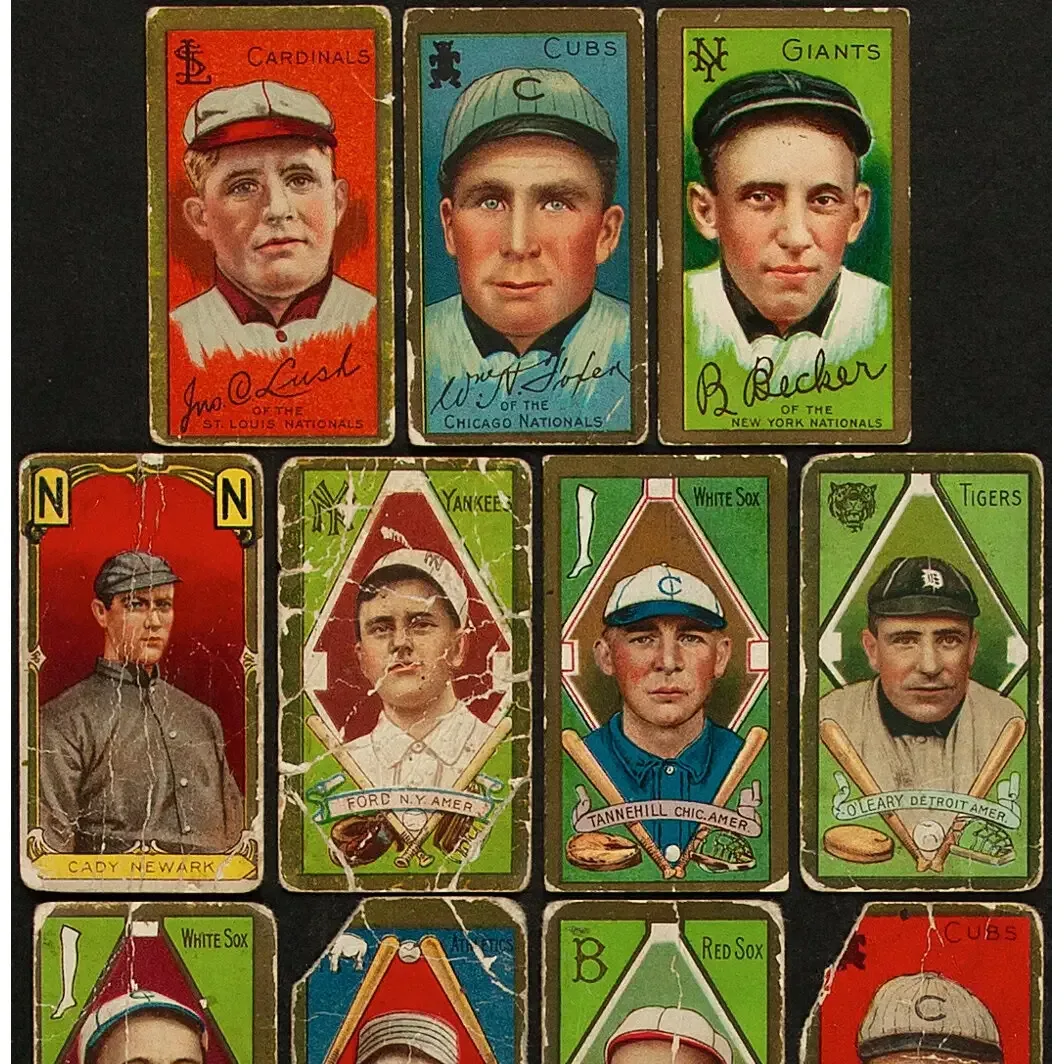
T205 immediately distinguishes itself through its gold-colored borders. Where white borders are a familiar look for cards of the period, these frames shine when preserved well and chip with alarming ease when they are not. That tension defines the set. The border is the design element collectors remember, but it is also often the first casualty of handling, cutting, age and wear. True mint examples are not expected to exist, and even a card otherwise presenting well can have its appeal changed substantially by border loss.
For more context, explore Tyga Faces $135,000 Suit Over Alleged Beijing Club No-Shows.
The cards are all vertical and use three principal front designs:
- American League players appear in head-and-shoulders images inside a baseball-diamond motif, with bats, gloves and catcher’s masks around the image and a name scroll.
- National League players receive larger headshots against plainer backgrounds, generally with a signature rather than the heavier surrounding decoration.
- Eastern League minor leaguers appear in elaborate frame designs. Four have frames partly built from baseball bats, while six use solid-color backgrounds and six include stadium scenes.
That division gives the set more variety than its single nickname suggests. The dozen minor leaguers, all from the Eastern League, are particularly notable because their inclusion is so narrow compared with T206’s 134 minor leaguers across six leagues. Jimmy Collins, a Providence player-manager, is a logical selection. Others are more enigmatic. Johnny Nee never played a major league game, though he later worked as a scout and signed Bill Dickey. Jimmy Frick likewise did not reach the majors. These choices give T205 a useful quality as a period artifact: it preserves players who were not necessarily the enduring household names later hobby history would prioritize.
The reverse side makes T205 more than a picture set
T205 backs are not an afterthought. Cards are unnumbered, identify players under formal names such as Christopher Mathewson and Denton T. Young, and include concise biographies. They also appear to be the first sports cards to provide prior-season statistics, albeit in a limited form. Batters receive games played, batting average and fielding average for 1908 through 1910; pitchers receive wins, losses, winning percentage and fielding percentage. The minor leaguers receive no statistics.
Those biographies vary from a straightforward career recap to enthusiastic promotional language. The wording has historical value precisely because it is not modern analysis. It records how players were being characterized in their own baseball moment, sometimes with broad praise rather than cautious evaluation. Addie Joss’s card is especially poignant: it acknowledges his April 14, 1911 death, creating a posthumous tribute, even as it incorrectly calls the Wisconsin-born pitcher a Cleveland native.
The other major reverse-side feature is advertising. T205 cards carry ads for 10 cigarette brands and Polar Bear scrap tobacco. Piedmont and Sweet Caporal backs are much more common than examples such as Hindu and Drum. Print colors can also vary, and not every player is known with every advertising brand or color. The minor leaguers are limited to Hassan or Polar Bear backs.
In practical collecting terms, this produces two fundamentally different goals. A front-only set treats one example of each player image as sufficient, without requiring every tobacco back. A back-variation project recognizes advertising and printing as separate collecting targets. Neither approach is inherently more legitimate, but the decision must be made before calling a set “complete.” Even the basic checklist is unsettled: 200 players and 208 cards is a common count, while other totals rise to 217 or 219 when additional variations are included.
That is not pedantry. A collector pursuing every accepted variation could turn a 200-player undertaking into a far deeper, more expensive assignment. Some changes plainly reflect real production updates. Peaches Graham and Dave Shean exist with Boston Rustlers or Chicago Cubs identification after early-1911 trades. Other distinctions invite debate: E.B. Barger’s cap can show a full or partial B, Otis Crandall’s name can have a crossed or uncrossed T, and Danny Hoffman’s second base may be white or yellow. Depending on the collector, these may be essential varieties or ordinary printing inconsistencies.
Errors, corrections and the Hoblitzell problem
Several T205 examples show why checklist research matters. Christy Mathewson’s 1908 line can read either 37–11, the accurate record, or a much rarer 37–1 error. The one-loss version is limited to Cycle backs. Dolly Gray’s card can appear with or without statistics, and the version with numbers gives hitter statistics that do not belong to the pitcher.
Doc Hoblitzell is an even more concentrated example. The first baseman, who earned a dentistry degree during offseasons while building an 11-year major league career, has four difficult T205 back forms: no statistics; three-year statistics with “1908 Cin.”; 1908 listed without a team; and a version misspelling his surname as “Hoblitzel” twice. A collector can reasonably decide to own a representative Hoblitzell first, then determine whether all four belong in the long-term plan.
These complexities are why terms need precision. A variation is a distinct, repeatable production version, such as an updated team or a corrected detail. An error is incorrect printed information, which can become a chase card if it was distributed in a recognizable form. A printing inconsistency may be visible but not universally treated as a checklist-worthy card. Conflating the three makes budgets and want lists harder to manage.
What a T205 collector is actually taking on
T205 has major names—Cy Young in his final active season, Tris Speaker, John McGraw, Three Finger Brown and Tinker, Evers and Chance—but it does not include Honus Wagner. The Wagner in the issue is Boston shortstop Charles “Heinie” Wagner, not Honus. Unlike T206, players generally do not have multiple significant poses, so the variation chase shifts attention from different portraits and action scenes to details, backs and text.
It is not a casual low-cost substitute simply because it is less famous than T206. T205 was printed in noticeably smaller quantity, and even commons in fair condition can approach $100. Hall of Famers, minor leaguers, scarce variations and stronger condition command meaningful premiums. Graded cards outnumber raw examples, an understandable outcome for a century-old issue with fragile borders. Graded means a third-party service has encapsulated the card and assigned an assessment of its condition; raw means it remains unencapsulated. A holder does not resolve every question about variation status, but it can make identification and condition comparison more standardized.
The sensible entry point is to define the finish line and accept the look of the set. A collector who needs spotless gold can be waiting for an unreasonable standard; one who values centered images, readable text and relatively intact framing may enjoy the set on its own physical terms. The gold border is not merely damage-prone packaging around the card. It is the card’s central aesthetic feature.
T207 heads in the opposite visual direction
If T205 is ornate, T207 is austere. Issued in 1912, the 200-player T207 set puts each player against a solid, dark-brown field with a tan or beige border. There are no elaborate American League baseball-diamond motifs, no National League signatures, and no stadium scenes. A small box at the bottom gives the player’s surname, team and league. The result is unmistakable—and far more monochromatic than the earlier issues.
Every T205 is vertical. T207 has one horizontal exception: Jack Barry, shown stretching for a line drive. Beyond that design wrinkle, the issue offers little front-side ornamentation. Its portraits have often been viewed as less attractive than those in T205 or T206, and the Walter Johnson image is notably unlike his real appearance. John McGraw’s card depicts him in his 19th-century playing days rather than in the managerial identity many collectors associate with him.
That restrained presentation helps explain why T207 has historically attracted less broad interest, but it also makes the set unusually coherent. It is a deliberately brown, period-specific object. Collectors who want high-color visuals may find it uncompromising; collectors drawn to scarcity, oddities and a consistent visual identity may see the appeal differently.
The player selection changes the equation as well. T207 contains 200 major leaguers and no minor leaguers. Cy Young is absent while inactive before his May 24, 1912 retirement, and Ty Cobb, Christy Mathewson and Eddie Collins are also omitted. Speaker, McGraw and Walter Johnson are present. Max Carey and Harry Hooper are the only added Hall of Famers. Every Hall of Famer in the set falls in the more common Recruit or Napoleon back grouping, an important bit of relief in a set where back scarcity otherwise matters greatly.
T207 backs, short prints and an exceptionally hard target
T207 backs omit the career statistics found on T205, but retain unnumbered formats, player summaries and tobacco advertising. Recruit Little Cigars is by far the most common back, followed by Napoleon. Broadleaf and Cycle are scarcer, Red Cross is extremely rare, and cards issued in Coupon packs lack advertising entirely, earning the catalog designation “anonymous.” Most backs use black ink; Cycle is usually red, and a minority across all six types use brown printing.
Once again, an owner must decide whether reverse printing is part of the objective. Few collectors try to obtain every player with every back color. The more practical route is a player set or a focused back subset. The critical point is that scarcity is not evenly distributed: many players occur only in Recruit/Napoleon or only in Broadleaf/Cycle groupings, with only a few in the latter group also known with Red Cross or anonymous backs.
There are recognized front changes, too. Paddy Livingston’s move from Philadelphia to Cleveland led to versions with a P, a lowercase c and then an uppercase C on his uniform. Jimmy Austin and Tom Clarke can be found with or without shirt emblems. Bill Carrigan and Heinie Wagner exist with correct backs and with each other’s backs. Rumors of other swapped-back pairs persist, but no other pair has been established on recognized checklists.
The real barrier, however, is three extreme shortages: Irving Lewis, Louis Lowdermilk and Ward Miller. Their exact production story is unknown. Miller’s card may have entered production only after it became clear he had made the Cubs roster; Lowdermilk’s may have stopped after his 1912 demotion. Those are possibilities, not settled explanations. Lewis is widely regarded as the toughest card in the issue, and comes with or without a Boston B on his sleeve. Both forms are scarce; the no-emblem version is scarcer still.
That makes a complete T207 effort qualitatively different from merely assembling attractive examples. A short print is a card believed to have been produced in significantly smaller quantity than most of its peers. When the reason is undocumented, responsible collecting means preserving the uncertainty rather than presenting speculation as fact. Lewis, Lowdermilk and Miller are scarce in the hobby regardless of why, and their presence transforms the cost and patience required for completion.
T205 and T207 may never displace T206 in mainstream recognition, and that is beside the point. T205 offers complex design, documentary backs and an unusually rich variation landscape. T207 offers an austere 1912 visual language and a scarcity structure that demands discipline. For collectors prepared to define their version of completion, inspect details closely and respect condition realities, these are not lesser footnotes. They are two distinct routes into prewar baseball-card history. For additional collector-oriented context on the pair, see this overview of T205 and T207 tobacco cards.