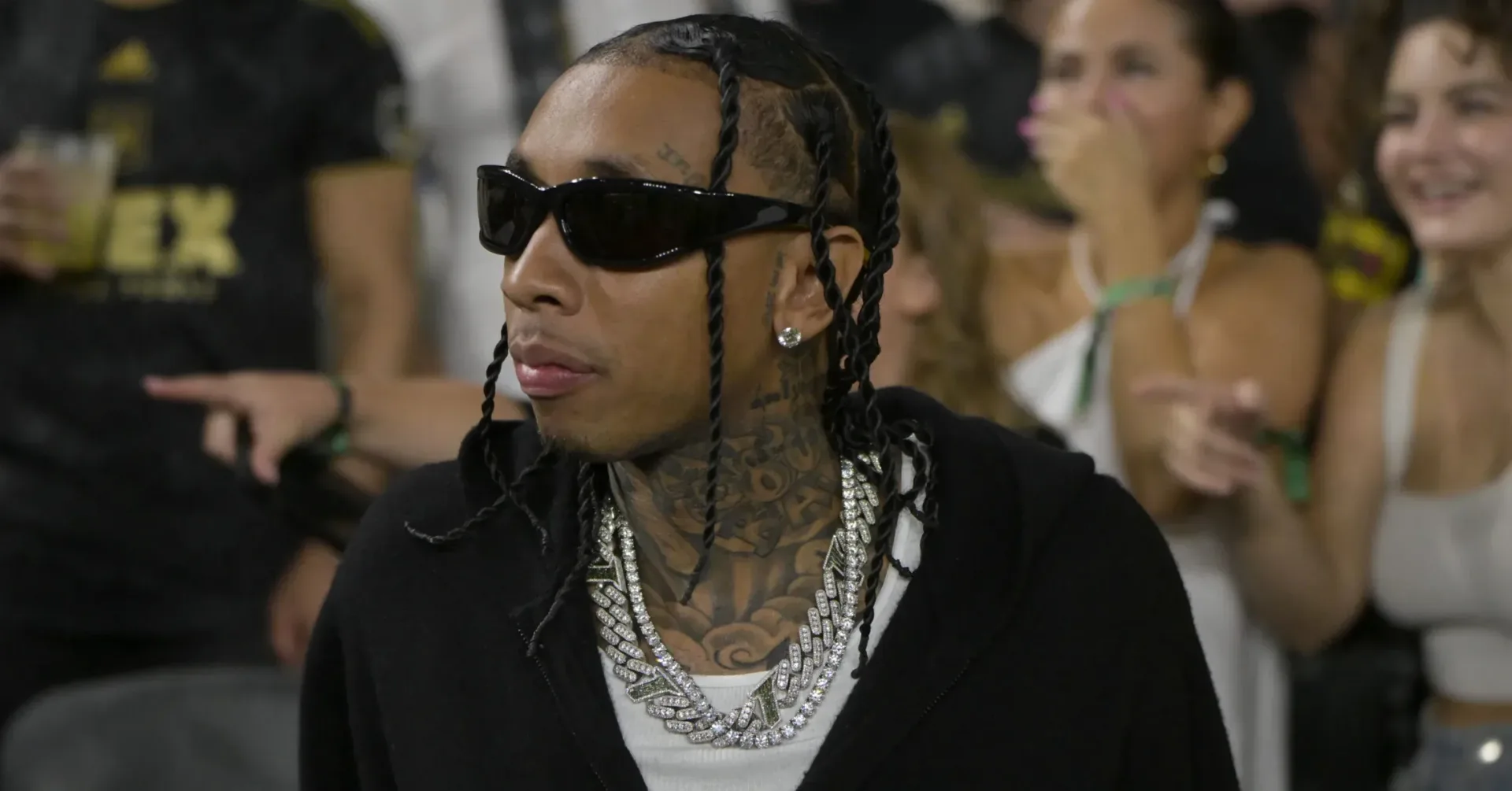
Tyga is facing a new lawsuit tied to two planned club appearances in Beijing that allegedly never happened. Beijing Tongxing Wanxin Catering Management claims it paid for the rapper to appear at Club Pac Star on two separate 2023 dates, then spent months attempting to secure either replacement performances or repayment.
The company is now seeking $135,000, along with interest and punitive damages, in a complaint that alleges fraud and breach of contract. The filing concerns scheduled appearances on August 4 and October 27, 2023. These are allegations in a civil case, not findings of fact. No response from Tyga or his representatives addressing the complaint was included in the available reporting.
What the Beijing complaint alleges
The core claim is straightforward: the management company says Tyga was booked and paid for two appearances at Club Pac Star, but did not appear on either date. It alleges that, after the missed bookings, it was told replacement dates would be arranged in the first or second quarter of 2024. The company says those promised rescheduled appearances did not materialize.
According to the company, the original amount at issue was $145,000. It says it later received $10,000 through a settlement, leaving a claimed unpaid balance of $135,000. That remaining sum is the primary amount requested in the lawsuit, before the added requests for interest and punitive damages.
That distinction matters. A request in a complaint is what a plaintiff wants the court to award; it is not an amount already owed as a matter of law. The eventual result, if the dispute proceeds, could depend on the underlying agreement, proof of payment, cancellation or scheduling communications, the status of any settlement, and the court’s authority over the parties.
The legal terms, without the courtroom fog machine
Breach of contract generally means one side claims the other did not fulfill obligations set out in an agreement. In this situation, the asserted obligation would be the booked appearances, while the claimed remedy is return of money associated with performances that allegedly did not take place.
Fraud is a more serious allegation. In broad terms, it asserts deceptive conduct rather than merely a broken promise. The supplied information does not detail the specific facts the company is using to support that claim, so it would be premature to assume how it will be argued or whether it will succeed.
Interest can be sought to account for the time money was allegedly withheld. Punitive damages are damages requested to punish or deter particularly wrongful conduct, rather than simply reimburse an asserted financial loss. A demand for them does not guarantee that they are available or that a court will award them.
Why an alleged $10,000 settlement payment is important
The reported $10,000 repayment is a key detail, but it does not by itself explain the legal status of the dispute. The company describes it as a settlement payment and says $135,000 remains outstanding. Whether that payment was part of a complete resolution, a partial repayment, or another arrangement would likely turn on the terms agreed by the parties.
In practical terms, a partial payment can narrow a dispute’s financial scope while leaving the larger question unresolved. Here, the plaintiff’s position is that the payment reduced the claimed total from $145,000 to $135,000, not that it closed the matter. Any defense response could offer a different account, but none was provided in the material available.
For venues, promoters, managers and performers, this kind of disagreement highlights why international booking arrangements need unusually clear paperwork. A date, fee and venue are only part of the deal. Agreements can also address deposits, travel arrangements, cancellation procedures, rescheduling deadlines, required approvals, exclusivity, who is authorized to communicate changes, and what happens when a show cannot go ahead. The Beijing complaint’s allegations are a reminder that vague assurances about a future replacement date can become a major point of conflict when no new performance occurs.
An earlier UAE dispute ended in a settlement
The Beijing case is not Tyga’s first legal dispute involving an overseas performance agreement. In 2018, promoter Heavy Rotation sued him over a planned run of appearances in the United Arab Emirates. The promoter alleged it paid $141,000 and accused Tyga of walking away from the arrangement after receiving a better offer from a competing Dubai nightclub.
Tyga disputed that earlier account. He maintained that he had not agreed to terms barring him from performing at other venues. He also alleged that the promoter failed to obtain necessary approvals for one of the planned shows. Those competing claims illustrate why event-contract cases can become more complicated than a simple question of whether an artist appeared: the parties may disagree over restrictions, permits, responsibility for logistics and the conditions that had to be met before a performance was required.
The UAE dispute later expanded into a $1.4 million lawsuit. Unlike the newly filed Beijing matter, it reached a documented resolution: Tyga and Heavy Rotation settled and agreed to dismiss the case in April 2019. The financial terms were not disclosed, so there is no public basis here to say what either side paid or conceded in resolving it.
What is known — and what is not
- Beijing Tongxing Wanxin Catering Management has filed a lawsuit accusing Tyga of fraud and breach of contract.
- The suit concerns two alleged Club Pac Star bookings in Beijing, scheduled for August 4 and October 27, 2023.
- The company says neither appearance occurred and that proposed 2024 replacement dates did not happen.
- It claims $145,000 was owed, with $10,000 repaid, and seeks the remaining $135,000 plus interest and punitive damages.
- No response from Tyga or his representatives to this particular complaint was included in the reporting provided.
- The claim has not been established by a court judgment in the information available.
The case also arrives in a broader entertainment-law environment where public allegations can race ahead of the formal legal record. Readers following celebrity litigation may recognize the same need for precision in other disputes, including a separate case involving a dispute over requested private texts. Pleadings, requests and accusations are the opening positions of litigation; they should not be flattened into proof before a court has weighed them.
What to watch next
The next meaningful development would be a response from Tyga, his legal team, or the court. A response could deny the allegations, challenge the court’s jurisdiction, contest the claimed contract terms, address the $10,000 payment, or present a different explanation for why the shows did not occur. The parties could also resolve the case privately, as happened in the prior UAE dispute.
For now, the concrete issue is narrow: a Beijing management company says it paid for two 2023 appearances that did not occur, received only a limited refund, and is seeking the rest through litigation. The available information does not establish Tyga’s account of the matter, and the complaint itself is only one side’s statement of the dispute.