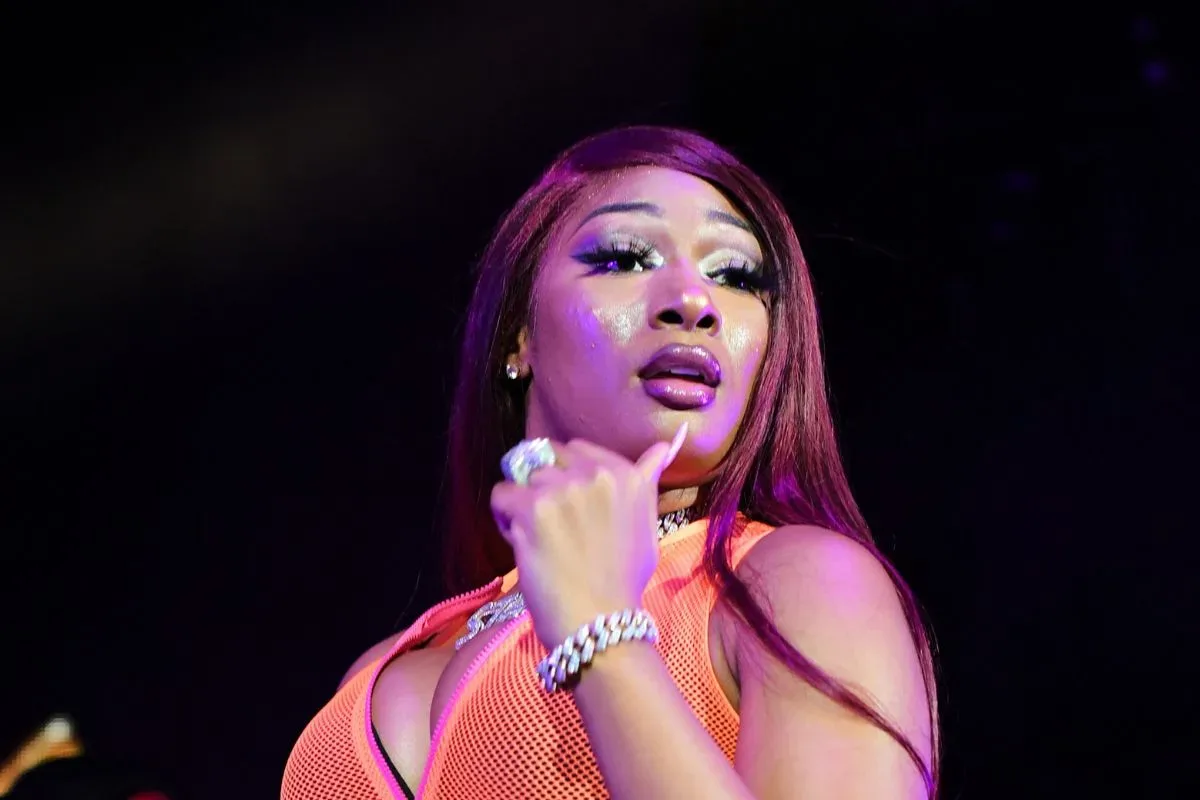
Megan Thee Stallion says a reluctance to ask questions about an early record deal became a costly lesson in the importance of ownership. Speaking at the Overcoming Impossible Live event in New York City, the rapper described being nervous about challenging the terms around her work before eventually reassessing the business structure behind her career.
“I was a little bit nervous about asking questions,” she said at the event, which brought business owners together for small-group sessions and talks featuring Megan, Gary Vaynerchuk and Robert Irvine.
That initial hesitation matters because a recording contract is not merely paperwork around releasing songs. It can determine who controls finished recordings, who receives revenue from them, who approves releases and what happens when an artist wants to change partners. Megan’s public account frames her later business moves as a response to learning those stakes firsthand.
A dispute that put releases and control at issue
Megan signed with Carl Crawford’s 1501 Certified Entertainment in 2018. She sued the label in 2020, beginning a dispute that continued for several years before the sides reached a private settlement and separated in October 2023.
During the case, Megan alleged that 1501 had interfered with her ability to release music and had kept her bound to the agreement after she believed she had met its terms. She also asked for outside scrutiny of the company’s finances in connection with a possible judgment. Crawford opposed that effort, disputing the request and characterizing it as harassment of the label.
The competing claims are important context: the disagreement involved allegations rather than a shared public account of what happened. The settlement terms were not disclosed, so the record supplied here does not establish the financial outcome or the full contractual resolution. What is clear is that the dispute ended with the parties parting ways.
Megan described the personal realization behind her change in approach more bluntly. She said she began to feel she was not earning what she should because she had effectively given control of her life to another party. Her response, she explained, was to examine her contracts and work out how to become her own boss.
What masters, publishing and distribution actually mean
Her subsequent deals put three often-confused business terms at the center: masters, publishing and distribution.
Related coverage includes Megan Thee Stallion Details Contract Lessons Behind Her Independent Path.
- Masters are the rights connected to the finished sound recordings: the recorded versions of songs listeners stream or buy.
- Publishing concerns the underlying musical work, including the composition and songwriting side of a song.
- Distribution is the process of getting music to listeners and platforms. A distributor can also provide practical support around promotion, radio or market reach without necessarily taking ownership of the artist’s masters and publishing.
Those distinctions help explain why Megan’s later agreements are notable. Keeping masters and publishing means retaining rights that are central to an artist’s catalog and songwriting work. A distribution partner, meanwhile, can provide infrastructure and strategic backing while the artist’s own company remains the home for releases.
That does not make every artist agreement identical; the specific commercial terms of the arrangements described here were not made public. But the ownership structure stated in Megan’s announcements is a visible contrast with the uncertainty and conflict she says surrounded her earlier deal.
Hot Girl Productions becomes the operating center
In February 2024, Warner Music Group announced a deal with Megan that left her with her masters and publishing rights. Music would be released through her own Hot Girl Productions, while Warner was set to handle distribution and assist with radio and marketing. Megan also retained creative control and had the option to bring artists signed to her imprint into Warner’s network.
That setup positioned Hot Girl Productions as more than a label name attached to a release. It served as the company through which Megan could put out her own music while relying on a larger company for particular services. The arrangement also created room for her to develop other artists under the imprint if she chose.
She had already begun issuing music through her own company before the Warner agreement. “Cobra” arrived in November 2023, and “HISS” was identified as her second solo release through Hot Girl Productions. The sequence is significant because it shows that the independent-company model was already in motion, rather than appearing only as a promise within a new corporate partnership.
For listeners, the immediate difference may not be obvious: the songs still arrive through familiar streaming and promotional channels. Behind the scenes, however, the stated structure gives the artist’s company a more central role in releases and rights management. It also reflects an attempt to separate the benefit of major-label-scale support from surrendering ownership of the work itself.
The Interscope partnership follows the same ownership principle
On August 14, 2026, Megan announced a distribution partnership with Interscope Records. The stated terms continued the framework she had pursued: Hot Girl Productions would remain the home of her releases, Megan would keep her masters and publishing, and Interscope would provide global distribution and strategic support.
“I’ve always wanted to create music on my terms while building a legacy that extends beyond the industry,” Megan said when the partnership was announced.
The move is not presented as a rejection of major music companies altogether. Instead, it is a partnership model: an artist-owned operation at the center, paired with a company that can help move releases globally and support broader strategy. That distinction is especially relevant in an industry where “independent” can refer to ownership, release infrastructure or both. In this case, the public description emphasizes retained ownership alongside outside distribution support.
Why asking questions is the central takeaway
Megan’s comments at the business event were not framed as a technical lecture on contract clauses. Still, the practical message is direct. Artists and other creators need to understand what they are signing, what rights they are assigning, what obligations they are taking on and who has decision-making power over their work.
Questions about ownership should not be treated as an obstacle to a deal. They are a way to understand the deal. In Megan’s case, the shift from fear of asking those questions to publicly prioritizing masters, publishing and creative control is the throughline connecting the 1501 litigation, Hot Girl Productions and the later distribution partnerships.
Her experience also illustrates why a deal’s headline name alone tells audiences very little. “Label deal,” “distribution deal” and “independent release” can describe very different arrangements. The meaningful details are the rights an artist retains, the services a partner provides and the degree of control the artist has over release decisions and creative direction.
For more current music-industry coverage on the site, see the report on support for Lil Durk’s new bail bid ahead of a November hearing.