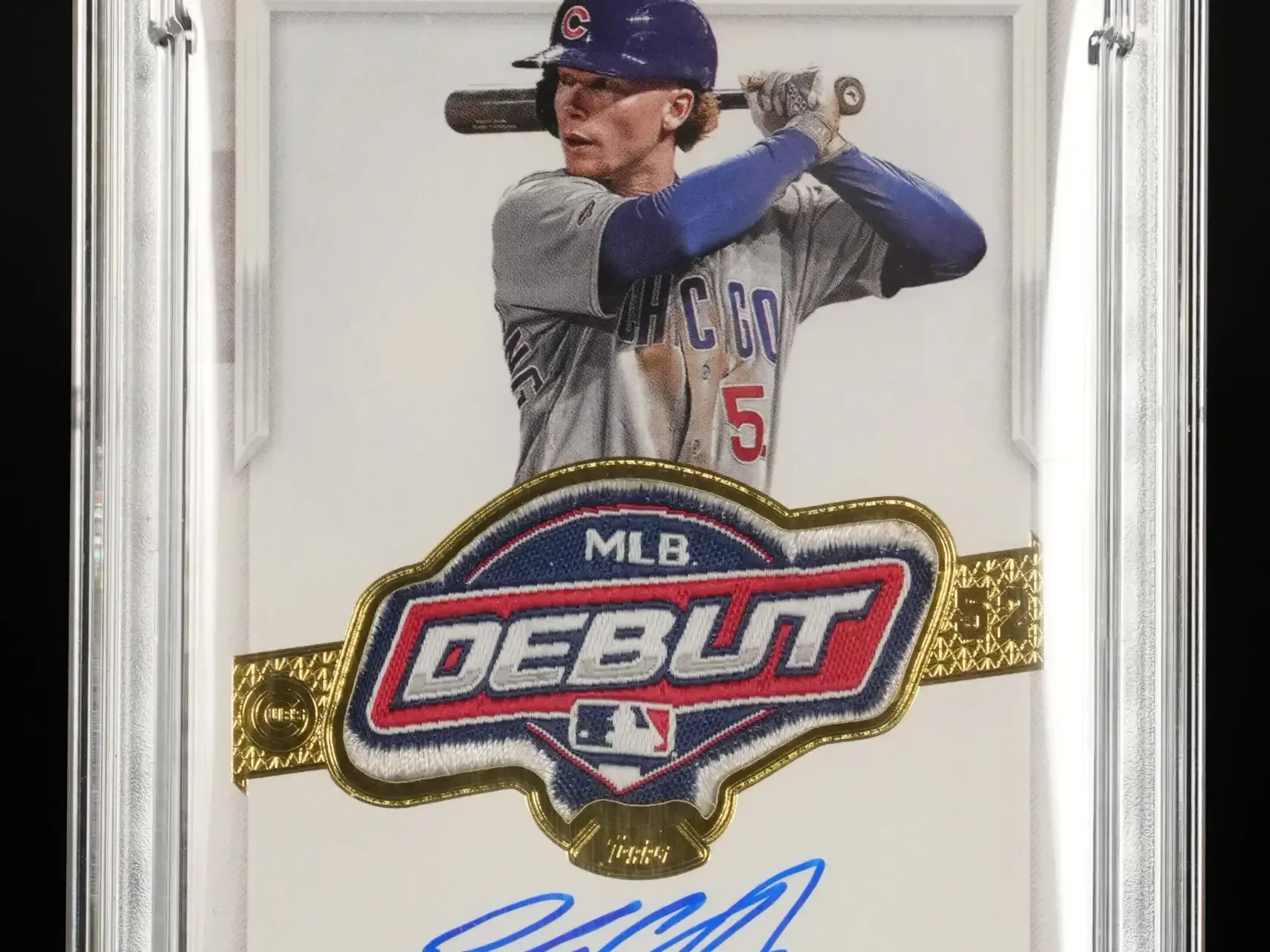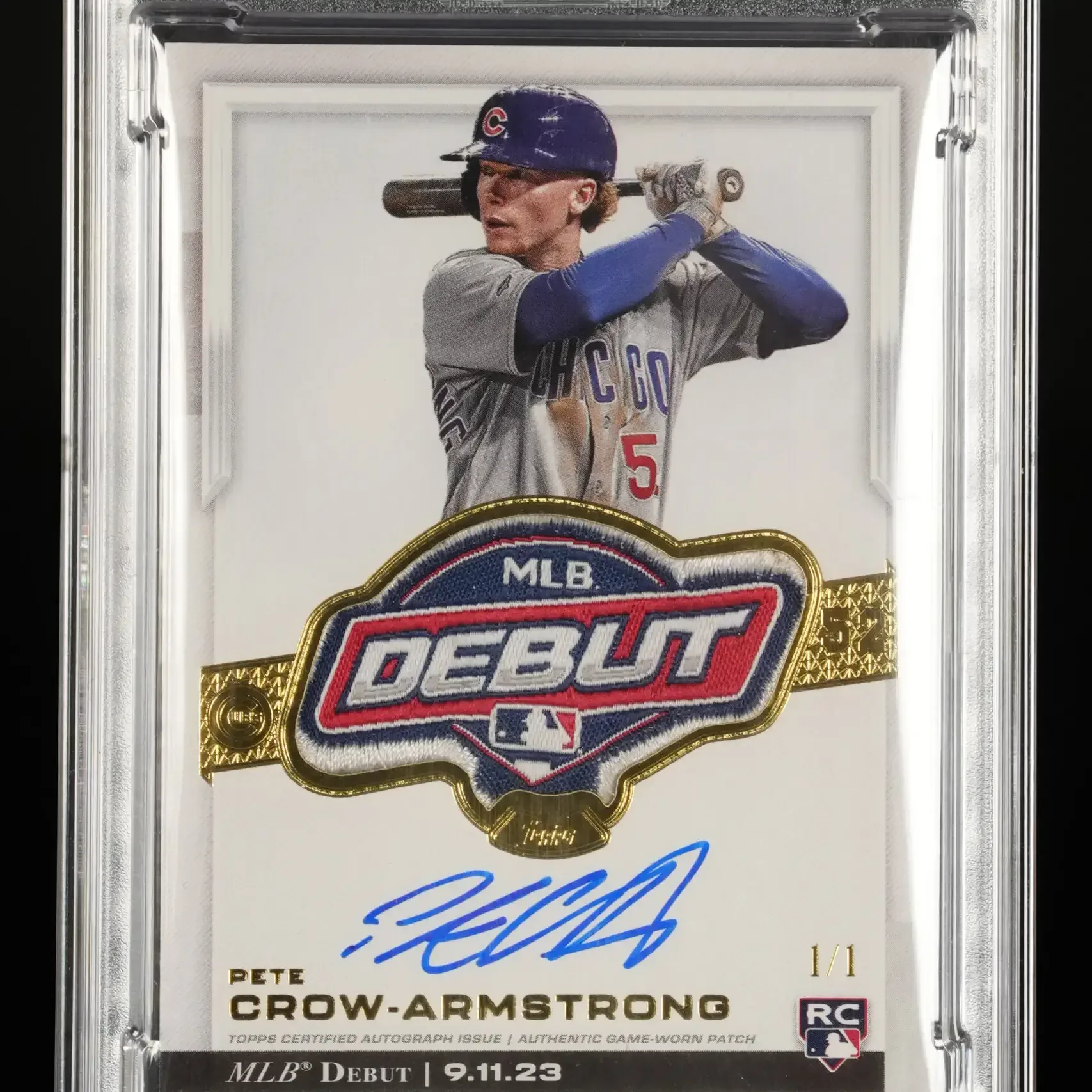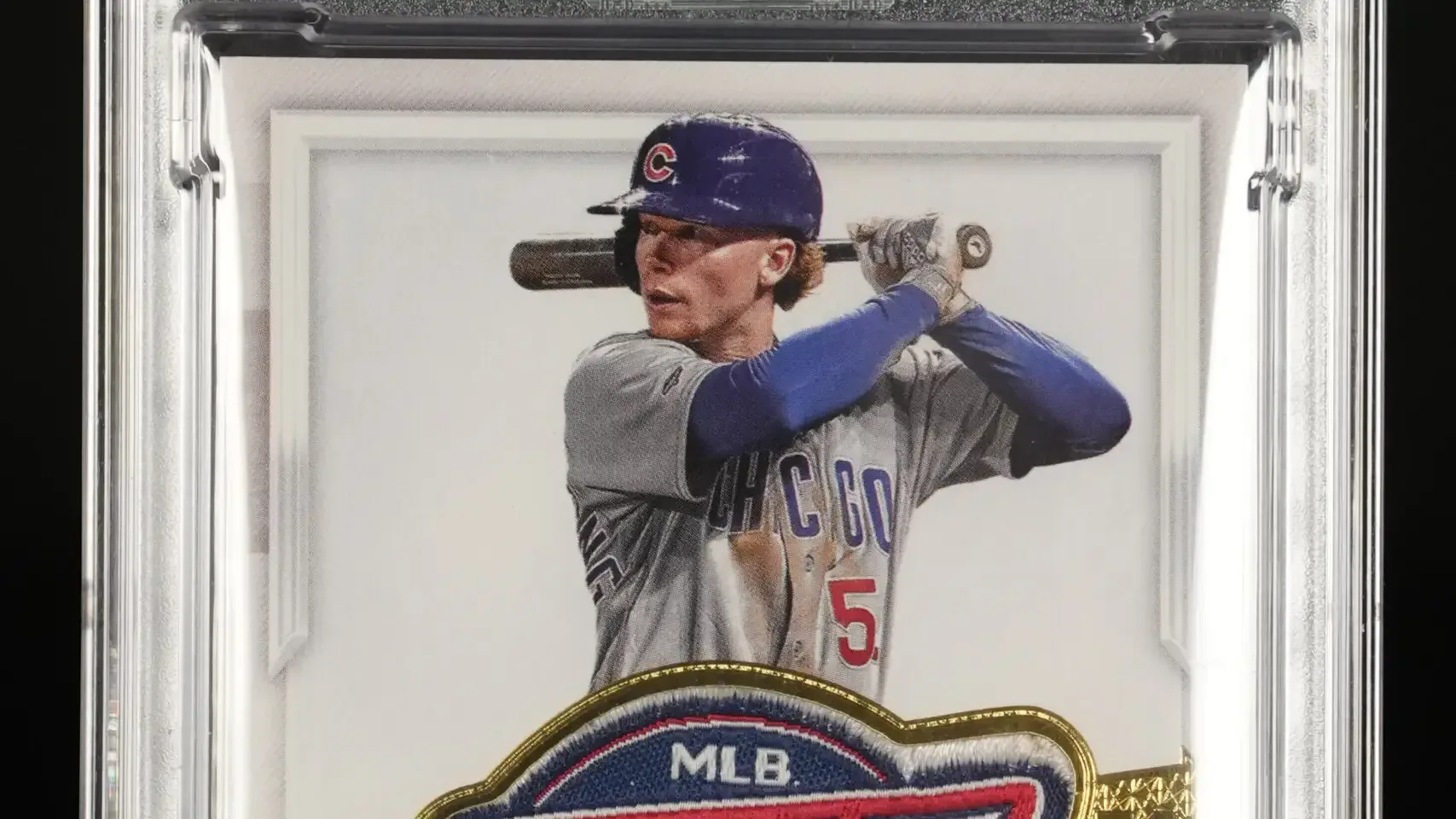
Pete Crow-Armstrong’s rise in Chicago has produced the kind of season that can rapidly reshape a player’s trading-card market. Now the centerpiece of that market is receiving its own auction: a 2024 Topps Chrome Update #1/1 MLB Debut Rookie Patch Auto featuring Crow-Armstrong, graded PSA 10 with a 10 autograph grade.
The standalone sale is open through Sept. 29. Its appeal is unusually easy to explain even before the bidding begins: there is one card, it contains the Rookie Debut patch Crow-Armstrong wore in his first Major League game, and it carries a top card grade alongside a top autograph grade. For collectors, that combination condenses several of the hobby’s most prized attributes into one modern baseball card.
Why this Crow-Armstrong card stands apart
Not every rookie card is built around the same kind of scarcity. A base rookie can be widely available, while parallels, autographs, memorabilia cards and one-of-one issues move progressively further from that broad-printing model. This Crow-Armstrong card is a 1-of-1, meaning Topps designated it as the only example of this specific version.
Its defining feature is the MLB Debut patch. Rather than a generic piece of player-worn memorabilia, the program uses the Rookie Debut patch worn by the athlete in his first MLB game. That direct connection gives the card a specific event at its center. The patch is not merely a design element or a broad reference to a rookie season; it is tied to the player’s debut.
For more context, explore Gilmore Girls Polly Pocket Compact Brings Stars Hollow to a $30 Miniature Set.
“RPA” is collector shorthand for Rookie Patch Auto: a rookie-year card that combines a patch swatch with an autograph. In this case, Crow-Armstrong signed the card on-card. An on-card signature is written directly on the card itself, as opposed to an autograph placed on a separate sticker and then applied to the card. Both formats exist in the hobby, but an on-card signature is an especially important detail on a premium, event-linked one-of-one.
The result is a card whose value proposition rests on multiple separate pillars:
- True one-of-one status: this exact 2024 Topps Chrome Update MLB Debut RPA has no duplicate.
- Debut-game provenance: the patch comes from Crow-Armstrong’s Major League debut.
- Rookie-card designation: it belongs to the player’s 2024 card output.
- On-card autograph: the player signed the card itself.
- PSA 10 card and autograph grades: both the card and signature received 10s.
Understanding the PSA 10/10 label
The PSA designation here covers two related but distinct assessments. A PSA 10 is the card’s grade. It addresses the card as a physical collectible. The separate 10 autograph grade evaluates the signature. Seeing both grades at 10 is commonly described as a “10/10” result, though it is useful to keep the two components separate when assessing a listing.
Related coverage includes Pete Crow-Armstrong MLB Debut Patch Auto Gets Standalone Goldin Auction.
For a modern card carrying a patch and a signature, condition matters well beyond surface-level cosmetics. Collectors frequently look at centering, corners, edges and surface when considering a graded card. The autograph grade adds another layer focused on the signature’s presentation. This auction removes uncertainty over whether the card has been graded: it has been authenticated and encapsulated by PSA with the highest grade cited for both measures.
That does not turn any auction outcome into a certainty. A grade is one variable among several, alongside the player’s performance, the perceived importance of the set, the singularity of the debut patch and the number of serious bidders. Still, an elite grade can make a card easier for bidders to evaluate because a recognized third-party assessment is already attached to it.
Performance has put PCA’s cards under a brighter spotlight
Crow-Armstrong’s 2026 campaign is the immediate backdrop. With two weeks remaining in the regular season, he was the National League MVP front-runner after posting 42 home runs, 102 RBI and 37 stolen bases. He also led the league with 112 runs scored and a 9.2 WAR.
WAR, or Wins Above Replacement, is a statistic designed to estimate a player’s overall contribution in terms of wins relative to a replacement-level player. It is not a card-market metric, but it supplies context for why a player may be drawing attention beyond traditional batting totals. In Crow-Armstrong’s case, the 9.2 figure sits alongside notable power, run production, speed and run-scoring output.
His previous season had already supplied a strong foundation. Crow-Armstrong led the 2025 Cubs with 31 home runs, 95 RBI and 35 stolen bases. The 2026 totals represent an increase in home runs and RBI while maintaining a major stolen-base total. For a collecting audience, that sort of back-to-back production helps explain why premium rookie cards are becoming focal points rather than niche curiosities.
Recent sale figures show that the market had already reacted before this debut-patch auction. A 2024 Topps Dynasty Gold #1/1 Rookie Patch Auto sold for a record $66,000, while other Crow-Armstrong rookies have reached as much as $50,000. Those results do not establish a floor or a guaranteed direction for the current auction; cards differ in set, grade, patch significance, autograph format and the individual buyer pool. They do, however, demonstrate that high-end Crow-Armstrong rookie material has already commanded substantial prices.
The significance of the MLB Debut Patch program
MLB Debut Patch cards are positioned among the hobby’s most sought-after chase cards because their central memorabilia component is tied to a clear, singular moment in a player’s career. A “chase card” is the high-demand card collectors hope to pull or acquire from a product, often because of rarity, memorabilia, autographs or all three.
The program’s ceiling is already visible in the market. Paul Skenes’ 2024 MLB Debut Patch card sold for more than $1 million. That sale is not a direct valuation guide for the Crow-Armstrong card; each athlete’s collector base, career arc, card construction and auction environment are different. But it establishes the level of attention that can surround a debut-patch one-of-one when a player’s on-field profile and collector demand converge.
Topps has also used comparable debut-patch concepts in NBA and NFL cards. The cross-sport expansion matters because it frames debut-worn memorabilia as a broader premium-card format rather than a baseball-only novelty. The underlying attraction is understandable across sports: the card offers a tangible piece attached to a player’s first appearance at the league level, then combines it with rarity and an autograph.
For Crow-Armstrong collectors, the distinction between a standard rookie patch auto and this particular RPA is therefore substantial. Both can be scarce and desirable. The MLB Debut card adds a uniquely identified piece of debut-game material, while this copy’s one-of-one designation and 10/10 grading further concentrate the card’s appeal.
What a standalone auction signals
A standalone auction gives a single card the full attention of the sale rather than placing it among a larger assortment of unrelated lots. That format is particularly suited to an item with a concise but compelling story: Crow-Armstrong’s 2024 rookie issue, his actual debut patch, an on-card autograph, one-of-one scarcity and dual PSA 10 grades.
The auction also arrives while Crow-Armstrong’s season provides a running sports narrative. As the regular season approaches its final two weeks, the card’s bidder interest will naturally exist alongside attention on the MVP race and the Cubs star’s statistical line. That proximity does not make a result predictable. Auctions depend on participation and individual collecting priorities, not only on a player’s latest numbers.
Still, it is fair to distinguish between evidence of demand and certainty of price. The $66,000 Topps Dynasty Gold sale and other sales up to $50,000 are evidence that premium PCA rookies have attracted high-end buyers. The Skenes result is evidence that the MLB Debut Patch concept can reach extraordinary territory. Neither fact determines what this exact card will close at on Sept. 29.
How collectors can read the listing details
Anyone following the auction can approach it as a case study in how modern flagship premium cards are evaluated. The essential details are not interchangeable, so it helps to parse them precisely.
- Identify the card: it is the 2024 Topps Chrome Update MLB Debut RPA, not simply any Crow-Armstrong rookie autograph.
- Confirm the scarcity: the card is numbered #1/1.
- Focus on the memorabilia connection: the embedded patch was worn on the player’s MLB debut.
- Note autograph placement: it is signed on-card.
- Separate the grades: PSA assigned a 10 to the card and a 10 to the autograph.
- Keep comparisons disciplined: prior PCA sales and other MLB Debut Patch results provide context, not a guaranteed comp.
That checklist is relevant because language around high-end cards can compress several attributes into one headline. “One-of-one,” “debut patch,” “rookie” and “10/10” each communicate a different part of the object’s collectible identity. Together they explain why this particular Crow-Armstrong card has been singled out for its own sale.
Goldin founder and CEO Ken Goldin called it the best Crow-Armstrong card that will exist, emphasizing the actual debut patch, the on-card signature and the dual 10 grades. He also projected that it could become the most valuable Topps baseball debut patch issued so far. That is an assessment of the card’s potential, not an established result, and the Sept. 29 close will supply the market’s answer.
For now, the card sits at the intersection of a fast-rising player and a format constructed for high-end attention. It is a literal piece of Crow-Armstrong’s first Major League game, embedded in a unique 2024 rookie card during a season that has placed him at the front of the NL MVP discussion. Collectors tracking the sale can follow the auction’s central listing story here as bidding runs toward Sept. 29.