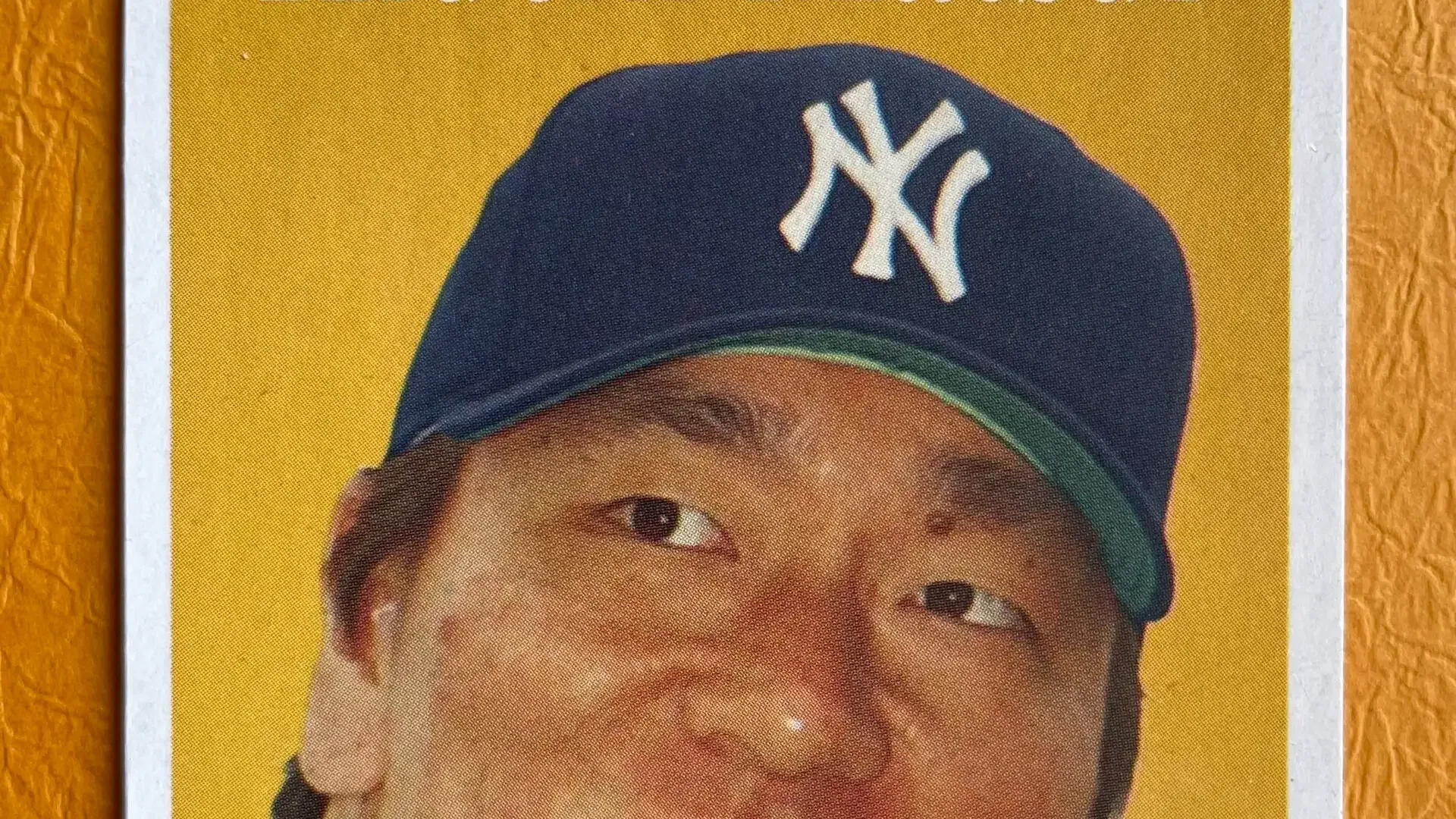
Hideki Matsui is back with the Yomiuri Giants, this time as manager. The club introduced the 52-year-old on October 23, bringing one of Japanese baseball’s most recognizable figures back to the organization where his professional playing career began.
For card collectors, the appointment adds a meaningful new chapter rather than changing the fundamentals overnight. Matsui already has an unusually broad collecting story: Japanese rookie cards from 1993, a long-running card sequence tied to each of his home runs, major-league rookie cards in New York Yankees uniform, and now the prospect of manager-era Japanese issues. His return also completes a personal arc closely tied to the late Shigeo Nagashima, the Giants icon who had hoped Matsui would someday lead the club.
The important distinction is between historical significance and an immediate price guarantee. A major managerial appointment can focus attention on a player’s cards, particularly among fans reconnecting with an earlier era. It does not by itself establish scarcity, condition, or sustained buyer demand. Those remain the practical factors that determine what a particular copy is worth. But in Matsui’s case, the new role makes it easier to understand why cards from his Giants years carry more than simple rookie-card appeal.
A return that carries Giants history
The Giants are among the most prominent and divisive clubs in Nippon Professional Baseball, with a following that reaches well beyond Tokyo. Matsui was drafted out of high school by the team and played there from 1993 through 2002, hitting 332 home runs across 10 seasons. He later hit 175 home runs in Major League Baseball with the Yankees, Angels, Athletics and Rays.
For more context, explore Azahar Drops ANBERNIC Device Support After ‘Azahar Plus’ Fork Appears in Promotion.
His accomplishments bridge two baseball contexts that are often collected separately. In Japan, Matsui won three MVP awards. In the United States, he became the 2009 World Series MVP with the Yankees. A collector can therefore build around his domestic Giants identity, his Yankees period, or the full crossover career. The managerial role reconnects the present most directly to that first category: Matsui as a Giants figure.
He will wear uniform number 90, the same number Nagashima wore when he first managed the Giants. It is a specific visual link between two central names in the team’s modern story, and it is likely to matter whenever manager cards, team issues, photos or other licensed memorabilia begin depicting Matsui in his new role.
That connection is especially resonant because Nagashima did not merely manage Matsui; he helped define the expectations around him. Nagashima spent his entire playing career with the Giants from 1958 to 1974, finishing with a .305 batting average and 444 home runs. He later managed the club from 1975 to 1980 and again from 1993 to 2001, a stretch that overlapped with Matsui’s Giants career.
The Nagashima relationship behind the cards
Nagashima was known by nicknames including “Mr. Giants,” “Mr. Pro Yakyu” and “Mister.” He was a star third baseman and a longtime Giants symbol, making his relationship with Matsui more than a routine manager-player association.
At Nagashima’s funeral following his death on June 3, 2025, Matsui recalled asking whether he could try third base. Nagashima, a former third baseman himself, instead insisted that Matsui belonged in the outfield and told him, “I want you to be Joe DiMaggio.” Later, Matsui saw a DiMaggio bat and a large photo of the Yankees great at Nagashima’s home while practicing his swing. That made the comparison clearer: it was an aspiration for Matsui to become a defining outfielder and a larger-than-life player.
The DiMaggio reference eventually shaped Matsui’s departure for the major leagues. When Matsui told Nagashima he was going to the Yankees, he framed the decision around Nagashima’s DiMaggio instruction. Nagashima smiled, allowing Matsui to feel that leaving the Giants was acceptable even if it was difficult.
This does not turn every Matsui card into a Nagashima card, nor should collectors collapse two distinct careers into one checklist. It does, however, give certain Matsui material clearer cultural context. His early Giants cards represent the player Nagashima developed and encouraged; Yankees cards represent the move that Nagashima’s DiMaggio comparison helped frame; future manager cards will show Matsui in a position Nagashima had wished for him.
For collectors who value narrative continuity, that is a far richer framework than simply cataloging a retired slugger’s rookie card and major-league issues.
The key 1993 Matsui rookie cards
Matsui’s main Japanese rookie card is card No. 423 in the 1993 BBM set. BBM is a Japanese card brand, and this issue is particularly notable because the set also includes Ichiro Suzuki’s rookie card. The shared set can draw attention from collectors who want cards from two major Japanese stars at the start of their professional careers, though each player’s market is its own.
The reported price contrast is stark: Ichiro’s 1993 BBM rookie has often sold for $200 or more, while Matsui’s BBM No. 423 can be found for about $30. That gap is useful context, not a promise that either card will sell at a certain level. Actual sale results vary with condition, grading, timing, eye appeal and whether the buyer wants a raw card or one authenticated and assessed by a third-party grader.
Matsui also had 1993 rookie cards from Takara and Calbee. Recent reported sales include a Takara copy graded PSA 8 at $120 and a Calbee graded PSA 6 at $95. PSA is a grading company; the numeric grade is intended to summarize a card’s condition on a 1-to-10 scale, with higher numbers generally reflecting stronger condition. It is not a universal substitute for looking closely at the actual card, but it gives buyers a common shorthand for comparing examples.
The three 1993 issues make for a focused and manageable Matsui rookie-card group:
- 1993 BBM No. 423: commonly treated as his principal Japanese rookie card and paired in the same set with Ichiro Suzuki’s rookie.
- 1993 Takara: another contemporary Japanese rookie-card option, with at least one PSA 8 example recently reported at $120.
- 1993 Calbee: a further 1993 issue, with a recent PSA 6 sale reported at $95.
Rather than assuming one is automatically the best purchase, collectors can decide what they are actually pursuing: the principal BBM rookie, a complete 1993 trio, a graded example at a chosen condition level, or a card that best represents Matsui as a Giants-era player.
The reprint detail buyers should not skip
The most practical warning concerns the 1993 BBM card. A reprint was included in the 2002 BBM The Legend of Hideki Matsui set. The reprint is marked “REPRINT” on the back.
That labeling makes the distinction more straightforward than it would be with an unmarked lookalike, but it only helps buyers who inspect both sides. When shopping online, request or examine a clear back image. When buying in person, turn the card over before treating it as a 1993 original. The word “reprint” is not a small technicality: it identifies a different issue with different collecting significance.
It is also worth using accurate language in a listing or personal inventory. Calling the 2002 card a reprint is not a criticism; it is the correct description. The 2002 release may still be desirable to a Matsui collector, especially as part of that themed set. It simply should not be confused with the original 1993 BBM rookie.
The 507-home-run NTV project
The most distinctive Matsui collecting project may be the Nippon Television, or NTV, series that commemorated every one of his 507 career home runs. It began in 1993 and continued through his career. Each card uses an image connected to the corresponding homer, showing Matsui either batting or moving around the bases.
This is fundamentally different from collecting a standard base-card run. The organizing principle is an achievement total: 507 individual home-run moments. A complete run has a built-in endpoint and a statistical narrative. It can be approached one card at a time, with each addition corresponding to a specific blast, rather than as an open-ended pursuit of every Matsui product ever issued.
The set also spans the two sides of Matsui’s career. He hit 332 homers for the Giants and 175 in Major League Baseball, which adds to 507. That arithmetic makes the NTV sequence a physical record of his entire home-run output, from his Japanese debut era through the conclusion of his playing career.
A collection of all 507 NTV home-run cards is displayed with other Matsui memorabilia at the Matsui Hideki Baseball Museum in Ishikawa prefecture. The museum is operated by Matsui’s family. For collectors, the display underscores the intended scale of the project: this is a career archive in card form, not just a handful of highlight cards.
Completing such a run is a different kind of challenge from buying one graded rookie. It requires checklist discipline, careful identification and patience. The appeal is archival: the finished group documents how Matsui’s record was accumulated, one home run at a time.
Japanese and MLB cards belong in the same story
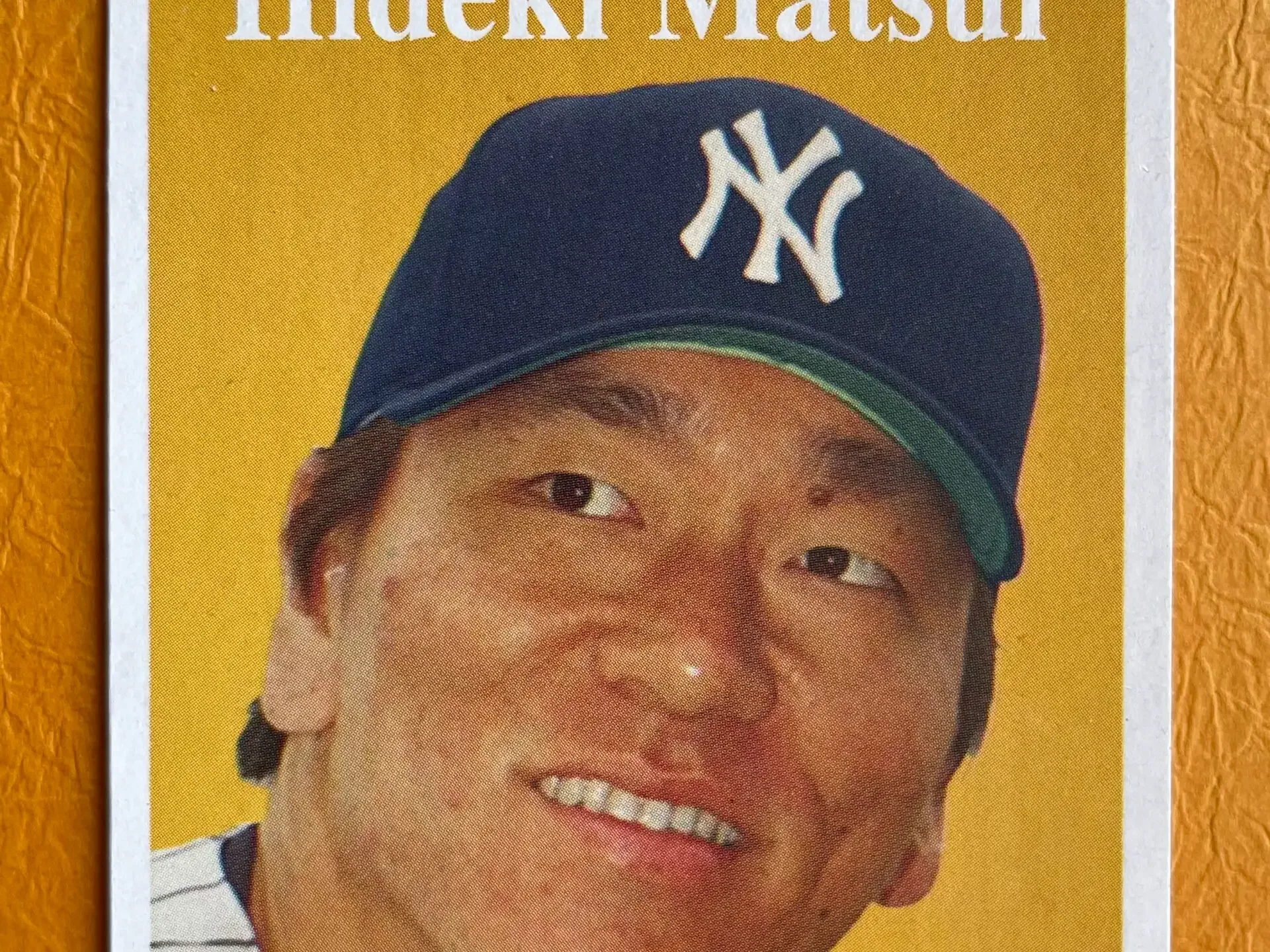
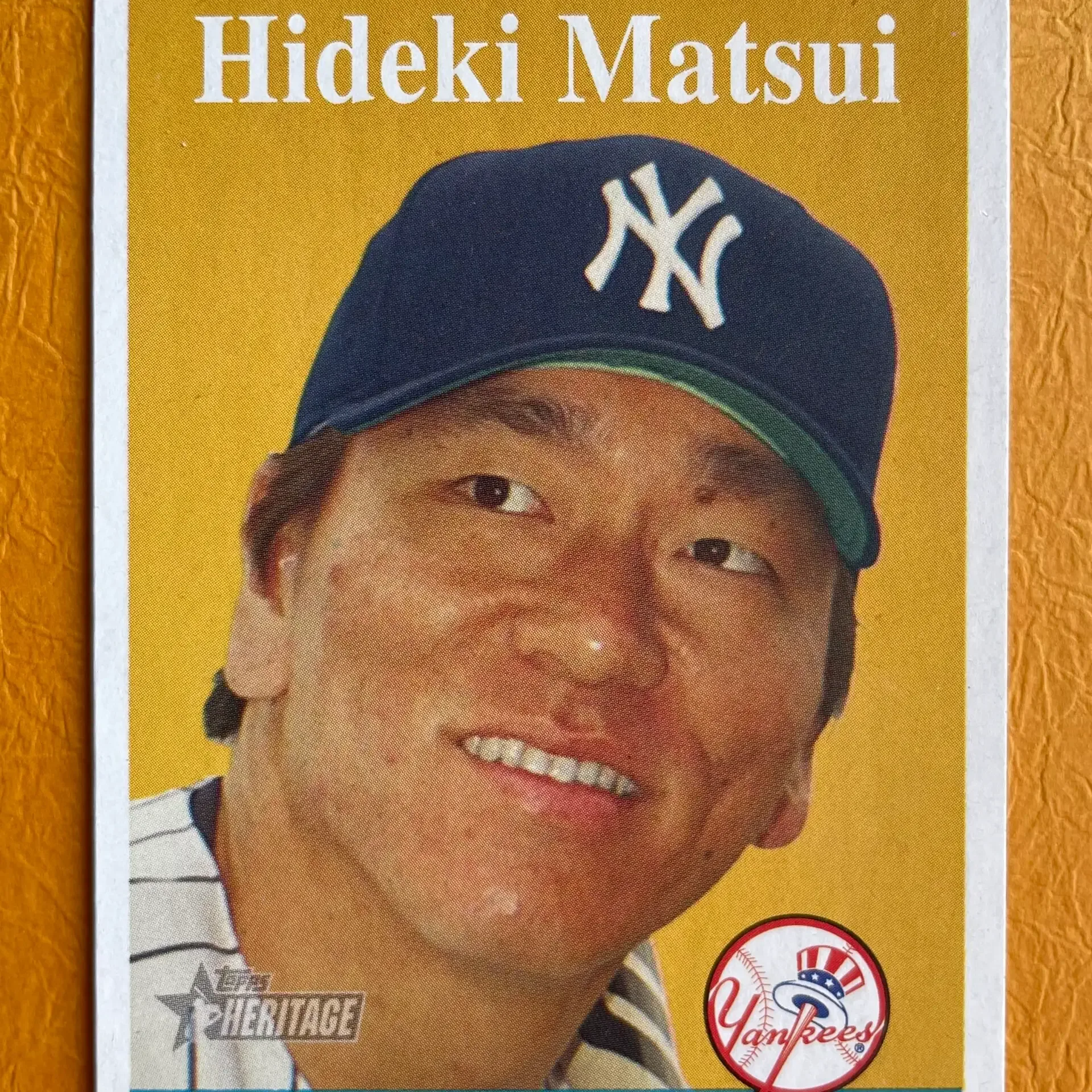
Matsui’s move to the Yankees created a second major card lane. There are numerous 2003 major-league rookie cards showing him in Yankees uniform, with Upper Deck producing the early major-league home-run cards and Topps handling later ones. These issues speak to a different audience from the 1993 Japanese rookies: collectors focused on MLB rookies, Yankees history or Matsui’s 2009 World Series MVP legacy.
Neither collecting route invalidates the other. A Japanese rookie card captures Matsui at the start of the Giants career that led to his new managerial post. A 2003 Yankees rookie captures the international move anticipated by Nagashima’s DiMaggio comparison. The NTV home-run cards connect the chapters numerically and visually.
That breadth is why Matsui can support more than one sensible collecting plan. A budget-conscious collector may start with the approximate $30 BBM rookie and carefully verify the back. A set builder may seek all three 1993 Japanese rookies. A narrative-focused collector may pair a Giants card, a Yankees card and one NTV home-run card. A long-term project collector may work through the 507-card NTV sequence.
What Matsui’s appointment may mean for collectors
The most immediate effect of Matsui becoming manager is likely to be renewed attention rather than a guaranteed market reset. Attention can bring more searches, more discussion of old checklists and more interest in Japanese cards that some North American collectors may have overlooked. It may also create a new manager-card category if Japanese products depict him in Giants attire.
The better collector response is to separate excitement from verification. Confirm the exact set and year. Check the reverse of a purported 1993 BBM rookie for the reprint marking. Compare condition honestly, whether a card is raw or graded. And remember that a recent sale is a data point, not a permanent price floor.
What has unquestionably changed is the framing. Matsui is no longer only a former Giants slugger and former Yankees star. He is now the Giants manager, wearing the number once used by the mentor whose influence shaped his route from Tokyo to New York and back again. That gives his existing cards a newly visible historical thread—and gives collectors a clear reason to revisit them with more care.