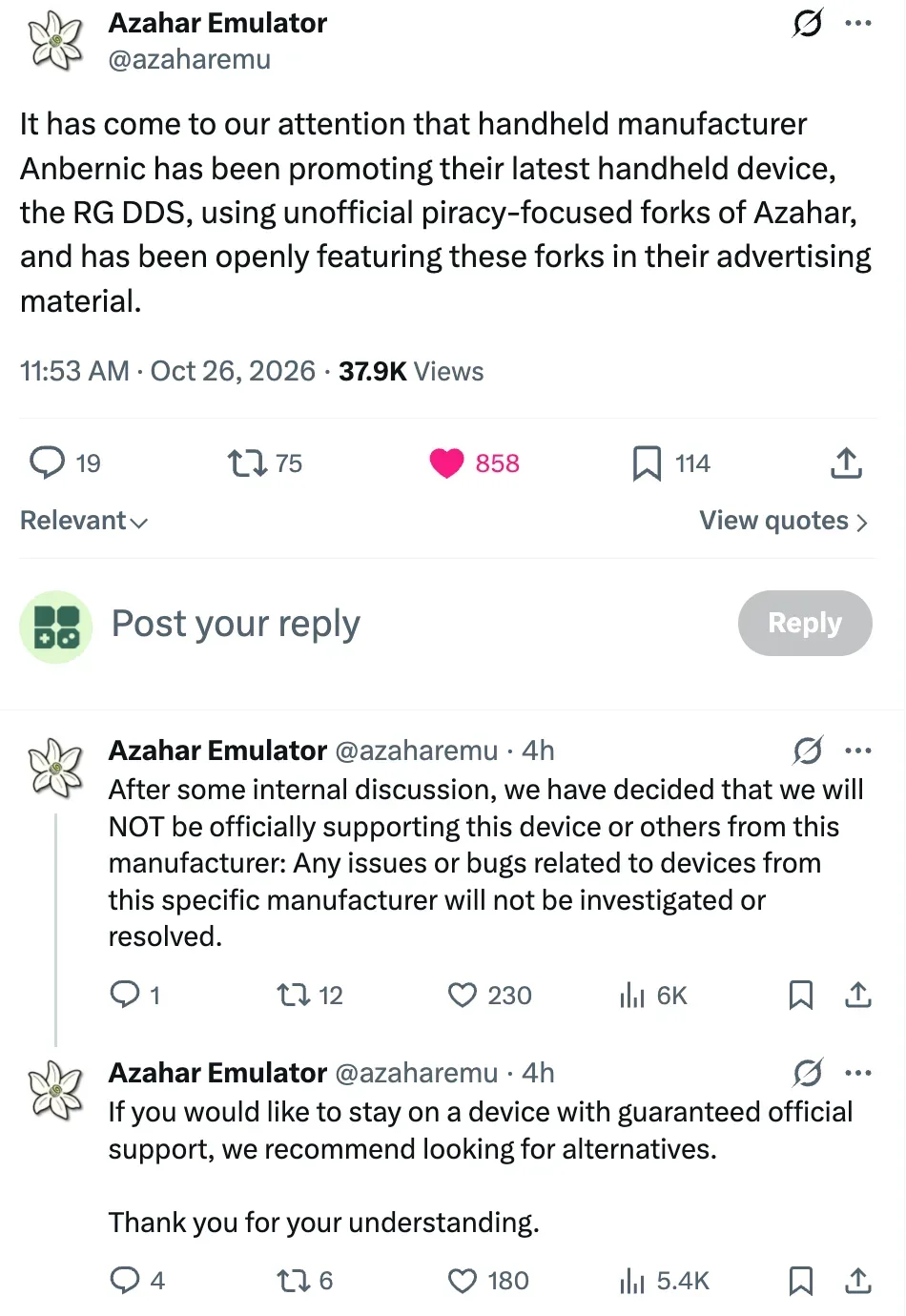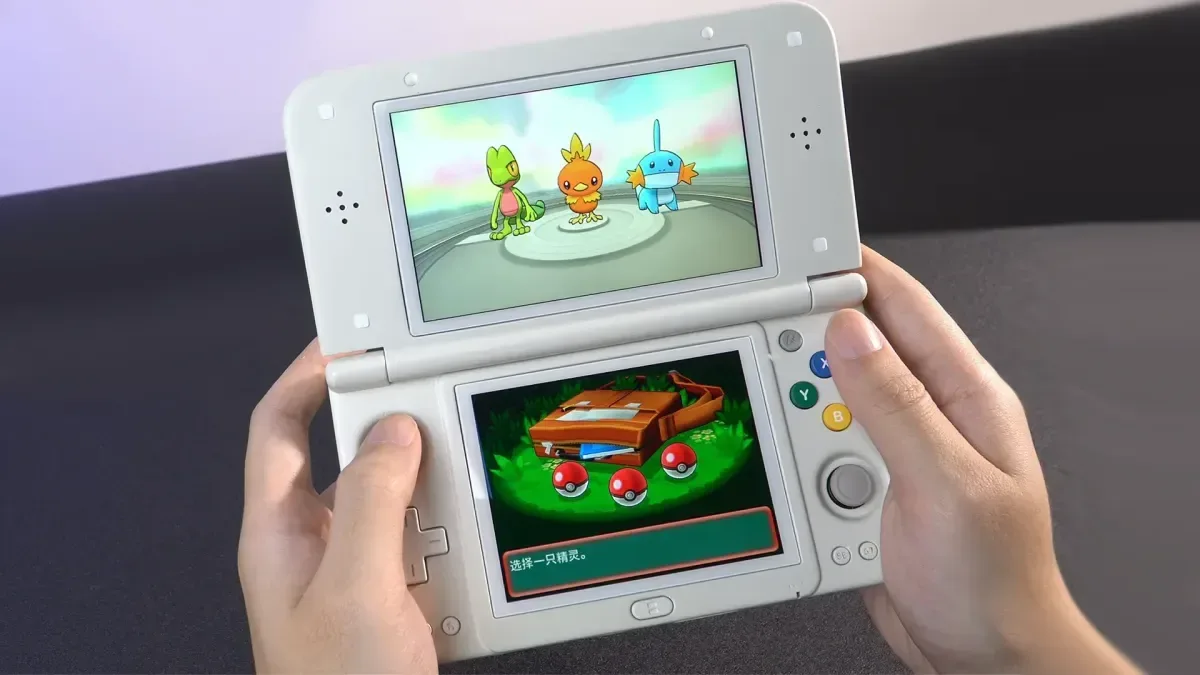
Azahar, the Nintendo 3DS emulator project, has said it will no longer provide support for ANBERNIC devices after the handheld manufacturer promoted what appears to be its own modified version of the software, branded “Azahar Plus.” The practical message is direct: bugs or compatibility problems on ANBERNIC hardware will not be investigated or fixed by the upstream Azahar team.
The dispute became public after ANBERNIC shared promotional material showing Azahar Plus being used with Nintendo 3DS games. Azahar characterized the software as an unofficial, piracy-focused fork and drew a firm line between its own project and the version associated with the hardware maker.
That distinction matters because emulation software, device firmware, game files, keys and preconfigured storage cards can all be separate parts of one consumer-facing package. A handheld may run a program whose name resembles a well-known open-source emulator, but that does not mean the original developers built, approved, tested or will troubleshoot that particular version.
What Azahar’s support decision means
Azahar’s statement does not necessarily mean every ANBERNIC handheld will immediately stop running the emulator. Instead, it means ANBERNIC-specific reports are outside the project’s support scope. If a future release behaves poorly on one of those devices, the upstream developers have said they will not spend their time reproducing, diagnosing or resolving the issue.
For users, that can create a frustrating support gap. A problem might be caused by the handheld’s operating system, controller mapping, graphics drivers, a custom emulator build, bundled configuration files, or a change made by the manufacturer. Normally, an upstream open-source project may receive a bug report and determine whether its own code is responsible. In this case, Azahar is signaling that it does not want ANBERNIC hardware to become part of that process.
That makes the origin of any installed emulator especially important. Owners who see “Azahar” or “Azahar Plus” in a menu should not assume those names describe identical software, identical settings, or identical support expectations. A branded build can differ from the main project even where it starts from the same codebase.
A fork is a technical term, not automatic proof of wrongdoing
A fork is a separate software project made by taking an existing codebase and continuing development independently. Forking is common in open-source development. Depending on the software license, it may be permitted to copy the code, modify it and distribute the altered version, provided the license’s conditions are met.
But “permitted to fork” is not the same as “endorsed by the original project.” A fork can introduce features, remove safeguards, alter defaults or carry bugs that the original developers do not recognize. It can also create brand confusion if consumers believe the original team is responsible for an independently maintained version.
Related coverage includes Azahar Ends Support for ANBERNIC Devices After Unofficial Fork Emerges.
Azahar has not publicly detailed the specific code or features it believes were altered in Azahar Plus. That absence is important. It would be speculation to state that particular technical checks were bypassed, that certain files are included, or that specific changes caused the break with ANBERNIC. What is clear from the project’s position is narrower: it views the ANBERNIC-linked build as unofficial and does not intend to support issues on that manufacturer’s devices.
Open-source communities often rely on a clear upstream/downstream relationship. Upstream refers to the main project where changes are developed and released. A downstream distributor or fork may package that software for a particular operating system or device. When the downstream version changes enough, upstream developers may be unable to tell whether a reported issue is theirs to fix. Stepping away from device-specific support is one way to prevent an unofficial build’s problems from being attributed to the original project.
Why branding and bundled software raise the stakes
The conflict is bigger than a filename. When a hardware company promotes a custom emulator build alongside a handheld, buyers may reasonably view the emulator as part of the device experience. If games fail to boot, controls do not work as expected, saves malfunction or updates introduce instability, users need to know which party is responsible.
Azahar’s response places that responsibility away from its own development channels. ANBERNIC users may need to rely on the manufacturer, the maintainers of the fork, or community resources tied to the particular firmware and build they are using. They should not treat an upstream Azahar issue tracker or support space as an assured route to a solution for an ANBERNIC-specific setup.
The situation also reinforces a basic consumer question for emulation-focused hardware: is the software an official release from its original developers, an unchanged package maintained by another party, or a customized fork? Those categories can lead to very different update paths and troubleshooting options.
For anyone encountering technical trouble with gaming software, the same general principle applies: establish the exact program version, device model and configuration before assuming a broad platform issue. That kind of separation is also useful in more conventional PC game support cases, such as the anti-cheat problems covered in this report on Helldivers 2 PC errors. The underlying technologies are different, but identifying the responsible layer remains essential.
The Nintendo 3DS context
Azahar is associated with Nintendo 3DS emulation, an area where technical development and legal questions are often discussed together but should not be collapsed into one issue. An emulator is software intended to reproduce the behavior of a system. Game software, system keys and other protected material are separate concerns. The existence of an emulator does not establish authorization to distribute games or other copyrighted files.
That separation is central to why project maintainers can be cautious about how their work is presented. A fork tied to messaging or distribution practices the upstream team considers piracy-focused can expose it to reputational and practical risk, even if the upstream project did not create or authorize the fork. Azahar’s statement appears designed to make its distance from the ANBERNIC-linked version unambiguous.
There is no supplied detail establishing what, if anything, will be bundled with ANBERNIC devices beyond the promotional appearance of Azahar Plus. It is therefore not appropriate to assume games, keys, ROMs or other files are included with a particular device. Consumers should distinguish verified product contents from emulator branding in marketing material.
What to watch with the RG DDS
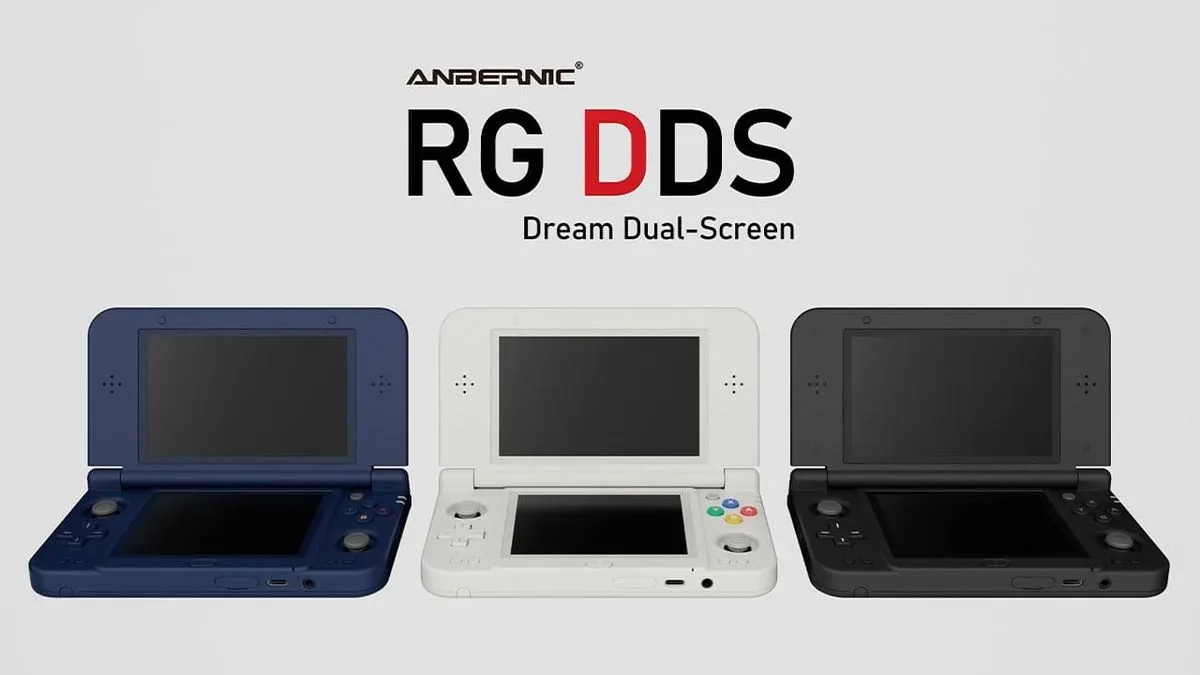
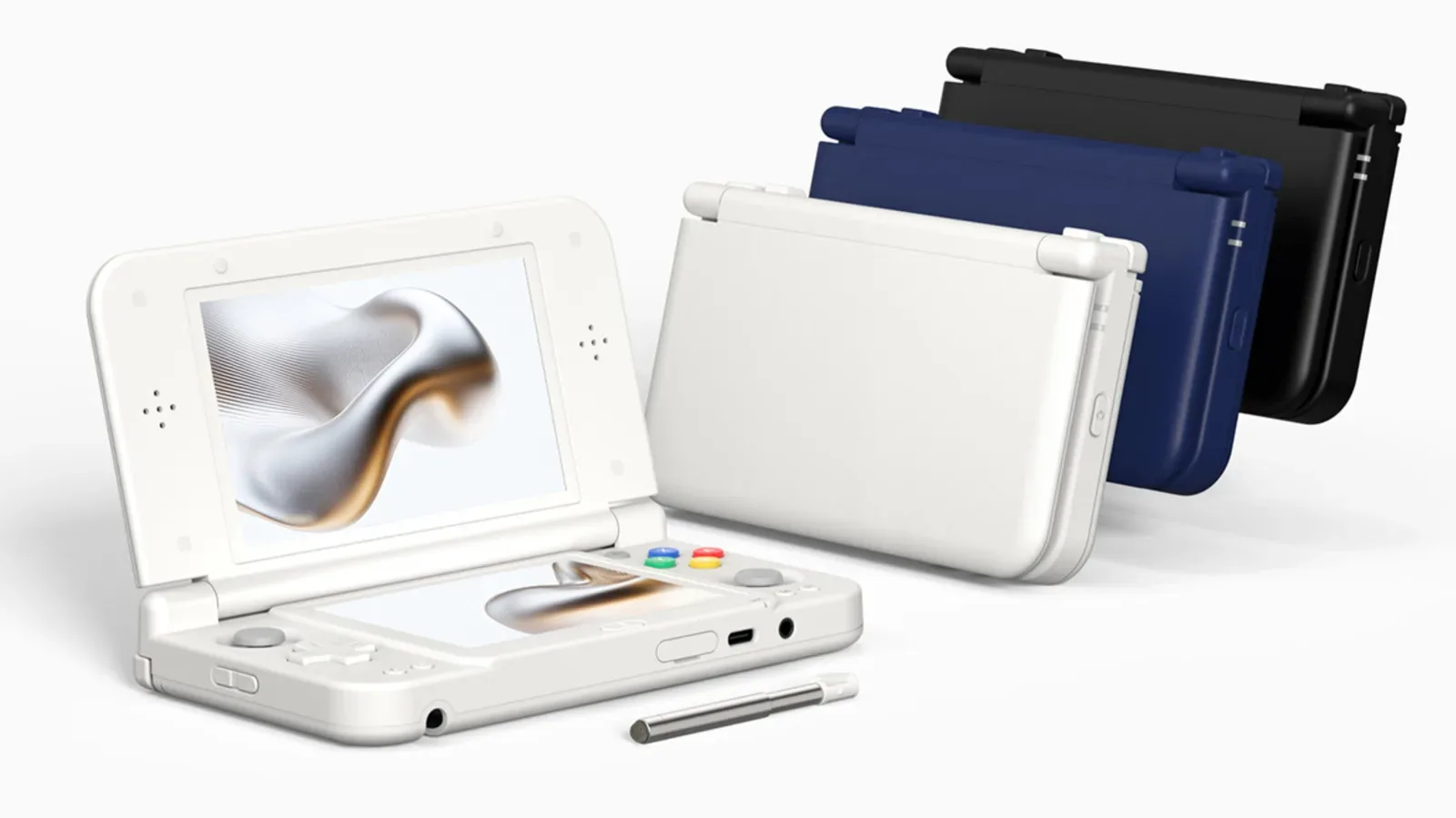
The support cutoff is particularly relevant to ANBERNIC’s upcoming RG DDS, which is expected to release on December 10. The key unanswered question is what emulator build the device will ship with, if it includes an Azahar-related build at all. The supplied information does not establish a final shipping configuration.
If the handheld uses Azahar Plus, prospective owners should expect that version to be treated as independent from upstream Azahar. If it uses a different build by release, the practical support picture could change, but neither outcome should be presumed until the software configuration is clearly identified.
There is also room for the two sides to change course. ANBERNIC could alter its software approach, and the dispute could be resolved. At present, though, Azahar’s policy is the relevant fact for users: the project will not investigate or resolve issues associated with ANBERNIC devices.
Practical implications for current and prospective owners
- Check the exact emulator name and version. “Azahar,” “Azahar Plus,” and an independently packaged build may not receive the same support.
- Keep support expectations realistic. Azahar has said ANBERNIC-specific bugs are out of scope, so an upstream fix should not be assumed.
- Separate hardware issues from software issues. A controller, display, operating-system or firmware problem is not automatically an emulator defect.
- Do not assume bundled content from a promotional video. The available information does not confirm which files or final software configuration may ship on the RG DDS.
- Use lawful, properly obtained software and files. Emulator compatibility discussion does not grant permission to distribute or acquire copyrighted games or protected system materials without authorization.
For the broader handheld-emulation scene, the episode is a reminder that open-source availability does not erase the need for clear attribution, responsible distribution and honest support boundaries. Azahar has now made its boundary explicit: whatever Azahar Plus may be on ANBERNIC hardware, it is not a version for which the upstream Azahar team intends to provide device support.