“Undervalued” is one of the hobby’s most slippery words. A card that sells in an open market has, in the most immediate sense, found its value: somebody paid that amount. That does not mean every comparison is equally satisfying, however. Collectors constantly weigh a player’s accomplishments, cultural pull, era, team, scarcity, card design and grade against the prices attached to comparable cards.
That is the more useful meaning of undervalued here. It is relative value, not a claim that the market has made an error or a forecast that any card must rise. Five Hall of Famers—Eddie Collins, Stan Musial, Yogi Berra, Wade Boggs and Greg Maddux—have card examples that have recently sold for far less than other great players from the same sets and in comparable grades. Their gaps are striking precisely because the on-field cases are so formidable.
For collectors, the practical lesson is not to treat statistics as a price guide. Card markets are not video-game leaderboards where the best career automatically receives the highest score. Fame, nostalgia, city, team identity, rookie-card status, visual appeal and collector demand can matter at least as much as performance. A disciplined buyer should also treat one sale as a data point, not a command prompt. Grade, eye appeal, registration quality, centering, timing and the number of bidders all affect the final result.
That same common-sense approach applies to any hobby purchase: compare the exact item rather than just the headline. It is the collecting equivalent of checking the practical tradeoffs in a budget PC-upgrade decision, where one attractive number does not settle the whole question.
What the grades and card terms mean
Every comparison below tries to hold the basic card issue and professional grade close to constant. PSA is a third-party grading designation; its familiar numerical scale runs from 1 to 10, with a PSA 10 representing a gem-mint example. The difference between two cards with the same printed set name can still be enormous if their grades differ, which is why the matched-grade comparisons are useful.
Population, often shortened to “pop,” means the number of examples a grading company has assigned a particular grade. It can help describe scarcity in graded form, but it is not a complete census of all surviving cards. Scarcity alone does not set a price either. A card can be rarer than another yet sell for less if collector demand is lower.
Several later-era card labels also deserve translation. Topps Tiffany cards are a premium version of their regular-year counterparts. A refractor is a shiny parallel treatment associated with Topps Finest. PMG, short for Precious Metal Gems, refers to a Metal Universe parallel; the “/50” on the Boggs and Jeter examples denotes a serial-numbered run of 50. These details matter because a player’s base card, premium parallel and serial-numbered parallel are separate markets.
Finally, WAR, or Wins Above Replacement, is a statistic used to summarize a player’s all-around value relative to a replacement-level player. It can sharpen historical comparisons, but cards are bought by people rather than formulas. A legendary moment, a famous nickname or a deep connection to a franchise can overwhelm a statistical edge.
Related coverage includes OTIA Top 3: Baseball Legends Whose Cards Sell for Less Than Their Peers’.
Eddie Collins: elite production from the pre-war shelf
Collins has an extraordinary statistical argument for more attention. Across a 25-year career, he recorded 3,315 hits, a .333 batting average, 741 stolen bases and six World Series titles. His 123.7 career WAR is higher than the totals cited for Ted Williams, Lou Gehrig and Mickey Mantle, among many other celebrated names. He is widely regarded as one of the game’s greatest second basemen and a plausible top-20 player overall.
Yet selected vintage comparisons show how dramatically the card market can separate achievement from demand:
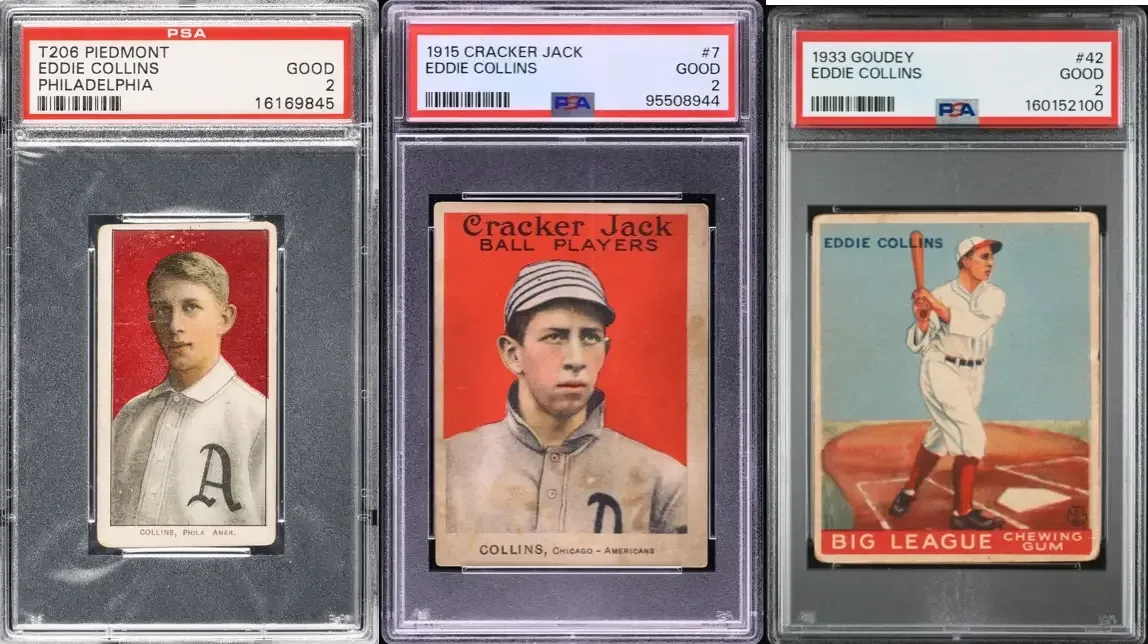
- 1909–1911 T206 Eddie Collins, PSA 2: $661; T206 Nap Lajoie portrait, PSA 2: $1,020.
- 1915 Cracker Jack Eddie Collins #7, PSA 2: $1,850; Shoeless Joe Jackson #103, PSA 2: $92,000.
- 1933 Goudey Eddie Collins #42, PSA 2: $229; Jimmie Foxx #29, PSA 2: $1,103.
The Jackson comparison is especially huge, but it also illustrates why “better player” is too simple a pricing model. The supplied career-WAR comparison puts Collins ahead of Lajoie, Jackson and Foxx, while their cards bring more in these examples. Jackson’s historical mythology and Foxx’s collector appeal are part of the demand picture; Collins’s résumé alone does not compel equivalent pricing.
For a collector who wants a foundational tobacco-era or candy-era card tied to an all-time infield great, that creates an intriguing research lane. The task is to decide whether the exact issue matters more than simply owning Collins: T206, Cracker Jack and Goudey have very different collector identities, even before condition enters the conversation.
Stan Musial: a giant career without the biggest premium
Musial’s numbers have little need for decoration: 3,630 hits, seven batting titles, three MVP awards, a .331 career average and 128.5 WAR, cited as 11th all-time. He also ended up with a beautifully symmetrical split of 1,815 hits at home and 1,815 on the road. On performance, he belongs in the most rarefied historical conversations.
His selected cards nevertheless sell below cards of some of the era’s most famous names:
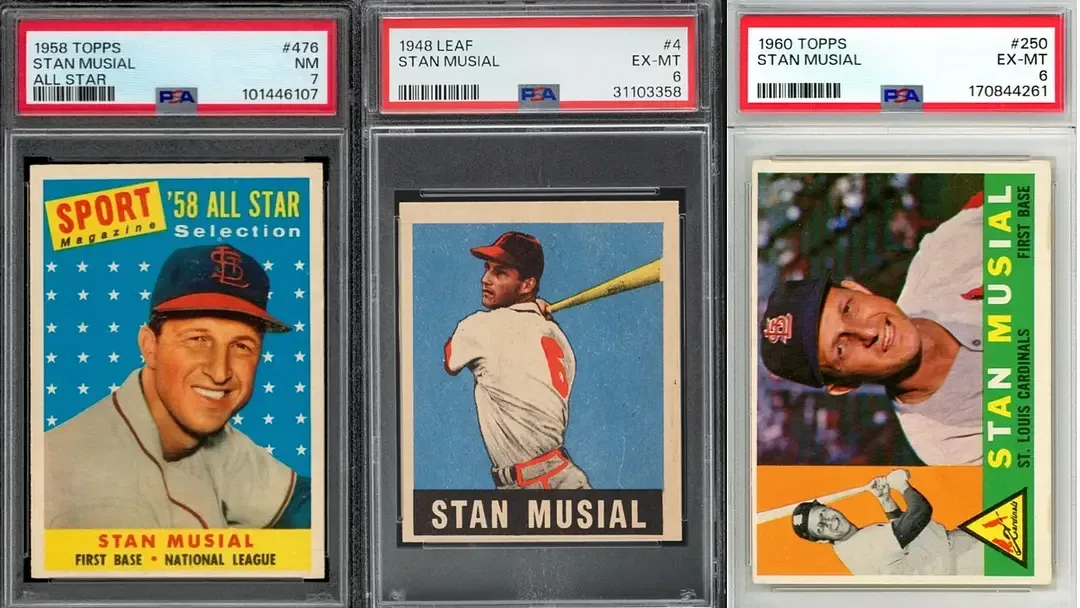
- 1958 Topps All-Star Stan Musial #476, PSA 7: $188; Mickey Mantle All-Star #487, PSA 7: $1,100.
- 1960 Topps Stan Musial #250, PSA 6: $210; Hank Aaron #300, PSA 6: $652.
- 1948 Leaf Stan Musial rookie card #4, PSA 6: $6,000; Joe DiMaggio #1, PSA 6: $9,040.
Musial spent his entire playing career in St. Louis rather than in the New York spotlight associated with Mantle and DiMaggio. His reserved public profile may also have limited the mythology that often drives demand. None of that diminishes his career; it helps explain why career achievement and cardboard prices travel on separate tracks.
The 1948 Leaf comparison is particularly helpful for buyers because it involves Musial’s rookie card rather than a later issue. It suggests that even the card most directly tied to his playing debut can sit below a peer’s comparable vintage card. That does not make it automatically cheap in an absolute sense—$6,000 is still a serious purchase—but it is a meaningful relative gap.
Yogi Berra: championships, MVPs and an image that can eclipse the player
Berra’s card market has to contend with two enormous forces: he played alongside Joe DiMaggio and Mickey Mantle, and his comic public reputation became nearly inseparable from his name. The memorable sayings are enduring, but they can distract from the player’s actual record. Berra won 10 World Series championships as a player, received three American League MVP awards and made 18 All-Star teams.
His background also extends beyond the diamond. Before his baseball career, Berra served in the Navy in World War II and manned a machine gun during the D-Day invasion of Normandy. At the plate, he hit 358 home runs while striking out only 414 times, a remarkable indication of how rarely opponents put him away.
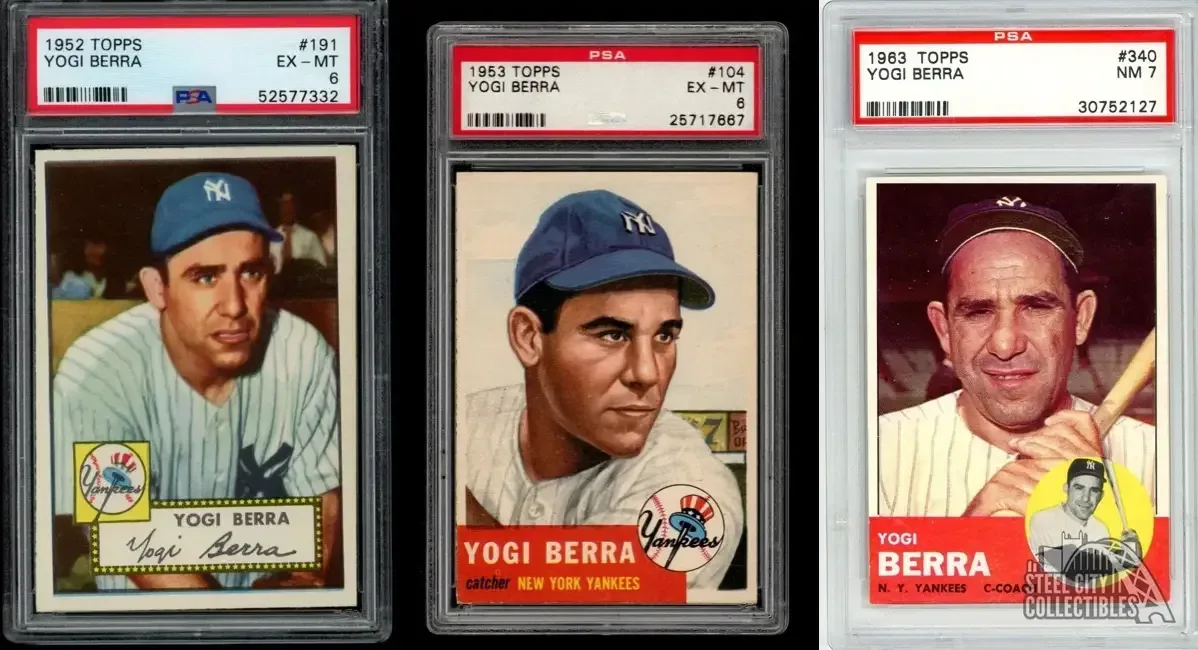
- 1952 Topps Yogi Berra #191, PSA 6: $2,208; Roy Campanella #314, PSA 6: $7,800.
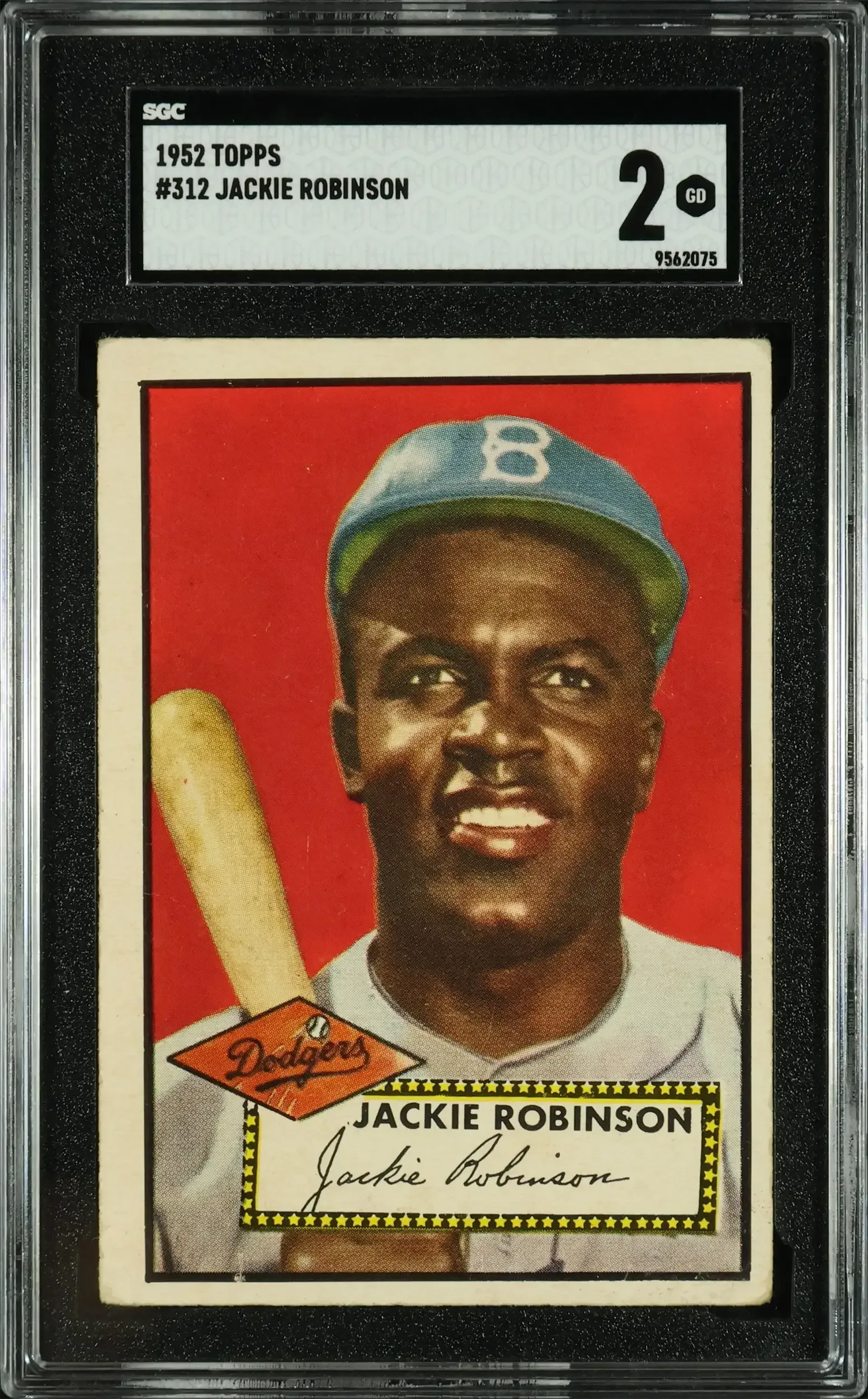
- 1953 Topps Yogi Berra #104, PSA 6: $985; Jackie Robinson #1, PSA 6: $15,000.
- 1963 Topps Yogi Berra #340, PSA 7: $449; Mickey Mantle #200, PSA 7: $2,950.
These should not be read as arguments against Campanella, Robinson or Mantle. Each has a distinct historical and collector story. Instead, the numbers show that Berra’s elite accomplishments did not translate into the same tier of card demand. Collectors interested in Yankees history can therefore find a route to one of the franchise’s most decorated players without immediately entering Mantle’s price bracket.
Wade Boggs: the contact hitter in a hobby that loves power
Boggs is a compelling test of what collectors reward. He finished with 3,010 hits, five batting titles and a .415 on-base percentage. His 91.4 WAR ranks third among third basemen, ahead of George Brett, Chipper Jones and Brooks Robinson in the comparison provided. Yet the market examples place him well below both a fellow batting-title machine and bigger hobby names.
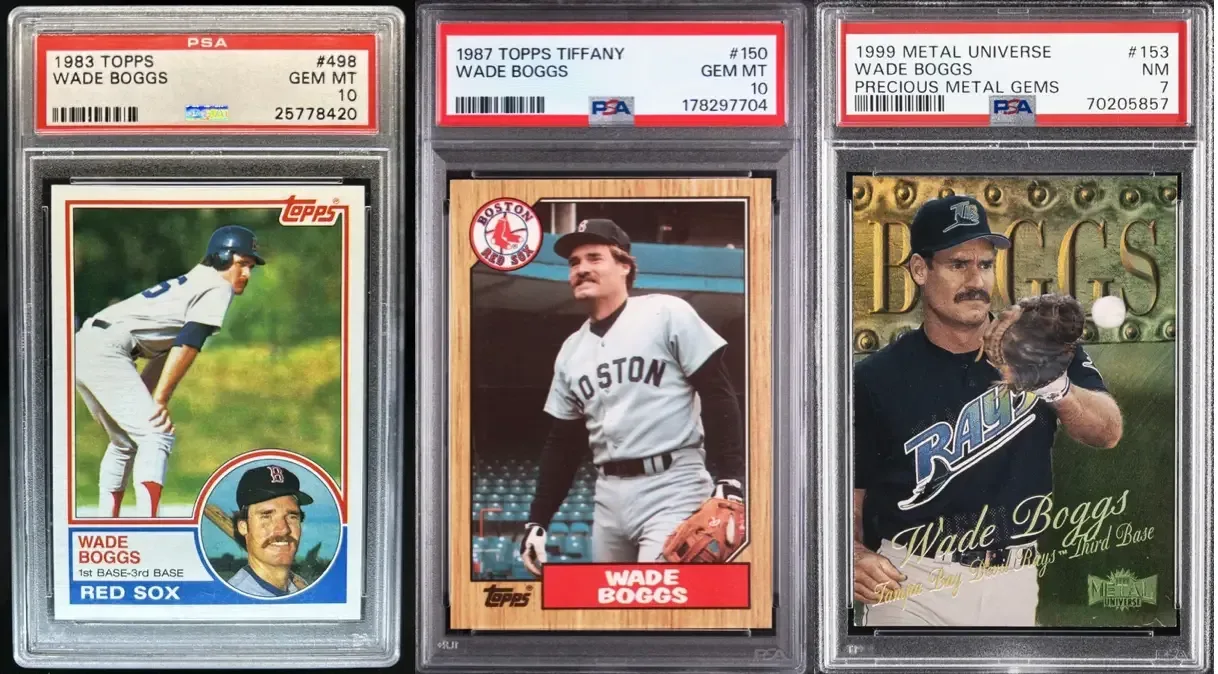
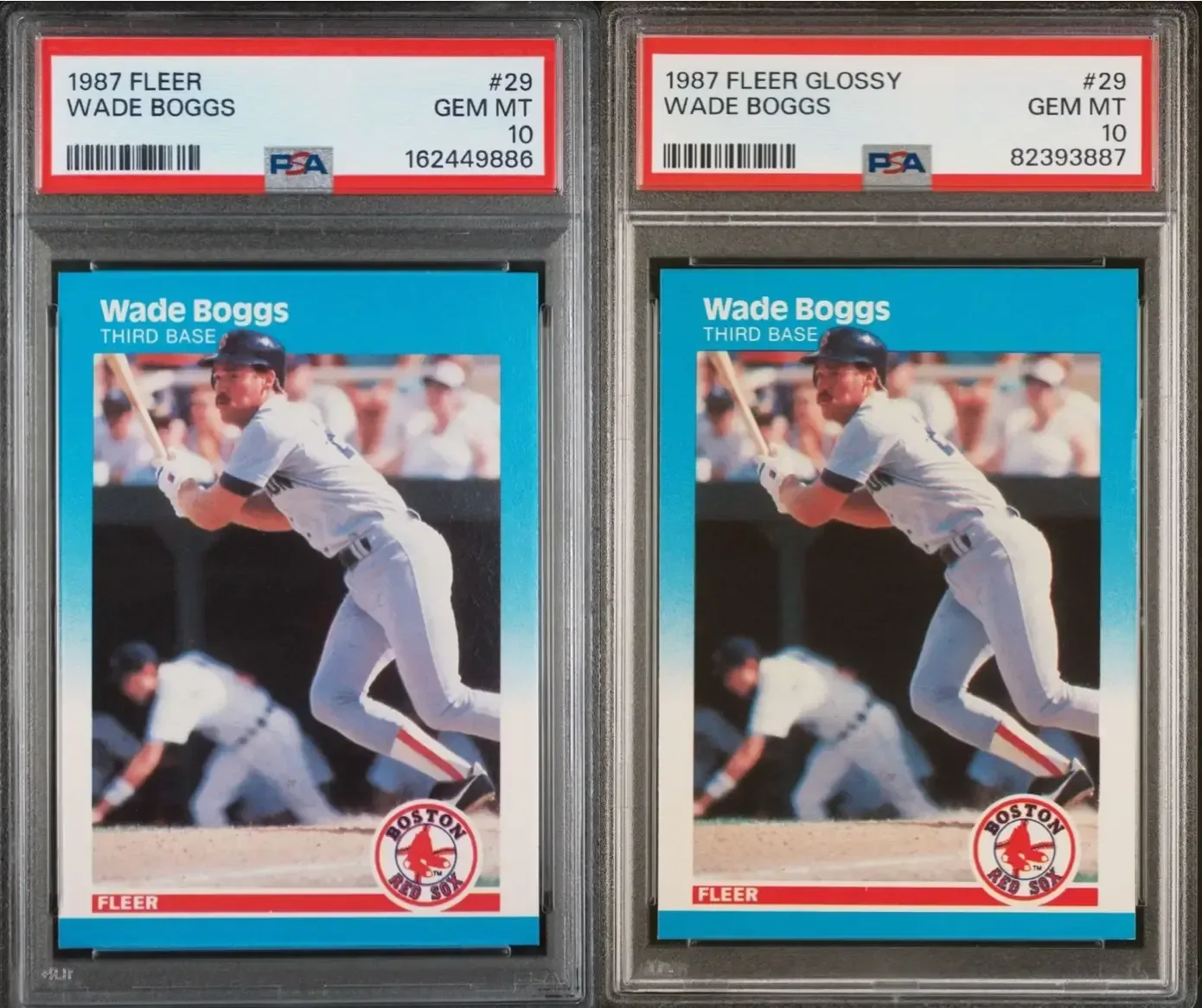
- 1983 Topps Wade Boggs rookie card #498, PSA 10: $4,532; Tony Gwynn rookie card #482, PSA 10: $8,500.
- 1987 Topps Tiffany Wade Boggs #150, PSA 10: $125; José Canseco #620, PSA 10: $833.
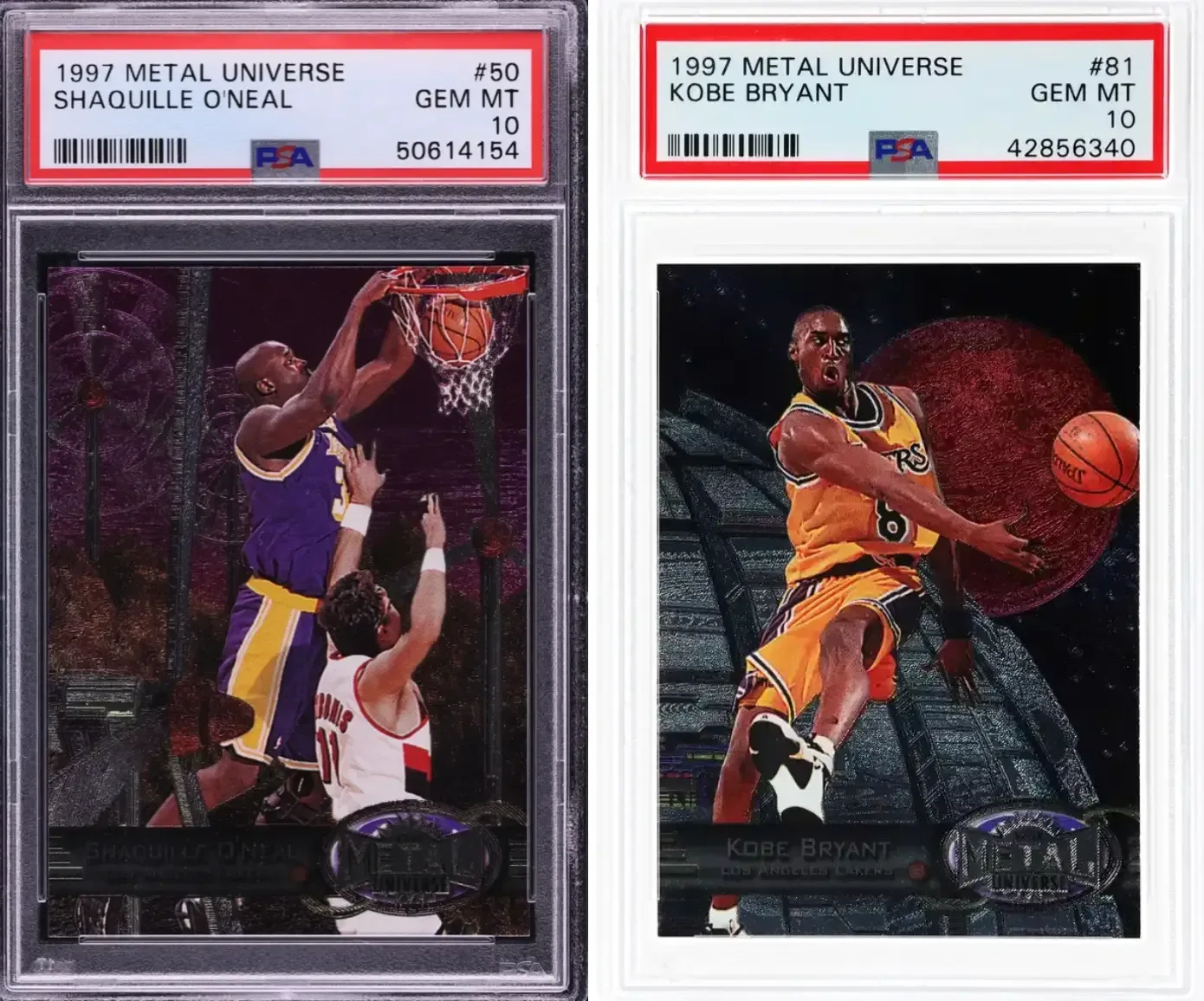
- 1999 Metal Universe Wade Boggs #153 PMG /50, PSA 7: $838; Derek Jeter #97 PMG /50, PSA 6: $30,000.
Boggs hit 118 home runs, a relatively modest total for a player of his stature, and that may help explain why his cards do not generate the same electricity as power-centric stars. But he was far from anonymous: “Chicken Man” was a nickname tied to his pregame chicken routine, and his personality has been the subject of lasting baseball lore.
The Jeter comparison is not a pure player-value referendum. Jeter’s popularity and the demand for 1999 PMGs are both major factors, while the two cards are also not the same grade. Still, a Boggs serial-numbered PMG /50 at $838 versus a Jeter PMG /50 at $30,000 demonstrates how fame and a card’s place in hobby culture can create a canyon between two Hall of Fame subjects.
Greg Maddux: dominance through efficiency
Maddux’s case rests on sustained excellence rather than theatrical velocity. He won 355 games, accumulated 106.6 WAR, won at least 15 games in 17 consecutive seasons and collected a record 18 Gold Gloves—more than any player at any position. He is identified as the only MLB pitcher to reach 300 wins and 3,000 strikeouts while issuing fewer than 1,000 walks.
His 1997 complete game against the Cubs, finished in only 78 pitches, is a compact illustration of that efficiency. So is his awards run: four straight Cy Young Awards from 1992 through 1995. The supplied comparison notes that Nolan Ryan did not win the award during his 27-year career, even though Ryan remains one of the hobby’s most magnetic pitching names.
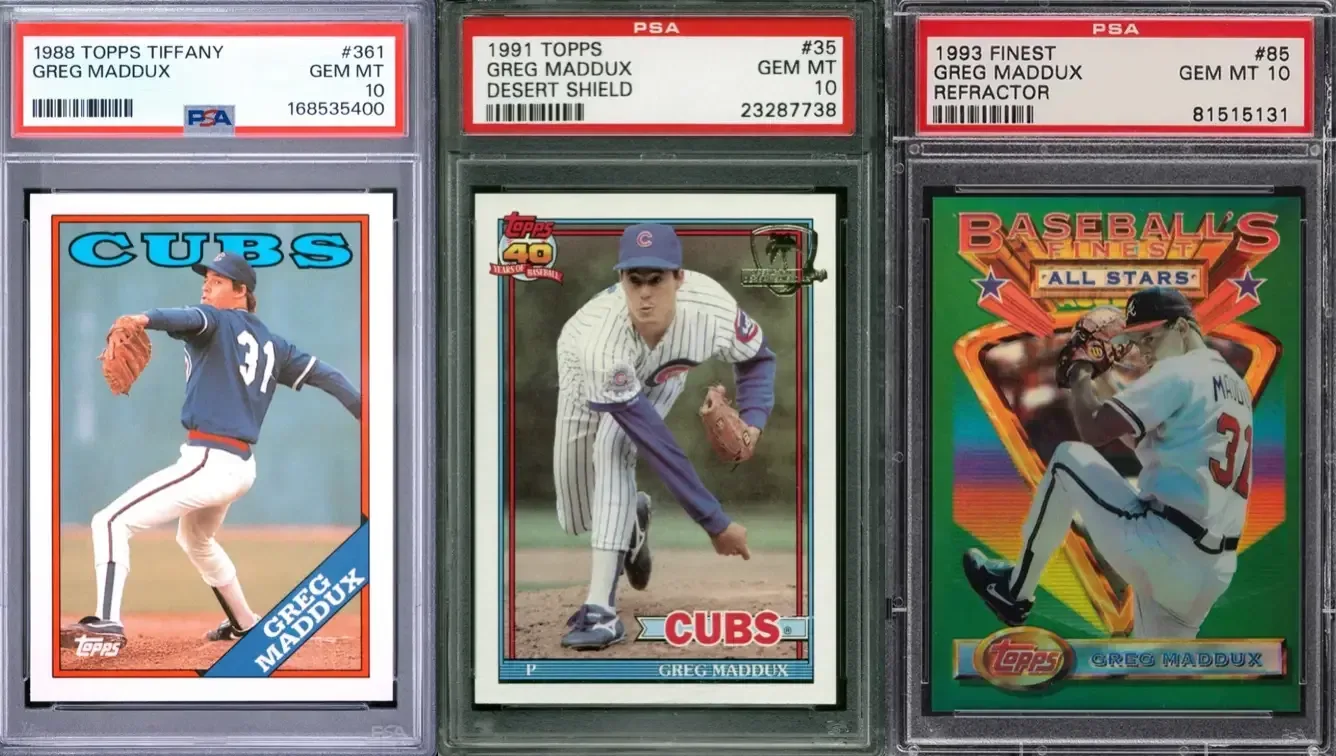
- 1988 Topps Tiffany Greg Maddux #361, PSA 10: $225; Nolan Ryan #250, PSA 10: $634.
- 1991 Topps Desert Shield Greg Maddux #35, PSA 10: $1,125; Nolan Ryan #1, PSA 10: $5,160.
- 1993 Topps Finest Refractor Greg Maddux #85, PSA 10: $3,825; Nolan Ryan #107, PSA 10: $36,000.
Ryan’s enduring appeal is not difficult to understand, but these same-set comparisons make Maddux a strong example of relative value. He was arguably baseball’s best pitcher for a substantial stretch of the 1990s, doing it in an offensive environment associated with extraordinary power numbers. For collectors who value sustained precision, major awards and technical mastery, his cards offer a different kind of legend than the strikeout-and-velocity mythology usually associated with pitching collectibles.
How to use these comparisons without overreading them
These five players are not a shopping list, and no past sale proves a future price. They are a reminder to build a collecting goal before chasing a headline. A buyer might prioritize a rookie card, a favorite set, a particular era, a Yankees or Cardinals collection, or simply the strongest card their budget permits. That goal should determine the card, not a claim that the market is about to “correct.”
- Compare like with like. Match the set, grade and parallel wherever possible.
- Check the exact grade and presentation. A numeric grade does not erase differences in centering or eye appeal.
- Separate scarcity from demand. A low population figure can be informative without guaranteeing broad buyer interest.
- Know why the other player costs more. Historical importance, team fandom, media visibility and signature cards often matter as much as career totals.
- Buy the story you actually want to keep. Collins’s pre-war greatness, Musial’s consistency, Berra’s championship record, Boggs’s hitting or Maddux’s command each offers a legitimate collecting theme.
In short, cards of Collins, Musial, Berra, Boggs and Maddux underline a basic truth of the hobby: a price is real, but it is never just a stat line in cardboard form. For collectors willing to look beyond the loudest names, these comparisons offer substantive careers and recognizable issues at levels that, at least beside their peers, remain surprisingly restrained.